
- Top Pick: GIGABYTE Radeon RX 9070 XT Gaming OC 16G Graphics Card, PCIe 5.0, 16GB GDDR6, GV-R9070XTGAMING OC-16GD Video Card
- Best Value: GIGABYTE Radeon™ RX 9070 XT Gaming OC ICE 16G Graphics Card (16GB GDDR6, 256-bit, PCIe 5.0, HDMI/DP 2.1, 2.7 Slot, Hawk Fan, Server-Grade Thermal Gel, Reinforced Structure)
- Premium Choice: ASUS Prime Radeon RX 9070 XT 16GB GDDR6 OC Edition Gaming Graphics Card
Top 4070 Super 9070 Amd Worth Picks for 2026
Here are our current top 4070 super 9070 amd worth picks, compared on real Amazon owner reviews, price, and features. Live prices update below.
- Top 4070 Super 9070 Amd Worth Picks for 2026
- The Quick Verdict: 4070 Super vs 9070 XT at a Glance
- Deep Dive Face-Off: Frames, Features, and Fit
- 2026 Market Watch: H200 Exports and Rising Prices
- Final Verdict: Pros, Cons, and the Alternative
- Conclusion
- Related Guides
- Frequently Asked Questions
- Related Articles
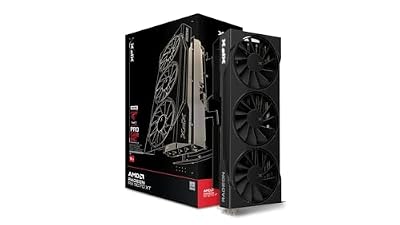

Dropped $80.77


4070 Super vs 9070 XT is a comparison between two different weight classes that keep landing in the same shopping cart, because their street prices on Amazon often sit only $50–$120 apart. The RTX 4070 Super launched at $599 with 12GB of VRAM as Nvidia’s mid-range sweet spot; the RX 9070 XT arrived at the same $599 MSRP with 16GB and RDNA 4 muscle, then drifted upward in price as demand spiked. So the real 2026 question is not which card is faster — it is whether the 9070 XT’s performance and memory advantage justifies whatever gap exists between them the day you buy. This comparison answers that with specs, benchmark data, feature analysis, and a clear look at where GPU prices are heading.
As an Amazon Associate we earn from qualifying purchases at no extra cost to you. Product prices and availability are accurate as of the date shown and are subject to change.


The Quick Verdict: 4070 Super vs 9070 XT at a Glance
Here is the fast answer for busy readers. The RX 9070 XT is the faster card, period — typically 20–30% ahead at 1440p and even further ahead at 4K, with 16GB of VRAM versus 12GB. The RTX 4070 Super remains relevant on two fronts: lower power draw (220W vs 304W) and Nvidia’s DLSS ecosystem, plus whatever street-price advantage it holds at checkout. If the price difference is under $100, buy the 9070 XT; if the 4070 Super is steeply discounted or your PSU and case are constrained, it is still a perfectly rational pick. Compare both cards’ live prices on Amazon before deciding — the spread moves weekly.
Why the RX 9070 XT Is the Performance Pick
The numbers are not close. The RX 9070 XT fields 4,096 stream processors on RDNA 4 with 16GB of GDDR6 and roughly 645GB/s of bandwidth, against the 4070 Super’s 7,168 CUDA cores, 12GB of GDDR6X, and 504GB/s. In aggregated 1440p testing, the AMD card averages 20–30% higher frame rates and stretches the lead at 4K where its memory advantage compounds.
The 16GB buffer is the future-proofing headline. Modern titles with high-resolution texture packs already push past 12GB at 4K, and frame generation itself consumes VRAM. For a card you intend to keep until 2029–2030, 16GB is the safer floor.
Why the RTX 4070 Super Still Sells
At 220W, the 4070 Super sips power by modern standards. It runs cool and quiet in compact cases, works fine on a quality 650W PSU, and its smaller partner designs fit small-form-factor builds that a triple-fan 9070 XT physically cannot.
It also carries Nvidia’s software stack: DLSS upscaling with the broadest game support in the industry, Reflex latency reduction, mature AV1 encoding, and CUDA for creative apps. For a quiet 1440p machine that doubles as a work PC, those practical strengths are genuine.
One more analytical wrinkle: efficiency per frame. Divide benchmark output by board power and the 4070 Super produces more frames per watt — about 15–20% better in raster workloads — even though the 9070 XT produces more frames in total. Over a four-year ownership window at typical electricity rates, the 84W gap translates to a real but modest cost difference of roughly $30–$60 for an average gamer. It will not decide the purchase alone, but heavy daily players should know the number exists.
Specs Comparison Table
The table below anchors the comparison in hard numbers before we go deeper.
| Specification | RTX 4070 Super | RX 9070 XT |
|---|---|---|
| Architecture | Ada Lovelace (AD104) | RDNA 4 (Navi 48) |
| Cores | 7,168 CUDA cores | 4,096 stream processors |
| VRAM | 12GB GDDR6X | 16GB GDDR6 |
| Memory Bandwidth | 504 GB/s | ~645 GB/s |
| Board Power | 220W | 304W |
| Upscaling | DLSS 3.5 + Frame Gen | FSR 4 (AI-based) |
| Launch MSRP | $599 | $599 |
| Performance Class | Strong 1440p | 1440p high-refresh / 4K |
Deep Dive Face-Off: Frames, Features, and Fit
Same launch price, very different cards. This section compares them across the three axes that decide real satisfaction after purchase: benchmark performance at the resolutions you actually play, the DLSS-versus-FSR 4 software question, and power, size, and compatibility in a real build.
Gaming Performance: 1440p and 4K
At 1440p ultra, the 9070 XT routinely posts 100–140 fps in AAA titles where the 4070 Super lands in the 80–110 range — a consistent 20–30% delta across large benchmark aggregates. At 4K, the gap widens as the 4070 Super’s 12GB buffer and narrower bus start binding, while the 9070 XT holds 60+ fps in most titles before upscaling.
Ray tracing narrows things: Ada’s RT cores remain efficient, and in heavy RT scenes the 4070 Super closes to within 10–15%, occasionally tying in path-traced edge cases when VRAM is not the constraint. RDNA 4’s RT uplift means AMD no longer collapses with RT on, which was the old objection.
For high-refresh competitive play at 1440p, both exceed 200 fps in esports titles; the difference there is academic, and the decision should fall to price and features instead.
Frame-time data tells the future-proofing story better than averages do. In 2025–2026 releases with large texture budgets, the 4070 Super’s 12GB buffer produces occasional frame-time spikes at 4K and even 1440p with maxed texture packs, while the 9070 XT sails through identical scenes. If you never max textures, you may never notice; if you always do, the difference is visible within the first hour.
DLSS vs FSR 4: The Ecosystem Question
DLSS still owns the adoption lead with hundreds of supported games and consistently excellent image quality, plus Frame Generation on the 4070 Super for single-player smoothness. It is the safe, proven choice.
FSR 4 is AMD’s AI-trained answer, and quality testing puts it remarkably close to DLSS — a generational leap over FSR 3. Its library is smaller but growing monthly, and AMD’s driver-level upgrade path means supported games improve over time. The experimental upside is real; the breadth, for now, still favors Nvidia.
Power, Size, and Real-Build Compatibility
The 4070 Super’s 220W draw is its quiet superpower: a 650W PSU suffices, two-slot models exist, and thermals are easy in cramped cases. The 9070 XT’s 304W wants a 750W PSU, a roomier case, and benefits from good airflow — standard stuff for a mid-tower, limiting for SFF builders.
Connector check: most 9070 XT boards use familiar dual 8-pin PCIe plugs, while many 4070 Super cards use the 16-pin connector with an included adapter. Verify your PSU’s cables before ordering either card and you will avoid the most common day-one upgrade snag.
2026 Market Watch: H200 Exports and Rising Prices
Two current news items materially affect this buying decision. The United States has approved Nvidia selling the H200 — one of its most powerful AI chips — to China, and laptop and component prices are trending upward industry-wide. Together they explain why neither of these GPUs is likely to get cheaper, and why timing your purchase matters this year.
What H200-to-China Means for Gamers
The H200 approval unlocks a vast new demand pool for Nvidia’s leading-edge silicon and high-bandwidth memory. Foundry and memory capacity are finite; when AI accelerator orders expand, allocation for consumer GPU dies and GDDR memory tightens, and street prices historically climb above MSRP within a quarter or two.
The 4070 Super, being Nvidia silicon, is directly exposed to that allocation squeeze. The 9070 XT is not immune either — AMD buys memory from the same suppliers now prioritizing high-margin AI orders.
Component Inflation Is Already Here
Memory contract prices have risen for multiple consecutive quarters, and laptop manufacturers have already passed increases to consumers. Graphics cards share that exact bill of materials: GDDR chips, substrates, VRMs, and shipping all cost more than they did a year ago.
In practice, the $599 MSRPs on both cards increasingly function as price floors. Listings that dip near MSRP sell out fast, and the replacement stock lists higher.
For context on magnitude: a 7–10% drift above MSRP — the historical pattern during supply squeezes — is $42–$60 on these cards. That is the entire price gap between a base dual-fan model and a premium triple-fan design with better thermals and quieter operation. Waiting does not just risk paying more; it risks paying more for less card.
The Smart Timing Play
If you intend to upgrade in 2026 regardless, the data favors buying sooner: there are two measurable forces pushing GPU prices up and none visibly pushing them down. Waiting for a sale era that supply dynamics do not support is the costly strategy.
Set your target — say, a 9070 XT under $650 or a 4070 Super under $550 — track Amazon for a few days, and buy when your number appears. Check the current prices now so your target is grounded in today’s market, not last year’s.
Final Verdict: Pros, Cons, and the Alternative
The 9070 XT wins this comparison on performance and memory; the 4070 Super survives it on efficiency, ecosystem, and price flexibility. Here is the honest ledger, plus a third card to consider if your budget bends in either direction.
Pros and Cons of Each GPU
RX 9070 XT — Pros: 20–30% faster at 1440p and stronger at 4K; 16GB VRAM for longevity; FSR 4 finally competitive; standard 8-pin power. Cons: 304W draw needs a 750W PSU and airflow; street price often runs above MSRP; smaller upscaling library than DLSS.
RTX 4070 Super — Pros: excellent 220W efficiency and quiet thermals; DLSS + Frame Gen across a huge library; fits SFF builds and 650W PSUs; frequently discounted. Cons: 12GB VRAM is the clear weak point for 4K and future titles; meaningfully slower; Ada is a discontinued architecture.
The Alternative: RTX 5070 as the Middle Path
If you want Nvidia’s current-generation stack without 4070 Ti Super pricing, the RTX 5070 at $549 MSRP delivers DLSS 4 Multi Frame Generation and Blackwell efficiency, sitting between these two cards in performance. It carries the same 12GB caveat as the 4070 Super, so it suits 1440p-focused buyers.
For shoppers whose budget stretches the other way, a discounted 9070 XT remains the strongest pure value at the top of this bracket — more frames and more memory per dollar than anything Nvidia offers near it.
Noise and thermals round out the alternative picture: typical 5070 partner cards land between the whisper-quiet 4070 Super and the airflow-hungry 9070 XT, making it the balanced pick for builders who care about acoustics but still want current-generation features and driver longevity.
Who Should Buy Which
Buy the RX 9070 XT if you play at 1440p high-refresh or 4K, plan to keep the card four-plus years, and have a 750W PSU — it is the performance-per-dollar winner of this matchup. Buy the RTX 4070 Super if you run a compact or power-limited build, live inside Nvidia’s DLSS/CUDA ecosystem, or find it at a genuinely sharp discount.
Either way, decide on today’s prices, not launch-day MSRPs — that single habit will save you more money than any spec debate.
See More:
Conclusion
In the 4070 super vs 9070 xt showdown, AMD’s RX 9070 XT takes the overall win with substantially higher performance and 16GB of VRAM at the same launch price, while the RTX 4070 Super remains the efficient, ecosystem-rich choice for compact builds and DLSS loyalists. With H200 exports tightening silicon supply and component prices climbing, both cards are more likely to cost more in six months than less. Make the call that fits your build, then act on it — tap through to check the latest 9070 XT and 4070 Super prices on Amazon and grab the better deal while it is still on the shelf.
Frequently Asked Questions
What is the best 4070 super 9070 xt in 2026?
The best 4070 super 9070 xt depends on your budget and how you plan to use it. The options compared above are our top-rated picks based on real customer ratings, build quality, and overall value — start with the highest-rated model that fits your budget.
How much should I expect to spend on a 4070 super 9070 xt?
Prices vary by brand and features. Budget options cover the essentials, while mid-range and premium models add durability, performance, and extra features. Compare the prices in the list above to find the best value for your needs.
What should I look for when buying a 4070 super 9070 xt?
Focus on what matters most for your use case — build quality, compatibility, performance, warranty, and verified customer reviews. Every pick above is selected to balance these factors.
Are budget 4070 super 9070 xt options worth it?
Yes. For most people a well-reviewed budget or mid-range 4070 super 9070 xt delivers excellent value. You only need to spend more if you specifically require premium materials or top-tier performance.
How did we choose these 4070 super 9070 xt picks?
We compare current Amazon ratings, review counts, key features, and price to surface the options with the best real-world value. The list is refreshed as ratings and availability change.










Write Your Review
No reviews yet. Be the first to share your experience!