
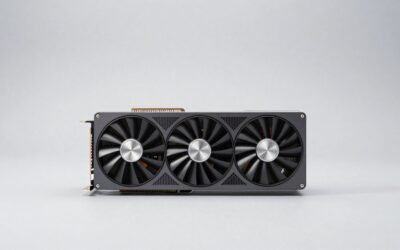
- Top Pick: ZOTAC Gaming GeForce RTX 4070 Ti Super Solid OC DLSS 3 16GB GDDR6X 256-bit 21 Gbps PCIE 4.0 Gaming Graphics Card, IceStorm 2.0 Advanced Cooling, ZT-D40730RC-10P
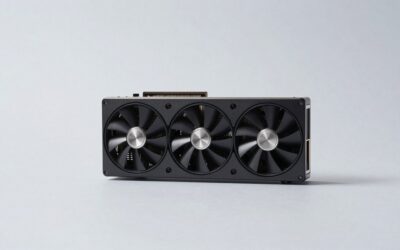
- Best Value: GIGABYTE GeForce RTX 4070 Ti Super Eagle OC 16G Graphics Card, 3X WINDFORCE Fans, 16GB 256-bit GDDR6X, GV-N407TSEAGLE OC-16GD Video Card
- Premium Choice: GIGABYTE GeForce RTX 4070 Ti Super Gaming OC 16G Graphics Card, 3X WINDFORCE Fans, 16GB 256-bit GDDR6X, GV-N407TSGAMING OC-16GD Video Card
Top Rtx 4070 Super 5060 Which Picks for 2026
Here are our current top rtx 4070 super 5060 which picks, compared on real Amazon owner reviews, price, and features. Live prices update below.
- Top Rtx 4070 Super 5060 Which Picks for 2026
- 4070 Super vs 5060 Ti: Verdict at 2026 Street Prices
- Deep Dive: Where Each Card Actually Wins
- Market Forces, Timing, and the AMD Alternative
- Recommended Products
- Final Verdict: 4070 Super vs 5060 Ti in 2026
- Related Guides
- Frequently Asked Questions
- Related Articles


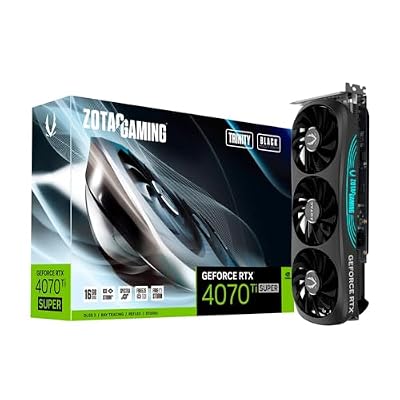
4070 Super vs 5060 Ti reads like a settled question on a spec sheet — 7,168 CUDA cores against 4,608 should end the argument — but 2026’s market scrambled the math. Nvidia discontinued the 4070 Super when Blackwell ramped, pushing it onto the used and new-old-stock market at $450-520, while the RTX 5060 Ti 16GB sells new at $429-470 with a warranty and a newer feature set. The faster card now costs more, carries used-market risk, and lacks the headline software. This comparison rebuilds the verdict from current street prices rather than launch MSRPs, because that is the decision actually sitting in your cart.
As an Amazon Associate we earn from qualifying purchases at no extra cost to you.


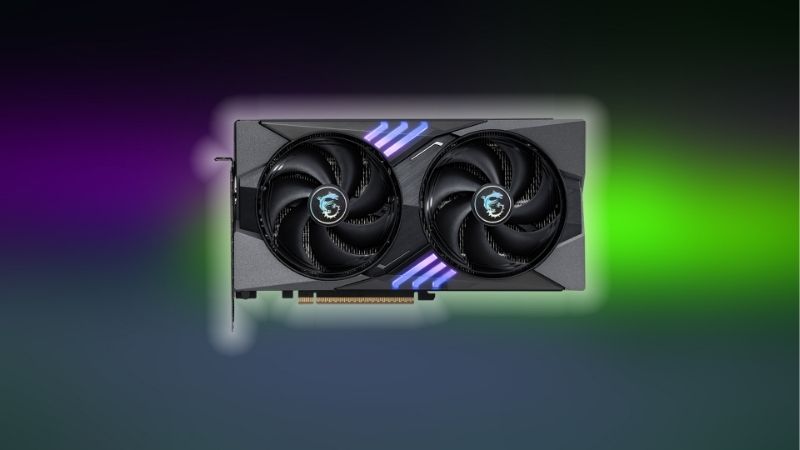
4070 Super vs 5060 Ti: Verdict at 2026 Street Prices
The verdict everyone quotes from launch reviews — Super for speed, 5060 Ti for value — was priced at $599 versus $429. Neither number survives in 2026, so this section re-runs the conclusion against what the cards actually cost today, with the full specification table as evidence.
The Re-Priced Quick Verdict
At current street prices, the RTX 5060 Ti 16GB takes the recommendation for most buyers — not because it got faster, but because the market closed the price gap that justified the Super’s risks. A new, warrantied card with DLSS 4 Multi Frame Generation at $429-470 against a discontinued card at $450-520 used means you now pay extra for less software and no safety net.
The RTX 4070 Super still wins one buyer outright: the raw-performance purist who games heavily in titles without frame generation support — competitive shooters, older engines, simulators — and who finds a documented unit at $430 or below. Its 22-28% native-performance lead is real and permanent. If that paragraph describes you, check the used listings; everyone else, check the new 5060 Ti price on Amazon and keep the warranty.
Full Specification Table, Annotated
Three rows decide this comparison: CUDA cores (Super), VRAM (5060 Ti), and frame generation (5060 Ti). The rest is context.
| Specification | RTX 4070 Super | RTX 5060 Ti 16GB |
|---|---|---|
| Architecture | Ada Lovelace | Blackwell |
| CUDA Cores | 7,168 | 4,608 |
| VRAM | 12GB GDDR6X | 16GB GDDR7 |
| Memory Bus / Bandwidth | 192-bit / 504 GB/s | 128-bit / 448 GB/s |
| Boost Clock | 2,475 MHz | 2,572 MHz |
| Total Graphics Power | 220W | 180W |
| Frame Generation | DLSS 3 (single) | DLSS 4 (multi, up to 4x) |
| Market Status 2026 | Discontinued — used/NOS $450-520 | In production — new $429-470 |
| Warranty | Rarely transfers | Full manufacturer |
Cost per Frame When Risk Enters the Spreadsheet
Run naive cost per native frame and the Super still leads — roughly 25% more performance for roughly 5-15% more money keeps it ahead on paper. The spreadsheet changes when you price the differences honestly: a used card carries a realistic failure-and-hassle premium owner communities estimate at 5-10% of purchase price, plus zero warranty recourse, plus verification time.
Then add the software column: in DLSS 4-supported titles, the 5060 Ti’s multi-frame generation displays 2-3x what the Super’s single-frame DLSS 3 manages, inverting the displayed-frames-per-dollar math entirely in that catalog. The honest summary at 2026 prices: the Super wins a spreadsheet that ignores risk and software; the 5060 Ti wins the one that includes them. Your game library decides which spreadsheet is yours.
A worked example sharpens it: a buyer paying $470 for a used Super versus $449 for a new 5060 Ti pays a $21 premium for the faster card, then self-insures roughly $35-45 of statistical risk and forfeits perhaps $30-50 of warranty value — meaning the true premium for the Super’s native lead runs closer to $90-110 than the sticker gap suggests. Whether 22-28% more raster speed is worth $100 is a legitimate yes for some buyers; the point is to price the actual question.
Deep Dive: Where Each Card Actually Wins
Averages hide the genre-level truth of this matchup, so this section splits the benchmarks by how people actually play, weighs the honest pros and cons of each card at its current market position, and covers the build-fit details that decide installations.
Benchmarks by Genre: Competitive vs Single-Player
In competitive and esports titles — where frame generation stays off for latency reasons — the 4070 Super’s lead is undiluted: 20-28% higher frame rates at 1080p and 1440p, which on a 240Hz monitor is the entire purchase justification. CS2, Valorant, Apex, and Rocket League all render this verdict identically: the Super is simply the faster card where raw rendering is the only currency.
In single-player AAA releases the hierarchy flips title by title. Native rendering still favors the Super by the same margin, but every DLSS 4 game hands the 5060 Ti a multiplier the Super cannot answer — 75 base FPS becoming 180-220 displayed transforms the experience on high-refresh panels. Ray-traced titles narrow the native gap too: Blackwell’s RT cores are more efficient per unit, trimming the Super’s lead to 12-18% before frame generation widens the displayed-frame gap the other way.
VRAM adds the final genre wrinkle: 2025-2026 releases at 1440p Ultra with RT now regularly allocate 11-13GB. The Super’s 12GB sits exactly on that line — occasionally over it — while the 5060 Ti’s 16GB never enters the conversation. Texture-mod enthusiasts and players who keep cards three-plus years should weight this heavily.
Creator workloads run the same split one degree harder: the Super’s extra cores win raw render races in Blender and Resolve, but 16GB versus 12GB decides which projects load at all — 4K timelines with heavy caches and mid-size local AI models sit exactly in the gap. Owners whose card moonlights as a work tool report the capacity question overruling the speed question more often than benchmarks predict.
Pros and Cons of Each Card at Its 2026 Position
The 4070 Super’s case: class-leading native performance, the wider 192-bit bus with 12% more bandwidth, proven Ada maturity, and excellence in exactly the genres where its rival’s headline feature is unusable. Its 2026 liabilities: used-market verification work, no warranty in most listings, a 12GB buffer on the pressure line, single-frame generation as a permanent ceiling, and street prices that no longer undercut the new alternative.
The 5060 Ti 16GB’s case: new-card warranty and return rights, DLSS 4 Multi Frame Generation, 16GB of headroom, 180W efficiency that suits small builds and modest PSUs, and active driver-optimization priority as a current-generation product. Its liabilities: a 128-bit bus that caps native 4K ambition, 4,608 cores that lose every raw-render contest with its rival, and an 8GB variant lurking in listings that buyers must actively avoid — verify 16GB before checkout, always.
Build Fit: Power, Size, and the Prebuilt Question
The practical gap is wider than 40W suggests. The 5060 Ti runs on a quality 600W supply with one 8-pin cable, ships in genuinely compact dual-slot models under 250mm, and slots into office prebuilts and SFF cases that the Super’s 220W, 267-310mm partner cards complicate. For upgraders whose PSU or case is fixed, the decision may already be made.
Thermals and acoustics follow the power budget: both run cool on competent coolers, but the 5060 Ti’s smaller thermal load consistently produces the quieter system at matched fan curves — a daily-life difference owners mention far more often than benchmark deltas. Neither card requires the connector-and-PSU modernization conversation that haunts the tiers above; this bracket remains refreshingly drop-in on both sides.
Electricity rounds out the build math quietly: the 40W gaming-load gap at twenty hours weekly compounds into a modest but real annual sum, and across a three-year ownership it covers a noticeable slice of the cards’ price difference by itself. Buyers in high-rate regions report folding it into the comparison as a matter of routine — one more small weight on the newer card’s side of an already tilting scale.
One installation footnote that recurs in reviews: the Super’s used listings span five generations of partner cooler quality, from excellent triple-fan designs to compact dual-fan models that struggled at 220W even when new — photos matter. The 5060 Ti’s new listings carry no such archaeology; every unit ships with a cooler engineered for its load and a return label if it disappoints. The risk asymmetry extends past silicon into the hardware bolted around it.
Market Forces, Timing, and the AMD Alternative
Two current developments are moving both cards’ prices — in opposite structural ways — and a third option from the red camp deserves a look for buyers whose priorities straddle this matchup awkwardly.
The H200 Approval Hits These Two Cards Differently
The United States has cleared Nvidia to sell the H200 — one of its most powerful AI accelerators — to China, reopening a multi-billion-dollar quarterly market and pulling Nvidia’s wafer, packaging, and premium memory allocation toward data-center margins. The documented consumer pattern follows within a quarter or two: GeForce supply tightens, current-generation GDDR7 cards feel it first, and street prices firm above MSRP.
The asymmetry: the 5060 Ti, sharing GDDR7 supply chains with AI products, faces direct exposure — today’s $429-470 is the band most likely to climb. The discontinued Super faces indirect pressure instead: tightening new supply historically cascades buyers into the used market, firming its $450-520 band from the demand side. Both prices point up; only the mechanism differs. Neither card rewards waiting under this news.
Component Inflation Compresses the Same Conclusion
In parallel, laptop and component prices are trending upward industry-wide, led by memory — DRAM and graphics memory contract prices have climbed as AI build-outs absorb fab output, and VRAM is among the largest line items on any card’s bill of materials. The 5060 Ti’s 16GB of GDDR7 makes it unusually sensitive to exactly the memory type under the most pricing pressure.
Board partners have already nudged SKU pricing upward this cycle, and each new-card increase lifts the umbrella under which the used Super trades. The takeaway for this matchup is identical from both directions: the current price window — where the two cards overlap within $50-90 of each other — is the decision-friendly anomaly, and it is likelier to widen against buyers than in their favor.
The Alternative: RX 9070 for the Raster-First Buyer
Buyers drawn to the Super purely for native performance should price one more card: AMD’s RX 9070 at $549 MSRP, with 16GB of VRAM and rasterization that lands between these two rivals — ahead of the 5060 Ti by a clear margin, within striking distance of the Super — plus a new-card warranty the Super cannot offer.
The trade is the ecosystem: FSR 4 upscaling has closed most of the image-quality gap, but frame-generation catalog depth and the CUDA-dependent creator stack remain green advantages. For a pure gamer whose library skips both, the 9070 quietly threads this comparison’s needle — worth five minutes on its Amazon listing before committing to either headline card.
Recommended Products

ASUS TUF Gaming NVIDIA GeForce RTX 5070 12GB GDDR7 OC Edition Graphics Card, (PCIe 5.0, HDMI/DP 2.1, 3.125-Slot, Military-Grade Components, Protective PCB Coating, Axial-tech Fans), 3 Year Warranty

ZOTAC
ZOTAC Gaming GeForce RTX 4060 Ti 8GB Twin Edge OC White Edition DLSS 3 8GB GDDR6 128-bit 18 Gbps PCIE 4.0 Compact Graphics Card, IceStorm 2.0 Advanced Cooling, Spectra RGB Lighting, ZT-D40610Q-10M

msi
MSI GeForce RTX 4060 Ti Gaming X Slim 16G Graphics Card – NVIDIA RTX 4060 Ti, 16GB GDDR6 Memory, 18Gbps, PCIe 4.0, Twin Frozr 9, RGB, DLSS3
As an Amazon Associate we earn from qualifying purchases. Product prices and availability are accurate as of the date/time indicated.
Final Verdict: 4070 Super vs 5060 Ti in 2026
The 4070 Super vs 5060 Ti verdict inverted with the market: at launch prices the Super’s muscle justified its premium, but in 2026 — discontinued, warranty-less, and priced at or above its newer rival — it remains the right buy only for raw-performance purists in frame-generation-averse genres who find documented units near $430. Everyone else gets more from the RTX 5060 Ti 16GB: a warranty, 16GB of headroom, DLSS 4’s multiplied frames, and 180W simplicity, all at the lower sticker. Raster-first holdouts should also price the RX 9070 before deciding. With the H200 approval tightening supply from one side and component inflation lifting prices from the other, the unusually narrow window where these cards overlap is the moment to act — check today’s Amazon listings on your pick and close the decision while the gap stays this small.
Frequently Asked Questions
What is the best 4070 super 5060 ti in 2026?
The best 4070 super 5060 ti depends on your budget and how you plan to use it. The options compared above are our top-rated picks based on real customer ratings, build quality, and overall value — start with the highest-rated model that fits your budget.
How much should I expect to spend on a 4070 super 5060 ti?
Prices vary by brand and features. Budget options cover the essentials, while mid-range and premium models add durability, performance, and extra features. Compare the prices in the list above to find the best value for your needs.
What should I look for when buying a 4070 super 5060 ti?
Focus on what matters most for your use case — build quality, compatibility, performance, warranty, and verified customer reviews. Every pick above is selected to balance these factors.
Are budget 4070 super 5060 ti options worth it?
Yes. For most people a well-reviewed budget or mid-range 4070 super 5060 ti delivers excellent value. You only need to spend more if you specifically require premium materials or top-tier performance.
How did we choose these 4070 super 5060 ti picks?
We compare current Amazon ratings, review counts, key features, and price to surface the options with the best real-world value. The list is refreshed as ratings and availability change.

Write Your Review
No reviews yet. Be the first to share your experience!