
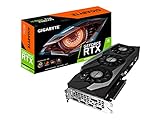
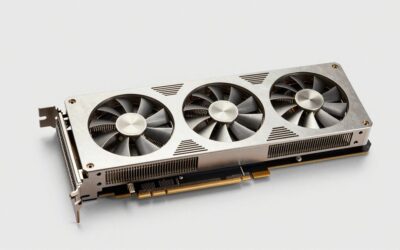
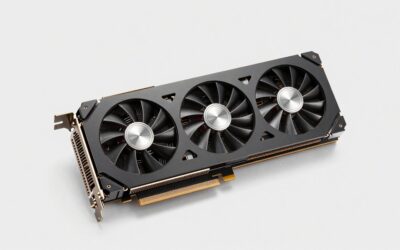
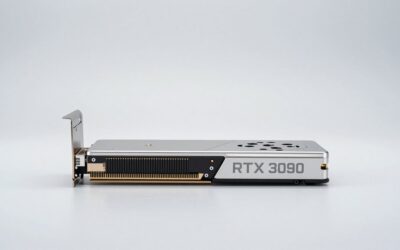
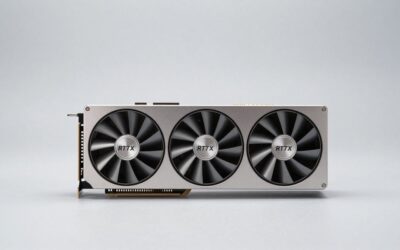
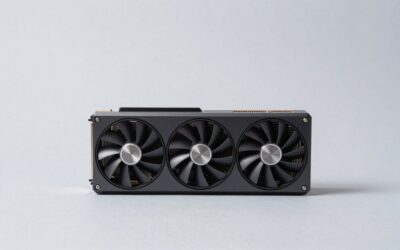
- Top Pick: Geforce RTX 3080 Ti 12GB GDDR6X PCI Express 4.0 Graphics Card Titanium and Black (Renewed)
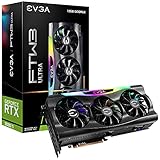
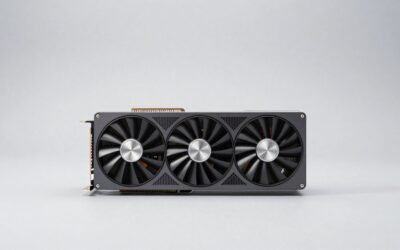
- Best Value: EVGA GeForce RTX 3080 Ti FTW3 Ultra Gaming, 12G-P5-3967-KR, 12GB GDDR6X, iCX3 Technology, ARGB LED, Metal Backplate (Renewed)
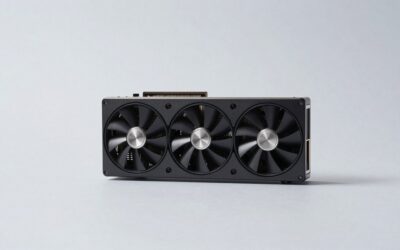
- Premium Choice: MSI Gaming GeForce RTX 3080 Ti Gaming X Trio 12G Computer Gaming Graphics Card 12GB GDRR6X 320-Bit HDMI/DP Nvlink Torx Fan 3 Ampere Architecture OC, NVIDIA GPU Video Cards for Gaming PC (Renewed)
Top 9070 3080 New Amd Used Picks for 2026
Here are our current top 9070 3080 new amd used picks, compared on real Amazon owner reviews, price, and features. Live prices update below.
- Top 9070 3080 New Amd Used Picks for 2026
- RX 9070 XT vs RTX 3080 Ti: Quick Verdict and the Numbers
- Deep Dive: Benchmarks, Ecosystems, and Build Fit
- Market Forces, Timing, and the Green Alternative
- Recommended Products
- Final Verdict: 9070 XT vs 3080 Ti, Settled by Profile
- Related Guides
- Frequently Asked Questions
- Related Articles
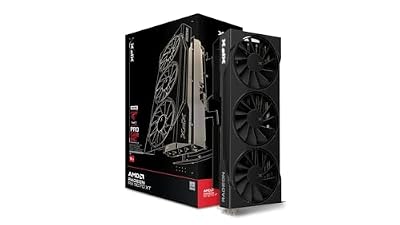


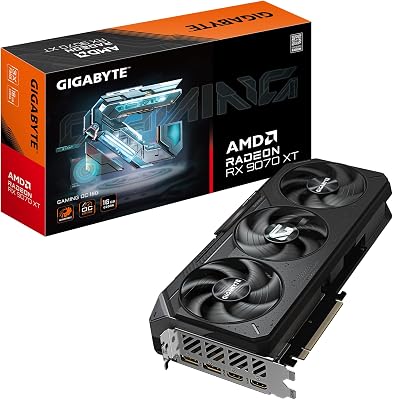
9070 XT vs 3080 Ti is 2026’s most interesting cross-brand dilemma because it crosses generations and ecosystems at once: AMD’s new RDNA 4 upper-midrange card at $599 against Nvidia’s used Ampere flagship at $350-450. One offers 16GB, FSR 4, a warranty, and modern efficiency; the other offers a $150-250 discount, elite memory bandwidth, and the CUDA-and-DLSS ecosystem half the software world is built on. The decision is bigger than a benchmark — it is a brand switch, a risk posture, and a budget philosophy in one purchase. This comparison runs all three with numbers.
As an Amazon Associate we earn from qualifying purchases at no extra cost to you.



RX 9070 XT vs RTX 3080 Ti: Quick Verdict and the Numbers
The conclusion first, then the evidence: this section delivers the two-paragraph verdict, the annotated specification table, and the cost-per-frame arithmetic that everything afterward builds on.
The Quick Verdict for Busy Buyers
The RX 9070 XT wins this comparison for most buyers building forward: roughly 25-35% faster in modern rasterization, 16GB of VRAM against 12GB, machine-learning FSR 4 upscaling, a full manufacturer warranty, and a 304W power budget that behaves more politely than Ampere’s spike-prone 350W. It is the card you buy new, install once, and stop thinking about.
The RTX 3080 Ti wins two specific buyers: the strict-budget gamer for whom the $150-250 gap is the entire decision, and anyone whose workflow touches CUDA — Resolve, Blender, Stable Diffusion, local LLMs — where Nvidia’s ecosystem advantage outweighs raw gaming deltas entirely. If either profile is yours, the used flagship still earns the money. Know your side already? Check current Amazon pricing on it — both bands move weekly.
Full Specification Table, Annotated
Three rows carry this comparison: performance class (9070 XT), price (3080 Ti), and ecosystem (split by workload). The bandwidth row is the spec-sheet trap — read the note beneath.
| Specification | RX 9070 XT | RTX 3080 Ti |
|---|---|---|
| Architecture | RDNA 4 (2025) | Ampere (2021) |
| Cores | 4,096 stream processors | 10,240 CUDA cores |
| VRAM | 16GB GDDR6 | 12GB GDDR6X |
| Memory Bus / Bandwidth | 256-bit / 645 GB/s | 384-bit / 912 GB/s |
| Board Power | 304W | 350W |
| Upscaling / Frame Gen | FSR 4 (ML) + frame generation | DLSS 2 only, no frame gen |
| Price & Status 2026 | $599+ new, warrantied | $350-450 used |
| Recommended PSU | 750W | 750W |
The bandwidth note: core counts and bandwidth do not translate across architectures — the 3080 Ti’s larger numbers describe 2021 silicon, and RDNA 4’s newer cache hierarchy extracts more frames from less raw bandwidth. Benchmarks, not spec rows, settle cross-generation matchups; the next section supplies them.
Cost per Frame: Where the Discount Meets the Deficit
The naive arithmetic: at $400 against $599, the 3080 Ti costs 33% less while delivering roughly 75-80% of the 9070 XT’s modern-title performance — which keeps the used card narrowly ahead on raw frames per dollar, the position it has defended since the 50-series launched.
The corrected arithmetic erodes that lead from three directions: the used-market risk premium (the community-standard 5-10% with no warranty recourse), FSR 4’s frame generation producing displayed-frame multiples the DLSS 2-only Ampere card cannot answer in supported titles, and the 12GB buffer brushing against 2026 releases at 4K Ultra while the 16GB card never enters that conversation. Fully costed, the gap narrows to a profile question — which is precisely why the deep dive below splits the verdict by workload rather than crowning one card.
One more cost-side wrinkle deserves its own line: street-price drift. The 9070 XT’s $599 MSRP holds only when supply does, and popular partner models routinely list $30-80 higher — while the used 3080 Ti’s band moves weekly with listing volume. Run this comparison against today’s actual numbers, not the launch figures both camps still quote; a $660 9070 XT against a $370 3080 Ti is a meaningfully different question than the MSRPs suggest.
Deep Dive: Benchmarks, Ecosystems, and Build Fit
This section measures the matchup where it actually lives: modern-title benchmarks and their exceptions, the ecosystem switch that this cross-brand purchase really is, and the pros, cons, and build realities of each card at its 2026 market position.
Gaming Benchmarks: New Silicon Stretches Its Lead
In current rasterized titles at 1440p, the RX 9070 XT posts a consistent 25-35% lead — roughly 130-160 FPS where the 3080 Ti holds 95-120 — and the margin holds at 4K, where RDNA 4’s efficiency meets Ampere’s brute bandwidth roughly evenly. In older and esports titles both cards overshoot most monitors and the gap stops mattering.
Ray tracing rewrites the old assumptions: RDNA 4’s third-generation RT hardware finally competes, and the 9070 XT now leads the 3080 Ti in most RT-enabled titles by 15-30% — a reversal of every prior AMD-versus-Ampere matchup. Path-traced showcases remain punishing on both, but the newer card degrades more gracefully and pairs its RT with FSR 4 frame generation, multiplying displayed frames in supported releases. The Ampere card answers with DLSS 2 upscaling alone — excellent image quality, no frame multiplication, and a feature ceiling that is permanent.
Frame-time behavior splits by scenario: the 3080 Ti’s 912 GB/s keeps 1% lows admirably tight in bandwidth-heavy open worlds, while the 9070 XT’s larger buffer wins the texture-streaming scenarios where 12GB fills. Owners of ultrawide monitors report both cards smooth; owners of 4K panels report the VRAM difference more often than the bandwidth one.
The Ecosystem Switch: What Changing Colors Actually Costs
For a pure gamer, the switch is nearly frictionless in 2026: Adrenalin’s drivers are mature, FSR 4 has closed most of the upscaling image-quality gap, and AMD’s control panel is arguably the cleaner single application. The historic “AMD driver anxiety” argument has aged out of relevance for gaming workloads — owner satisfaction data shows the camps at parity.
For everyone else, the inventory is real: CUDA remains the default acceleration path for Resolve, Blender, Stable Diffusion, and virtually every local-AI toolchain — workloads where ROCm support improves yearly but still demands tinkering CUDA never asks for. Nvidia-side extras compound it: Broadcast’s AI audio tools, Reflex’s esports adoption, and the deepest frame-generation catalog. The honest rule from cross-brand owners: if the GPU only games, switch freely and bank the performance; if it earns money or runs models, the green ecosystem is worth more than any single benchmark.
The switching costs also include the small frictions nobody budgets: rebuilt fan curves and undervolts in a new control panel, per-game settings re-learned around FSR instead of DLSS, and the occasional title whose vendor-specific feature — a Reflex toggle here, a frame-generation mode there — simply has no equivalent on the other side. None of these is disqualifying; all of them are real hours, and honest cross-brand reviews mention them precisely because the spec sheets never do.
Pros, Cons, and the Build Reality of Each Card
The 9070 XT, fully weighed: class-leading raster value at MSRP, 16GB of headroom, competitive RT at last, warranty and return rights, familiar 8-pin power connectors with none of the 12VHPWR conversation — against street prices that drift above $599 when supply tightens, an ecosystem gap for creator workloads, and partner cards that skew large (290-330mm) despite the moderate power budget.
The 3080 Ti, fully weighed: the strongest sub-$450 rasterization money can buy, elite bandwidth, mature drivers, and full CUDA citizenship — against 350W with documented transient spikes that demand a quality 750W unit and separate PCIe cables, real heat and acoustics, the 12GB pressure line, no frame generation ever, and the standard used-market homework of mining histories and warranty silence. Both cards want the same PSU class; only one arrives with a return label.
Acoustics and room heat split predictably: the 9070 XT’s 304W on current partner coolers games noticeably quieter than aged 350W Ampere designs, and across a long evening session the 46W gap plus cooler efficiency is the difference owners in small rooms actually report. The used card’s counterweight is choice — five years of partner models means the patient buyer can hunt the legendary coolers (Strix, FTW3, Gaming X Trio) at the band’s top, where the gap narrows to nearly nothing.
Market Forces, Timing, and the Green Alternative
Two current developments are lifting both sides of this cross-brand matchup — through different mechanisms — and one Nvidia card deserves pricing before any verdict gets spent.
The H200 Approval Reaches Both Brands
The United States has cleared Nvidia to sell the H200 — one of its most powerful AI accelerators — to China, reopening a multi-billion-dollar quarterly market. The first-order effect is green: Nvidia’s wafer, packaging, and premium memory allocation flows toward data-center margins, tightening GeForce supply within the documented one-to-two-quarter lag and cascading priced-out buyers into the used market — directly firming the $350-450 band every 3080 Ti occupies.
The second-order effect is red: AMD fabricates at the same TSMC and competes for overlapping GDDR supply, so industry capacity redirected toward AI silicon raises input costs and constrains Radeon output too — and history adds demand-side sympathy, with value-seeking buyers flowing toward AMD whenever GeForce prices firm, lifting 9070 XT street prices in turn. Neither column shelters from this news; it simply arrives by different doors.
Component Inflation Presses Both Floors Upward
In parallel, laptop and component prices are trending upward industry-wide, led by memory: DRAM and graphics memory contract prices have climbed as AI build-outs consume fab output, and the 9070 XT’s generous 16GB makes it unusually exposed to exactly that line item — board partners have already nudged SKU pricing on both brands this cycle.
The used card trades under the umbrella every such increase lifts: a 12GB flagship soldered at 2021 memory prices competes against new capacity built at 2026 prices, and demand reprices it upward mechanically. The cross-brand conclusion is symmetrical — today’s prices on both sides are likelier floors than ceilings through the next two quarters, and the unusually wide overlap window this comparison enjoys is the kind that closes against the patient.
The Alternative: RTX 5070 Ti Keeps the Ecosystem and the Speed
Buyers drawn to the 9070 XT’s performance but anchored to Nvidia’s ecosystem have a $749 answer: the RTX 5070 Ti, with 16GB of GDDR7, DLSS 4 Multi Frame Generation, full CUDA citizenship, and rasterization that edges the AMD card by single digits while leading clearly in heavy RT.
The $150 premium over the 9070 XT buys the deepest feature stack in the bracket and dissolves every switching cost this article catalogued; against the used 3080 Ti it is the “new, warrantied, and faster” path at roughly double the sticker. For creator-gamers especially, it frequently outscores both headline cards — five minutes on its Amazon listing is the cheapest diligence in this three-way decision.
Recommended Products

GIGABYTE
GIGABYTE GeForce RTX 4070 Super WINDFORCE OC 12G Graphics Card, 3X WINDFORCE Fans, 12GB 192-bit GDDR6X, GV-N407SWF3OC-12GD Video Card
ZOTAC
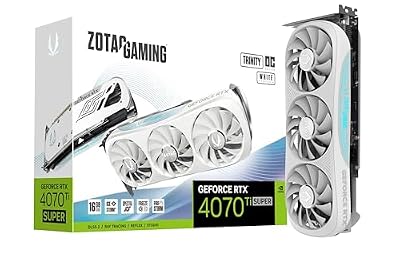
ZOTAC Gaming GeForce RTX 4070 Ti Super Trinity OC White Edition DLSS 3 16GB GDDR6X 256-bit 21 Gbps PCIE 4.0 Gaming Graphics Card, IceStorm 2.0 Advanced Cooling, Spectra RGB Lighting, ZT-D40730Q-10P

PNY
PNY GeForce RTX™ 4070 12GB XLR8 Gaming Verto Epic-X RGB™ Triple Fan Graphics Card DLSS 3
As an Amazon Associate we earn from qualifying purchases. Product prices and availability are accurate as of the date/time indicated.
Final Verdict: 9070 XT vs 3080 Ti, Settled by Profile
The 9070 XT vs 3080 Ti verdict splits cleanly along the lines this comparison drew. Buy the RX 9070 XT if you are building forward: its 25-35% performance lead, 16GB buffer, competitive ray tracing, FSR 4 frame generation, and warranty make it the better card for pure gaming through 2028, full stop. Buy the used RTX 3080 Ti if the $150-250 discount is decisive for your budget, or if CUDA workloads anchor you to the green ecosystem where the used flagship remains the cheapest credible citizen. Creator-gamers who can stretch should price the RTX 5070 Ti and likely end the debate there. With the H200 approval tightening supply on both brands and component inflation lifting every floor, the wide overlap window that makes this matchup interesting is the part most likely to vanish — check today’s Amazon listings on your side and settle it while the window holds.
Frequently Asked Questions
What is the best 9070 xt 3080 ti in 2026?
The best 9070 xt 3080 ti depends on your budget and how you plan to use it. The options compared above are our top-rated picks based on real customer ratings, build quality, and overall value — start with the highest-rated model that fits your budget.
How much should I expect to spend on a 9070 xt 3080 ti?
Prices vary by brand and features. Budget options cover the essentials, while mid-range and premium models add durability, performance, and extra features. Compare the prices in the list above to find the best value for your needs.
What should I look for when buying a 9070 xt 3080 ti?
Focus on what matters most for your use case — build quality, compatibility, performance, warranty, and verified customer reviews. Every pick above is selected to balance these factors.
Are budget 9070 xt 3080 ti options worth it?
Yes. For most people a well-reviewed budget or mid-range 9070 xt 3080 ti delivers excellent value. You only need to spend more if you specifically require premium materials or top-tier performance.
How did we choose these 9070 xt 3080 ti picks?
We compare current Amazon ratings, review counts, key features, and price to surface the options with the best real-world value. The list is refreshed as ratings and availability change.

Write Your Review
No reviews yet. Be the first to share your experience!