
- Top Pick: Geforce RTX 3080 Ti 12GB GDDR6X PCI Express 4.0 Graphics Card Titanium and Black (Renewed)
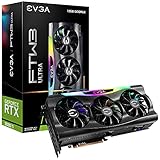
- Best Value: EVGA GeForce RTX 3080 Ti FTW3 Ultra Gaming, 12G-P5-3967-KR, 12GB GDDR6X, iCX3 Technology, ARGB LED, Metal Backplate (Renewed)
- Premium Choice: MSI Gaming GeForce RTX 3080 Ti Gaming X Trio 12G Computer Gaming Graphics Card 12GB GDRR6X 320-Bit HDMI/DP Nvlink Torx Fan 3 Ampere Architecture OC, NVIDIA GPU Video Cards for Gaming PC (Renewed)
Top Rtx 3080 3080 Still Worth Picks for 2026
Here are our current top rtx 3080 3080 still worth picks, compared on real Amazon owner reviews, price, and features. Live prices update below.
- Top Rtx 3080 3080 Still Worth Picks for 2026
- RTX 3080 vs 3080 Ti: The Quick Verdict
- Deep Dive Face-Off: Performance, Memory, and Running Costs
- Pros, Cons, and the Smart Third Option
- Market Forces in 2026: Why Used Ampere Will Not Get Cheaper
- Recommended Products
- Final Verdict on the 3080 vs 3080 Ti Question
- Related Guides
- Frequently Asked Questions
- Related Articles


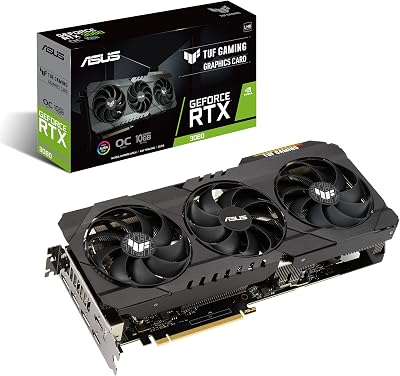


3080 vs 3080 Ti was a $500 question when both cards launched — and in 2026 it has become a $50 question that thousands of used-market shoppers still ask every week. Ampere’s two upper-tier siblings now trade within arm’s reach of each other on the second-hand market, and the original price gap that made the Ti controversial has compressed into a premium small enough to genuinely reconsider. This comparison measures what actually separates the two cards today, prices that separation against current used listings, weighs years of owner feedback on both, and answers the larger question hovering over the whole matchup: whether either remains the right buy at all in a market full of newer options.
As an Amazon Associate we earn from qualifying purchases at no extra cost to you. Product prices and availability are accurate as of the date shown and are subject to change.



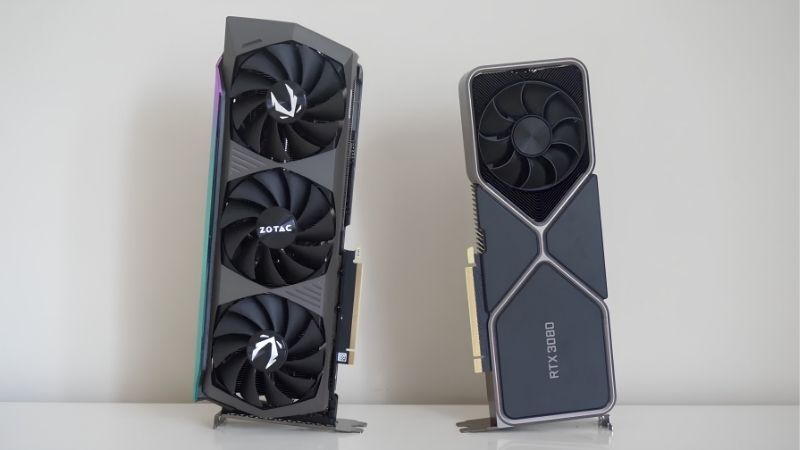
RTX 3080 vs 3080 Ti: The Quick Verdict
The fast answer: the RTX 3080 Ti is roughly 8-12% faster and carries 12GB against the 3080’s 10GB, and on today’s used market that difference costs about $50-80 — making the Ti the better buy whenever the premium stays inside that band. Both remain legitimate 1440p raster cards at $250-350 used, and both carry the same generational ceilings: no frame generation, aging efficiency, and VRAM buffers that modern titles increasingly test. The honest larger verdict: at the upper end of their price range, new cards like the RTX 5060 Ti 16GB beat both outright. If you are committed to the Ampere route, compare current used listings for both cards against the new alternatives on Amazon first — the day’s actual gaps decide this matchup more than the silicon does.
Specs Comparison Table at a Glance
Two cards from the same 2020-2021 family, separated by one binning tier and a memory configuration that matters more now than it did at launch.
| Specification | RTX 3080 (10GB) | RTX 3080 Ti |
|---|---|---|
| Architecture | Ampere (2020) | Ampere (2021) |
| CUDA cores | 8,704 | 10,240 |
| Boost clock | 1.71 GHz | 1.67 GHz |
| VRAM | 10GB GDDR6X | 12GB GDDR6X |
| Memory bandwidth | 760 GB/s | 912 GB/s |
| TDP | 320W | 350W |
| Launch MSRP | $699 | $1,199 |
| Typical used price (2026) | $250-300 | $310-380 |
The launch-price story — a 71% premium for roughly 10% more performance — made the Ti one of Ampere’s most criticized values. The used-market story inverts it: the premium has collapsed to 20-25% while the performance and memory gaps remain intact.
Who Should Pick the RTX 3080
The strict budget buyer wins here: at $250-280, the 3080 delivers the tier’s performance floor for the least money, and in titles that fit inside 10GB the experiential difference from the Ti is nearly invisible.
It also suits buyers planning a short ownership window — a bridge card for a year or two before a proper upgrade — where paying any premium for longevity features makes no sense, since the card will be resold before its limits arrive.
Who Should Pick the RTX 3080 Ti
Anyone holding the card past 2027 should pay the small premium: the extra 2GB and 20% more bandwidth are precisely the specifications aging best, as texture budgets in new releases keep climbing past the 10GB line.
At 4K specifically, the Ti’s case strengthens further — the resolution where both bandwidth and buffer earn their keep, and where the 3080’s 10GB shows its limits first.
Deep Dive Face-Off: Performance, Memory, and Running Costs
Criterion-by-criterion measurement, using aggregated results from GPU-limited systems, shows exactly where the 8-12% lives — and where it grows larger than the averages suggest.
Raster Benchmarks at 1440p and 4K
At 1440p ultra, the gap is textbook consistent: Cyberpunk 2077 runs at 68 FPS on the 3080 versus 74 FPS on the Ti, Horizon Forbidden West at 86 versus 93 FPS, Black Ops 6 at 121 versus 131 FPS — an 8-9% spread that no player identifies blind. Both cards deliver a genuinely good high-refresh 1440p experience in raster workloads.
Esports erases the gap entirely: both cards push 220-300 FPS at 1080p and 1440p competitive settings in Valorant and Counter-Strike 2, saturating 240Hz monitors with the CPU as the limiter. Competitive-focused buyers choosing between these two are effectively choosing on price alone, which hands the 3080 the win for that specific profile.
At 4K the spread widens to 10-14% as bandwidth earns its keep, and the memory difference begins adding its own component: in titles exceeding 10GB at 4K ultra textures, the 3080 develops the swapping stutter that averages conceal while the Ti’s 12GB holds smooth — 1% lows diverging 20%+ in the worst cases. The VRAM line, not the core count, is where this comparison stops being academic.
The Shared Ceilings: What Neither Card Can Do
Honesty requires the generational column: both cards are permanently excluded from frame generation of every kind, both make ray tracing a costly setting rather than a default, and both run Ampere-era efficiency — 320-350W for performance that newer 180W cards approach. DLSS upscaling, including the improved transformer model, remains their shared lifeline and extends both cards meaningfully in supported titles.
That lifeline deserves quantification because it shapes the buying case: the transformer upscaler delivers 30-40% effective performance gains at quality presets with image fidelity launch-era DLSS never approached, which means both cards run new releases better today than their raw aging would predict. Migration reviews from owners of both models consistently rank “DLSS kept it alive” among their top observations — the feature is doing real work in every modern session.
The GDDR6X thermal story is also shared and worth a buyer’s attention: both cards run their memory hot by design, and years of service on degraded thermal pads produce the 100°C+ junction temperatures that dominate used-market complaints. A $15 pad replacement restores both; budgeting the hour matters equally for either purchase. The repaste-and-pads job also typically drops junction temperatures 15-20°C, restores boost clocks the degradation had quietly stolen, and — per the maintenance reviews — converts a borderline used buy into a card with years of remaining service.
Power, Heat, and the Cost of Old Silicon
The practical ledger treats them almost identically: 320W versus 350W TDPs both demand quality 750-850W power supplies with transient headroom, both heat a room in summer, and both run physically large coolers built for their era. Neither imposes the 12V-2×6 adapter ecosystem — traditional 8-pin connectors fit any decent older PSU, a genuine convenience the used reviews mention.
Running costs deserve one number: against a modern 180W card delivering comparable frames, either Ampere card burns roughly 140-170 extra watt-hours per gaming hour — real electricity money across a multi-year window, and part of why the new-card comparison below stays competitive even at higher sticker prices.
Pros, Cons, and the Smart Third Option
Years of owner reviews across both cards’ lives produce confident scorecards — and the new-market alternative deserves the final word before any used purchase.
RTX 3080 Strengths and Weaknesses
Pros: the cheapest entry to this performance tier, proven 1440p service with launch-era ratings at 4.6-4.7 stars, deeply mature drivers, and abundant used supply that keeps its price honest. Long-term owners describe it as the shortage era’s most worth-it fight.
Cons: the 10GB buffer is the recurring modern complaint — adequate at 1440p today, visibly limiting at 4K and shrinking yearly — plus the shared Ampere ceilings above and the standard used-market provenance risks: mining histories, tired pads, expired warranties.
RTX 3080 Ti Strengths and Weaknesses
Pros: near-3090 performance with the same 12GB that aged gracefully, the tier’s best 4K showing, and a used price that finally matches its value after launching as Ampere’s worst. Owners who bought post-crash rate it dramatically better than launch reviews did.
Cons: it shares every generational ceiling, runs the family’s hottest memory configuration — the GDDR6X complaints concentrate here — and draws the most power for the smallest performance return per watt in this comparison. Provenance risk runs slightly higher too: more Ti units served in mining fleets proportionally, a pattern visible in the lower-star listings.
The Alternative: RTX 5060 Ti 16GB Reframes Everything
The comparison both cards must survive: the RTX 5060 Ti 16GB at $429 new delivers raster performance within 10-15% of the 3080, more VRAM than either Ampere card, DLSS 4 Multi Frame Generation that pushes its effective frame rates past both, 180W efficiency, and a full warranty.
Against a $350+ used 3080 Ti, the new card simply wins; against a $250 used 3080, the Ampere route retains a real price argument for raster-focused builds. Checking the 5060 Ti’s live price on Amazon before committing to either used card is the ten-minute step that prevents this generation’s most common buyer’s remorse.
Market Forces in 2026: Why Used Ampere Will Not Get Cheaper
Both cards’ prices are governed by forces larger than their age, and understanding them converts the timing question from guesswork into forecast.
H200 Sales to China Prop Up the Whole Ladder
The United States has approved Nvidia selling the H200 — one of its most powerful AI accelerators — to China, reopening enormous data center demand. The mechanism cascades down every rung: data center production competes with consumer GPUs for fabrication and memory supply, new-card prices firm under the squeeze, and used prices — which are always discounts against new alternatives — hold firm beneath them.
Every previous AI demand surge tightened consumer availability within one to two quarters, and the pattern is already visible in this generation’s above-MSRP drift. The used Ampere tier rides that tide whether buyers like it or not.
Memory Inflation Reaches the Second-Hand Market
Simultaneously, laptop and component prices are trending upward with memory leading the climb, as AI infrastructure absorbs DRAM production. Memory contracts negotiated quarters ahead bake the increases into new-card pricing through 2026 — and used prices track new prices with a short lag, which is why the historical endgame of old flagships sliding toward clearance has stalled across the board.
For this matchup specifically: buyers waiting for the 3080 to hit $180 or the Ti to hit $250 are waiting on market mechanics that no longer operate. The bands quoted in this comparison are more likely to drift up than down.
The Timing Conclusion for Used Buyers
The read is direct: a clean 3080 under $270 or a verified Ti under $340 found today is statistically the best version of this deal that will exist — act inside the windows or redirect to new cards, but do not wait for windows the data says are closing.
Sellers hold the mirror image: Ampere resale values remain unusually firm for the cards’ age, making sell-and-upgrade arithmetic the most favorable it has been in years.
Recommended Products

msi
MSI Gaming GeForce RTX 3080 Gaming Z Trio 10G LHR 10GB GDRR6X 320-Bit HDMI/DP Nvlink Torx Fan 4 RGB Ampere Architecture Computer Gaming Graphics Card, NVIDIA GPU Video Cards for Gaming PC (Renewed)
View on Amazon
1 day ago

EVGA
EVGA GeForce RTX 3080 FTW3 Ultra Gaming, 10G-P5-3897-KL, 10GB GDDR6X, iCX3 Technology, ARGB LED, Metal Backplate, LHR
View on Amazon
1 day ago
GIGABYTE
GIGABYTE GeForce RTX 3080 Gaming OC 10G (REV2.0) Graphics Card, 3X WINDFORCE Fans, LHR, 10GB 320-bit GDDR6X, GV-N3080GAMING OC-10GD REV2.0 Video Card (Renewed)
View on Amazon
6 hours ago
As an Amazon Associate we earn from qualifying purchases. Product prices and availability are accurate as of the date/time indicated.
See more:
- ASUS TUF Gaming GeForce RTX 5090 3080 vs 5080
- Nvidia RTX 4070 Super graphics card
- Sapphire graphics card
- Is HDR good for gaming
- RTX 4080 vs 5070
Final Verdict on the 3080 vs 3080 Ti Question
The 3080 vs 3080 Ti comparison ends in a verdict the launch era would not have predicted: the Ti, once Ampere’s most criticized value, is now the better buy whenever its used premium stays under roughly $80 — the extra 2GB and bandwidth are precisely what age best, and the performance gap, while small, is free at that spread. The 3080 remains the budget floor of the tier and a fine short-horizon card at $250-280. Both, however, must survive the comparison against the new RTX 5060 Ti 16GB, which beats their upper price range outright with modern features and a warranty. With AI demand and memory inflation holding every price floor firm, neither patience nor nostalgia pays in this market. Compare the current used listings for both cards against the new alternative on Amazon today, and let the live numbers close a debate the spec sheets started five years ago.
Frequently Asked Questions
What is the best 3080 3080 ti in 2026?
The best 3080 3080 ti depends on your budget and how you plan to use it. The options compared above are our top-rated picks based on real customer ratings, build quality, and overall value — start with the highest-rated model that fits your budget.
How much should I expect to spend on a 3080 3080 ti?
Prices vary by brand and features. Budget options cover the essentials, while mid-range and premium models add durability, performance, and extra features. Compare the prices in the list above to find the best value for your needs.
What should I look for when buying a 3080 3080 ti?
Focus on what matters most for your use case — build quality, compatibility, performance, warranty, and verified customer reviews. Every pick above is selected to balance these factors.
Are budget 3080 3080 ti options worth it?
Yes. For most people a well-reviewed budget or mid-range 3080 3080 ti delivers excellent value. You only need to spend more if you specifically require premium materials or top-tier performance.
How did we choose these 3080 3080 ti picks?
We compare current Amazon ratings, review counts, key features, and price to surface the options with the best real-world value. The list is refreshed as ratings and availability change.










Write Your Review
No reviews yet. Be the first to share your experience!