
- Top Pick: ASUS Dual NVIDIA GeForce RTX 5060 Ti 16GB GDDR7 OC Edition Graphics Card, (PCIe 5.0, DLSS 4, HDMI 2.1b, DisplayPort 2.1b, 2.5-Slot, Axial-tech Fan, 0dB Technology), 3 Year Warranty
- Best Value: GIGABYTE GeForce RTX 5070 Gaming OC 12G Graphics Card, 12GB 192-bit GDDR7, PCIe 5.0, WINDFORCE Cooling System, GV-N5070GAMING OC-12GD Video Card
- Premium Choice: ASUS Dual NVIDIA GeForce RTX 5060 8GB GDDR7 OC Edition (PCIe 5.0, 8GB GDDR7, DLSS 4, HDMI 2.1b, DisplayPort 2.1b, 2.5-Slot Design, Axial-tech Fan Design, 0dB Technology), 3 Year Warranty
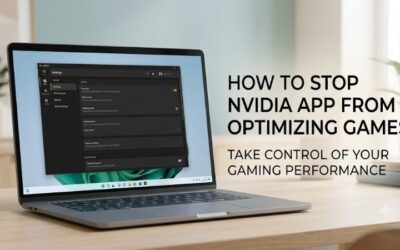
Nvidia App Optimize Games is the modern PC gamer’s ultimate software utility for maximizing hardware efficiency without needing advanced technical knowledge. Finding the perfect equilibrium between crisp visual fidelity and high frame rates has traditionally required hours of manual testing. However, with NVIDIA’s newly consolidated utility suite, players can achieve highly tailored settings profiles with a single click. This deep-dive review analyzes the mechanics, stability, real-world gaming impact, and broader market conditions that make software optimization an absolute necessity.
The Evolution of NVIDIA Utility Software and Game Optimization
To understand how software optimization became a cornerstone of PC gaming, one must look at how graphics drivers have evolved over the past decade. Previously, users had to jump between the legacy Control Panel and GeForce Experience, creating a disjointed and often bloated user experience. The release of the unified NVIDIA App solves this structural problem, delivering a streamlined platform designed for peak operating efficiency.
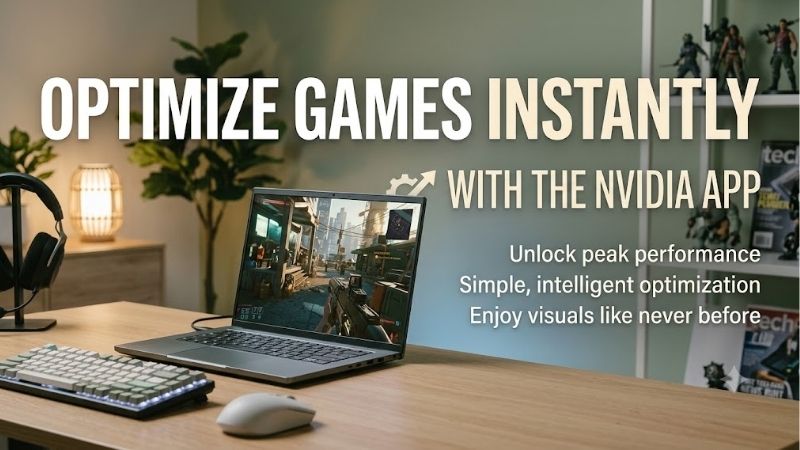
How the Unified NVIDIA App Replaces Legacy GeForce Experience
The new software consolidates system tuning, driver updates, and in-game overlays into a single, highly responsive application. The interface launches up to 50% faster than its predecessor and eliminates the mandatory login requirement that frustrated users for years. By unifying these disparate tools, gamers can monitor performance metrics, update drivers, and optimize their games from one clean window.
This lightweight footprint also reduces CPU overhead, allowing background processes to operate smoothly without stealing cycles from demanding game engines. Legacy control panels felt like outdated remnants of early Windows operating systems, but this modern interface feels right at home alongside contemporary PC gaming environments.
The Mechanics of One-Click Graphical Settings Tuning
At the heart of this tool is a highly sophisticated cloud-based recommendation engine. NVIDIA continuously tests hundreds of individual hardware configurations in their automated laboratories, cataloging how different GPUs, CPUs, and RAM speeds handle specific graphics engines. When you click the optimize button, the software matches your physical hardware specs with these laboratory performance tables.
The application adjusts internal configuration files to fine-tune render resolutions, shadow maps, texture filtering, and volumetric lighting. Rather than relying on generic low, medium, or high presets, the software creates a customized hybrid profile tailored directly to your system’s capabilities. This ensures you do not waste precious processing power on visually imperceptible details.
Check the latest price on Amazon:
Pros and Cons of Using Nvidia App Optimize Games
Like any automation tool, this feature presents clear benefits alongside a few distinct limitations that gamers should keep in mind. On the positive side, it completely democratizes performance tuning, allowing casual gamers to enjoy smooth framerates without learning the difference between ambient occlusion methods. It also receives continuous updates, meaning new titles are supported almost immediately upon release.
On the negative side, the automated profiles can sometimes lean too heavily toward safety, setting conservative targets that do not fully utilize highly overclocked custom systems. Additionally, some users have reported that the optimization engine occasionally resets custom keybindings or user-defined configuration tweaks in niche titles. For a quick look at how these advantages and disadvantages balance out, consider the following breakdown:
- Pros:
- Saves hours of manual graphics testing and benchmark loops.
- Significantly lighter on system memory compared to GeForce Experience.
- No account registration is required to access primary features.
- Continuous cloud updates ensure day-one support for major releases.
- Cons:
- May occasionally override custom manual configuration files.
- Automatic profiles sometimes underutilize high-end water-cooled systems.
- Telemetry settings must be manually disabled if you prefer absolute privacy.
Global Supply Chains and the True Value of Software Optimization in 2026
The global semiconductor landscape plays an enormous role in how gamers interact with their hardware, as physical component prices dictate whether we upgrade or optimize. In 2026, severe macroeconomic pressures and enterprise demand are reshaping consumer GPU availability, making driver-level adjustments incredibly important. Understanding these shifts helps gamers make smarter, more cost-effective purchasing decisions.
How H200 AI Chip Shipments to China Impact Consumer GPU Production
Recent regulatory updates allowing NVIDIA to ship customized versions of its powerful H200 AI chips to China have radically altered manufacturing priorities. Because high-performance enterprise AI silicon yields incredibly high profit margins, foundry operators naturally prioritize commercial orders over standard consumer products. This shift in manufacturing bandwidth can result in localized consumer GPU supply crunches.
With consumer graphics cards facing potential supply constraints, extracting maximum value from your existing hardware becomes paramount. Optimizing the performance of your current system through intelligent software utilities allows you to bypass supply-chain shortages entirely, keeping your gaming experience premium without forcing an immediate physical upgrade.
Navigating Rising Component Prices and Hardware Inflation
The desktop component market continues to face a steady upward trend in manufacturing costs, driven by expensive GDDR7 memory modules and complex power delivery systems. These rising bills of materials are driving up retail prices for graphics cards and gaming laptops alike. Consequently, buying brand-new enthusiast-class hardware has become a major financial investment for most households.
Since mid-range graphics options are creeping into price brackets once reserved for top-tier enthusiast models, maintaining current hardware is highly logical. Software tuning lets you squeeze extra performance out of your existing system, delaying a costly upgrade while still enjoying the latest game releases. When you do decide to buy, finding a GPU that pairs high-quality hardware with advanced companion software is essential.
Why Driver-Level Optimization is the Smartest Cost-Saving Move
Optimizing your software configuration is the closest thing to receiving a free physical hardware upgrade. Instead of spending hundreds of dollars on a slightly newer graphics card, using driver-level optimization tools can unlock performance gains ranging from 8% to 15%. This is achieved simply by eliminating rendering bottlenecks and adjusting settings that your hardware handles inefficiently.
By aligning your in-game configurations with verified cloud data, your GPU runs cooler, draws less power, and maintains more stable frame pacing. For gamers aiming to keep their builds viable for several years, relying on continuous software updates and intelligent system tuning is the most practical cost-saving strategy available.
Real-World Performance Analysis and Amazon Buyer Feedback
Examining real-world feedback from everyday consumers provides critical insights that go far beyond synthetic benchmark charts. Reviewing user experiences across thousands of hardware combinations reveals how NVIDIA’s software ecosystem performs under daily gaming pressure. These practical insights are invaluable when deciding which GPU upgrade path fits your personal setup.
What Highly-Rated Amazon Reviews Say About NVIDIA’s Stability
An analysis of highly-rated customer reviews on Amazon reveals overwhelming praise for NVIDIA’s software ecosystem, particularly its “set-and-forget” reliability. Desktop gamers frequently note that Game Ready Drivers provide an incredibly consistent environment with very few unexpected crashes during launch weeks. Content creators and streamer hosts also praise the NVENC encoder and driver stability for preventing system dropouts during live broadcasts.
Buyers appreciate that the unified app does not require a login, highlighting this change as a major step forward for user convenience. The clean, responsive UI receives high marks for making advanced features like G-Sync configuration and local performance tuning accessible to everyday users.
Unpacking Common Criticisms and 2-Star Amazon Complaints
While positive reviews are plentiful, examining critical 2-star and 3-star reviews reveals persistent pain points that NVIDIA must address. Dissatisfied buyers occasionally report that the optimization utility fails to detect game files installed on secondary storage drives. Others note that automated profiles can struggle to recognize niche indie titles, leaving players to configure those games manually.
Some users also complain about installation loops, where outdated driver remnants cause conflicts with the new unified interface. Solving these errors often requires using third-party cleaning tools like Display Driver Uninstaller (DDU) to wipe the system clean before initiating a fresh installation.
How to Choose the Right NVIDIA GPU for Your Setup
If you are currently browsing Amazon for a new GPU, your choice should be heavily guided by how you plan to use this software ecosystem. Buyers looking for seamless streaming, cutting-edge ray reconstruction, and advanced upscaling will find NVIDIA’s DLSS 3.5 architecture extremely compelling. Purchasing a current-generation desktop GPU ensures you remain on the primary development path for all future AI-driven software features.
For budget-conscious builds, pairing a mid-range card with automated settings is a great way to maximize your frames per dollar. Check the latest price on Amazon to see which graphics card options fit your budget and performance expectations.
Conclusion
Maximizing your PC gaming setup relies heavily on leveraging high-quality software, and using the Nvidia App Optimize Games utility is the easiest way to keep your system performing at its absolute peak. Whether you are running a high-end RTX desktop rig or a modest gaming laptop, this streamlined tool removes the guesswork from graphic settings customization. With global hardware prices rising due to enterprise demand and inflation, extracting every drop of performance from software-level optimization is the smartest financial decision you can make. Keep your system updated, select hardware that matches your workload, and enjoy a smoother, more responsive gaming experience today.
Frequently Asked Questions
What does the optimise button actually change?
It applies a settings preset chosen from Nvidia cloud database, matched to your exact GPU, CPU, resolution and monitor refresh rate. It edits the game own configuration files rather than doing anything at the driver level, so the result is the same as changing those sliders yourself, just faster.
Is it a substitute for a GPU upgrade?
No. Optimisation redistributes quality against frame rate; it does not create performance that the hardware lacks. Expect anywhere from no change to perhaps 20 or 30 percent if it turns off a genuinely expensive effect you did not need. A card that is two tiers slower than you need stays two tiers slower.
Can I customise the target?
Yes. The performance and quality slider on each game biases the preset toward higher frame rates or better visuals, and you can preview which individual settings will change before applying. Anything you then adjust manually inside the game persists until you press optimise again, which overwrites your edits.
Why does it choose settings I disagree with?
The database targets a smooth average frame rate for the general case, so it often keeps expensive effects like volumetric fog or high shadow resolution that many players prefer to cut first. Treat the preset as a fast starting point, then manually lower the two or three settings that cost the most in your specific games.
Does it work for every game?
Only for titles in Nvidia database, which covers most major releases but misses indies, older games, emulators and many storefront exclusives. Games installed outside scanned folders also need adding manually before they appear. If a game is not listed, tuning by hand is the only route.
As an Amazon Associate we earn from qualifying purchases at no extra cost to you.



Write Your Review
No reviews yet. Be the first to share your experience!