
- Top Pick: MSI Thin 15.6 inch FHD 144Hz Gaming Laptop Intel Core i5-13420H NVIDIA GeForce RTX 4060-16GB DDR4 512GB SSD Gray (2025)
- Best Value: ASUS ROG Strix G16 Gaming Laptop, 16” 16:10 FHD+ 165Hz/3ms, NVIDIA GeForce RTX 5050 Laptop GPU, Intel Core i5 Processor 14450HX, 16GB DDR5-5600, 512GB PCIe Gen 4 SSD, Wi-Fi 7, Win11 Home, G615JHR-DS53
- Premium Choice: acer Nitro V 15.6” FHD IPS 165Hz Gaming Laptop, Intel Core i5-13420H, NVIDIA GeForce RTX 5050 with 8GB GDDR7 VRAM, Win11H, w/Mouse pad (16GB RAM, 512GB PCIe SSD)


The 5050 laptop vs 4060 laptop decision is one every gaming-laptop shopper faces in 2026, and it hides a detail most spec sheets ignore: the same GPU behaves very differently depending on the laptop it lives in. NVIDIA’s newer RTX 5050 Laptop brings DLSS 4 and efficiency, while the established RTX 4060 Laptop offers more raw muscle and a proven track record. Pick wrong and you either overpay or end up with a machine that runs hot and loud. This comparison breaks down the raw specifications, real gaming performance, DLSS features, power limits and cooling, battery life, and honest price-to-value math. We also cover a smart alternative and what rising laptop prices mean for buying now. Read the quick verdict first if time is short.
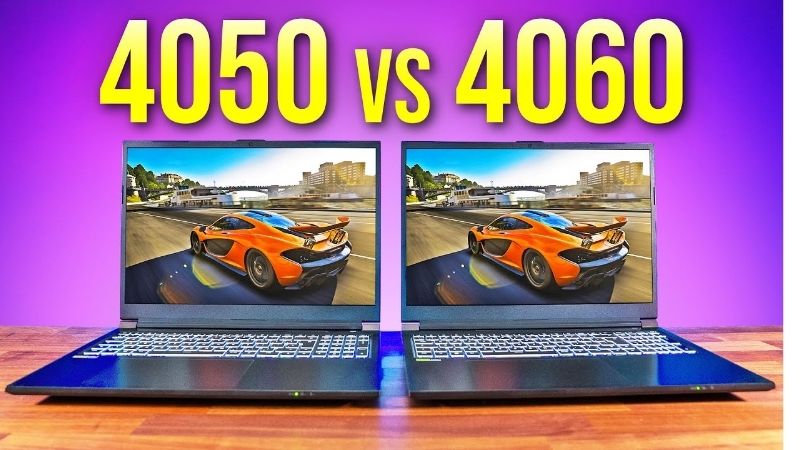
RTX 5050 Laptop vs 4060 Laptop: The Quick Verdict
These two mobile GPUs target the same buyer from different angles. The RTX 4060 Laptop generally offers more raw performance, while the RTX 5050 Laptop counters with newer DLSS 4 features and efficiency. Crucially, the laptop’s power limit and cooling shape the result as much as the chip itself. Here is the fast answer, then who each option suits.
As an Amazon Associate we earn from qualifying purchases at no extra cost to you.


The One-Line Answer for Busy Buyers
The RTX 4060 Laptop usually wins on raw performance, while the RTX 5050 Laptop wins on newer DLSS 4 features and efficiency, often in cheaper laptops.
So if you want the most frames in demanding games, a well-cooled 4060 laptop is the stronger performer. If you want the latest AI upscaling and multi-frame generation in a lighter, more affordable machine, the 5050 laptop makes sense. The gap narrows sharply in games that support DLSS 4.
Who Should Pick the RTX 4060 Laptop
Choose a 4060 laptop if you want more raw horsepower for 1080p high-refresh gaming and light 1440p, and you are buying a machine with a generous power limit and strong cooling. It has years of driver maturity and broad game support behind it.
It is also the better pick if you play titles that do not yet support the newest DLSS features, where raw performance matters most. For buyers who prioritize framerate over the latest software tricks, the 4060 remains a dependable mainstream choice.
Who Should Pick the RTX 5050 Laptop
Choose a 5050 laptop if you want the newest DLSS 4 multi-frame generation, better efficiency, and typically a lower price or a thinner, lighter chassis. Its modern feature set can lift smoothness impressively in supported games.
It is the smart pick for students and casual gamers who value portability and battery life alongside solid 1080p gaming. If your favorite games support DLSS 4, the 5050 can feel far quicker than its raw specs suggest.
Specifications and Performance Face-Off
Specs explain why the 4060 leads on raw output while the 5050 stays competitive through newer software. But in laptops, the numbers on the box are only half the story, because the power budget the manufacturer assigns changes everything. The figures set the stage for the real gaming results.
Core Specs Side by Side
Here are the key specifications that shape performance:
| Spec | RTX 5050 Laptop | RTX 4060 Laptop |
|---|---|---|
| Architecture | Blackwell | Ada Lovelace |
| Memory | 8 GB GDDR7 | 8 GB GDDR6 |
| Upscaling | DLSS 4 + multi-frame gen | DLSS 3 + frame gen |
| Power limit (varies) | ~35-100 W | ~35-140 W |
| Raw performance | Entry | Mainstream (higher) |
| Best resolution | 1080p | 1080p / 1440p |
The 4060 typically allows a higher power ceiling and more raw performance, while the 5050 answers with GDDR7 and the newest DLSS. Note how wide the power ranges are, which is why two laptops with the same GPU can perform very differently.
Gaming Performance and Why TGP Matters
In raw gaming, a fully powered 4060 laptop generally outpaces a 5050 laptop, delivering higher framerates in demanding titles at 1080p and holding up better at 1440p. That extra headroom is real when the cooling can sustain it.
But here is the practical catch that catches many buyers out: a laptop GPU’s power limit, often called TGP, varies widely between models. A thin-and-light 4060 laptop capped at a low power limit can lose to a well-cooled machine with a lower-tier chip. Always check reviews for the specific laptop’s sustained power and thermals, because the same GPU name can mean two very different experiences.
A quick way to judge this before buying is to look up the laptop’s maximum graphics power in reviews or the spec sheet, not just the GPU name. Two 4060 laptops can differ by dozens of watts, and that difference often decides more real-world framerate than choosing between the 4060 and the 5050 in the first place. The chassis, in other words, can matter more than the chip.
DLSS 4, Frame Generation, and NVIDIA’s AI Features
Upscaling is the 5050’s headline advantage. DLSS 4 with multi-frame generation uses AI to boost smoothness dramatically in supported games, which can let the newer, lower-powered chip feel faster than the 4060 in those titles.
This is where NVIDIA’s forward-looking technology shifts the math. Because frame generation is software-driven and keeps improving, the 5050 is positioned to gain from future updates, and its newer generation should enjoy the latest features first. Frame generation does add a little latency and prefers a solid base framerate, so it is best seen as a smoothness enhancer. For buyers who value AI-driven performance and longevity, the 5050’s DLSS 4 support is a genuine draw against the 4060’s raw power.
Support breadth is the caveat to keep in mind. Frame generation only helps in games that implement it, so an older or competitive-focused library sees less benefit, and there the 4060’s raw performance advantage stands unassisted. If your most-played titles are recent single-player games with DLSS 4 support, the 5050 closes the gap impressively; if they are older, the 4060 keeps its lead.
Value, Battery, and Real-World Fit
A gaming laptop is a whole-system purchase, so performance is only part of the story. Efficiency, battery life, heat, and price all shape daily satisfaction. This section makes the trade-offs concrete and lays out the honest pros and cons.
Price, Battery Life, and Portability
The 5050’s efficiency often means lower-priced laptops, thinner designs, and better battery life away from the wall, which matters if you carry your machine to class or work. A 4060 laptop, especially a high-power model, tends to be heavier with shorter unplugged endurance.
Think about how you will actually use the laptop. If it lives on a desk and gaming performance is everything, a well-cooled 4060 laptop is worth the extra weight and cost. If it travels daily and you value quiet, cool, all-day use with strong 1080p gaming, the 5050 laptop is the more livable companion.
Screen and build quality deserve equal weight to the GPU on a laptop. A great panel, a comfortable keyboard, and a sturdy chassis affect your daily enjoyment far more than a handful of frames, and these vary wildly between models at both tiers. When two laptops are close on GPU, let the display, thermals, and build break the tie rather than the graphics name alone.
Cooling, Noise, and Sustained Performance
Cooling decides whether a laptop can hold its performance or throttles under load. A 4060 laptop with a robust cooling system sustains high framerates, but a poorly cooled one runs hot and loud and loses performance over long sessions.
The 5050’s lower power draw is easier to cool, so it often stays quieter and cooler, which many users appreciate more than a few extra frames. When comparing two specific laptops, read thermal reviews carefully, because a great chip in a weak chassis is a disappointing machine regardless of the sticker on the lid.
One practical tip helps either laptop run better: keep the intake vents clear and consider a laptop cooling pad for long sessions, since even a strong cooling system struggles when airflow is blocked on a bed or couch. Undervolting or using the manufacturer’s balanced power profile can also cut heat and fan noise with little performance loss, which many owners find worthwhile.
Pros and Cons of Each Laptop GPU
Here is the honest balance sheet for this 5050 laptop vs 4060 laptop decision:
| RTX 5050 Laptop | RTX 4060 Laptop | |
|---|---|---|
| Pros | DLSS 4 + multi-frame gen; efficient; cooler; often cheaper | More raw performance; mature drivers; better at 1440p |
| Cons | Lower raw power; entry tier; 8 GB memory | Runs hotter at high power; heavier; older DLSS 3 |
The pattern is clear. Pay for raw framerate and cooling with a strong 4060 laptop, or pay for efficiency and the newest DLSS with a 5050 laptop, remembering that the specific laptop’s power and cooling matter enormously.
The Smart Alternative and What Today’s Prices Mean
Sometimes a different configuration or good timing serves you better than either default. If neither perfectly fits, an alternative may, and the current laptop market makes timing worth a careful look before you buy.
A Third Option Worth Considering
If your budget can stretch, an RTX 4070 Laptop delivers a meaningful step up for 1440p gaming and future headroom, and it keeps NVIDIA’s ecosystem. On the value side, a well-cooled 4060 laptop on sale can outperform a pricier but poorly cooled machine, so a good deal on the right chassis beats chasing the newest name.
These options are worth pricing before you commit, because the chassis and cooling can matter as much as the GPU tier. If one interests you, compare current gaming laptop prices on Amazon alongside the two options in this matchup.
Watch for seasonal sales too, as gaming laptops see some of the deepest discounts of any PC hardware during major shopping events. A last-generation 4060 laptop on a strong sale can undercut a newer 5050 machine while offering more raw performance, so a well-timed purchase of the right chassis is often the smartest money you can spend here.
Should You Buy Now or Wait?
Timing is a fair question in 2026 because laptop and component prices have trended upward, driven by a memory shortage that has not fully cleared. The cautiously good news is that prices have stopped climbing as steeply as they did in late 2025, and some hardware makers have reported a stretch of relative stability, while still warning that volatility remains.
New supply is on the way from Chinese memory makers and new Micron fabs in Idaho, but those plants are not expected to run until 2027 or 2028. In plain terms, prices have leveled off rather than dropped, and real relief is still years out. If you need a gaming laptop now, waiting is unlikely to save money in the near term, and good sales are the more realistic way to spend less.
Final Recommendation
Buy a 4060 laptop if you want maximum raw gaming performance and you choose a model with a high power limit and strong cooling. Buy a 5050 laptop if you value DLSS 4, efficiency, battery life, and a lighter or cheaper machine for solid 1080p gaming.
For most portable-focused buyers, a well-built 5050 laptop is the more livable choice, while a well-cooled 4060 laptop remains the pick for those who want the highest sustained framerates.
See More:
- Radeon drivers
- What is NVIDIA CUDA Toolkit
- 4080 Super vs 5060 Ti
- NVIDIA PhysX
- NVIDIA Game Ready Driver
Conclusion
The 5050 laptop vs 4060 laptop choice comes down to raw performance and cooling versus efficiency and the newest DLSS 4 features, and the right answer depends on your games, your portability needs, and, above all, the specific laptop’s power limit. The 4060 leads on raw framerate; the 5050 counters with modern AI upscaling and better battery life, with a 4070 laptop as a strong step up. With laptop prices only stabilizing rather than falling, there is little reason to wait if you are ready. Weigh performance against portability, then check today’s prices and thermal reviews to pick the gaming laptop that fits you best.
Frequently Asked Questions
Is the RTX 5050 laptop GPU faster than the RTX 4060 laptop GPU?
In pure raster they land close together, with the 4060 often slightly ahead at higher power configurations because of its wider shader array. The 5050 counters with faster GDDR7 memory and the Blackwell feature set, so results swing by title and by how much wattage the chassis allows.
Do both have 8GB of VRAM?
Yes, and that is the shared weakness. Eight gigabytes is workable at 1080p and 1440p with sensible textures, but modern releases with ultra assets, ray tracing or frame generation enabled can exceed it. Frame generation itself consumes extra VRAM, which limits how aggressively you can use the headline feature.
How much does the laptop total graphics power rating matter?
Enormously, often more than the model name. The same GPU can be configured anywhere from roughly 45 to 115 watts, producing performance differences of 30 percent or more between two laptops with identical stickers. Always check the manufacturer stated TGP and dynamic boost figure before buying.
What advantage does DLSS 4 multi frame generation give the 5050?
It can insert multiple generated frames between rendered ones, sharply raising displayed frame rate on a high refresh panel. It does not reduce input latency the way real frames do, and it needs a reasonable base frame rate to look good, so treat it as smoothness rather than responsiveness.
Which laptop should I actually buy?
Buy on the whole machine rather than the GPU badge. A 4060 laptop with high TGP, good cooling and a quality panel beats a thermally throttled 5050 machine. If prices and specifications are similar, the 5050 is the more future-facing choice thanks to newer encoders and DLSS 4 support.

Write Your Review
No reviews yet. Be the first to share your experience!