
- Top Pick: ASRock Intel Arc B580 Challenger 12GB OC Graphics Card, 2740 MHz GPU Clock, 12GB GDDR6, DisplayPort 2.1, HDMI 2.1a, Dual Fan Cooling, 0dB Silent Operation
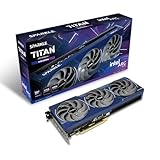
- Best Value: ASRock Intel Arc B580 Steel Legend 12GB OC Graphics Card, 2800 MHz GPU Clock, 12GB GDDR6, DisplayPort 2.1, HDMI 2.1a, Triple Fan Cooling, Polychrome SYNC
- Premium Choice: ASRock Intel Arc A580 Challenger 8GB OC Graphics Card, Intel Xe HPG Architecture, 8GB GDDR6, PCIe 4.0, Dual Fans, 0dB Silent Cooling, DisplayPort 2.0

Prime
Best Seller
ASRock Intel Arc B580 Challenger 12GB OC Graphics Card, Xe2-HPG, 2740MHz GPU, 12GB GDDR6 192 Bits, PCIe 4.0, Dual Fans, 0dB Silent, DP 2.1, HDMI 2.1a


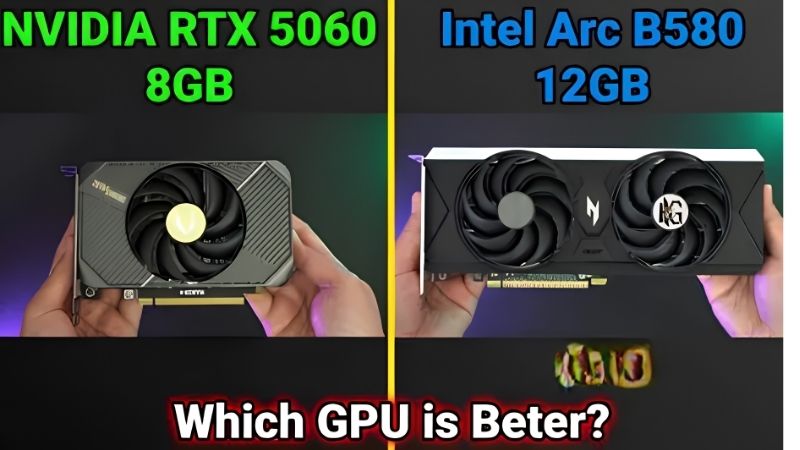
RTX 5060 vs Intel Arc B580 is the budget-GPU showdown that has real buyers genuinely torn in 2026, and for good reason. One card leans on Nvidia’s mature features and efficiency, the other counters with more memory at a lower price, and the two land close enough that the wrong pick leaves value on the table. This comparison gives you a quick verdict, a full specs table, a feature-by-feature face-off, an alternative if neither fits, and a clear recommendation for each kind of budget gamer.
RTX 5060 vs Intel Arc B580: Quick Verdict and Specs
Budget shoppers do not want a lecture, they want to know which card to buy, so this section front-loads the answer and lays out the raw numbers. The headline tension is easy to state: the Arc B580 offers more VRAM for less money, while the RTX 5060 offers Nvidia’s ecosystem, efficiency, and the strongest upscaling. Everything below explains which of those advantages matters more for your particular games.
As an Amazon Associate we earn from qualifying purchases at no extra cost to you.





The Quick Verdict for Budget Gamers
If you want the most VRAM per dollar and play at 1080p or entry 1440p, the Intel Arc B580 and its 12 GB buffer are the value champion. Its extra memory ages well as game textures keep growing.
If you want lower power draw, rock-solid driver maturity, and the best upscaling through DLSS 4, the RTX 5060 is the safer all-rounder despite its 8 GB. Short version: Arc B580 for VRAM value, RTX 5060 for features and efficiency, and both are legitimately good 1080p cards.
The reason this matchup is so close is that each card wins on a different axis, so there is no universal answer. Your personal priorities, memory versus features, price versus polish, are what break the tie, which is exactly why the detailed sections below matter.
Full Comparison Table
Numbers first. Focus on the memory and price rows, because those are where these two cards diverge most sharply and where the whole debate really lives.
| Spec | Nvidia RTX 5060 | Intel Arc B580 |
|---|---|---|
| Architecture | Blackwell | Battlemage |
| Memory | 8 GB GDDR7 | 12 GB GDDR6 |
| Memory bus | 128-bit | 192-bit |
| Board power | ~145 W | ~190 W |
| Launch MSRP | 299 | 249 |
| Upscaling | DLSS 4 + Multi Frame Gen | XeSS |
| Recommended PSU | 550 W | 600 W |
Two rows deserve a second look. The B580 pairs more memory with a wider 192-bit bus, while the RTX 5060 answers with far lower power draw and the newer GDDR7, a classic trade of raw memory resources against efficiency and modern features.
Price and Value Snapshot
On paper the B580 undercuts the RTX 5060 by around 50 while handing you an extra 4 GB of memory, which is an aggressive value pitch for a budget card. That combination is the heart of the entire debate.
The counterpoint is that the RTX 5060 draws far less power, runs on a smaller PSU, and brings DLSS 4, which can stretch performance in supported titles further than the Intel card’s XeSS. So the question becomes whether you value raw memory and price, or efficiency and features.
For many buyers, the total system cost tips the scale. The RTX 5060’s lower power requirement can let you keep a smaller power supply, quietly narrowing the price gap, so weigh the whole build rather than just the sticker on the box.
Deep Dive Face-Off: Performance, Memory, and Features
Spec sheets set the stage, but real games decide the winner, so this section pits the two cards on the metrics that matter to a budget build: rasterized 1080p performance, the impact of the VRAM gap, and the software features around each card. Reviewers broadly rate these as closely matched, but they pull ahead of one another in specific, predictable situations worth understanding before you spend.
1080p Rasterization Performance
At 1080p, the primary home for both cards, the two trade blows across a broad test suite, with neither running away from the other in pure raster. Frame rates in most modern titles land in comfortable, high-refresh territory on either card.
The RTX 5060’s newer architecture and GDDR7 give it an efficiency edge, delivering similar frames at notably lower power. The B580’s wider 192-bit bus and larger memory pool, meanwhile, help it stay composed in demanding scenes where a narrow bus can bottleneck a card, which is a meaningful analytical point in its favor.
Because the raster race is so tight, individual game optimization often decides which card looks better in any given benchmark. Averaged across many titles, though, treat them as roughly equals in raw 1080p speed and let the other factors break the tie.
That parity is actually good news for buyers, because it means you are not sacrificing meaningful frame rate whichever way you lean. With raw speed effectively off the table as a deciding factor, the choice cleanly reduces to memory and price against efficiency and features, which are far easier to reason about.
The 8 GB vs 12 GB VRAM Question
This is the single biggest practical difference between the two. At 1080p today, 8 GB is usually enough, but a growing number of newer titles with high-resolution textures can push past it, causing stutters or forcing you to lower settings.
The B580’s 12 GB gives real headroom for those texture-heavy games and for light 1440p play, which is exactly why value-focused reviewers champion it. If you keep a card for several years and hate compromising on texture settings, that extra memory is the most future-relevant spec in this entire comparison.
It is worth being honest about the flip side, though: in the many games that stay under 8 GB, the extra memory sits unused, and the RTX 5060’s efficiency and features do more for you. The VRAM edge is insurance against future demands, not a guaranteed win in every title you play today.
How much you value that insurance depends on how long you keep a card. If you upgrade every couple of years, 8 GB is likely fine for your window, and the RTX 5060’s efficiency and DLSS 4 may serve you better. If you hold a card for four or five years, the B580’s headroom becomes increasingly valuable as texture budgets climb across the industry.
Ray Tracing and Upscaling: DLSS 4 vs XeSS
Ray tracing is playable but limited on both at this tier, so treat it as an occasional bonus rather than a core feature on either card. Neither is a ray-tracing powerhouse, and that is fine at this price.
Upscaling is where Nvidia leads: DLSS 4 with Multi Frame Generation is more widely adopted and generally cleaner than Intel’s XeSS, and it is the forward-looking feature that can extend the RTX 5060’s useful life as more games support it. XeSS has improved a lot and is a genuine asset, but it still trails DLSS in polish and game coverage.
This feature gap is the quiet counterweight to the VRAM gap. Where the B580 banks on more memory for the future, the RTX 5060 banks on a steadily expanding library of DLSS 4 titles, so both cards have a credible story for aging gracefully, just through different mechanisms.
In practice, that means neither choice is a dead end. Whether you bet on the B580’s memory or the RTX 5060’s feature pipeline, both cards have a plausible path to staying usable for several years, which lowers the stakes of the decision considerably for a first-time budget buyer.
Pricing Outlook, The Alternative, and Final Verdict
With the technical picture settled, the final decisions come down to timing, budget, and matching each card to the right gamer. The current component market adds an important wrinkle for value buyers, because when you buy can matter almost as much as which card you choose at this sensitive price point.
Pricing Outlook in a Shaky Market
Timing matters a lot for budget cards specifically, because a small price swing is a big percentage of the total. Component prices have been trending upward, driven largely by rising memory costs, and both of these cards are exposed to that pressure.
The encouraging news is that the steep climb of late 2025 has flattened out, and some hardware makers, including Framework, have reported a stretch of relative price stability, even while cautioning that the market could still swing again. In other words, the panic phase appears to have paused for now.
Fresh supply is coming but not soon. OEMs can now source DDR5 from Chinese suppliers such as CXMT, and Micron is building two plants in Idaho, yet those fabs are not expected to come online until roughly 2027-2028 and will not affect this year’s prices.
The practical takeaway for a budget buyer is that prices have paused rather than dropped, and real relief is more than a year out. If either card hits its expected price and you need a GPU now, buying beats waiting for a discount that may simply not arrive on your timeline.
For budget buyers specifically, there is also an opportunity cost to waiting: the months spent holding out for a lower price are months without the card, and with relief still distant that trade rarely pays off. A fair price secured today usually beats a hypothetical better price that keeps slipping into next year.
The Alternative If Neither Fits
If you can stretch the budget a little, stepping up to an RTX 5060 Ti with more memory gives you a smoother path to 1440p and eases the 8 GB worry entirely. It is the natural upgrade for anyone on the fence about VRAM.
Pros of stepping up: more VRAM, stronger 1440p performance, and longer legs before you need to upgrade again. Cons: a higher price that partly defeats the budget goal in the first place.
On the other end, a well-priced previous-generation card on sale can also undercut both if raw value is your only concern, though you trade away newer features and warranty length. For most buyers, one of the two headline cards remains the sweeter spot.
Still, it is worth pricing the step-up option before you buy, because sales can occasionally put a 5060 Ti within reach of the budget you set. When that happens, the extra memory and 1440p headroom can be the best value of all, so a quick check never hurts.
See More:
Final Verdict and Recommendation
Buy the Intel Arc B580 if you want the most memory and performance per dollar, play mainly at 1080p, and are comfortable with a maturing driver stack in exchange for genuine value. It is the budget value pick, plain and simple.
Buy the RTX 5060 if you prize low power draw, proven drivers, and the best upscaling with DLSS 4, and you can live within 8 GB at 1080p. Whichever you choose, prices move weekly, so use the buttons on this page to check today’s live listings for both cards before you commit.
For the truly undecided, let live pricing referee it: if the gap widens in the B580’s favor, its value case strengthens, while a discounted RTX 5060 tilts things back toward Nvidia’s feature set.
The RTX 5060 vs Intel Arc B580 decision comes down to two questions: how much you value extra VRAM at a lower price, versus how much you value efficiency and DLSS 4. For raw value, Intel; for features and power savings, Nvidia, and both deliver a genuinely good 1080p experience.
With the market paused rather than dropping, locking in a fair price on whichever card fits your priorities is the sensible move. Compare the latest prices in the RTX 5060 vs Intel Arc B580 matchup and grab the one that matches how you actually play.
Frequently Asked Questions
Does the Arc B580 have more VRAM than the RTX 5060?
Yes. The B580 ships with 12GB of GDDR6 on a 192-bit bus, while the RTX 5060 has 8GB of GDDR7 on a 128-bit bus. That extra capacity helps Intel in texture-heavy titles and at 1440p, where 8GB cards occasionally stutter, though NVIDIA still holds a bandwidth-per-bit advantage from GDDR7.
Do I need Resizable BAR for the Intel Arc B580?
Effectively yes. Intel officially requires Resizable BAR for expected performance, and without it the B580 can lose substantial frame rate in many games. That means a relatively modern platform with UEFI boot and the setting enabled in BIOS. The RTX 5060 benefits from ReBAR too, but degrades far less gracefully when it is off.
How do drivers compare between the two?
Intel drivers have improved dramatically but still show occasional issues in older DirectX 9 and 11 titles, which run through a translation layer. NVIDIA GeForce drivers remain the more predictable choice for day-one game support. If you play a lot of legacy or niche titles, that reliability gap matters more than raw benchmark averages.
Which card is better for power and PSU requirements?
The RTX 5060 is the more efficient option at roughly 145W, comfortable on a 550W supply with one 8-pin connector. The B580 sits near 190W and Intel recommends around 600W. In a small form factor build or with an older PSU, the NVIDIA card is the easier drop-in.
What about upscaling and frame generation?
NVIDIA offers DLSS 4 with transformer-model upscaling and Multi Frame Generation, supported in a very large game library. Intel counters with XeSS 2 and Frame Generation, which look good but appear in fewer titles. If you plan to lean on upscaling to hit high refresh rates, DLSS still has the broader support base.

Write Your Review
No reviews yet. Be the first to share your experience!