
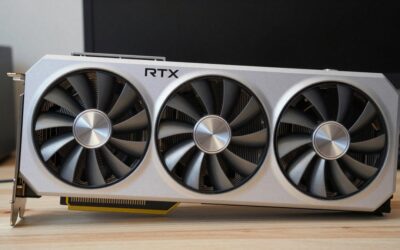
- Top Pick: GIGABYTE Radeon™ RX 9070 XT Gaming OC ICE 16G Graphics Card (16GB GDDR6, 256-bit, PCIe 5.0, HDMI/DP 2.1, 2.7 Slot, Hawk Fan, Server-Grade Thermal Gel, Reinforced Structure)
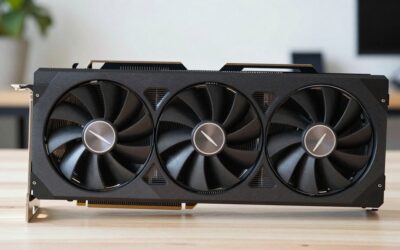
- Best Value: GIGABYTE Radeon RX 9070 XT Gaming OC 16G Graphics Card, PCIe 5.0, 16GB GDDR6, GV-R9070XTGAMING OC-16GD Video Card
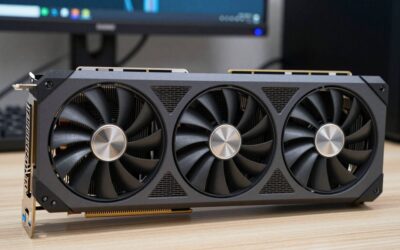
- Premium Choice: ASUS Prime Radeon RX 9070 XT 16GB GDDR6 OC Edition Gaming Graphics Card


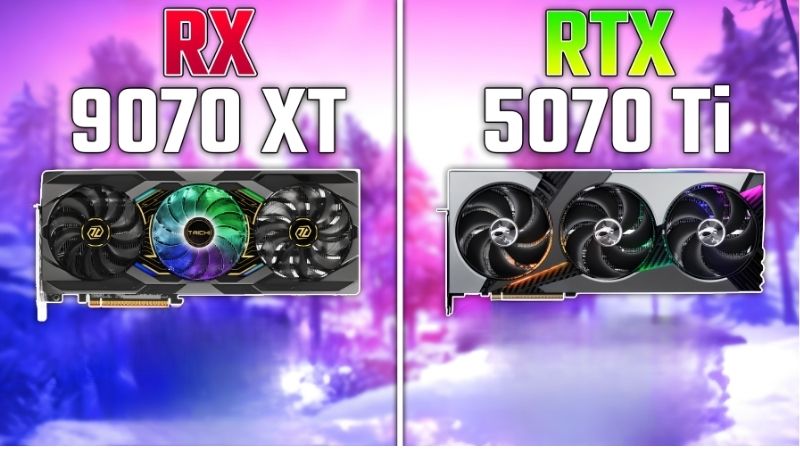
AMD Radeon 9070 XT vs 5070 Ti is one of the most consequential mid-to-high matchups of this generation, and because it is a larger purchase, you want to weigh it carefully with numbers and a verdict, not a highlight reel. Both cards carry 16 GB and target high-refresh 1440p and capable 4K, but they win on different axes. This comparison lays out the specs side by side, breaks down each card honestly, and tells you which one fits which buyer so you can decide with confidence.
The Quick Verdict: AMD Radeon 9070 XT vs 5070 Ti
For readers who want the answer immediately: the RX 9070 XT tends to win on raw rasterization value, while the RTX 5070 Ti wins on ray tracing, DLSS 4, and the broader feature ecosystem. Both carry 16 GB, so memory is not the deciding factor; the choice hinges on whether you prioritize native frames per dollar or feature depth. Below, each claim is grounded in the specs.
As an Amazon Associate we earn from qualifying purchases at no extra cost to you.


Who Wins on Raw Rasterization
In traditional rasterized rendering, the RX 9070 XT is a strong performer and frequently competes hard on native frames, which is a hallmark of AMD’s higher-end RDNA 4 cards. For a player focused on maximum native performance without upscaling, it makes a compelling case.
The RTX 5070 Ti is no slouch in rasterization either, and the gap between them varies by title. But if pure native rasterized value is your top priority, the 9070 XT is often the more direct answer, particularly if it is competitively priced.
The size of any rasterization lead depends heavily on the specific game and how well it maps to each architecture. Some titles favor RDNA 4, others land closer to parity, so rather than assuming a fixed gap, it is wise to look at benchmarks for the games in your own library before deciding.
Who Wins on Ray Tracing and DLSS
The RTX 5070 Ti takes ray tracing decisively. NVIDIA’s more mature ray tracing pipeline means that in path-traced and heavily ray-traced titles, the 5070 Ti delivers a smoother experience than the 9070 XT even where AMD narrows the rasterization gap.
DLSS 4 with Multi Frame Generation widens the lead further in supported games. AMD’s FSR has improved substantially, but NVIDIA’s upscaling and frame-generation stack remains broader in game support and generally cleaner in image quality, which is a meaningful advantage for anyone playing modern single-player showcases.
Who Wins on Value
Value is close and often decided by the market. Both cards sit in a similar high-mid price band and both carry 16 GB, so neither wins on memory or price by a wide margin. The tiebreaker is which feature set you will actually use.
If you lean on ray tracing and DLSS, the 5070 Ti’s feature advantage justifies its price; if you play mostly rasterized titles and want native frames for the money, the 9070 XT is the value pick. Current pricing on each often settles an otherwise even matchup.
Full Specs Comparison Table: 9070 XT vs 5070 Ti
Numbers cut through marketing, so here is the core specification face-off. Pay closest attention to the ray tracing and upscaling rows, because with matched memory, those categories explain most of the real-world difference between these cards.
| Spec | AMD Radeon RX 9070 XT | NVIDIA RTX 5070 Ti |
|---|---|---|
| Architecture | RDNA 4 | Blackwell |
| VRAM | 16 GB GDDR6 | 16 GB GDDR7 |
| Rasterization | Strong | Strong |
| Ray Tracing | Improved RDNA 4 RT | 4th-gen RT (stronger) |
| Upscaling | FSR | DLSS 4 + Multi Frame Gen |
| Target Resolution | 1440p, capable 4K | 1440p, capable 4K |
| Power Draw | Higher | Lower |
Core Specs, VRAM, and Memory
Both cards carry 16 GB, though the 5070 Ti uses faster GDDR7 versus the 9070 XT’s GDDR6. In practice both have ample memory for high-resolution textures at their target resolutions, so unlike some matchups, VRAM capacity does not separate them.
That matched memory is important for buyers, because it means the decision comes down to architecture, features, and efficiency rather than a longevity gap in the buffer. Both cards are well equipped to handle demanding textures at 1440p and into 4K.
This is genuinely helpful for buyers, because it removes one of the trickier variables from the decision. In matchups where one card has less memory, VRAM anxiety can override everything else; here, with both at 16 GB, you can focus purely on the strengths that actually differ, which makes the choice cleaner.
Power, Cooling, and Efficiency
On the practical side, the RTX 5070 Ti is typically the more efficient card, drawing less power for its performance, which benefits cooling and lets it run comfortably on a slightly more modest supply. The 9070 XT’s higher draw asks more of your power supply and case airflow.
Both come in a range of partner designs, so length and slot thickness vary by model. Whichever you choose, confirm your case clearance and power supply capacity against the specific board, since higher-end cards in this class often run large and demand real airflow.
The efficiency difference has practical downstream effects worth weighing. A lower-power card runs cooler and quieter for the same work, dumps less heat into your room, and can pair with a more modest power supply. For a compact or quieter build, the 5070 Ti’s lower draw is a tangible convenience beyond the raw numbers.
Pros and Cons of Each Card
The RX 9070 XT’s pros are strong native rasterization value and a full 16 GB buffer, making it excellent for high-frame 1440p in traditional rendering. Its cons are weaker ray tracing than NVIDIA, an upscaling ecosystem that still trails DLSS, and higher power draw.
The RTX 5070 Ti’s pros are class-leading ray tracing, DLSS 4 with Multi Frame Generation, lower power consumption, and the deepest AI feature set with ongoing driver gains. Its cons are that its rasterization advantage is not guaranteed and it may command a price premium for its features.
Neither list contains a dealbreaker for a 1440p or 4K gamer. The choice is about which strengths you will use and which you can live without.
Deep Dive Face-Off: Performance, Features, and Timing
With the specs established, this section compares the cards on what actually shapes daily use: real-world frame rates, the software and AI ecosystem, and the market timing that determines when you should buy.
Rasterization and Real-World Frame Rates
In native 1440p rasterized gaming, the 9070 XT frequently leads or matches the 5070 Ti, sometimes by a modest margin depending on how well a title maps to RDNA 4. For pure frames-per-dollar in non-upscaled workloads, AMD is the aggressor here.
The 5070 Ti stays highly competitive and pulls ahead the moment ray tracing or DLSS enters the picture. So the faster card depends entirely on your settings: rasterization can favor AMD, while ray tracing plus upscaling flips the result toward NVIDIA.
Your monitor and the kind of games you play should therefore steer the decision. A competitive player at high-refresh 1440p who mostly runs rasterized titles will love the 9070 XT, while a single-player enthusiast chasing ray-traced showcases at 4K will get more from the 5070 Ti. Match the card to how you actually game rather than to a single benchmark chart.
Ray Tracing, DLSS 4, and NVIDIA’s AI Edge
This is where the forward-looking case for the 5070 Ti lives. Blackwell’s ray tracing hardware and DLSS 4 Multi Frame Generation can transform demanding path-traced games from marginal to smooth, and the feature list keeps growing through driver updates rather than staying fixed at launch.
That ongoing optimization matters for a multi-year purchase. A 5070 Ti bought today often gains frames in newly supported titles later, and NVIDIA’s AI tooling extends beyond gaming into creative and local AI workloads. If you value being on the leading edge of features, the 5070 Ti is the more future-facing bet.
Buy Now or Wait? 2026 Pricing
Timing deserves its own analysis because the market is unusual right now. Graphics card prices trended upward and have not fully released that pressure, though the steep climb of late 2025 eased into relative stability, even as analysts warn volatility is not over. The panic phase passed; a real discount did not arrive.
Anyone hoping to wait for cheaper cards should temper expectations. New memory supply is opening up, but the factories that would loosen pricing are not expected to run until 2027 to 2028. For a card you need now, waiting exposes you to volatility with little near-term upside, which nudges the practical buyer toward acting while pricing is stable rather than gambling on a distant payoff.
The Alternative and Final Recommendation
If neither card lands cleanly for your budget or needs, there are sensible detours, and then a clear framework for who should buy which. This closes the loop on the AMD Radeon 9070 XT vs 5070 Ti decision.
A Third Option Worth Considering
If both cards stretch your budget, a standard RTX 5070 or RX 9070 delivers a large slice of the experience for less, at the cost of some performance and headroom. It is the value escape hatch when the flagship-mid cards feel like too much spend.
If your budget flexes upward and 4K at maximum settings is the goal, stepping up to a higher-tier card resolves the debate with more raw headroom. The right answer depends on whether native rasterization or ray tracing and upscaling depth matter more to you.
Who Should Buy the RX 9070 XT
Choose the 9070 XT if you prioritize native rasterized frames, want strong value in traditional rendering, and mostly play titles where ray tracing is optional. Value-focused 1440p gamers who keep hardware for years get strong mileage from its rasterization strength and 16 GB buffer.
It is also the pick if you are indifferent to DLSS and simply want the most native performance your money can buy at this tier, provided your power supply and case can accommodate its higher draw.
For a buyer who keeps hardware for years and values raw rasterization, the 9070 XT’s combination of native performance and a full 16 GB buffer makes it a durable, sensible investment.
Who Should Buy the RTX 5070 Ti
Choose the 5070 Ti if ray tracing, DLSS 4, lower power draw, and NVIDIA’s expanding AI ecosystem matter to you. Single-player enthusiasts who chase visual showcases and want ongoing feature gains through drivers will be happiest here.
It is also the better fit for creators and hobbyists who lean on NVIDIA’s software stack beyond gaming, and for builds where the lower power draw simplifies cooling and power supply choices.
And for anyone who wants their card to keep improving after purchase, NVIDIA’s steady stream of driver-delivered feature gains means the 5070 Ti often does more a year after you buy it than it did on day one, which is a real part of its long-term value.
See More:
- NVIDIA GeForce Game Ready Driver
- NVIDIA CUDA Toolkit Archive
- Gigabyte GeForce RTX 5070 Windforce OC
- AMD Radeon RX 9070 XT vs NVIDIA GeForce RTX 5070
- PNY GeForce RTX 5070 Ti Triple Fan
Conclusion
The AMD Radeon 9070 XT vs 5070 Ti verdict is a values test, not a knockout: the 9070 XT wins on native rasterization value, while the 5070 Ti wins on ray tracing, DLSS 4, efficiency, and future-facing AI features, with both sharing a 16 GB buffer. With 2026 pricing stable but unlikely to drop soon and real relief years away, the buyer who needs performance now is best served by picking the card whose strengths match their games and locking it in. Compare current prices for both cards through the links below and buy the one that fits how you actually play.
Frequently Asked Questions
Both have 16GB, so is the memory identical?
No. Capacity and bus width match at 16GB on 256-bit, but the RX 9070 XT uses GDDR6 while the RTX 5070 Ti uses faster GDDR7. That gives NVIDIA meaningfully higher bandwidth, which shows up most at 4K and in ray traced scenes that stress the memory subsystem hardest.
How close is AMD ray tracing now?
Much closer than the previous generation. RDNA 4 substantially reworked the ray tracing hardware, so the 9070 XT is competitive in lightly ray traced titles. NVIDIA still pulls clearly ahead in path traced games such as heavy Cyberpunk or Alan Wake presets, where dedicated RT throughput matters most.
Which card runs cooler and quieter?
It depends far more on the board partner than the chip. Both sit near 300W, so both need a triple-fan cooler in a well ventilated case. Compare specific models rather than brands, and prioritise cards with larger heatsinks and thicker fin stacks if acoustics matter in your build.
What about creator and AI workloads?
NVIDIA is the stronger choice. CUDA is the default target for rendering engines, video editors, and local AI tooling, and NVENC remains the preferred encoder for streaming and export. AMD support has improved through ROCm and HIP but still lags in application coverage and setup simplicity.
Which one holds value better?
NVIDIA cards historically retain resale value better because of broader software support and brand demand. That said, the 9070 XT’s lower entry price often offsets the depreciation difference. If you upgrade every generation, factor resale in. If you keep a card for four or five years, it matters far less.
Ready to decide? Our #1 pick for 2026 is the Architecture.
Live price & availability on Amazon.

Write Your Review
No reviews yet. Be the first to share your experience!