
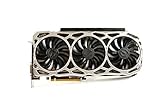
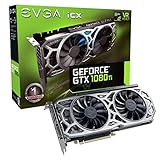
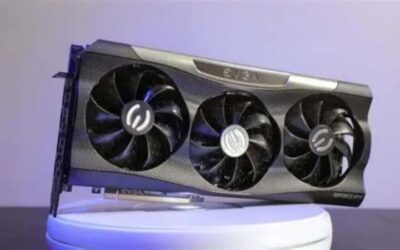
- Top Pick: EVGA GeForce GTX 1080 Ti SC Black Edition Gaming, 11GB GDDR5X, iCX Cooler & LED, Optimized Airflow Design, Interlaced Pin Fin Graphics Card 11G-P4-6393-KR (Renewed)
- Best Value: NVIDIA GEFORCE GTX 1080 Ti – FE Founders Edition (Renewed)
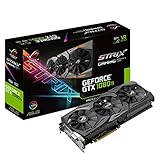
- Premium Choice: ASUS GeForce GTX 1080 TI 11GB Turbo Edition VR Ready 5K HD Gaming HDMI DisplayPort PC GDDR5X Graphics Card TURBO-GTX1080TI-11G (Renewed)
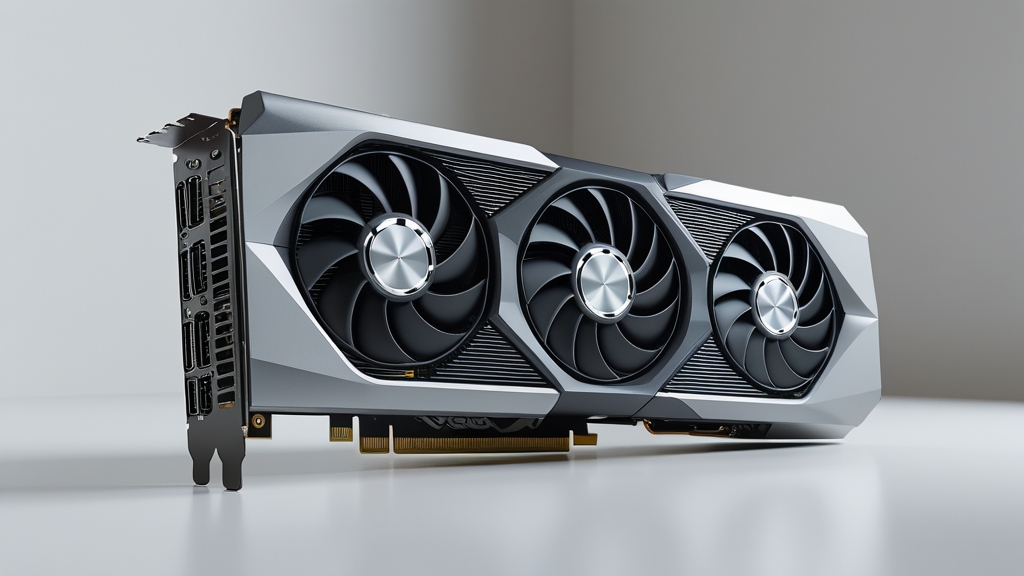
NVIDIA 1080 Ti still earns respect in 2026, nearly a decade after it launched as arguably the greatest graphics card of its era. This Pascal flagship arrived in 2017 at $699 and outran everything on the market, and today it survives as a value option on the used scene thanks to one standout trait: its 11GB of memory. This review takes an objective, expert look at whether the card still deserves a place in a modern build: the specifications behind its legend, how it performs in current games, the VRAM advantage that keeps it relevant, what you should pay and which models to choose, and how 2026’s rising prices reshape the decision. If you are eyeing a cheap, capable rasterization card, here is where the NVIDIA 1080 Ti stands.
What Makes the NVIDIA 1080 Ti a Legend
The 1080 Ti’s reputation rests on raw rasterization power and a memory buffer that was extravagant for its time. Understanding the hardware, and what it conspicuously lacks, frames a fair verdict on a card that is now nine years old. The specifications explain why it aged so unusually well.
As an Amazon Associate we earn from qualifying purchases at no extra cost to you.


The Specs Behind the Legend
The 1080 Ti is built on NVIDIA’s Pascal architecture using the GP102 die, with 3,584 CUDA cores and 11GB of GDDR5X memory on a wide 352-bit bus. It launched on March 10, 2017 at a $699 MSRP and immediately set the performance bar for consumer gaming.
That generous 11GB frame buffer is the key to its longevity. Few cards near its price offer as much memory, which lets it load high-resolution textures that overwhelm many newer budget GPUs with smaller buffers.
The trade-offs are entirely generational. With a 250-watt draw and a pre-Turing design, there is no hardware ray tracing, no Tensor cores, no DLSS, and no AV1 decode. It is pure rasterization muscle from another era.
Real Performance Today
In current games the 1080 Ti still holds up at sensible resolutions. It delivers strong 1080p gaming at high settings and capable 1440p at medium-to-high settings, which keeps it usable for mainstream gaming in 2026.
In raw rasterization it matches or even exceeds a modern RTX 3060 in titles that do not lean on DLSS, a remarkable result for a card of its age. Where it loses ground is in games heavily optimized for newer architectures, ray tracing, or DLSS-dependent frame targets.
At 4K the card can run older or well-optimized titles but stumbles in heavy modern games, where even low settings struggle. It is best understood as a high-end 1080p and solid 1440p card today, not a 4K machine.
Missing Features and Where It Fits
The absence of modern features is the card’s defining limitation. Without RT cores or DLSS, it cannot compete in ray-traced titles or benefit from NVIDIA’s AI upscaling, which increasingly underpins performance in new releases.
Its one upscaling lifeline is FSR. Because FidelityFX Super Resolution is hardware-agnostic, the 1080 Ti can use it in supported games to reclaim frames, partly offsetting the lack of DLSS even though it cannot match a dedicated AI upscaler.
Positioned honestly, the 1080 Ti is a rasterization specialist for buyers who play non-ray-traced games. It is a value pick defined by VRAM and raw frames, not by the modern feature set that newer cards provide.
Buying a 1080 Ti in 2026: Value and Verdict
The decision turns on price, model choice, and how much the 11GB buffer matters to you. The 1080 Ti is cheap for its power, but it is an old, hot card with no warranty, so picking the right unit is as important as the price. This section sets the value case and verdict.
Used Pricing and the Best Models
On the used market the 1080 Ti typically sells for between $115 and $200, with $125 to $180 the most common range for tested, thermally sound cards. That buys a lot of rasterization performance per dollar.
Model choice matters for a card this old. Well-cooled designs such as the EVGA FTW3 or MSI Gaming X consistently run cooler and quieter, while blower-style and reference Founders Edition cards are best avoided unless your case airflow is excellent.
As a target, paying under roughly $130 for a clean, well-cooled unit is a genuinely good deal, and the value weakens as the price climbs toward $200 where newer used options appear.
The 11GB VRAM Advantage
The 1080 Ti’s memory is its trump card in 2026. At its price bracket, 11GB of VRAM is more than almost any competing used card offers, and memory has become a decisive factor as modern games grow hungrier.
That buffer prevents the texture stutter and frame drops that plague 8GB cards in demanding titles at higher settings. For buyers who keep a GPU for years, the extra headroom is a meaningful, practical benefit.
The closest comparison, the 12GB RTX 3060, offers similar memory and adds DLSS and ray tracing, so a buyer must weigh the 1080 Ti’s raw raster value against the newer card’s modern features and efficiency.
Pros and Cons of the NVIDIA 1080 Ti
On the positive side, the NVIDIA 1080 Ti delivers strong rasterization, a class-leading 11GB of VRAM for its price, solid 1080p and 1440p gaming, FSR support, and excellent value when bought cheaply, often matching a modern RTX 3060 in non-DLSS titles.
On the negative side, it has no ray tracing, Tensor cores, DLSS, or AV1 decode, draws a hefty 250 watts, runs on PCIe 3.0, carries used-market wear and no warranty, and loses badly in ray-traced or DLSS-dependent games.
The verdict is positive at the right price. The NVIDIA 1080 Ti is a smart buy for a value-minded gamer who plays rasterized titles and finds a clean unit cheaply, and a weak choice for anyone who wants modern features or efficiency.
Market Forces and Who Should Buy
The wider 2026 market has pushed new prices upward, which quietly strengthens the case for older cards. Understanding that backdrop, and what it means for a 1080 Ti buyer, clarifies the timing. Compatibility then confirms whether this demanding old card suits your system.
Why New GPU Prices Climbed in 2026
The 2026 market is shaped by a severe structural memory shortage. DRAM contract prices have risen more than 170 percent year over year, and because video memory can account for up to 80 percent of a graphics card’s bill of materials, new GPU prices have climbed sharply, with current-generation cards up an estimated 15 to 23 percent and some models jumping 16 to 17 percent almost overnight.
AI demand is the root cause. With the United States approving sales of NVIDIA’s powerful H200 accelerators to major Chinese firms, memory and fabrication capacity is being pulled toward data-center silicon, and reports indicate NVIDIA has trimmed mid-range consumer output by a significant margin. Memory suppliers have warned the shortage could persist into 2027.
The result is a new-card market that is both pricier and patchier. Even faster new GPUs arrive with inflated stickers and long lead times, which erodes the value advantage they would normally hold over a cheap, capable used card. AMD raised prices around ten percent early in 2026 and NVIDIA followed, so the inflation is broad and unlikely to ease while the shortage lasts.
What This Means for a 1080 Ti Buyer
For a 1080 Ti shopper, the squeeze tilts the scales toward buying used. When new cards are inflated and stock is uneven, a sub-$130 1080 Ti with 11GB of VRAM looks more compelling, delivering frames-per-dollar that new budget cards cannot match this year.
It also reframes the comparison with newer used cards. Rising prices keep demand high across the second-hand market, so the 1080 Ti’s appeal rests on finding it cheap enough to undercut alternatives that add modern features. When even used prices firm up, a low-priced 1080 Ti stands out precisely because it offers so much VRAM for the money.
The timing logic is straightforward. While the shortage keeps new prices elevated, a well-priced 1080 Ti is a rational value play, but only when bought cheaply rather than at the top of its used range. Watch local listings and marketplace deals, and act when a clean, well-cooled card appears near the bottom of its price band.
Compatibility and Who Should Buy
The 1080 Ti needs a healthy system around it. A quality 600-watt or larger power supply is the sensible minimum given its 250-watt draw, and the card uses a PCIe 3.0 interface, which is fine on modern boards but worth noting.
It is a large, hot card, so confirm case clearance and good airflow before buying. Repasting an older unit can noticeably improve temperatures and noise.
The ideal buyer plays rasterized 1080p or 1440p games, values VRAM over modern features, already owns a capable PSU, and can find a clean, well-cooled unit cheaply. Anyone wanting ray tracing, DLSS, or low power draw should choose a newer card instead.
Frequently Asked Questions
A few questions recur from buyers considering the NVIDIA 1080 Ti in 2026. The concise answers below cover performance, pricing, and modern features.
Is the NVIDIA 1080 Ti still good in 2026?
Yes for rasterized 1080p and 1440p gaming, where it can match a modern RTX 3060 in non-DLSS titles. Its weaknesses are the lack of ray tracing and DLSS and a high power draw.
How much should I pay for a 1080 Ti?
Used prices run $115 to $200, with $125 to $180 typical for tested cards. Under roughly $130 for a clean, well-cooled unit is a strong deal.
Does the 1080 Ti support DLSS or ray tracing?
No. It predates RT and Tensor cores, so it has neither DLSS nor hardware ray tracing. It can, however, use AMD’s hardware-agnostic FSR upscaling in supported games.
See more:
Recommended Products
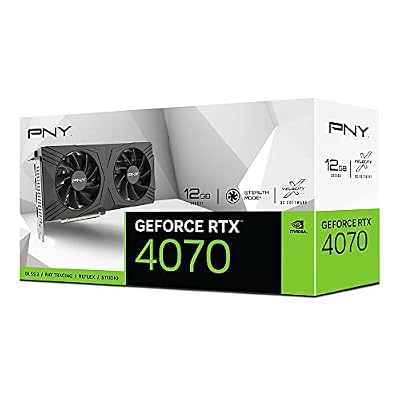
PNY
PNY GeForce RTX™ 4070 12GB Verto™ Dual Fan Graphics Card DLSS 3 (192-bit, PCIe 4.0, GDDR6X, HDMI/DisplayPort, Supports 4k, 2 Slot)
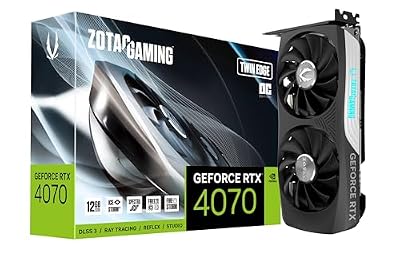
ZOTAC
ZOTAC Gaming GeForce RTX 4070 Twin Edge OC GDDR6 DLSS 3 12GB GDDR6 192-bit 20 Gbps PCIE 4.0 Compact SFF Gaming Graphics Card, IceStorm 2.0 Advanced Cooling, Spectra RGB Lighting, ZT-D40740H-10M

ASUS
ASUS TUF Gaming NVIDIA GeForce RTX 3080 Graphics Card (PCIe 4.0, 10GB GDDR6X, HDMI 2.1, DisplayPort 1.4a, Dual Ball Fan Bearings, Military-Grade Certification, GPU Tweak II) (Renewed)
As an Amazon Associate we earn from qualifying purchases. Product prices and availability are accurate as of the date/time indicated.
Conclusion
The NVIDIA 1080 Ti in 2026 remains a remarkable testament to how well a great design can age. Its 11GB of VRAM and strong rasterization let it match a modern RTX 3060 in non-DLSS titles and handle 1080p and 1440p gaming with ease, all for a used price that often sits under $130. The compromises are equally clear: no ray tracing, no DLSS, a thirsty 250-watt draw, and the usual risks of buying old hardware. With 2026’s memory shortage keeping new cards expensive, a cheap, well-cooled 1080 Ti is a genuinely rational value pick for rasterization-focused gamers. Choose a good model, confirm your power supply, and buy it cheaply, and the NVIDIA 1080 Ti still delivers performance that belies its age.


Write Your Review
No reviews yet. Be the first to share your experience!