
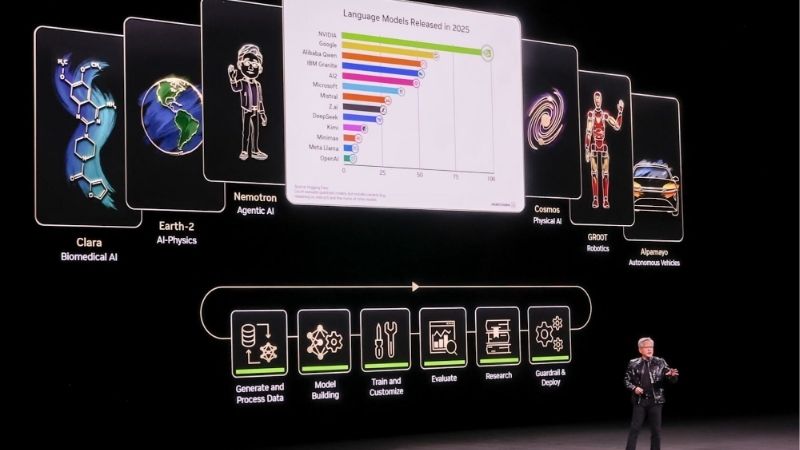
CES 2026 Nvidia keynote saw CEO Jensen Huang open the show in Las Vegas with a presentation focused squarely on artificial intelligence, robotics and the future of computing rather than new gaming cards. The headline was the Vera Rubin AI platform, alongside a genuinely important gaming update in DLSS 4.5 and a sweeping push into physical AI and self-driving. If you missed the roughly ninety-minute address or just want the parts that matter to you, this recap covers what Nvidia actually announced and, crucially, what it means for gamers, creators and buyers in 2026.

Best Seller
NVIDIA Quadro K4000 3GB GDDR5 256-bit PCI Express 2.0 x16 Full Height Video Card (Renewed)


What Nvidia Announced at the CES 2026 Keynote
The keynote packed an enormous amount into its running time, but the announcements sorted into a few clear themes: a next-generation AI platform, a meaningful software update for gamers, and a broad expansion into robotics and autonomous driving. Understanding those pillars is the fastest way to grasp what the event was really about, since the focus was firmly on AI infrastructure rather than consumer hardware this year.
The Vera Rubin AI Platform
The centrepiece was Vera Rubin, Nvidia’s next-generation AI platform and the successor to its record-breaking Blackwell architecture. Named after the pioneering astronomer, it was announced as already being in full production, signalling that Nvidia is moving its hardware roadmap forward at pace.
Rather than a single chip, Rubin is a complete rack-scale platform built from several tightly integrated components designed to work as one AI supercomputer. Nvidia framed this tight co-design as the key to scaling AI while cutting the cost of training and running models dramatically compared with the previous generation.
For most gamers this is data-centre technology rather than something they will buy, but it matters because it shows where Nvidia is focusing its energy, and because the software advances that reach gaming often trace back to this underlying research. In other words, even when a keynote seems aimed entirely at data centres, the technologies it debuts often filter down to the cards and features gamers use a year or two later, which is why the platform news is worth understanding even for consumers.
DLSS 4.5 for Gamers
The most relevant gaming announcement was DLSS 4.5, a meaningful update to Nvidia’s AI upscaling and frame-generation technology. It introduced enhancements including a new higher multi-frame generation mode and an improved model for its super resolution, aimed at delivering more frames and better image quality in supported games.
This is the part of the keynote that directly benefits existing RTX owners, since DLSS improvements arrive through software and can boost performance on cards people already own. It is a reminder that Nvidia continues to add value to its gaming cards over time, not just at launch.
Notably, the update came largely through a separate gaming-focused presentation rather than the main keynote, which reflected how heavily the headline event leaned toward AI and enterprise rather than consumer gaming. That placement told its own story about Nvidia’s priorities this year, with gaming positioned as a valued but secondary thread rather than the headline it has sometimes been at previous shows.
Robotics, Autonomous Driving and Open Models
A large share of the keynote was devoted to physical AI, the idea of AI that perceives, reasons and acts in the real world. Nvidia introduced open AI models spanning domains such as healthcare, robotics and autonomous driving, positioning itself as the foundation for a new wave of real-world AI applications.
On self-driving, Nvidia unveiled a reasoning-based autonomous vehicle model and showcased a partnership with Mercedes-Benz, with a new model on the CLA, though full robotaxi ambitions were framed as arriving in the years ahead rather than immediately. The company also demonstrated robotics work with partners on stage.
For everyday buyers this is more a statement of direction than a product to purchase today, but it makes clear that Nvidia sees robotics and autonomy as major future growth areas alongside its core businesses.
What the CES 2026 Keynote Means for You
An announcement-packed keynote is only useful if you know how it affects you, so this section translates the headlines into practical implications for different kinds of readers. The short version is that gamers got software rather than new hardware, creators and AI users got a glimpse of a faster future, and the overall direction tells buyers a lot about what to expect. Each group takes something different away. Sorting the news by who you are is far more useful than a single verdict, because the same keynote can be genuinely exciting for one reader and largely irrelevant for another.
For Gamers: No New Cards, Better Software
The most important takeaway for gamers is that Nvidia did not announce new GeForce gaming cards during the keynote. The focus was firmly on AI, so anyone hoping for a fresh GPU reveal will have to keep waiting, and the current RTX line-up remains what gamers buy today.
The consolation, and it is a real one, is DLSS 4.5, which improves performance and image quality on existing RTX cards through a software update. In practical terms, your current card can get better without you spending anything, which softens the absence of new hardware.
The overall message for gamers is stability: no new cards to chase this cycle, but continued software improvements that keep existing RTX GPUs competitive, which is worth factoring into any buying decision. For anyone weighing whether to buy now, that stability is reassuring rather than disappointing, since it means the card you purchase today is not about to be quietly superseded a few weeks later.
For AI and Creators
For creators and anyone working with local AI, the keynote painted a picture of rapidly advancing capability, with Rubin promising large gains in AI performance and efficiency. While Rubin itself is enterprise hardware, the direction signals more powerful and more accessible AI tools over time.
Creators already using Nvidia cards for AI-assisted work benefit indirectly, as the software ecosystem and models Nvidia showcased continue to expand. It reinforces that a capable Nvidia GPU remains a strong foundation for AI and creative workloads heading into the year.
CES 2026 Nvidia Keynote Highlights: Pros and Cons
Weighing what the keynote delivered, here is the honest balance from a consumer’s point of view.
| Pros | Cons |
|---|---|
| DLSS 4.5 boosts existing RTX cards for free | No new GeForce gaming GPUs announced |
| Clear, ambitious AI and robotics roadmap | Rubin is enterprise, not consumer, hardware |
| Ongoing software value for current owners | Much of it is future-facing, not available now |
| Confidence in Nvidia’s direction | Gaming felt secondary to AI this year |
The takeaway is that the keynote was a triumph for Nvidia’s AI ambitions and a modest but genuine win for existing gamers, if a disappointment for anyone waiting on new gaming hardware. Whether the keynote counts as a hit or a miss therefore depends heavily on what you came for, which is exactly why breaking it down by audience is more useful than a single overall verdict.
What to Do After the Keynote
Knowing what was announced naturally leads to the practical question of what, if anything, to do about it, and the answer depends on whether you are gaming, creating or simply upgrading. Turning the keynote’s news into a sensible plan is what makes watching it worthwhile, so this final section offers clear guidance for each situation.
Should Gamers Wait or Buy Now
Because no new gaming cards were announced, gamers who need a GPU now have no reason to wait for a keynote reveal that did not come. The current RTX line-up remains the sensible choice, and with DLSS 4.5 improving those cards, buying today is a reasonable move rather than a compromise.
If you were holding out purely in hope of a new card, this keynote suggests patience may not pay off in the near term, so buying a well-priced current card and enjoying the DLSS 4.5 gains is often the better plan than waiting indefinitely.
Getting DLSS 4.5 Benefits Today
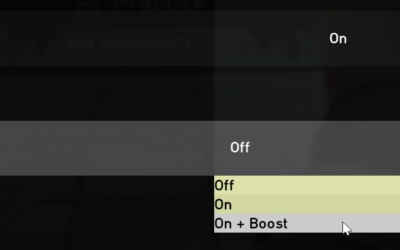
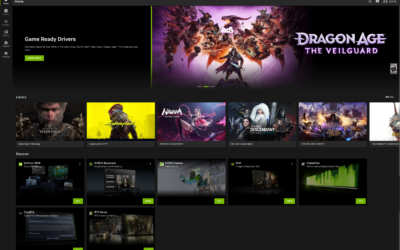
To benefit from DLSS 4.5, keep your drivers current through the Nvidia app so the update reaches your card, then enable DLSS in the games that support it. Since these gains come through software, an existing RTX card can improve simply by staying up to date.
This is the most immediate, practical outcome of the keynote for gamers: a free performance and quality boost on hardware you may already own, provided you keep your software current and switch the feature on where it is available.
See More:
Buying Tips
If the keynote has you considering a purchase, focus on a current RTX card that suits your resolution and budget rather than waiting for unannounced hardware. Match the card to how you actually play, and confirm your system can support it before buying.
Once you have decided, you can compare current Nvidia graphics cards and gear that fit your needs through the links on this page, so you get a card that makes the most of DLSS 4.5 and the ongoing software improvements the keynote reaffirmed. Buying with DLSS 4.5 in mind means choosing a card that will keep getting better, which is a quietly strong reason to invest in the current RTX line-up rather than hold out for hardware that was not announced.
In summary, the CES 2026 Nvidia keynote was a bold statement of the company’s AI ambitions, headlined by the Vera Rubin platform and a sweeping push into robotics and autonomous driving, with DLSS 4.5 as the standout for gamers. The clear message for consumers is that no new gaming cards arrived, but existing RTX owners gain real value through software, so the practical move is to keep current cards updated or buy a well-priced RTX card today rather than waiting on hardware the keynote did not reveal.
Frequently Asked Questions
Does the Rubin architecture affect gaming graphics cards?
Rubin is positioned as NVIDIA’s data centre platform succeeding Blackwell, paired with the Vera CPU and next generation high bandwidth memory. Consumer GeForce cards historically derive from related but separate silicon that arrives later, so a data centre announcement is an indicator of direction rather than a product you can buy for a gaming PC in the same window.
Will my current RTX card get the newest DLSS improvements?
NVIDIA has repeatedly shipped upgraded DLSS models to older RTX hardware through driver and DLL updates, with super resolution and ray reconstruction improvements reaching cards going back to the 20 series. Multi frame generation, by contrast, remained restricted to the newest generation because it depends on hardware features, so expect a split between shared and exclusive features.
Is it worth delaying a GPU purchase after a keynote like this?
Only if an announced product is close to release and sits in your budget class. Data centre and professional announcements rarely change consumer pricing quickly, and demand for AI accelerators has historically kept gaming card prices firm rather than pushing them down. If you need a GPU now for a specific resolution target, waiting on a roadmap slide rarely pays off.
How much of the keynote actually applied to gamers?
Keynotes of this type devote most of their runtime to AI infrastructure, robotics and automotive platforms, with gaming appearing as a segment covering upscaling advances, new titles adopting neural rendering, and driver level features. Treat the gaming portion as the actionable part and the rest as context for where compute and memory supply is heading.
What does neural rendering mean for game performance?
Neural rendering replaces parts of the traditional graphics pipeline, such as material shading, texture compression or denoising, with small networks running on tensor hardware. The practical promise is better image quality at a lower memory and shader cost. Adoption depends on engine support, so benefits arrive title by title rather than across your whole library at once.




Write Your Review
No reviews yet. Be the first to share your experience!