


Nvidia developer resources sit behind a huge share of modern computing, from AI breakthroughs to game engines and scientific research, yet many people are unsure what the program actually offers. Joining gives you access to a vast toolkit of software, libraries and documentation built around Nvidia’s hardware. This review explains what the Nvidia developer ecosystem includes, the key tools you can use, who benefits most, how to get started, and what developers who rely on it have to say. By the end you will know whether joining is worthwhile for your projects and where to point your attention first.
What the Nvidia Developer Program Is
Before diving into the tools, it helps to understand what the program is and why it exists. It is a free gateway to the software that makes Nvidia hardware so powerful for developers.
As an Amazon Associate we earn from qualifying purchases at no extra cost to you.


Overview of the Program
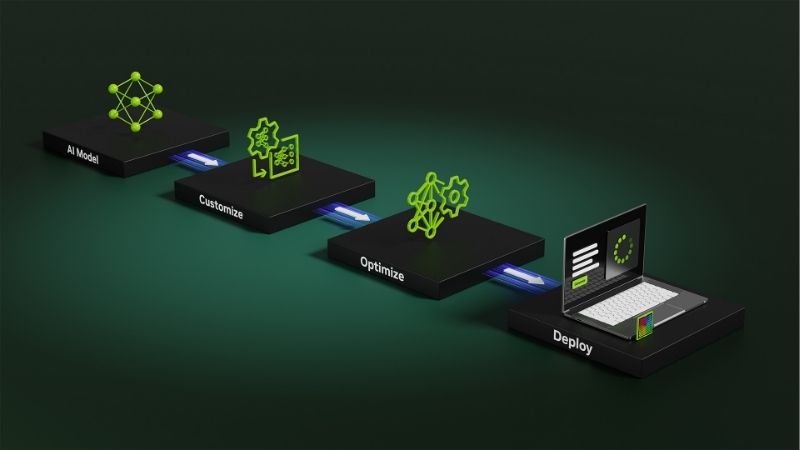
The Nvidia developer program is a free membership that unlocks access to a broad range of software development kits, tools and technical resources. It is designed to help programmers build applications that take full advantage of Nvidia GPUs and platforms. Rather than leaving developers to reinvent the wheel, it hands them tested tools built specifically for the hardware.
Membership connects you to everything from graphics and gaming tools to advanced AI and high-performance computing frameworks. In effect, it is the front door to Nvidia’s entire software ecosystem for developers. Once inside, you can move freely between graphics, AI and computing tools without hunting them down separately, which saves a surprising amount of setup time.
Signing up is straightforward and free, open to individuals and organisations alike. That accessibility is a big part of why the ecosystem has grown so large and influential. A low barrier to entry means students, start-ups and large firms all draw from the same well of tools.
What You Get Access To
As a member, you gain access to Nvidia’s core development platforms, including its widely used parallel computing framework and numerous specialised libraries. These tools cover graphics, AI, data science and more. Whatever field you work in, there is usually a dedicated library or framework already tuned for it.
You also receive documentation, sample code, tutorials and technical guides that make it far easier to start building. This wealth of learning material lowers the barrier to entry considerably. Instead of piecing together scattered guides from around the web, you get official, up-to-date material in one trusted place.
Beyond software, membership often includes access to forums, community support and updates on new tools. Together these resources form a genuinely comprehensive package for developers. Few competing ecosystems bundle software, learning material and community support quite so completely.
Who It Is For
The program suits a wide audience, from game developers and AI researchers to data scientists, engineers and students learning to code on GPUs. Anyone building software that benefits from GPU acceleration is a natural fit. If your work involves heavy parallel computation, the program is almost certainly relevant to you.
It is equally valuable to hobbyists exploring machine learning and to professionals shipping large-scale applications. The breadth of tools means it scales from first experiments to production work. The same account that helps you run a small test can support a full commercial deployment, so you rarely outgrow it. That continuity means the time you spend learning the tools early keeps paying off as your ambitions grow.
For anyone not working with GPU-accelerated software, the program has little relevance. Its value is entirely tied to building on Nvidia’s hardware and platforms. That focus is a strength for GPU developers and simply a non-factor for everyone else.
Key Tools and Resources
The real strength of the program lies in its tools, which span graphics, AI and general computing. Here is a look at the most important ones and what they enable.
CUDA and Core SDKs
At the centre of the ecosystem is CUDA, Nvidia’s parallel computing platform that lets developers harness the GPU for general-purpose processing. It is the foundation on which countless AI and scientific applications are built. A vast amount of modern research and industry software ultimately runs on top of this one platform.
Alongside CUDA sit numerous software development kits for graphics, video, ray tracing and more. These SDKs give developers ready-made building blocks rather than forcing them to start from scratch. That head start can shave weeks off a project, since the hardest low-level work is already handled for you.
Mastering CUDA and the core SDKs unlocks the full power of Nvidia hardware. For many developers, this is the single most valuable part of the program. Learning it well pays dividends across almost every other tool in the ecosystem.
AI and Deep Learning Tools
Nvidia provides a rich set of tools for artificial intelligence and deep learning, including optimised libraries that accelerate training and inference. These are widely used across the AI industry today. Many of the models and products people use daily were trained with the help of these very libraries.
Frameworks and libraries tuned for Nvidia GPUs let developers train models faster and deploy them efficiently. This tight integration is a major reason Nvidia hardware dominates so much of AI work. When the software and silicon are designed together, the resulting performance is difficult for less integrated stacks to match.
For anyone building machine learning applications, these tools are a compelling reason to join. They turn raw GPU power into practical AI capability. Without them, extracting that performance would demand far more low-level effort from each developer.
Libraries, Documentation and Community
The program includes an extensive collection of libraries covering maths, data processing, graphics and more, saving developers enormous amounts of time. These pre-built components are trusted and heavily optimised. Relying on them means you inherit years of Nvidia’s tuning rather than writing and testing the same code yourself.
Comprehensive documentation, tutorials and sample projects support every major tool, making the learning curve far gentler. Good documentation is one of the ecosystem’s quietly underrated strengths. Clear, thorough guides turn a powerful but complex toolset into something a newcomer can actually approach with confidence.
A large, active community of developers means help and shared knowledge are usually easy to find. That support network adds real value on top of the software itself. When a problem arises, the odds are high that another developer has already solved and documented it.
Value, Getting Started and What Users Say
With the tools covered, the practical questions are whether it is worth it, how to begin, and what real developers think. Here is an honest look at all three.
Pros and Cons of the Nvidia Developer Program
Here is the honest ledger for the Nvidia developer program, based on real-world use.
Pros: free to join, access to industry-leading tools like CUDA, excellent documentation, strong AI and graphics support, and a large community. Cons: tools are tied to Nvidia hardware, and the sheer breadth can feel overwhelming for newcomers.
The pattern is clear: for anyone building on Nvidia GPUs, the value is outstanding, while those on other hardware gain little. Its worth depends entirely on your platform and goals. If you have already chosen Nvidia hardware, though, not using the program means leaving a great deal of free value on the table.
How to Get Started
Getting started is as simple as creating a free developer account on Nvidia’s official site and browsing the available tools. From there you can immediately download the SDKs and libraries relevant to your project. There is no lengthy approval process at all, so you can be experimenting within minutes of signing up.
A sensible approach is to begin with the specific tool your project needs, rather than trying to absorb everything at once. Focusing narrowly keeps the vast ecosystem from feeling overwhelming. You can always branch out into other tools later, once the first one is familiar and your project demands more.
Nvidia’s tutorials and sample projects are the ideal on-ramp for newcomers. Working through a guided example is the fastest way to become productive. Building something small that actually runs teaches far more than reading documentation in the abstract.
What Developers Report
Developers widely praise the power and maturity of Nvidia’s tools, especially CUDA and its AI libraries, which are often described as industry standards. Many credit the ecosystem for making demanding projects feasible. For a lot of teams, these tools are the difference between an idea being possible and being out of reach.
The most common critique is that the breadth can overwhelm beginners, and that everything is tied to Nvidia hardware. These are real trade-offs rather than flaws in the tools themselves. Understanding them upfront helps set realistic expectations and avoids the frustration of trying to learn everything at once.
Overall, the consensus is strongly positive for anyone working on GPU-accelerated software. The tools are seen as best-in-class, with documentation and community support to match. That combination is a large part of why Nvidia’s platform has become the default choice in so many fields.
See more:
- Nvidia gear store
- Nvidia number of employees
- Nvidia Jetson Xavier Developer Kit
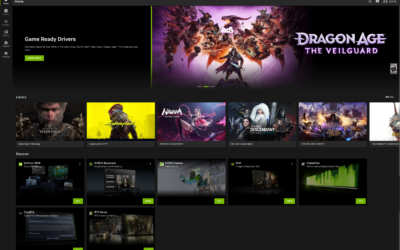
- GeForce graphics driver
Conclusion: Is the Nvidia Developer Program Worth It?
For anyone building GPU-accelerated software, the Nvidia developer program is genuinely valuable, offering free access to industry-leading tools like CUDA, a deep set of AI and graphics libraries, and excellent documentation and community support. Its main limitations are that everything is tied to Nvidia hardware and that the sheer scope can overwhelm beginners, so the smart approach is to start with the specific tools your project needs. If your work involves AI, graphics, data science or high-performance computing on Nvidia GPUs, joining the Nvidia developer ecosystem is an easy, low-risk and genuinely rewarding decision.
Frequently Asked Questions
What does the NVIDIA Developer Program actually give me?
Free registration provides access to SDKs and tools including the CUDA Toolkit, TensorRT, cuDNN, Nsight profilers, the DLSS SDK, Omniverse, Jetson JetPack, and NGC container registry pulls. It also unlocks early access programmes, technical documentation, and developer forums where NVIDIA engineers respond to implementation questions.
Do I need a specific GPU to develop with CUDA?
Any CUDA capable GeForce, RTX, or Jetson device works for learning and most development. Compute capability determines which features you can target, so newer architectures support newer instructions. For serious deep learning you want a card with large VRAM, since model size rather than raw compute is usually the constraint.
Is the developer program free?
Yes for the standard tier, which covers the majority of SDKs and tools. Paid or application gated tiers exist for enterprise support, NVIDIA AI Enterprise licensing, and certain early access hardware programmes. Individual developers and students almost never need to pay to access the core toolchain.
What is the difference between the Game Ready driver and the CUDA toolkit driver?
Game Ready drivers ship frequently with launch day game optimisations, while the CUDA Toolkit bundles a driver validated against a specific CUDA version. If you develop and game on the same machine, install a current Studio or Game Ready driver and then install the toolkit without its bundled driver component.
Where should a beginner start?
Register for a free developer account, install the CUDA Toolkit matching your driver, and work through the official programming guide samples before moving to a higher level framework. For AI work, start with PyTorch or TensorRT rather than writing kernels directly, since most practical acceleration is already implemented there.



Write Your Review
No reviews yet. Be the first to share your experience!