
When was Nvidia founded has a precise and rather charming answer: the company was founded in April 1993 by three engineers who mapped out their plan over coffee at a Denny’s diner. From that humble booth grew the company now at the center of the AI revolution. This article covers exactly when Nvidia was founded, who the founders were, the famous origin story, and how a graphics-chip startup became a global giant.
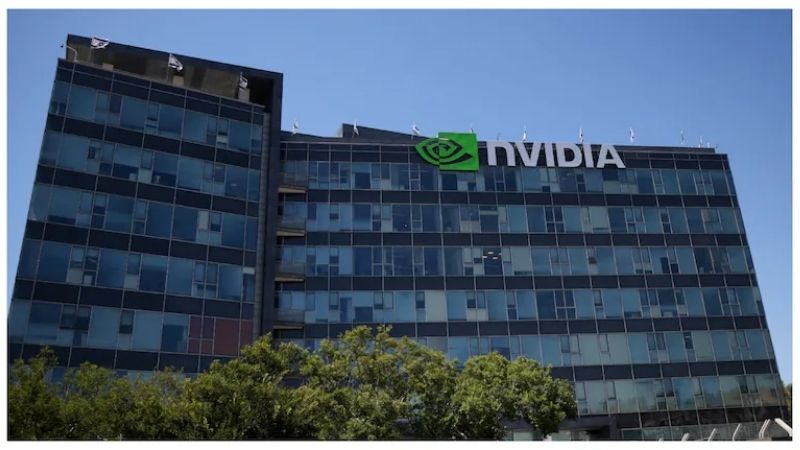
When Nvidia Was Founded
The founding is easy to pin down, but the details around it add welcome color. Knowing the date, the people, and the place gives the full picture.
The Founding Date
It is worth noting that sources occasionally differ on the exact day, since a company’s conception, incorporation, and first day of operations can fall on slightly different dates. What is not in dispute is the year and the season: Nvidia came into being in the spring of 1993, at a moment when the personal computer was rapidly moving from a specialist tool into an everyday household appliance. That broader context helps explain why three engineers thought the time was right to bet a company on making those computers dramatically better at rendering graphics.
Nvidia was founded in April 1993, in the heart of what would become Silicon Valley. Jensen Huang chose that spring to launch the company, reportedly on his thirtieth birthday, giving the date a neat personal significance.
The early 1990s were a formative moment for personal computing, and the founders saw an opportunity in dedicated graphics hardware just as PCs were becoming mainstream household machines.
That timing proved crucial, since the company arrived early enough to help shape the emerging market for accelerated graphics rather than merely following it.
The Three Founders
The complementary backgrounds of the three founders were a big part of why the venture had a chance. Huang brought experience from the semiconductor industry along with the business instincts to lead a company, while Malachowsky and Priem carried deep engineering credibility from designing graphics systems at a respected workstation maker. This blend meant Nvidia was not merely an idea but a team capable of actually building sophisticated chips, a distinction that separates the startups that survive from the many that never ship a working product.
Nvidia was founded by three people: Jensen Huang, Chris Malachowsky, and Curtis Priem. Huang, who had worked at chipmakers including LSI Logic and AMD, became CEO, a role he has held ever since.
Malachowsky and Priem were both accomplished engineers who came from Sun Microsystems, where they had deep experience designing graphics technology for workstations.
Together the trio combined business leadership with serious technical depth, a pairing that gave the young company both a vision and the engineering muscle to pursue it.
The Denny’s Origin Story
The choice of a Denny’s was not a marketing gimmick but simply where three engineers without an office could meet cheaply and talk for hours. That ordinariness is exactly what has made the story resonate, because it underscores how modest the beginnings of an eventual trillion-dollar company can be. The particular Denny’s in East San Jose has since been embraced as a landmark in the company’s mythology, a reminder to founders everywhere that world-changing businesses often start not in gleaming labs but in unremarkable everyday places.
The most famous detail of Nvidia’s founding is where it was hatched: a booth at a Denny’s restaurant in East San Jose. There, over endless cups of coffee, the three founders sketched out their bet on 3D graphics.
The diner has since become part of Silicon Valley lore, celebrated by the company and even commemorated at the restaurant itself, a fitting symbol of a startup that began with an idea and a cheap meal.
The story endures because it captures something true about the company’s origins: a bold technical vision, three determined engineers, and very little else at the start.
The Early Years
Founding a company is only the beginning, and Nvidia’s first years were far from guaranteed success. The path ran through a shaky start and a couple of breakthrough products.
The Name and the First Chips
The near-failure of that first product is a crucial and often overlooked chapter, because it shows how close Nvidia came to never mattering at all. The NV1 bet on an unconventional graphics approach that the wider industry did not adopt, leaving the young company with disappointing sales and dwindling cash. Survival required painful cuts and a rapid strategic rethink, and it was only the subsequent success of the RIVA 128 that pulled Nvidia back from the brink and validated the founders’ broader vision for dedicated graphics hardware.
The Nvidia name draws on the Latin word invidia, meaning envy, hinting at the founders’ hope that rivals would covet their products. Early on the company also used “NV” as shorthand for its projects.
Its first product, the NV1 released in 1995, was an ambitious but commercially disappointing multimedia chip that nearly sank the fledgling company before it found its footing.
Nvidia recovered with the RIVA 128 in 1997, a graphics accelerator that sold strongly and gave the company the momentum and revenue it desperately needed to survive.
Coining the ‘GPU’
Branding the GeForce 256 as the first GPU was a shrewd act of category creation as much as a technical milestone. By naming and defining a new class of processor, Nvidia positioned itself as the originator and leader of that category, a framing that competitors then had to react to rather than shape. The term stuck so thoroughly that it became a generic word used across the entire industry, and the marketing insight behind it foreshadowed the way Nvidia would later define and dominate other emerging computing categories.
In 1999 Nvidia introduced the GeForce 256 and marketed it as the world’s first “GPU,” or graphics processing unit, coining a term that has since become universal across the industry.
The GeForce line established Nvidia as a leader in consumer graphics, powering gaming PCs and building the brand that enthusiasts would come to know for decades.
That branding stroke mattered as much as the engineering, since defining a whole product category helped cement Nvidia’s identity at the center of it.
Going Public in 1999
The role of early venture backers deserves emphasis, because without them Nvidia might not have survived long enough to reach its public offering. Firms that took a chance on the unproven startup provided the capital that carried it through its rocky first product and into the success of the RIVA line. The 1999 listing then converted that early faith into a durable public company, giving Nvidia the financial resources and credibility to compete against far larger, better-established rivals in the fast-growing market for computer graphics.
Nvidia held its initial public offering in early 1999, listing on the Nasdaq and giving it the capital and public profile to scale up its ambitions in graphics.
The company had earlier been backed by prominent venture investors including Sequoia Capital and Sutter Hill Ventures, whose early support helped it survive the rocky first years.
Going public marked the end of the pure startup era and the beginning of Nvidia’s long climb from a graphics specialist toward something far larger.
From Startup to Giant
The founding date is a starting line, not the whole race. What the founders built over the following decades is what makes the origin story worth telling.
The Road to AI Dominance
The pivotal decision on this road was Nvidia’s investment in making its GPUs programmable for general-purpose computing, not just graphics. Long before artificial intelligence became a mainstream obsession, the company built the software and hardware foundations that would let researchers run massive parallel calculations on its chips. When deep learning later exploded, Nvidia found itself holding exactly the tools that the AI boom demanded, a position that looked like extraordinary luck but was in fact the payoff from years of patient, forward-looking engineering choices.
Over the following decades, Nvidia expanded from gaming graphics into professional visualization, then into the parallel-computing platform that would eventually power artificial intelligence.
Its CUDA software, launched in the late 2000s, let developers harness GPUs for general computing, quietly laying the groundwork for the AI boom that arrived years later.
By the 2020s, that long bet paid off spectacularly, as Nvidia’s chips became the essential engine of generative AI and the company’s value soared into the trillions.
The Pros and Cons of Nvidia’s Original Bet
The founders’ original bet on dedicated graphics hardware had clear pros and cons. On the plus side, it placed Nvidia at the ground floor of an enormous emerging market and built deep expertise in parallel computation.
That same focus later proved perfectly suited to AI, since the math behind training neural networks resembles the math behind rendering graphics, an advantage the founders could not have fully foreseen in 1993.
On the downside, the early narrow focus nearly doomed the company when the first product flopped, showing how a bold, concentrated bet can be as risky as it is rewarding.
Why the Founding Story Matters
The 1993 founding story matters because it explains the company’s DNA: an engineering-first culture, a willingness to make long, risky bets, and a founder-CEO still steering the ship decades later.
Few technology companies retain their original founder as chief executive for more than thirty years, and that continuity has shaped Nvidia’s consistent, long-horizon strategy.
Understanding where the company came from makes its later transformation feel less like luck and more like the culmination of choices made in that Denny’s booth.
See More:
- TechPowerUp GPU
- Nvidia H200 GPU price
- RTX 5050 Mobile
- Nvidia competitors
- Nvidia Reflex low latency on or off
The Bottom Line on When Nvidia Was Founded
In short, when Nvidia was founded is answered simply: April 1993, by Jensen Huang, Chris Malachowsky, and Curtis Priem, over coffee at a Denny’s in San Jose. From a nearly fatal first product to coining the term GPU and ultimately powering the AI era, the company’s journey traces back to that single spring. To see how far the technology has come since then, explore our Nvidia GPU reviews and guides.
Frequently Asked Questions
What is NVIDIA’s exact founding date?
NVIDIA was founded on 5 April 1993, a date chosen partly because it was Jensen Huang’s thirtieth birthday. The company was incorporated in California initially and later reincorporated in Delaware. It began with three founders and roughly forty million dollars of venture backing from Sequoia Capital and Sutter Hill Ventures secured over the following months.
Is the Denny’s story true?
Yes, and NVIDIA has embraced it publicly. Huang, Chris Malachowsky and Curtis Priem met at a Denny’s on Berryessa Road in East San Jose to plan the company, a location Huang had worked at as a dishwasher and busboy years earlier. The restaurant has since installed a booth marking the spot as the birthplace of the company.
What did NVIDIA make first?
The first product was the NV1 in 1995, a multimedia accelerator that combined 2D and 3D graphics with audio. It used quadratic texture mapping rather than the triangle-based approach the industry adopted, which made it incompatible with the emerging Direct3D standard and left it commercially unsuccessful. The company nearly failed before the RIVA 128 turned things around in 1997.
When did NVIDIA go public?
The initial public offering took place in January 1999 on the Nasdaq. Later that year the company launched the GeForce 256, which it marketed as the world’s first graphics processing unit because it integrated transform and lighting on the chip. That product established both the GeForce brand and the term GPU in mainstream use.
Are the original founders still involved?
Jensen Huang remains chief executive and president, an unusually long tenure for a technology founder. Chris Malachowsky continues as an NVIDIA Fellow, a senior technical role. Curtis Priem left the company and later became known for large philanthropic donations to Rensselaer Polytechnic Institute, his alma mater, funded by the NVIDIA shares he held.
As an Amazon Associate we earn from qualifying purchases at no extra cost to you.








Write Your Review
No reviews yet. Be the first to share your experience!