
- Top Pick: GIGABYTE Radeon RX 9070 XT Gaming OC 16G Graphics Card, PCIe 5.0, 16GB GDDR6, GV-R9070XTGAMING OC-16GD Video Card
- Best Value: GIGABYTE Radeon™ RX 9070 XT Gaming OC ICE 16G Graphics Card (16GB GDDR6, 256-bit, PCIe 5.0, HDMI/DP 2.1, 2.7 Slot, Hawk Fan, Server-Grade Thermal Gel, Reinforced Structure)
- Premium Choice: ASUS Prime Radeon RX 9070 XT 16GB GDDR6 OC Edition Gaming Graphics Card
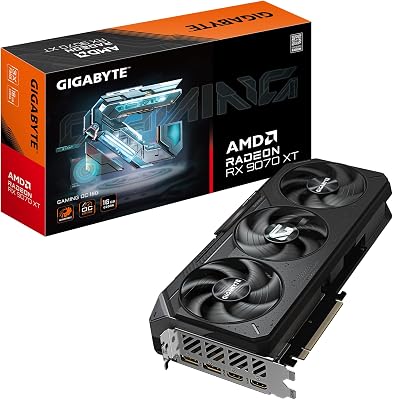


The radeon rx 9070 xt vs 5080 matchup is really a value question dressed up as a spec battle: the RX 9070 XT is a strong 1440p-to-4K card at a mid-premium price, while the RTX 5080 is a high-end 4K performer that costs far more. The honest issue is whether the 5080’s extra speed, ray tracing, and DLSS 4 justify the price jump for you. This face-off delivers the quick verdict, a full spec table, real performance expectations, and a clear recommendation for your monitor and budget.
As an Amazon Associate we earn from qualifying purchases at no extra cost to you.


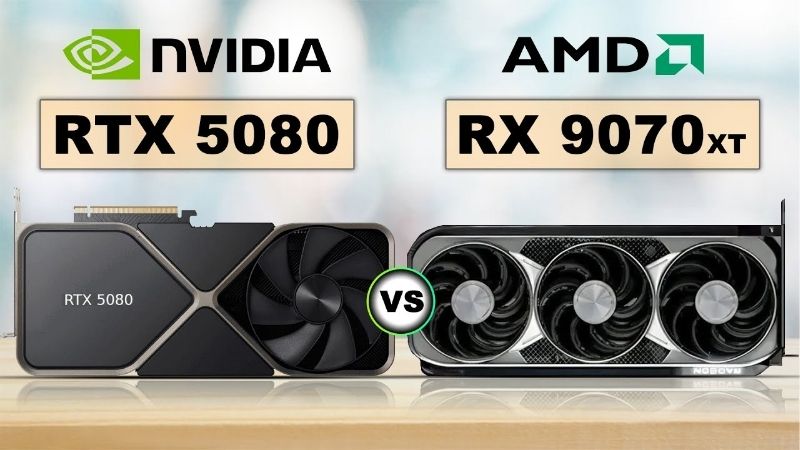
Quick Verdict and Full Spec Comparison
Short on time? This section hands you the blunt answer, the core specs side by side, and a plain explanation of what the price difference actually buys. These two cards target different buyers, and knowing which one you are is most of the decision.
The 30-Second Answer
Buy the RTX 5080 if you game at 4K, want the strongest ray tracing and DLSS 4, and treat your GPU as a long-term, no-compromise investment. Choose the Radeon RX 9070 XT if you game at 1440p or entry 4K, want excellent performance per dollar, and would rather spend the savings elsewhere in your build.
The 5080 is the faster card, full stop, but it commands a large premium. The 9070 XT is the value play that covers the vast majority of real gaming needs. Your resolution and how much you value ray tracing decide the winner far more than brand loyalty.
Put simply, the 5080 is for people who refuse to compromise at 4K, and the 9070 XT is for people who want a superb experience without paying flagship money. Both are excellent cards; the trap is overspending on capability your setup will never fully use.
Radeon RX 9070 XT vs 5080 Spec Table
Here are the essential numbers. Clocks, board power, and prices are launch or reported figures, so confirm the current listing before buying, since 2026 pricing moves quickly.
| Spec | Radeon RX 9070 XT | RTX 5080 |
|---|---|---|
| Architecture | RDNA 4 (Navi 48) | Blackwell (GB203) |
| Memory | 16GB GDDR6 | 16GB GDDR7 |
| Memory Bus | 256-bit | 256-bit |
| Boost Clock (approx.) | ~2.97 GHz | ~2.6 GHz |
| Typical Board Power | ~304W | ~360W |
| Recommended PSU | 750W | 850W |
| Upscaling | FSR | DLSS 4 |
| Interface | PCIe 5.0 | PCIe 5.0 |
| Launch MSRP | $599 | $999 |
What the Price Gap Really Buys You
The RTX 5080 asks for roughly 400 dollars more, and in return it delivers higher raw performance, faster GDDR7 memory, notably stronger ray tracing, and DLSS 4 with frame generation. In broad terms, expect the 5080 to lead by something like 30 to 45 percent in demanding games, with the gap widest when ray tracing is switched on.
The Radeon RX 9070 XT counters with value. It matches the 5080 on memory capacity and bus width, and it delivers a large share of the real-world experience for well under two-thirds of the price. For buyers who game mostly at 1440p, that price-to-performance balance is hard to argue with.
It helps to translate the price gap into a monthly cost of ownership. Spread over a few years of use, the extra outlay for the 5080 is small per month if you genuinely game at 4K every day. But if most of your play is 1440p, that same money is far better spent elsewhere, which is the case the 9070 XT quietly makes.
Deep Dive Face-Off: Performance, Ray Tracing, and Value
Spec sheets do not tell you how a card feels in the games you love. What matters is frame rates at your resolution, how each handles ray tracing, and how the total cost fits your build. This is where the radeon rx 9070 xt vs 5080 question turns practical.
Gaming Performance at 1440p and 4K
At 1440p, both cards are excellent, and the RX 9070 XT already delivers high frame rates that satisfy most players; the 5080 simply pushes the ceiling higher for 240Hz-class monitors. If 1440p is your target, the value card covers you comfortably.
At 4K, the gap grows. The RTX 5080 is a true 4K card that holds smooth frame rates in demanding titles, while the 9070 XT is capable at 4K but leans more on upscaling to stay silky in the heaviest games. If native 4K at high settings is the goal, the 5080 is the safer long-term buy.
Frame-rate targets matter as much as resolution. If you are happy at 60fps, the 9070 XT covers a huge range of games even at higher resolutions, while chasing 120fps or more at 4K is where the 5080 pulls decisively ahead. Match the card to the frame rate you actually want to lock, not to a number on a box.
Ray Tracing, DLSS 4, and Future Features
Ray tracing is where Nvidia stretches its lead, and the RTX 5080 handles heavy ray-traced lighting with more comfort than the 9070 XT. This is the forward-looking, experimental side of the decision: as more games and creative apps lean on ray tracing and AI features, the 5080’s strengths become more relevant over time.
DLSS 4 with frame generation is the other differentiator, often boosting frame rates substantially in supported titles while keeping the image clean. The 9070 XT answers with FSR, which continues to improve, but Nvidia’s feature set is currently broader. If cutting-edge features matter to you, weigh that heavily.
This is also the most forward-looking part of the decision. As game engines lean harder on ray tracing and AI-assisted rendering, a card with stronger hardware for those tasks should stay relevant longer. If you tend to keep a GPU for many years, that future-proofing argument tilts toward the 5080; if you upgrade often, it matters far less.
Pros and Cons of Each Card
Here is the honest trade-off. The RTX 5080’s pros are top-tier performance, strong ray tracing, GDDR7 memory, and DLSS 4. Its cons are the high price, the higher power draw, the need for an 850W-class supply, and diminishing returns if you only game at 1440p.
The Radeon RX 9070 XT’s pros are outstanding value, strong 1440p and capable 4K performance, the same 16GB and 256-bit setup, and a lower power requirement. Its cons are weaker heavy ray tracing and a narrower feature set than the 5080. For value-focused 1440p gamers, those compromises are easy to accept.
The trade-off becomes obvious when you list your priorities. Rank raw power, ray tracing, and longevity at the top and the 5080 wins. Rank value, efficiency, and covering 1440p beautifully at the top and the 9070 XT wins. There is no universally correct answer, only the one that matches your own ranking.
Buying in a Rising-Price GPU Market
The wider market shapes this decision too. Component prices in 2026 have climbed rather than eased, which raises the stakes on a big-ticket purchase like the 5080 and makes the 9070 XT’s value even more appealing. A short market check helps you buy with confidence.
Why 2026 Prices Reward the Value Pick
Across the PC space, laptops and parts have generally risen in price this year, and graphics cards have not escaped the trend. Memory cost is a big factor: as the modules feeding GPUs and systems get more expensive, that cost reaches the final price, which makes a well-priced high-value card like the 9070 XT especially attractive against a premium option.
There is some positive news, though it is modest and mostly in the future. The steep climb of late 2025 has cooled, and hardware maker Framework has noted a spell of relative price stability while still warning of ongoing volatility. In short, prices have stopped surging, not begun falling.
Additional supply is coming, too. Manufacturers can now source DDR5 from Chinese suppliers such as CXMT, and Micron is building two plants in Idaho to expand production. The catch is timing, since those Idaho facilities are not expected to run until 2027 or 2028, putting meaningful relief years away rather than this quarter.
For this specific choice, the practical lesson is clear. If you want to spend less in a firm-priced market, the 9070 XT is the sensible call, and if the 5080’s performance is a must-have, buying near its listed price today is reasonable because a near-term crash is unlikely. Waiting rarely rewards you when the market is on a plateau.
For a premium purchase specifically, this stability is oddly reassuring. It means the 5080 you buy today is unlikely to feel foolish next month because of a sudden price collapse, and it means the value-focused 9070 XT holds its appeal as the sensible spend. Either way, timing is less of a gamble than it was during the sharp increases of late 2025.
For buyers, the smartest response to a firm market is discipline rather than delay. Set a fair target price for whichever card suits you, watch for it, and buy when a listing lands near that number. Chasing a dramatic discount that the supply picture does not support usually just means going without a working card for longer than necessary.
The Alternative: A Card Between Them
If the 5080 is out of budget but the 9070 XT leaves you wanting more Nvidia features, the RTX 5070 Ti sits neatly in the middle. It brings DLSS 4 and strong performance at a price well below the 5080, making it a natural compromise for feature-focused buyers.
On the value side, the standard RX 9070 offers most of the 9070 XT’s experience for less, which suits tighter budgets. Comparing all of these through the links on this page is the fastest way to lock in the best current price.
Do not overlook the used and previous-generation market either. A well-kept older flagship can occasionally rival the 9070 XT on raw performance for less money, though it usually gives up efficiency and the newest features. If you go that route, buy from a reputable seller and confirm the card’s condition, since a warranty and clean history are worth paying a little more for.
Final Verdict: Who Should Buy Which
Choose the RTX 5080 if you game at 4K, prize ray tracing and DLSS 4, and want a no-compromise card that stays strong for years. It is the enthusiast’s pick, justified when your display and workload can truly use it.
Choose the Radeon RX 9070 XT if you game at 1440p or entry 4K and want the best balance of performance and price. It is the value winner for most gamers, and it frees up budget for the rest of your build. Check live pricing on both through the links here before you commit.
Whichever way you lean, buy the card that matches the way you actually play, not the one that wins a benchmark you will never run. The RTX 5080 rewards true 4K enthusiasts, and the Radeon RX 9070 XT rewards everyone who wants flagship-class gaming at a far more sensible price. Both leave you with a fast, capable system for years to come.
See More:
Conclusion
The radeon rx 9070 xt vs 5080 decision is a classic trade-off between raw power and value. The RTX 5080 wins on 4K performance, ray tracing, and DLSS 4, but it costs far more, while the RX 9070 XT delivers most of the real-world experience at a friendlier price for 1440p players. With component prices holding firm rather than falling, buying the card that fits your resolution today is the smart move. Compare the latest prices on both through the links on this page and choose the one that matches your monitor and your budget.
Frequently Asked Questions
How big is the performance gap between these two cards?
The RTX 5080 is the faster card overall, especially at 4K and in ray traced titles where its wider memory bandwidth and stronger RT hardware show. The RX 9070 XT closes much of the raster gap at 1440p and remains competitive per pound, but it is not a 5080 rival in path traced workloads.
Do both cards have enough VRAM for 4K?
Both carry 16GB, which is adequate for 4K today in almost every title. The 5080 pairs it with faster GDDR7 on a 256-bit bus, so it holds up better with ray tracing and high resolution texture packs enabled simultaneously. Neither card will run out of memory at 1440p.
What power supply should I plan for?
The RX 9070 XT is roughly a 300W card and pairs well with a 750W unit using two or three 8-pin connectors. The RTX 5080 is around 360W and Nvidia recommends 850W, with a 12V-2×6 connector. Seat the 16-pin cable fully, since partial insertion is the known cause of connector damage.
Which one is better for creative and AI work?
Nvidia still leads in software support. CUDA is the default target for most video, 3D and AI tooling, and Blackwell cards handle local model inference well. AMD has improved with ROCm and HIP support in Blender and DaVinci Resolve, but you should verify your specific application before choosing Radeon for production work.
Will either card fit a mid-tower case?
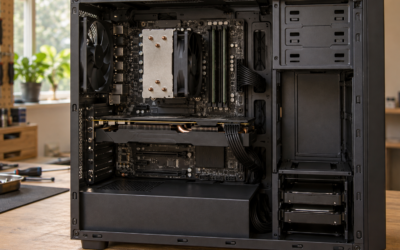
Most partner designs of both cards are triple-slot and 320mm or longer, which rules out many compact cases and some mid-towers with front radiators. Measure clearance from the rear bracket to the drive cage, and allow another 30mm to 40mm for the power connector bend if the cable exits the top edge.
Ready to decide? Our #1 pick for 2026 is the Architecture.
Live price & availability on Amazon.





Write Your Review
No reviews yet. Be the first to share your experience!