
Top Rtx 3050 Laptop Gpu Still Picks for 2026
Here are our current top rtx 3050 laptop gpu still picks, compared on real Amazon owner reviews, price, and features. Live prices update below.




3050 Ti laptops remain surprisingly common on shelves and in the used market, which raises a fair question in 2026: is this five-year-old mobile GPU still worth your money? The RTX 3050 Ti is a laptop-only chip, with no desktop counterpart, and it has aged into the entry point of budget gaming notebooks. This review takes an objective look at what the 3050 Ti actually delivers today, drawing on the pattern of positive owner impressions and the recurring complaints that temper them. We will cover the silicon and its specs, real 1080p gaming performance, the much-debated 4GB VRAM limit, and how a turbulent 2026 pricing landscape changes whether to buy now or stretch for something newer.
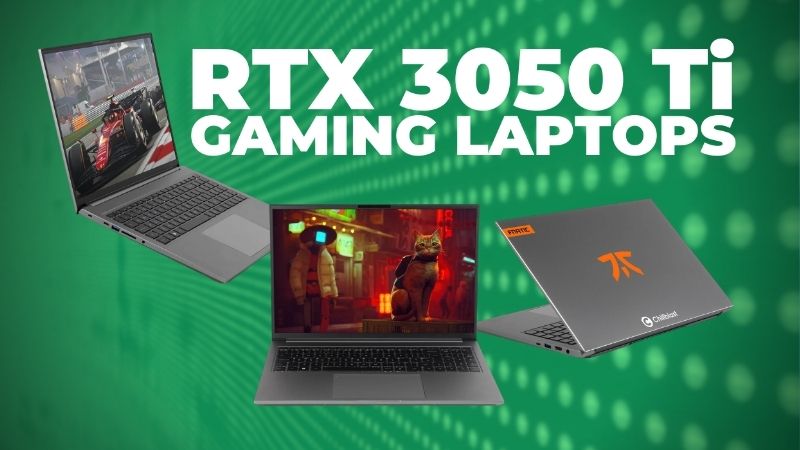
RTX 3050 Ti Specs and Where It Fits
The RTX 3050 Ti is built on NVIDIA’s Ampere architecture using the GA107 die, and it exists only as a mobile part inside laptops. Understanding its specifications, and one crucial variable the spec sheet hides, is the foundation for judging whether the chip still earns a place in a 2026 purchase.
The Silicon and Core Numbers
The 3050 Ti carries 2,560 CUDA cores paired with 4GB of GDDR6 memory on a 128-bit bus, delivering roughly 187 GB/s of bandwidth. It launched in 2021 as a budget mobile solution and slots firmly at the entry level of NVIDIA’s gaming stack.
As an Ampere card it includes second-generation RT cores for hardware ray tracing and third-generation Tensor cores that enable DLSS. It also supports AV1 decode and NVIDIA Broadcast, features that extend its usefulness beyond gaming alone. In raw rasterization it lands roughly in the class of a previous-generation RTX 2060.
The TGP Problem: Why Two 3050 Ti Laptops Differ
The single most important fact about this GPU is not on most spec sheets. The 3050 Ti ships with a configurable power budget, or TGP, that laptop makers set anywhere from about 35W to 80W, and that range produces a performance gap of up to fifty percent between two laptops carrying the identical chip name.
This means the badge on the box tells you far less than the cooling and power design of the specific laptop. A thin, fanless-leaning ultraportable will run the 3050 Ti far slower than a thicker gaming chassis with proper heat pipes.
The practical takeaway is to research the exact laptop model, not just the GPU. Look for the wattage figure in reviews, because a well-cooled 80W implementation is a genuinely different product from a throttled 35W one.
How It Positions Against Its Siblings
Within NVIDIA’s mobile range the 3050 Ti sits just above the plain RTX 3050 and below the RTX 3060 laptop GPU. The step up to a 3060 brings more cores and, critically, more memory, delivering a meaningfully larger jump in playable frame rates.
Against the standard 3050, the Ti offers a modest edge rather than a transformation. The two are close enough that the laptop’s power design often matters more than which of the two chips it carries, which defines the 3050 Ti’s identity as an affordable entry into RTX gaming with clear ceilings.
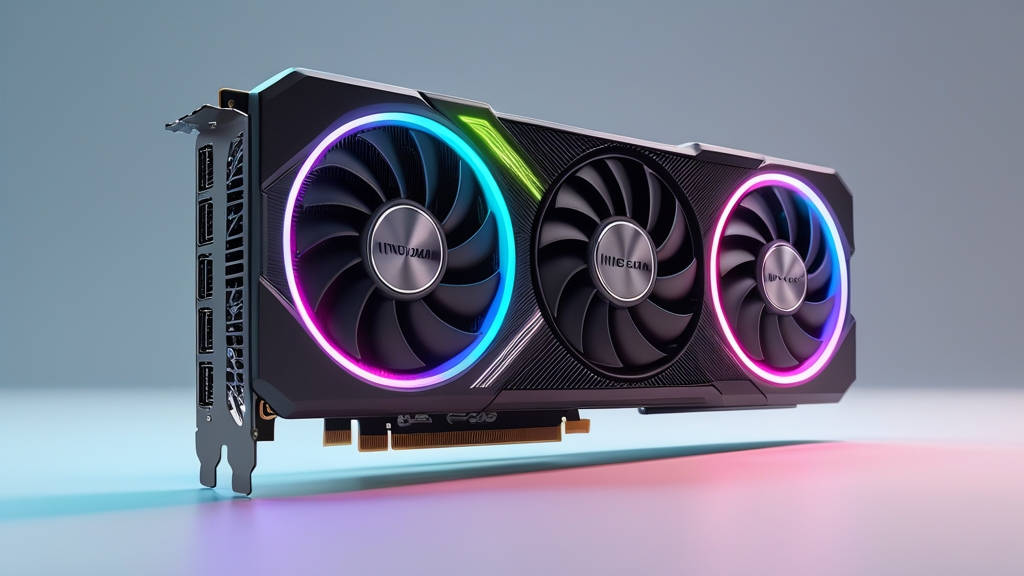
Real-World Performance in 2026
Specifications matter less than how a card plays today, so this section synthesizes the experience owners describe, balancing enthusiastic reviews against honest frustrations. The summary: the 3050 Ti remains a competent 1080p esports and older-AAA machine, with one limitation that increasingly defines its reviews in 2026.
1080p Gaming and Esports Results
For competitive and esports titles, the 3050 Ti still performs well. Games like CS2, Valorant, Rocket League, and Dota 2 run comfortably at 1080p with high frame rates, which covers a large slice of what budget gamers actually play.
In older and less demanding AAA games, 1080p at medium settings is realistic, and DLSS can recover frames in supported titles. Owners frequently praise the chip for handling their existing library smoothly on a tight budget.
The experience falls off in current, heavyweight AAA releases. Demanding 2024-and-later titles often require low settings and DLSS to stay playable, and even then the card is working at its limit rather than coasting.
The 4GB VRAM Question
The defining limitation in 2026 is memory. The 3050 Ti’s 4GB of VRAM was tight at launch and is now the chip’s clearest bottleneck, because modern games increasingly expect more, especially with high-resolution textures or ray tracing enabled.
When a game exceeds the available VRAM it must swap data over the slower system bus, causing stutters, texture pop-in, and sharp frame drops regardless of how capable the core is. This is the complaint that surfaces most often in critical owner reviews.
The practical mitigation is to lower texture quality and lean on DLSS, both of which reduce memory pressure. With realistic settings the 4GB buffer is workable for 1080p, but it is the reason the card cannot be recommended for maxed-out modern gaming.
What Owners Praise and Criticize
The positive reviews cluster around value and efficiency. Owners highlight smooth esports performance, solid battery-friendly power draw, and the ability to play a broad back catalogue without spending heavily, which is exactly the brief for an entry-level laptop.
The criticism is consistent and centers on longevity. The 4GB VRAM ceiling, weak performance in the newest AAA games, and the wide quality gap between low-wattage and high-wattage implementations are the recurring three-star concerns that buyers should weigh.
Pricing, the 2026 Market, and Who Should Buy
The final question is value, and in 2026 it is inseparable from a volatile component market. Weighing the chip’s pros and cons against current prices, and the news shaping them, determines whether a 3050 Ti laptop is a smart buy or a false economy right now.
Pros and Cons of the 3050 Ti in 2026
On the positive side, the 3050 Ti is inexpensive, power-efficient, and capable at 1080p esports and older AAA gaming, and it brings the RTX feature set, DLSS, ray tracing, AV1 decode, and NVIDIA Broadcast, to a budget price point.
On the negative side, the 4GB VRAM is a real constraint, current AAA performance is weak, and the configurable TGP means quality varies dramatically between laptops carrying the same chip. The 3050 Ti is a sensible budget choice for the right buyer and games, but only at the right price.
How Rising 2026 Prices Change the Math
The component market in 2026 strengthens the case for older hardware like the 3050 Ti. A severe structural memory shortage has driven DRAM prices more than 170 percent higher year over year, and because video memory can make up as much as 80 percent of a graphics card’s bill of materials, new GPUs and the laptops built around them have grown markedly more expensive. Current-generation cards are up an estimated 15 to 23 percent, lead times on some models stretch for months, and that inflation flows straight through into notebook sticker prices and stock levels.
AI demand is the engine behind the squeeze. With the United States approving sales of NVIDIA’s powerful H200 accelerators to major Chinese firms, memory and fabrication capacity is being steered toward lucrative data-center silicon, and reports indicate NVIDIA has trimmed mid-range consumer output by a significant margin to match. AMD raised prices around ten percent early in the year and NVIDIA followed, with some popular cards jumping 16 to 17 percent overnight and memory suppliers warning the shortage could persist into 2027. The downstream effect is that newer budget laptops cost more and are harder to find at sensible prices, while their year-over-year performance gains are partly cancelled out by the higher price of entry. A modest generational uplift means little if it arrives with a noticeably larger bill attached.
For a value-focused buyer this reshapes the decision entirely. An existing or lightly used 3050 Ti laptop, bought at a genuine discount, can deliver more gaming per dollar in this climate than a newer entry-level machine carrying the full weight of 2026 inflation. The strategy is opportunistic rather than aspirational: a well-cooled 3050 Ti laptop at a low price is a smart buy precisely because the newer alternatives have become expensive and scarce, whereas paying near-new money for the aging chip never makes sense. In a year of rising prices, a cheap capable laptop you already understand is a rational hedge.
Who Should Buy and Who Should Skip
You should consider a 3050 Ti laptop if your budget is tight, you mainly play esports and older titles at 1080p, and you can find a well-cooled, higher-wattage model at a clear discount. For that buyer it remains a sensible, efficient choice.
You should skip it if you want to play the latest AAA games at high settings, need headroom for several years, or are being asked to pay close to the price of a newer card with more VRAM.
The honest recommendation is conditional. Buy the 3050 Ti for what it is, a budget 1080p machine bought cheaply, and avoid it as a long-term investment or a maxed-settings gaming solution.
Frequently Asked Questions
Several questions recur from buyers weighing a 3050 Ti laptop in 2026. The concise answers below tackle the most common ones about gaming capability, memory, and value.
Is the 3050 Ti good for gaming in 2026?
Yes for 1080p esports and older AAA titles, where it performs smoothly. It struggles with the newest demanding games, which usually require low settings and DLSS to stay playable.
Is 4GB of VRAM enough on the 3050 Ti?
It is workable at 1080p with sensible texture settings, but 4GB is the card’s main bottleneck in 2026 and can cause stutters in memory-hungry modern games.
Should I buy a 3050 Ti laptop now or wait?
With newer laptops inflated by the 2026 memory shortage, a discounted, well-cooled 3050 Ti laptop can be strong value. Avoid it only if you need to max out the latest AAA games.
See more:
Recommended Products

Crucial 8GB DDR4 RAM 3200MHz (PC4-25600), Downclockable to 2933/2666MHz Laptop Memory, SODIMM 260-Pin CL22, Compatible with 13th Gen Intel Core and AMD Ryzen 7000 - CT8G4SFRA32A

Prime ASRock Radeon RX 7600 Challenger 8GB OC & Challenger CL-550B 550W 80+ Bronze PSU | High-FPS 1080p Gaming Power Bundle

Sapphire Technology Pulse AMD Radeon RX 6700 XT Gaming Graphics Card with 12GB GDDR6, AMD RDNA 2 (11306-02-20G) (Renewed)
As an Amazon Associate we earn from qualifying purchases. Product prices and availability are accurate as of the date/time indicated.
Conclusion
The 3050 Ti in 2026 is a study in buying the right thing for the right reasons. It is no longer a powerful GPU, and its 4GB of VRAM limits it in modern AAA games, but for 1080p esports and a deep back catalogue it still delivers smooth, efficient gaming at a budget price. The wider market sharpens that conclusion: with new-laptop prices pushed up by a steep memory shortage and AI-driven demand, a well-cooled 3050 Ti machine bought at a genuine discount can offer better value per dollar than a pricier newer model. Match the card to lighter games and a low price, and the 3050 Ti remains worth buying; expect it to handle everything maxed out, and it will disappoint.
Top picks from this guide
 HP&ref_=dp_csx_lgbl_s_premium-eligibleHP Victus 15.6" FHD 144Hz Gaming Laptop, Intel Core i5-13420H,…$679 \xc2\xb7 99/100CrucialCrucial 8GB DDR4 RAM 3200MHz (PC4-25600), Downclockable to 2933/2666MHz Laptop…$75 \xc2\xb7 99/100Amazon RenewedSapphire Technology Pulse AMD Radeon RX 6700 XT Gaming Graphics…$410 \xc2\xb7 99/100
 Amazon Renewedmsi Thin 15 15.6” 144Hz FHD Gaming Laptop - Intel…$700 \xc2\xb7 98/100


Write Your Review
No reviews yet. Be the first to share your experience!