
- Top Pick: ASUS ROG Strix SCAR 18 (2025) Gaming Laptop, 18” ROG Nebula HDR 16:10 2.5K 240Hz/3ms, NVIDIA GeForce RTX 5090, Intel Core Ultra 9 275HX, 32GB DDR5, 2TB PCIe Gen 4 SSD, Wi-Fi 7, Win 11 Pro, G835LX-XS97
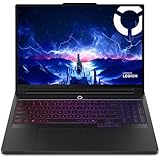
- Best Value: EXCaliberPC [2025] MSI Raider 18 HX AI A2XWJG-069US (Intel Core Ultra 9 285HX, 64GB DDR5 RAM, 2TB NVMe SSD, NVIDIA GeForce RTX 5090, 18" UHD+ mini LED, Windows 11 Pro) Gaming Laptop
- Premium Choice: Lenovo Legion Pro 7i Gen 10 w/Ultra 9, NVIDIA GeForce RTX 5080, OLED
Choosing between an RTX 5090 laptop and an RTX 5080 laptop sounds like a pure performance question, but for most buyers at home it is really a budget-and-lifestyle decision. Both GPUs belong to NVIDIA’s current Blackwell generation, both handle 1440p and 4K gaming comfortably, and both drive the large 18-inch panels that dominate premium gaming laptops right now. The difference shows up in how much headroom you are paying for: the RTX 5090 in laptops typically carries 24GB of GDDR7 memory and draws up to around 150–175W of total graphics power, while the RTX 5080’s laptop version ships with 16GB and usually runs between 80 and 150W depending on the chassis. That translates to roughly a 15–25 percent real-world gaming gap, a bigger gap in GPU-heavy creator workloads, and a price gap that can exceed $1,000 once you compare complete systems. Machines built around the RTX 5090, like the ASUS ROG Strix SCAR 18 at $4,499 or the MSI Raider 18 HX at $5,099, sit at the top of the market. RTX 5080 systems, such as the Lenovo Legion Pro 7i around $3,589 or the Lenovo Legion 9i at $4,999, span a wider range of prices and configurations. This guide breaks down where each one makes sense for your home, your desk, and your wallet.
Quick Verdict
If you play at 4K, edit 6K or 8K video, run local AI models, or simply want the fastest laptop money buys in 2026, the RTX 5090 is the better pick — the extra VRAM and compute make it genuinely future-proof for demanding creative work. If you game at 1440p or 1600p, mostly play AAA titles at high (not maximum) settings, and care about value, the RTX 5080 delivers around 85 percent of the experience for hundreds less. For most home buyers, that makes an RTX 5080 machine like the Legion Pro 7i the smarter default, with the RTX 5090 reserved for professionals and enthusiasts who will actually use the headroom.
As an Amazon Associate we earn from qualifying purchases at no extra cost to you. Product prices and availability are accurate as of the date shown and are subject to change.

![EXCaliberPC [2025] MSI Raider 18 HX AI A2XWJG-069US (Intel Core Ultra 9 285HX, 64GB DDR5 RAM, 2TB NVMe SSD, NVIDIA GeForce RTX 5090, 18" UHD+ mini LED, Windows 11 Pro) Gaming Laptop](https://m.media-amazon.com/images/I/31wpNaexAXL._SL160_.jpg)

Side by Side
| Factor | RTX 5090 Laptop | RTX 5080 Laptop |
|---|---|---|
| Gaming performance | Top tier; comfortable 4K high-refresh in most titles | Strong; ideal for 1440p–1600p high refresh, capable 4K at 60+ fps |
| VRAM | 24GB GDDR7 — headroom for 8K editing and large AI models | 16GB GDDR7 — plenty for 4K gaming and 1080p–4K editing |
| Typical power draw | 150–175W total graphics power; needs a chunky cooling system | 80–150W depending on chassis; runs cooler and quieter |
| Comfort (noise/heat) | Noticeably louder under load; keyboard decks run warm | Generally quieter fans; more comfortable for long sessions |
| Durability considerations | Sustained high heat stresses thermals over years; premium builds handle it well | Lower thermal load; historically easier on batteries and fans long-term |
| Price range | Roughly $4,000–$5,500 | Roughly $3,000–$5,000 |
| Maintenance | More frequent dust cleaning needed; consider a cooling pad ($30–$60) | Standard yearly cleaning; less thermal margin stress |
| Space needed | Usually 18-inch chassis, 3.1–3.5 kg, needs a deep desk (16–18″ wide footprint) and a 280–330W charger | Available in 16- and 18-inch bodies, 2.4–3.4 kg; still a large brick charger |
| Look and presence | Aggressive gaming aesthetics, RGB, big vents — a statement piece | Range from bold gaming designs to more restrained pro-style bodies |
| Resale value | Flagship GPUs hold value better among enthusiasts | Good resale; larger buyer pool at mid-premium prices |
| Best for | 4K gamers, 3D artists, video editors, AI hobbyists | 1440p gamers, students, mixed work-and-play users |
Where Rtx 5090 Laptop Wins
The RTX 5090’s 24GB of VRAM is the single biggest practical advantage. If you edit high-resolution video in DaVinci Resolve or Premiere, work with large scenes in Blender or Unreal Engine, or run local large language models and Stable Diffusion pipelines, VRAM capacity often matters more than raw frame rates, and 24GB vs 16GB is a real threshold. In games, the 5090 pulls meaningfully ahead at 4K with ray tracing and path tracing enabled, where memory bandwidth and shader count get stressed hardest. It also handles DLSS 4 multi-frame generation with more overhead to spare, so performance holds up longer as titles get heavier. Typical 5090 machines also pair the GPU with flagship CPUs — like the Intel Core Ultra 9 275HX or 285HX in the SCAR 18 and Raider 18 HX — plus 32–64GB of RAM and 2TB+ of storage, so the whole system stays fast for years. If your philosophy is “buy once, keep five years,” the top spec depreciates slower in capability terms.
Where Rtx 5080 Laptop Wins
Value is the headline. At roughly $3,500–$4,000 for well-equipped configurations like the Legion Pro 7i with an OLED panel, you save $1,000 or more versus a comparable 5090 machine — money that buys a great monitor, a chair, or simply stays in your account. The performance deficit in 1440p gaming is often modest, and since most 5080 laptops run the GPU at lower wattage, they tend to be quieter and cooler, which you will notice on your lap and your ears during long sessions. The 16GB of VRAM comfortably covers 4K gaming and mainstream creative work today. There is also more choice: RTX 5080 systems come in slimmer 16-inch chassis as well as big 18-inch desktop replacements, giving you flexibility if portability matters. The one exception worth flagging: the Lenovo Legion 9i Gen 10 pairs a 5080 with an 18-inch 4K 240Hz mini-LED-class panel at 520 nits and a Gen5 SSD for $4,999 — proof that a 5080 machine can still be an absolute flagship in every other respect.
Cost Over 5 Years
Assume a purchase between $3,600 (Legion Pro 7i tier) and $5,100 (MSI Raider tier). Beyond the sticker price, factor in roughly $60–$120 over five years for a cooling pad, compressed air, and thermal paste reapplication if you are comfortable doing it yourself, or $100–$150 for professional servicing. Both GPU classes draw similar power under gaming load in practice — expect 250–330W total system draw, or roughly $25–$45 per year at average U.S. electricity rates for someone gaming 15 hours a week; the 5090 machines skew slightly higher. An extended warranty adds $200–$400 over five years and is worth considering on any $4,000+ laptop. The bigger financial question is resale: flagship 5090 systems tend to retain a modest premium on the used market, but the resale difference rarely closes the full $1,000+ purchase gap. Net over five years, the RTX 5080 path typically costs $800–$1,300 less all-in.
Which One for Your Home
Small Apartment or Dorm
Go RTX 5080. A 16-inch 5080 laptop (around 2.4–2.7 kg) is meaningfully easier to move, fits smaller desks, and runs quieter in a single-room living situation where fan noise is hard to escape. Pair it with a single 1440p 165Hz monitor and you will not miss the 5090’s headroom at all. If you must go 18-inch, the Legion Pro 7i offers strong performance per dollar without the top-tier price.
Family With Kids or Pets
Still RTX 5080, for durability economics. A $3,600 machine that survives a juice spill costs far less to replace than a $5,000 one, and lower thermal loads mean less stress on components in a dusty or warm household. Keep any laptop — GPU aside — on a hard elevated surface, vacuum vents every few months, and consider a keyboard cover if little hands are around. If the household needs serious rendering power, a desktop or an eGPU-adjacent setup is safer than one expensive shared machine.
Rental or Temporary Living
RTX 5080 again, with portability weighted heavily. Renters move often, and a 3.5 kg, 330W-charger 18-inch flagship is the least fun thing to pack four times in three years. Choose a 16-inch 5080 machine with a sturdy lid, keep the original box, and skip maximum-spec purchases you may regret hauling. The money saved covers a good travel-friendly monitor.
Long-Term Home (5+ Years, Dedicated Setup)
This is RTX 5090 territory. If you have a permanent desk, a 4K or ultrawide display, and plan to keep the machine for five or more years while your workloads grow — 4K gaming, content creation, local AI — the 5090’s 24GB of VRAM and extra compute are what keep a laptop feeling current in year four and five. The ROG Strix SCAR 18 or MSI Raider 18 HX, with their 18-inch high-refresh panels and 64GB RAM options, are built exactly for this scenario. Just commit to annual thermal maintenance.
FAQ
Is an RTX 5090 laptop worth the extra ~$1,000 over an RTX 5080?
Only if you specifically need 4K max-settings gaming, more than 16GB of VRAM for creative or AI workloads, or you plan to keep the machine five-plus years. For 1440p gaming, the 5080 delivers most of the experience for far less.
Do RTX 5090 and RTX 5080 laptops run hot?
Both are warm under load, but 5090 machines draw up to 175W of graphics power and generally run louder and hotter, requiring larger cooling systems. 5080 laptops in lower-wattage configurations run noticeably quieter.
Can an RTX 5080 laptop handle 4K gaming?
Yes, at 60+ fps in most titles with high settings, and higher with DLSS. Where the 5090 pulls ahead is 4K with ray tracing or path tracing maxed, and sustained high-refresh 4K.
Which GPU is better for video editing and 3D work?
The RTX 5090, clearly — 24GB of VRAM handles larger timelines, heavier GPU effects, and bigger 3D scenes without bottlenecks. The 5080 remains fully capable for 1080p-to-4K editing and hobbyist 3D work.






Write Your Review
No reviews yet. Be the first to share your experience!