
Searching for RTX 3070 pricing turns up a mess: a launch MSRP of $499, a Ti version at $599, years of shortage-era markups, and a used market where the same silicon is sold under very different conditions. A single number would be misleading, so this guide does something more useful. It explains how to judge whatever price you see on a listing today.
I am deliberately not quoting a current street price, because it changes and it differs by seller type, cooler model, and condition. What I can give you is the fixed reference points, the questions that explain a price gap, and the newer cards that make a pricey 3070 hard to justify.
As an Amazon Associate we earn from qualifying purchases at no extra cost to you.

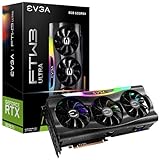
Quick answer: Our top pick in 2026 is the Condition (new, renewed, used) — our #1 rated choice. See the full ranked comparison, alternatives and buying advice below.
Short Version: The Price That Makes Sense Is Relative
A 3070 is worth buying when its listing price sits clearly below what a newer comparable card costs, and when you can live with its 8GB of VRAM. If the listing price drifts up near the launch MSRPs of newer cards with more memory and frame generation, skip it. The decision is a comparison, not a number.
The Fixed Reference Points
Nvidia launched the RTX 3070 8GB at $499 with a 220W board power rating. The RTX 3070 Ti arrived later at $599 and 290W, also with 8GB. Those are official launch MSRPs. They tell you how Nvidia positioned the cards, not what you will pay. Real listings run on a different logic: new stock depends on the seller, renewed units come with limited warranties, and used units depend on their history.
One more reference matters. The RTX 5070 launched at a $549 MSRP with 12GB, and the RX 9070 from AMD launched at $549 with 16GB. If a 3070 listing creeps toward that territory, you are paying near-current-generation money for an older card with less memory.
Why Two 3070 Listings Can Differ So Much
| Factor | What it does to the price | What to check |
|---|---|---|
| Condition (new, renewed, used) | New or sealed stock usually costs the most; used the least. | Return window and who handles warranty claims. |
| Ti versus non-Ti | The Ti, launched at $599 against $499, tends to cost more. | The exact model name in the title and the product image. |
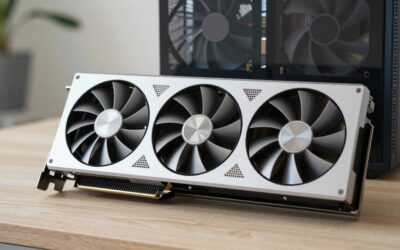
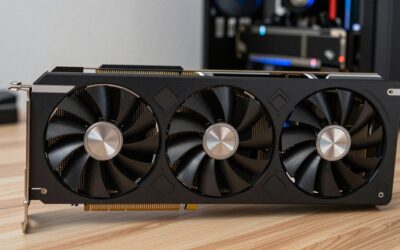
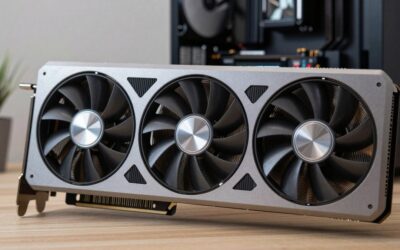
| Cooler design | Larger triple-fan models often cost more than compact dual-fan versions. | Card length and slot width against your case. |
| Seller type | Marketplace third-party sellers vary widely in markup. | Seller rating, photos of the actual card, and the shipping source. |
| Prior use | Mining history can lower price but raises wear risk. | Fan noise reports, thermal paste age, and asking the seller directly. |
Treat the table as a checklist, not a formula. A well-cared-for used card from a seller with a clear return policy can be a better deal than a higher-priced renewed card with a short warranty.
What You Get for Your Money
The RTX 3070 is a capable 1440p card for many games at medium to high settings, and a strong 1080p card in nearly everything. Launch reviews from TechPowerUp, Tom’s Hardware, and Gamers Nexus placed it comfortably above the 3060 Ti and below the 3080. It supports DLSS upscaling and ray tracing hardware, but not Nvidia’s frame generation (RTX 40 and newer) or multi frame generation (RTX 50 only).
The biggest question is the 8GB of VRAM. Some modern games ask for more memory at high texture settings, and you may need to lower textures even when the GPU has headroom. This is the main reason a 3070 is worth less to a buyer who wants the card to last than its raw speed suggests.
Pros
- Strong 1080p and capable 1440p performance in a wide range of games.
- Mature drivers and wide support in creative and streaming software.
- Moderate 220W rating means most partner models fit standard cases and supplies; confirm the recommended PSU on the spec page.
- A wide range of cooler designs makes it easy to find one that fits a small case.
Cons
- 8GB of VRAM is limiting for high texture settings in newer titles.
- No frame generation from Nvidia.
- Used units may carry mining wear.
- If priced close to newer midrange cards, it loses on features and efficiency.
Who Should Pay for a 3070 and Who Should Not
A 3070 makes sense if you play at 1080p or 1440p with a 60 to 144Hz target, you are upgrading from an older card like a GTX 1070, 1080, or RTX 2060, and the listing price is well under a newer alternative. Pair it with a Ryzen 5000 chip or Intel 12th gen and you will not be held back at those resolutions.
It does not make sense if you want to hold the card for many years, play at 4K, or rely on ray tracing heavily. In those cases, step up to a card with 12GB or more.
Cheaper and Smarter Comparisons
| Option | Launch MSRP | Trade-off |
|---|---|---|
| RTX 3060 Ti 8GB | $399 | A bit slower; same VRAM; lower power at 200W. |
| RTX 3060 12GB | $329 | More memory, less speed; solid 1080p. |
| RTX 5060 Ti 16GB | $429 | Newer features and more VRAM; check current listing price. |
| RTX 4070 12GB | $599 | Frame generation and 12GB, but higher MSRP than the 3070. |
| RX 9070 16GB | $549 | 16GB and RDNA 4; different feature set from Nvidia. |
FAQ
What was the original RTX 3070 price?
The launch MSRP was $499 for the 3070 and $599 for the 3070 Ti. Neither number reflects the price you will see on a listing in 2026.
Is the 3070 Ti worth the extra over the 3070?
It is faster, but it draws more power at 290W compared with 220W and has the same 8GB of VRAM. Unless the price gap is small, the standard 3070 is usually the more sensible pick.
Should I buy a used 3070?
You can, if the seller offers returns, shows photos of the actual card, and answers questions about usage. Avoid listings with stock photos and no history.
How do I check the current price?
Open the listing and compare the total cost, including shipping and warranty terms, against the launch MSRP of newer cards in the table above.
Ready to decide? Our #1 pick for 2026 is the Condition (new, renewed, used).
Live price & availability on Amazon.

Write Your Review
No reviews yet. Be the first to share your experience!