
- Top Pick: GIGABYTE GeForce RTX 5070 Ti Gaming OC 16G Graphics Card, 16GB 256-bit GDDR7, PCIe 5.0, WINDFORCE Cooling System, GV-N507TGAMING OC-16GD Video Card
- Best Value: ASUS Prime GeForce RTX 5070 Ti 16GB GDDR7 Gaming Graphics Card
- Premium Choice: BAKLUCK msi Gaming RTX 5070 TI 16G Shadow 3X OC Graphics Card (16GB GDDR7, 256-bit, Extreme Performance: 2497 MHz, DisplayPort x3 2.1a, HDMI 2.1b, NVIDIA Blackwell Architecture)
Top Rtx 5070 3080 Should Ampere Picks for 2026
Here are our current top rtx 5070 3080 should ampere picks, compared on real Amazon owner reviews, price, and features. Live prices update below.
- Top Rtx 5070 3080 Should Ampere Picks for 2026
- RTX 5070 vs 3080 Ti: The Upgrade Verdict Up Front
- What the Upgrade Actually Delivers, Category by Category
- The 2026 Market: Why Upgrade Timing Favors Sooner
- Final Verdict: Upgrade, Hold, or Skip a Tier?
- Conclusion
- Related Guides
- Frequently Asked Questions
- Related Articles


Dropped $2.52

Dropped $4.44

RTX 5070 vs 3080 Ti is the question sitting in thousands of 2021-era builds right now, and it deserves a different treatment than the usual buyer’s comparison. If you own a 3080 Ti, you are not choosing between two purchases — you are weighing one purchase against the card already in your slot, with resale value, swap effort, and feature gaps all on the scale. This guide runs that exact calculation: what the $549 RTX 5070 genuinely improves over the Ampere flagship, what it merely sidesteps, what your current card is worth in trade, and the honest answer to whether 2026 is the year to make the switch — or to skip a tier instead.
As an Amazon Associate we earn from qualifying purchases at no extra cost to you. Product prices and availability are accurate as of the date shown and are subject to change.


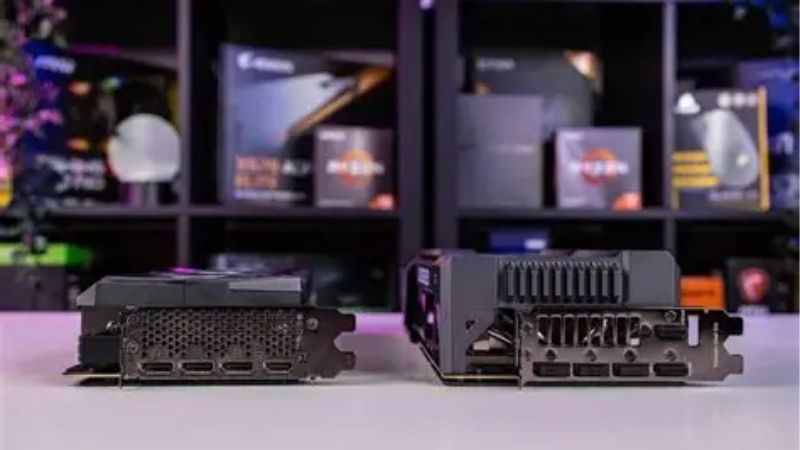
RTX 5070 vs 3080 Ti: The Upgrade Verdict Up Front
Upgrade decisions reward blunt answers before nuance, so here is the conclusion this guide will spend its remaining sections earning: the 5070 is an improvement over the 3080 Ti — but a moderate one, and whether it is worth executing depends almost entirely on what bothers you about your current card.
The Short Answer for Current Owners
Switching to the RTX 5070 buys roughly 10 to 20 percent more raster performance, a 100W reduction in power and heat, DLSS 4 Multi Frame Generation, and a warranty — for a net cost near $150 to $200 after selling the 3080 Ti at today’s firm used prices. As upgrades go, that is cheap; as performance leaps go, it is modest.
The rule that falls out: upgrade if your pain is heat, noise, power, or missing frame generation. Hold — or save for the 5070 Ti — if your pain is raw frame rate, because 15 percent is rarely felt without a counter on screen. Check the 5070’s live Amazon price before deciding; the net-cost math moves with it weekly.
What Changed in Four Years: The Spec Reality
The table below explains why this upgrade is moderate rather than dramatic: the 3080 Ti was a genuine flagship, and flagships age slowly in raw terms.
| Specification | RTX 3080 Ti (your card) | RTX 5070 (the candidate) |
|---|---|---|
| Architecture | Ampere (2021) | Blackwell (2025) |
| CUDA Cores | 10,240 | 6,144 |
| VRAM | 12GB GDDR6X | 12GB GDDR7 |
| Memory Bandwidth | 912 GB/s | 672 GB/s |
| Board Power | 350W | 250W |
| Frame Generation | None | DLSS 4 Multi Frame Generation |
| 2026 Value | ~$380-420 used | $549 new |
Identical 12GB capacity is the most upgrade-relevant line: you are not buying memory headroom with this move, only speed, efficiency, and features.
Pros and Cons of Making the Switch
Framed as a transaction rather than a product, the trade-offs look like this.
Upgrading — pros: 100W less heat dumped into your room and case; near-silent operation replacing Ampere’s fan curves; Multi Frame Generation in a growing catalog of titles; warranty resets to day one; resale captures your old card’s unusually strong value. Cons: only 10 to 20 percent raster gain; zero VRAM gain; swap labor and the small risk any hardware change carries; $150 to $200 of net spend that could bank toward a bigger jump.
Holding — pros: spends nothing; the 3080 Ti remains a legitimate 1440p performer; waiting compounds your eventual upgrade’s size. Cons: heat, noise, and power continue; thermal pads on five-year-old GDDR6X likely need service soon; every quarter on Ampere is a quarter without frame generation as engines increasingly assume it.
What the Upgrade Actually Delivers, Category by Category
Generic benchmarks understate and overstate this switch simultaneously. The honest accounting splits it into the four things owners actually notice: frames, the room the PC lives in, the software experience, and the wallet.
Performance: Where 15 Percent Shows and Where It Hides
At 1440p high settings, expect roughly 100 to 150 fps from the 5070 against 90 to 115 fps from your 3080 Ti in demanding titles — a gain you will see on an overlay and occasionally feel on a 165Hz panel, but rarely notice blind. Modern engines favor Blackwell’s clocks and cache; a few older bandwidth-hungry titles run nearly even thanks to the Ampere card’s 912 GB/s. The pattern is consistent enough to predict from your own library: the newer your average game, the larger your personal version of this gap.
Ray tracing is the exception where the upgrade feels generational: fourth-generation RT cores deliver 40-plus percent gains in hybrid titles, and path-traced games move from off-limits to playable. If your library leans that direction, weight this section double.
Frame generation rewrites the perceived gap entirely: in supported titles, Multi Frame Generation lifts presented frame rates far beyond anything the raster delta suggests — the single largest experiential difference the switch delivers.
Efficiency: The Upgrade You Feel Every Session
Veteran 3080 Ti owners know the card’s personality: 350W of GDDR6X-heated assertiveness, audible fans, and a warm room by hour two. The 5070’s 250W changes the machine’s character — cooler case temperatures, fan curves that rarely announce themselves, and compatibility with the 650W-class power supplies that Ampere’s transient spikes always threatened.
There is a maintenance dividend too: stepping off a five-year-old card means stepping off its aging thermal pads and fan bearings before they bill you. Owners who upgraded report the silence, more than the frames, as the change they would not reverse — a recurring theme across upgrade threads that benchmark tables structurally cannot capture.
The electricity line is small but real: at four hours daily, the 100W gap returns a modest annual saving that quietly offsets part of the net cost.
Software and Features: The Widening Gap
Your 3080 Ti already receives the improved transformer-based DLSS upscaler by driver — Nvidia has treated Ampere well. What it can never receive is any tier of Frame Generation, Reflex 2, or Blackwell’s media engines with their superior AV1 encoding, and the catalog assuming those features grows monthly.
For side interests in local AI, the equal 12GB buffers conceal a real throughput gap: fifth-generation Tensor Cores with FP4 support run image generation and small language models at multiples of Ampere’s pace. None of this makes the old card bad; it makes the new card’s software runway visibly longer — the difference between hardware that is maintained and hardware that is developed for.
The Money: Net Cost and Resale Timing
The transaction math is unusually friendly right now. Clean 3080 Ti units sell at $380 to $420 — values held firm by market forces covered below — so a $549 RTX 5070 nets out near $130 to $170 plus the effort of a sale. Few meaningful upgrades in PC hardware price that low. Selling effort is the real cost: photograph the card honestly, include the original box if kept, and price at the band’s middle for a fast, clean sale.
The same math frames the alternative path: banking your card’s resale toward the $749 RTX 5070 Ti raises net cost to roughly $330 to $370 but buys 16GB of GDDR7 and a 25-plus percent leap over your current card — the version of this upgrade that is unambiguous rather than situational.
Either way, the resale side of the equation is time-sensitive in a way the market section explains: used Ampere values are strong now and not guaranteed to stay so once the next product cycle turns.
The 2026 Market: Why Upgrade Timing Favors Sooner
This decision’s two prices — what you pay and what your old card fetches — are both being moved by current industry forces, and unusually, both movements favor acting rather than waiting.
The H200 China Approval and Your New Card’s Price
The United States has cleared Nvidia to sell the H200 — one of its most powerful AI accelerators — to China, releasing data-center demand that competes with GeForce production for memory, packaging, and wafer allocation. Volume cards like the 5070 are historically first above MSRP when that allocation tightens; the $549 anchor this guide’s math assumes is a price to capture, not to assume indefinitely.
Watch the early signs on retailer pages — lengthening restock gaps and third-party premiums — and treat a clean MSRP listing as the trigger it is.
Rising Component Prices and Your Old Card’s Value
Simultaneously, laptop and PC component prices are climbing industry-wide, led by memory, and the squeeze has frozen used-GPU depreciation: 3080 Ti resale has traded flat for consecutive quarters instead of sliding. Sellers, not buyers, currently hold the good side of the used market.
That is the upgrade’s hidden subsidy — and its deadline. Strong trade-in values fund cheap upgrades only while they last, and they historically soften when a new product wave or supply normalization arrives. The friendly net-cost math above is a snapshot of a favorable moment, not a permanent offer.
The Timing Call
If this guide’s verdict already fits you, execute inside the current window: alert set at $549 on Amazon, your 3080 Ti listed the same week, two transactions funding each other.
If the verdict says hold, hold with a plan — define the trigger (a 5070 Ti budget reached, a monitor upgrade, the first thermal-pad symptom) rather than drifting.
Final Verdict: Upgrade, Hold, or Skip a Tier?
Three profiles cover essentially every 3080 Ti owner reading this, and each gets a clean instruction.
Upgrade to the RTX 5070 If…
…your complaints are heat, noise, power draw, or missing frame generation, and a near-wash transaction appeals more than a bigger leap. The 5070 fixes every one of those at the lowest net cost in this guide, with a warranty as the bow on top.
Execute when Amazon shows $549 to $579 — the math degrades quickly above that band.
Hold the 3080 Ti If…
…your card runs cool enough, your titles perform well, and 15 percent would not change a single session. Holding is a legitimate verdict, not a failure to decide — flagship silicon earns long service lives.
Just service it: refresh thermal pads if memory temperatures climb past 100C, and keep its resale option warm by keeping the box.
Skip to the RTX 5070 Ti If…
…you want an upgrade you will feel without an fps counter. At $749, its 16GB of GDDR7 and 25-plus percent gain over your 3080 Ti is the unambiguous version of this move, and your old card’s resale covers more than half of it.
For owners upgrading less than once a generation, it is this guide’s actual recommendation — price it on Amazon alongside the 5070 before choosing.
See More:
- Nvidia Reflex low latency
- RTX 4070 vs 5060 Ti
- Zephyr RTX 4070
- RTX 3080 Ti price
- Nvidia RTX 2060 Super
Conclusion
The RTX 5070 vs 3080 Ti decision is an upgrade question with an unusually personal answer: the new card delivers a moderate 10 to 20 percent raster gain wrapped around transformative efficiency, silence, and DLSS 4 Multi Frame Generation — at a net cost under $200 thanks to firm Ampere resale values. Owners suffering heat and missing frame generation should switch; owners chasing pure frame rate should skip to the 5070 Ti or hold with a plan. With the H200 export approval threatening MSRP availability and rising component prices propping up the trade-in side, the window favors deciding now. Wherever you land on the RTX 5070 vs 3080 Ti question, check today’s Amazon prices, run your own net-cost math, and act while both sides of it are still this kind.
Frequently Asked Questions
What is the best rtx 5070 3080 ti in 2026?
The best rtx 5070 3080 ti depends on your budget and how you plan to use it. The options compared above are our top-rated picks based on real customer ratings, build quality, and overall value — start with the highest-rated model that fits your budget.
How much should I expect to spend on a rtx 5070 3080 ti?
Prices vary by brand and features. Budget options cover the essentials, while mid-range and premium models add durability, performance, and extra features. Compare the prices in the list above to find the best value for your needs.
What should I look for when buying a rtx 5070 3080 ti?
Focus on what matters most for your use case — build quality, compatibility, performance, warranty, and verified customer reviews. Every pick above is selected to balance these factors.
Are budget rtx 5070 3080 ti options worth it?
Yes. For most people a well-reviewed budget or mid-range rtx 5070 3080 ti delivers excellent value. You only need to spend more if you specifically require premium materials or top-tier performance.
How did we choose these rtx 5070 3080 ti picks?
We compare current Amazon ratings, review counts, key features, and price to surface the options with the best real-world value. The list is refreshed as ratings and availability change.










Write Your Review
No reviews yet. Be the first to share your experience!