
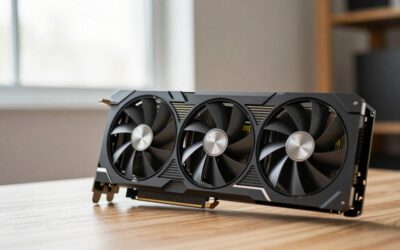
- Top Pick: NVDIA GeForce RTX 3070 8GB GDDR6 PCI Express 4.0 Graphics Card – Dark Platinum and Black (Renewed)
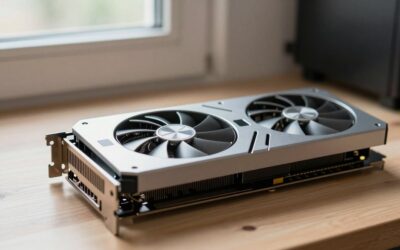
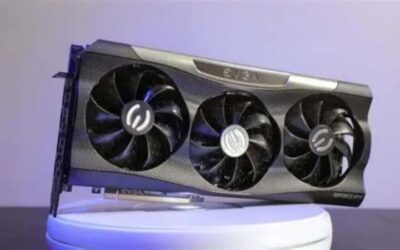
- Best Value: EVGA GeForce RTX 3070 XC3 Ultra Gaming, 08G-P5-3755-KL, 8GB GDDR6, iCX3 Cooling, ARGB LED, Metal Backplate, LHR (Renewed)
- Premium Choice: NVIDIA GeForce RTX 3070 8GB GDDR6 PCI Express 4.0 Graphics Card – Dark Platinum and Black


The rtx 5050 vs 3070 comparison sets Nvidia’s newest budget card against a former 1440p champion, and it delivers a humbling reminder that newer does not always mean faster. The 2020 RTX 3070 still beats the 2025 RTX 5050 by around 30% in raw gaming, thanks to its far larger core count and wider bus. Yet the RTX 5050 fights back with half the price, far lower power, and exclusive DLSS 4 Multi Frame Generation. This breakdown shows whether raw frames or modern value and features should win your money.
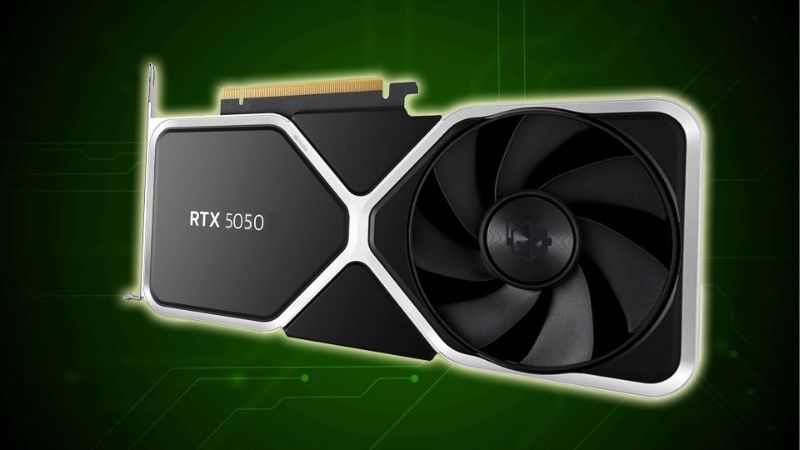
Quick Verdict: RTX 5050 vs RTX 3070 at a Glance
Here is the short answer. The RTX 3070 is the faster gaming card, leading the RTX 5050 by roughly 30% in raw raster, but it launched at twice the price and draws far more power. The RTX 5050 counters with a $249 tag, excellent efficiency, DLSS 4 Multi Frame Generation, and new-stock availability the discontinued 3070 lacks. Your priorities, raw speed versus value and features, decide the winner, as the table and mini-verdicts below explain.
As an Amazon Associate we earn from qualifying purchases at no extra cost to you.



Who Wins the RTX 5050 vs RTX 3070 Race
On raw performance the older card wins comfortably. The RTX 3070 packs 5,888 CUDA cores and a 256-bit bus against the RTX 5050’s 2,560 cores and 128-bit bus, and that hardware advantage delivers around a 30% lead in aggregate gaming benchmarks.
Value and features flip the story. The RTX 5050 launched at $249 against the 3070’s original $499, so it offers more than double the performance per dollar, and it adds DLSS 4 Multi Frame Generation and modern efficiency the older Ampere card cannot match.
The shortest answer: choose the RTX 3070 if you can find one cheap and want the most raw frames, and choose the RTX 5050 if you want a new, efficient, affordable card with DLSS 4 and are happy trading some raw speed for modern features and a warranty. That framing captures the whole comparison: one card is faster today, the other is newer, cheaper, and lower-risk, and which matters more depends entirely on how you shop and what you value.
The Full RTX 5050 vs RTX 3070 Comparison Table
Specs settle arguments faster than prose, so here is the core sheet side by side. Use it to sanity-check any deal before you click through to a store.
| Spec | RTX 5050 | RTX 3070 |
|---|---|---|
| Architecture | Blackwell (GB207) | Ampere (GA104) |
| CUDA cores | 2,560 | 5,888 |
| Memory | 8GB GDDR6 | 8GB GDDR6 |
| Bus width | 128-bit | 256-bit |
| Upscaling | DLSS 4 + Multi Frame Gen | DLSS 2 (no frame gen) |
| Board power | ~130W | ~220W |
| Launch MSRP | $249 (2025) | $499 (2020) |
| Best for | Value and efficiency | Raw raster frames |
The numbers tell the trade instantly. The 3070 has more than double the CUDA cores and twice the bus width for raw speed, while the 5050 draws about 90W less power and costs half as much, delivering a very different kind of value. The 3070 sells raw performance while the 5050 sells efficiency and modern features, so the two are less rivals than different answers to different budgets and priorities.
Why 2026 Prices and Availability Reshape the Decision
Here is the context spec sheets skip: the RTX 3070 is a 2020 card that is no longer sold new, so buying one means the used market, while a tight 2026 memory market has pushed budget GPU prices up rather than down. That availability gap matters, because a used 3070 carries no warranty and unknown wear, whereas the 5050 is a fresh retail purchase.
There is cautious good news, but it is weak and in the future. Prices have stopped climbing as steeply as they did in late 2025, and some hardware makers have reported a stretch of relative stability, while still warning that volatility is not over. For a budget buyer, the free-fall has paused rather than reversed.
Fresh supply is coming but is years away. New memory capacity, including DDR5 from Chinese suppliers and two Micron plants in Idaho, is not expected to run until 2027-2028. The practical takeaway: a new RTX 5050 near $249 with a warranty is the lower-risk buy, and a used 3070 only makes sense if it is cheap and you accept the trade-offs of second-hand hardware. Used pricing on a card this old also varies wildly by region and condition, so a good 3070 deal is real but far from guaranteed, whereas the 5050’s retail price is predictable.
Deep Dive Face-Off: Performance, Features and Efficiency
The raw-frame gap is real, so the decision leans on how much that speed matters against DLSS 4, efficiency, and the realities of buying old versus new. This section walks those three battlegrounds with measured behavior rather than adjectives.
Raw Rasterization and 1080p Frame Rates
In native rendering the RTX 3070 is clearly faster, its roughly 30% aggregate lead translating into higher frame rates across most 1080p titles and genuine headroom for 1440p that the 5050 lacks. For raw raster, the older flagship still hits hard.
The RTX 5050 holds its own for a budget entry card, delivering smooth 1080p gameplay in most titles even if it cannot match the 3070’s ceiling. It is built for solid 1080p rather than the higher resolutions the 3070 once targeted.
The analytical read is unambiguous on raw frames: the 3070 wins. But that lead comes at double the launch price and far higher power, so the question becomes whether raw speed alone justifies the older card’s downsides in 2026. For a buyer who never touches upscaling and simply wants maximum native frames per dollar from a cheap used card, the 3070 still answers that question well; for everyone else, the calculus shifts.
DLSS 4 Multi Frame Generation and Efficiency
DLSS 4 is the RTX 5050’s trump card. Its Multi Frame Generation can insert AI-generated frames to lift frame rates in supported titles, and in those games the 5050 can post numbers that close or exceed the gap to the 3070, which is limited to older DLSS 2 with no frame generation.
The experimental caveat is honesty about image quality. Frame generation at higher multipliers can introduce latency and artifacts, so those inflated figures are a bonus in supported titles rather than proof of raw power, but they still represent a real capability the 3070 cannot offer.
Efficiency is the 5050’s other decisive edge. At roughly 130W it draws about 90W less than the 3070’s 220W, running cooler and quieter and slotting into modest systems where the power-hungry older card would demand more from the cooling and the supply. Over years of ownership that efficiency gap also shows up on the electricity bill and in noise levels, small factors individually but ones that add up for a card running daily.
Buying Old vs New and Real-World Build Fit
The practical divide is old versus new. The RTX 3070 is available only on the used market now, meaning no warranty, potential wear from years of use, and pricing that swings with supply, while the RTX 5050 is a fresh retail card with full support.
On power and platform, the 5050’s modest 130W runs happily on a 450W to 550W supply, whereas a 3070 build wants more headroom around its 220W draw. The 5050 also uses a PCIe 5.0 x8 link, so on very old boards it can lose a little bandwidth.
Both cards carry 8GB of VRAM, so neither holds a memory advantage, and both are best treated as strong 1080p performers. The decision therefore rests on whether the 3070’s raw speed outweighs the 5050’s newness, efficiency, and DLSS 4 features. With VRAM equal at 8GB, the usual memory tiebreaker is off the table here, which pushes the decision firmly onto raw speed versus modern support and buying risk.
Pros, Cons, Alternatives and Final Buying Advice
With the 3070 faster and the 5050 newer and cheaper, the recommendation comes down to an honest scorecard and how you value speed against risk. This section covers the pros and cons, a stronger alternative if your budget can flex, and a clear verdict.
RTX 5050 vs RTX 3070: Pros and Cons Breakdown
The RTX 5050’s strengths are its low $249 price, DLSS 4 Multi Frame Generation, excellent 130W efficiency, newer Blackwell features, and new-stock availability with a warranty. Its cons are a roughly 30% raw-performance deficit and a PCIe 5.0 x8 link that can bottleneck on old boards.
The RTX 3070’s strengths are its stronger raw raster performance, wide 256-bit bus, and high core count. Its cons are high 220W power draw, an aging DLSS 2 feature set with no frame generation, and used-only availability that brings warranty and wear risks.
Put plainly: the 3070 wins on raw frames, the 5050 wins on price, efficiency, features, and peace of mind. The wrong move is paying a high used price for a 3070 when a new 5050 delivers modern value and a warranty for less. The 5050’s peace-of-mind advantages, a warranty, known history, and current drivers, are easy to undervalue until a used card develops a fault with no recourse.
A Smart Alternative If You Want More Power
If you want the 3070’s speed without the used-market risk, the RTX 5060 at $299 or the RX 9060 XT 16GB near $349 both deliver strong new-card performance with modern features and full warranties, closing much of the raw-frame gap.
For buyers set on maximum value, the RX 9060 XT 16GB in particular pairs solid performance with a large 16GB buffer, making it a future-proof step up from the 5050 for not a lot more money.
Given the 2026 market, buying a new card with a warranty at a fair price often beats chasing an old flagship on the used market. Real price relief is years away, so a dependable new card holds its value and usefulness better over time. Stretching to one of these newer cards often makes more sense than either budget option, since it delivers the 3070’s class of performance with none of the used-market uncertainty.
Final Verdict: Which GPU Should You Buy
Buy the RTX 3070 only if you find one cheap on the used market, want the most raw frames, and accept the lack of warranty and DLSS 4. As a bargain used card it still games well at 1080p and even 1440p. Just inspect the card carefully, confirm its history where you can, and factor in that it will run hotter and hungrier than anything new in its price range.
Buy the RTX 5050 if you want a new, efficient, affordable card with DLSS 4 and a warranty, and you are happy trading some raw speed for modern features and lower running costs. For most new budget buyers it is the sensible pick.
Whichever you choose, timing and price matter most at this tier. Compare live pricing and used-market deals before you commit, and grab the option that offers the best real value in your region. Follow the link to check current prices and lock in the better buy.
See more:
- amd driver auto-detect tool
- nvidia geforce rtx 5080 best buy
- TechPowerUp GPU-Z
- nvidia china
- nvidia etf price
Conclusion
The rtx 5050 vs 3070 decision defies the newer-is-better rule: the RTX 3070 is the faster gaming card by around 30%, while the RTX 5050 counters with half the price, far lower power, DLSS 4 Multi Frame Generation, and new-stock availability. In a 2026 market where budget prices have merely flattened and the 3070 exists only on the used market, most new buyers are better served by an affordable, warrantied 5050, with the 3070 reserved for cheap second-hand deals. Compare current prices through the link above and secure the GPU that fits your build and budget today.
Frequently Asked Questions
Which card is faster in raw rasterised games?
The RTX 3070 generally still wins in native rasterised performance. It has 5888 CUDA cores and a 256-bit GDDR6 bus versus the 5050 with 2560 cores on a 128-bit bus. In older titles without DLSS the 3070 can be twenty to thirty percent ahead, so raw horsepower is not where the newer budget card competes.
Why would anyone choose the RTX 5050 then?
Efficiency and features. The 5050 draws about 130W against 220W for the 3070, runs cooler and quieter, and supports DLSS 4 multi frame generation which the Ampere-based 3070 cannot use. In supported titles that frame multiplication can push the 5050 well past the 3070 in perceived smoothness, plus you get a warranty and the newer NVENC encoder.
Do both cards have the same VRAM limitation?
Yes, both are 8GB cards, which is the shared weak point. Neither is a comfortable 1440p ultra option in modern texture-heavy releases. The 3070 has more memory bandwidth to work with, so it degrades slightly more gracefully when a game pushes past comfortable settings, but both will need texture quality reduced in the heaviest titles.
Is a used RTX 3070 a smart buy in 2026?
It can be if the price is low and the seller is trustworthy, but factor in no warranty, higher running costs from that extra 90W, possible mining history, and thermal pads or paste that are now five years old. For a system with a weak 450W or 500W power supply, the new 5050 is the far safer drop-in.
How do power supply requirements compare?
The RTX 3070 needs a single 8-pin or a 12-pin adapter depending on model, with a 650W recommendation and noticeable transient spikes. The RTX 5050 uses one 8-pin and a 550W recommendation, and real draw stays near 130W. In an older prebuilt with a stock supply, the 5050 usually installs without any PSU upgrade at all.


Write Your Review
No reviews yet. Be the first to share your experience!