
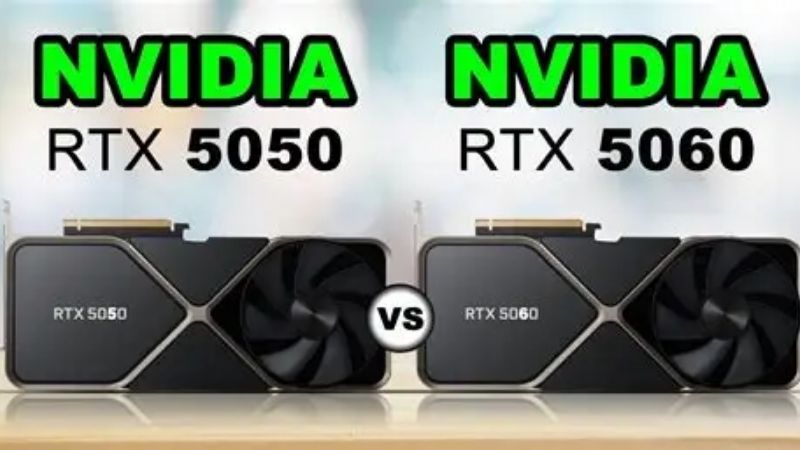
RTX 5050 vs RTX 5060 is the decision facing anyone shopping at the very bottom of Nvidia’s current lineup, where every $50 counts and the marketing gives few clear answers. The RTX 5050 is the cheapest Blackwell card, aimed at 1080p gamers on the tightest budgets, while the RTX 5060 asks for a little more money in exchange for meaningfully more performance and faster memory. Both bring DLSS 4 to the table, so the real question is whether the 5060’s extra outlay is worth it for the way you play. This comparison settles it with plain numbers rather than hype.


The Quick Verdict: RTX 5050 vs RTX 5060
Because these two cards sit only one small step apart in both price and performance, the quick verdict comes down to exactly how tight your budget is and what kind of games you actually play most. Here is the compressed answer before the detailed breakdown further down the page. In short, the RTX 5060 is the better all-round 1080p card and worth the modest premium for most buyers, while the RTX 5050 earns its place only for the most budget-constrained or esports-focused players.
As an Amazon Associate we earn from qualifying purchases at no extra cost to you.



Quick Verdict For Everyday 1080p Gaming
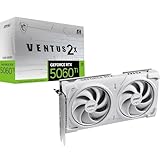
For general 1080p gaming across a mix of modern single-player and multiplayer titles, the RTX 5060 is the smarter buy of the two by a comfortable margin. Its extra cores and much faster GDDR7 memory give it noticeably more headroom in demanding games where the cheaper card starts to feel stretched.
The relatively small price gap between the two makes this an easy call for most people. Spending a little more once, at the point of purchase, tends to buy a smoother experience and a longer useful life than trying to save that same small amount by dropping down a tier.
If your budget can absorb the difference at all, the RTX 5060 is the card that will keep you happy for longer. It is the sensible default recommendation for the everyday 1080p gamer who wants one card to handle everything reasonably well.
Quick Verdict For Tight Budgets And Esports
The RTX 5050 makes real sense in two specific situations. The first is when your budget is genuinely fixed and the 5060 is simply out of reach, in which case the 5050 still delivers a capable modern 1080p experience with DLSS 4 support.
The second is if you mostly play lighter, competitive esports titles such as popular online shooters and MOBAs. Those games run extremely well even on the cheaper card, so the 5060’s extra muscle would go largely unused, and the money saved is better spent elsewhere.
Choose the RTX 5050 with clear eyes about its ceiling. It is a fine card for its price and purpose, but it is not the one to buy if you expect to play the heaviest new releases at high settings for years to come.
RTX 5050 vs RTX 5060 Specs And Price Snapshot
The fastest way to understand the gap between these two budget cards is to line up their core specifications and prices together in a single view. Skim this table first, then read the short analysis underneath for what these differences actually mean once you sit down to play rather than shop.
| Specification | RTX 5050 | RTX 5060 |
|---|---|---|
| Architecture | Blackwell | Blackwell |
| CUDA cores | ~2,560 | 3,840 |
| VRAM | 8GB GDDR6 | 8GB GDDR7 |
| Approx. TDP | ~130W | ~145W |
| DLSS 4 Multi Frame Gen | Yes | Yes |
| Typical MSRP | Around $249 | $299 |
The table shows a clear but not enormous gap: the RTX 5060 carries more cores and steps up to faster GDDR7 memory for a modest price premium. Both cards share 8GB of VRAM and the same DLSS 4 feature set, so the difference between them is one of degree rather than kind, and that degree is exactly what your extra money buys.
It is worth putting that gap in everyday terms. In a lighter esports title running at a high frame rate, you will struggle to tell the two cards apart, because both are far above what the game demands. In a heavy modern single-player release with demanding settings, the RTX 5060’s extra cores and bandwidth translate into the handful of extra frames that keep gameplay feeling smooth rather than choppy, which is precisely where the premium earns itself back.
Deep Dive Face-Off: RTX 5050 vs RTX 5060 By Criteria
With the quick answer settled, here is the detailed head-to-head across the areas that genuinely decide this budget purchase: raw performance and the value of each dollar spent, the practical realities of power and efficiency, and the honest strengths and weaknesses of each card for a buyer who is watching every penny carefully.
Raw Performance And Value Per Dollar
In raw performance the RTX 5060 leads consistently, typically delivering a solid double-digit-percentage advantage over the RTX 5050 in demanding 1080p titles. That lead comes from its extra cores combined with the substantial bandwidth boost that GDDR7 provides over the older card’s GDDR6.
Value is where the picture gets interesting for tight budgets. The 5050 costs less, but because the 5060 offers more performance for only a small extra outlay, the 5060 often works out as the better value per frame despite its higher sticker price.
The honest way to judge this is to look at the real price gap on the day you buy. When the two cards are close in price, the 5060 is the obvious pick; only when the 5050 is significantly cheaper does its value case become genuinely compelling for mainstream buyers.
Power, Efficiency, And DLSS 4
Both cards are highly efficient by nature, drawing modest power that keeps them easy to fit into almost any build. The RTX 5050’s slightly lower draw of around 130W makes it a touch friendlier still for older or lower-wattage power supplies, which can matter in a budget upgrade.
Neither card demands a large power supply, and both run cool and quiet in typical use. A quality 450–550W unit comfortably handles either one alongside a mainstream CPU, so power is rarely a deciding factor between these two specifically.
Crucially, both cards include DLSS 4 with Multi Frame Generation, the same AI upscaling technology found across the entire RTX 50-series. This means even the cheaper 5050 can lift its frame rates significantly in supported games, narrowing the real-world gap in the titles where it is available.
Pros And Cons Of Each Card
Setting the trade-offs of each card directly side by side makes this close budget decision far easier to resolve for your own particular needs.
RTX 5050 — pros: the lowest price of entry, excellent efficiency, easy compatibility with modest power supplies, and full DLSS 4 support. Cons: slower GDDR6 memory and fewer cores, leaving less headroom in the most demanding modern games.
RTX 5060 — pros: noticeably stronger 1080p performance, faster GDDR7 memory, more longevity, and the same DLSS 4 features. Cons: a slightly higher price and marginally higher power draw than the entry-level card.
Read together, these lists point at two different buyers rather than a clear winner and loser. The 5060 is the right pick for the gamer who wants the best everyday experience and plans to keep the card a while, whereas the 5050 is the right pick for the buyer whose budget is truly fixed or whose games are light enough never to need the extra power in the first place.
Pricing, Alternatives, And The Final Call
The final factor is real 2026 cost, where the memory market and a couple of alternatives can shape this budget decision at the margins. Treat this section as the practical, wallet-focused counterweight to the performance numbers above, since at this price point every dollar carries real weight. When two cards are this close, the current street price is often what tips the decision one way or the other, so it pays to check before you commit.
How 2026 Memory Prices Affect These Budget Cards
Graphics-card pricing in 2026 is being driven heavily by forces outside gaming. Through late 2025, surging AI datacenter demand pushed DDR5, SSD, and graphics-card prices up by roughly 20%, though budget 8GB cards like these two have felt that pressure a little less than the pricier high-VRAM models.
There is cautiously positive news to note. Prices have stopped climbing as steeply as they did at the end of 2025, and some manufacturers have reported a spell of relative stability while still warning of possible volatility. New supply is coming from DDR5 sources such as CXMT and from two new Micron plants being built in Idaho.
The catch is timing, since those plants will not ramp until 2027–2028. For these budget cards there is a small silver lining: because both use only 8GB, they sit outside the segment datacenters most want, giving them a little more price stability — but relief is still not a reason to delay a needed purchase.
The Alternative If Neither Fits
If both cards feel underpowered for your ambitions, stepping up to the RTX 5060 Ti buys a meaningful jump in performance and an optional 16GB of VRAM for those who want to reach into 1440p territory more comfortably.
On the value side, a well-priced AMD Radeon RX 9060 XT is worth a look too, often offering strong rasterization and more VRAM for the money. For strict 1080p budgets, though, one of these two Nvidia cards usually remains the simplest and most sensible choice.
Used cards are the other avenue worth a glance if you are truly stretching every dollar. A previous-generation RTX 4060 in good condition can occasionally be found near the RTX 5050’s price, trading DLSS 4 Multi Frame Generation for slightly different raw performance. Just weigh the lack of warranty and the missing 50-series features carefully before choosing older hardware over a new card at this tier.
See More:
Final Verdict And Recommendation
Buy the RTX 5060 if your budget can stretch even slightly beyond the entry point, you play a broad mix of games at 1080p, and you want a card that stays comfortable for longer. It is the right call for the clear majority of buyers weighing this pair.
Buy the RTX 5050 only if your budget is genuinely fixed at the lowest tier, or if you play mostly light competitive titles that will never tax the extra power of the 5060. For those specific buyers, it is a smart and capable way to save.
The honest bottom line is that this is a small decision with a small price gap, and there is no truly wrong answer here. Both cards are efficient, modern, and DLSS 4-capable. The choice is simply between paying a little more now for extra comfort and longevity, or saving that little and accepting a lower ceiling — and your own budget and game library make that call for you more than any benchmark can.
To settle the RTX 5050 vs RTX 5060 debate: the RTX 5060 is the better all-round 1080p card and the smarter buy for most, while the RTX 5050 is the value pick reserved for the tightest budgets and lightest games. With budget cards holding relatively steady through 2026, buying the right one at a fair price sooner is the sensible move rather than waiting on a discount that may not come. Check today’s prices through the link below and grab the card that matches your budget and your library, and do not lose sleep over the small gap between them.
Frequently Asked Questions
How much faster is the RTX 5060 than the RTX 5050?
The RTX 5060 carries roughly 50 percent more shader cores and pairs them with faster GDDR7 memory on the same 128-bit bus, giving it around 400GB/s of bandwidth versus the GDDR6 equipped 5050. In real games at 1080p that translates to roughly a 25 to 35 percent frame rate advantage, with the gap widening in memory heavy titles and ray traced scenes.
Is 8GB of VRAM a problem on both cards?
Yes, and it is the biggest shared weakness. Both models ship with 8GB, which is fine for esports and for 1080p at medium to high settings, but modern titles with high resolution texture packs, ray tracing or frame generation can exceed that buffer. When it happens you see stutter and sudden one percent low drops rather than a smooth reduction in average frame rate.
What power supply and connector do these GPUs need?
The RTX 5050 sits near 130 watts and the RTX 5060 near 145 watts, so both are modest by modern standards. A quality 450 to 550 watt unit is comfortable for either card in a mainstream system. Most partner models use a single 8-pin PCIe connector, though a few premium designs adopt the 12V-2×6 plug and include an adapter in the box.
Do both cards support DLSS 4 multi frame generation?
They do. Both are Blackwell parts, so they include the fifth generation tensor cores required for DLSS 4 and its multi frame generation modes, along with the transformer based super resolution model. That matters more on the 5050, where upscaling from a lower internal resolution is often the difference between a playable and an uncomfortable experience in demanding games.
Which one is the better value at retail prices?
The RTX 5060 usually costs about fifty dollars more while delivering closer to a third more performance, so its cost per frame is normally better. The 5050 only makes sense when the budget is genuinely fixed, when you are upgrading a prebuilt with a weak power supply, or when the target is esports titles at 1080p where both cards already exceed high refresh needs.
Ready to decide? Our #1 pick for 2026 is the Architecture.
Live price & availability on Amazon.

Write Your Review
No reviews yet. Be the first to share your experience!