
Nvidia H200 GPU price is the first thing any AI team asks about before committing to an infrastructure plan, and the answer is rarely a single clean number. Between standalone cards, full server boards, and per-hour cloud rental, the cost of the H200 spans four orders of magnitude. This guide lays out exactly what the H200 costs in 2026, what you are actually paying for, and the market forces — including a major export decision — that are moving the price right now.

Prime
Best Seller
ASUS SFF-Ready Prime NVIDIA GeForce RTX 5070 Graphics Card (PCIe 5.0, 12GB GDDR7, HDMI/DP 2.1, 2.5-Slot, Axial-tech Fans, Dual BIOS), 3 Year Warranty

Best Seller
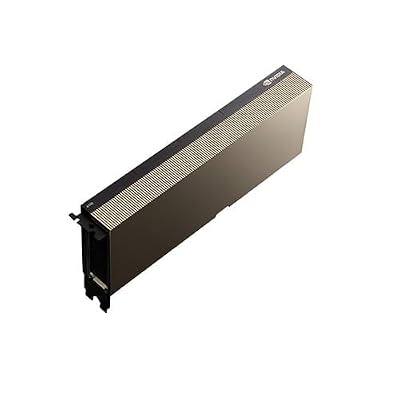
NVIDIA Tesla A100 Ampere 40 GB Graphics Processor Accelerator – PCIe 4.0 x16 – Dual Slot
How Much the Nvidia H200 GPU Actually Costs in 2026
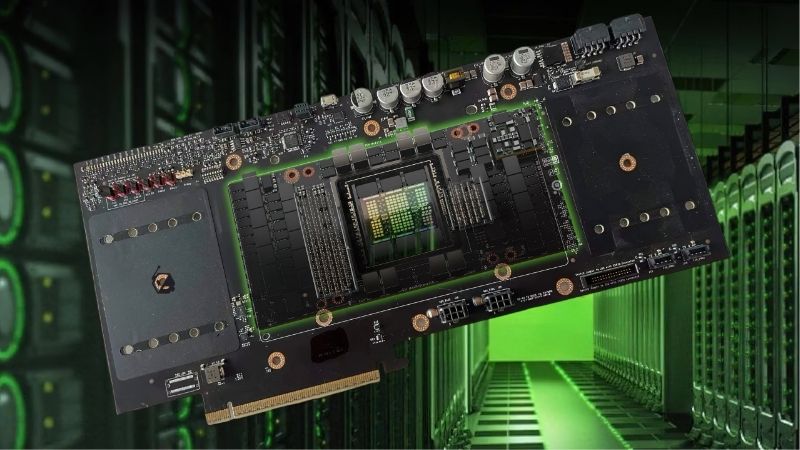
The H200 is a data-center accelerator, not a retail product, so its price depends entirely on how you buy it. There are three realistic paths: a single card through a reseller, a complete multi-GPU system, or renting capacity by the hour in the cloud. Each suits a very different budget and workload, and knowing the going rate for all three is the only way to avoid overpaying for capacity you do not need.
As an Amazon Associate we earn from qualifying purchases at no extra cost to you.




Single-Card Price: NVL vs SXM
A standalone H200 NVL card — the PCIe form factor built for air-cooled servers — typically sells for around $31,000 to $32,000 through authorized channels, with some resellers listing it as high as $45,000 depending on availability. That premium reflects both the advanced HBM3e memory and the limited production volume of the high-memory variant.
The SXM version is not usually sold as a loose card. It is designed for Nvidia’s HGX and DGX platforms, requires liquid cooling, and delivers roughly 18% higher throughput than NVL thanks to its superior interconnect and 700W thermal headroom. If you see a single-card quote online, it is almost always the NVL you are pricing, not the SXM.
For context, the H200 runs about 15% to 20% more than an H100, which sits nearer $25,000 to $30,000. You are paying that gap almost entirely for memory, a point worth keeping in mind when you weigh the two against each other for a given workload.
Full Systems: HGX and DGX H200
Buyers at this level are usually standing up training or inference clusters, where a single node is just one building block. The per-GPU cost blurs into a much larger infrastructure budget, and vendors expect negotiation, volume discounts, and multi-year support contracts rather than a one-off checkout, so the sticker figures above are starting points, not final quotes.
Most large buyers never purchase a single card. Hyperscalers ship the H200 in 8-GPU HGX nodes, and an 8-GPU H200 baseboard lands around $315,000, versus roughly $215,000 for the equivalent 8-GPU H100 board. The step up buys capacity and bandwidth, not raw compute.
A complete DGX H200 system, with eight SXM GPUs plus networking, storage, and Nvidia’s software stack, runs approximately $350,000 to $500,000 depending on configuration. A full AI rack with multiple boards can exceed $600,000 once you add the surrounding infrastructure.
These are capital-expenditure decisions measured against multi-year utilization, not impulse buys. At this scale, the GPU sticker is only part of the total cost of ownership, which also includes power, cooling, networking, and the data-center space to house it all.
Cloud Rental: Paying by the GPU-Hour
For teams that cannot justify — or wait 6 to 12 months for — hardware, cloud rental is the fastest on-ramp. On-demand H200 rates in 2026 range from about $2.43 to under $20 per GPU-hour depending on the provider, region, and service level, and some hyperscalers raised rates around 15% in early 2026 as supply stayed tight.
Specialized GPU clouds sit at the low end, with some single-H200 instances near $2.50 to $3.80 per hour, while the big hyperscalers price higher for the convenience and integration they offer.
The practical math is stark: running one H200 continuously for a year at roughly $3.80 an hour is about $33,000 — close to buying the card outright, but with none of the power, cooling, or depreciation burden. For steady, long-term workloads hardware wins; for bursty or experimental work, the cloud is far cheaper.
What Drives the H200 Price — and Whether It’s Worth It
The H200’s price only makes sense once you understand what changed from the H100, because on paper the two GPUs are more alike than the price gap suggests. The entire premium comes down to one subsystem, and whether it is worth it depends entirely on your workload rather than on any headline benchmark.
You’re Paying for Memory, Not Compute
The H200 uses the exact same GH100 compute die as the H100: identical 16,896 CUDA cores, identical peak FP8 and FP16 throughput, identical 700W envelope. Nvidia did not redesign the compute pipeline at all. It widened the memory pipe.
The change is 141GB of HBM3e running at 4.8 TB/s, up from the H100’s 80GB of HBM3 at 3.35 TB/s — a 76% capacity increase and a 43% bandwidth increase. That is the whole story of the price difference, and it is a deliberate one.
The reason it matters is that modern large language models run out of memory long before they run out of compute. Extra VRAM and bandwidth are precisely the resources that unblock those workloads, which is why Nvidia can charge a premium for a card that adds no new compute.
H200 vs H100: Is the Premium Justified?
A useful way to frame it is cost per useful result rather than cost per card. If the H200’s extra memory lets one GPU do what previously took two, the effective price can actually fall despite the higher sticker, because you buy fewer cards, use less power, and simplify the networking between them.
For memory-bound jobs, the answer is often yes. A single 141GB H200 can hold a 70B-parameter model with headroom on one card, avoiding the sharding and multi-GPU complexity an 80GB H100 forces on you. In long-context inference and large-batch training, that translates to roughly 1.4x faster training and up to 1.8x faster inference.
For workloads that already fit comfortably in 80GB, the extra spend buys almost nothing, since the compute silicon is unchanged. Two GPUs with the same cores will finish a compute-bound job in the same time regardless of how much memory sits unused.
The honest test is therefore simple: if your model or context length strains an 80GB budget, the H200 premium pays for itself; if it does not, the H100 is the better value and the money is better spent elsewhere in the cluster.
Pros and Cons of Buying vs Renting
Because the H200 sits at such a high price point, the buy-versus-rent decision matters as much as the sticker itself. The table below weighs the two against the realities most teams actually face day to day.
| Buying (own hardware) | Renting (cloud) |
|---|---|
| Cheapest for 24/7 long-term workloads | Cheapest for bursty or experimental use |
| Full control, data stays in-house | Live in ~90 seconds, no lead time |
| $31k+ per card, plus power and cooling | $2.43-under $20/GPU-hr adds up fast if always on |
| 6-12 month lead times historically | No depreciation or maintenance to manage |
Most teams land on a hybrid: rent to prototype and validate, then buy once utilization is high and predictable enough to beat the hourly rate. Getting that crossover point right is where the real savings live.
Market Forces Moving the H200 Price Right Now
H200 pricing is not static, and two developments in particular are shaping it in 2026. If you are budgeting for this card, these are the factors that decide whether you buy today or wait a quarter, and both point the same direction.
The China Export Approval and What It Means for Demand
It is also a reminder that this market is shaped by policy as much as by silicon. Export rules can shift the global demand curve for a specific chip overnight, and the H200 sits right at the center of those decisions, so buyers should treat regulatory news as a genuine pricing input, not background noise.
In a significant policy shift, the US moved to allow Nvidia to sell the H200 — one of its most powerful AI chips cleared for the market — to China on a case-by-case basis, with an initial batch of Chinese firms approved. For a supply-constrained product, a large new pool of approved buyers matters a great deal.
The practical read for a Western buyer is straightforward: additional global demand for an already-tight card tends to keep prices firm rather than falling. Supply that might otherwise have loosened gets absorbed by new orders.
If your roadmap needs H200 capacity, this development argues against assuming prices will soften on their own in the near term. Planning around firm pricing is the safer bet than betting on a demand-driven discount.
HBM Memory Costs and the 2026 Price Pressure
Because the H200’s value is its memory, memory economics drive its cost directly. HBM prices have surged with AI demand, and suppliers reportedly raised HBM3e prices by nearly 20% for 2026 deliveries as accelerator demand outstripped supply. When the priciest component gets pricier, the finished card follows.
Memory has become the single largest cost driver in these GPUs, so this is not a minor line item. It flows straight through to the price you pay for a finished H200.
There are early signs of relief, but they are distant. The steep climb has eased somewhat and the market has shown patches of relative stability, yet meaningful new memory supply is not expected to change the picture until 2027-2028. For now, plan around firm pricing rather than an imminent drop.
How to Time an H200 Purchase or Rental
Put those forces together and the tactic is clear. If your workload is memory-bound and continuous, lock in hardware or a reserved cloud commitment now, since waiting for a price crash that the supply timeline does not support only costs you compute time and momentum.
If your needs are uncertain, start on hourly cloud instances, measure real utilization over a few weeks, and convert to reserved capacity or hardware once the math tips in favor of ownership.
You can compare current H200 cloud rates and card availability through the links on our recommendations before you commit a budget this large. A little price research up front is trivial next to a five- or six-figure purchase.
See More:
- TechPowerUp GPU
- Nvidia H200 GPU price
- RTX 5050 Mobile
- Nvidia competitors
- Nvidia Reflex low latency on or off
The Bottom Line on Nvidia H200 Pricing
The Nvidia H200 GPU price in 2026 is best understood as a range, not a figure: roughly $31,000 to $45,000 for a single NVL card, $315,000 and up for 8-GPU systems, and $2.43 to under $20 per GPU-hour in the cloud. You are paying for 141GB of HBM3e, and that premium is worth it precisely when your models are memory-bound. For individuals and small teams who cannot justify data-center hardware, a consumer card such as the RTX 5090 or the RTX 5060 Ti 16GB is the accessible on-ramp for local AI experimentation — tap the link on our site to check today’s prices before you build.
Frequently Asked Questions
How much does a single H200 cost?
There is no consumer list price. Individual H200 accelerators have traded through channel partners in the range of roughly thirty to forty thousand dollars each, varying with form factor, volume and supply conditions. NVIDIA sells primarily through OEM system builders and cloud providers rather than as individual components, so quoted single-unit pricing is always indicative rather than official.
What does a complete H200 system cost?
An eight-GPU HGX H200 baseboard integrated into a server with CPUs, high-speed networking, memory and storage typically runs into the high hundreds of thousands of dollars. A full DGX-class node sits at the upper end of that range. Rack-level deployments then add switching, power distribution and cooling, which can equal a substantial fraction of the compute cost again.
How does the H200 differ from the H100?
The H200 uses the same Hopper compute architecture but pairs it with 141GB of HBM3e memory at roughly 4.8 TB/s of bandwidth, against 80GB of HBM3 at about 3.35 TB/s on the H100. Raw compute is comparable, so the gains show up in memory-bound work: large model inference, long context windows and workloads that previously required splitting across more GPUs.
Is renting cloud capacity cheaper than buying?
For intermittent work, almost always. Hourly H200 instances from major and specialist cloud providers avoid capital outlay, power and cooling costs, and hardware depreciation on a product line that refreshes quickly. Purchasing makes sense at sustained high utilisation over multiple years, or where data residency, latency or contractual requirements rule out third-party infrastructure.
Why are these accelerators so expensive?
Cost is driven by advanced node manufacturing, the limited supply of HBM3e stacks, and constrained CoWoS advanced packaging capacity, all layered on top of strong demand and limited competition. The price also reflects the surrounding software stack and networking that make large clusters usable, not just the silicon itself, and NVIDIA’s data centre gross margins reflect that position.
Ready to decide? Our #1 pick for 2026 is the Cheapest for 24/7 long-term workloads.
Live price & availability on Amazon.


Write Your Review
No reviews yet. Be the first to share your experience!