
NVIDIA GTX 1060 drivers used to be a simple matter of clicking whatever the app offered. That stopped being true in October 2025, and most 1060 owners have not been told. Your card no longer receives Game Ready drivers — there is a final build, it has a specific number, and knowing it is now the difference between a stable machine and a slow drift into problems nobody explains. This article gives you that number, the download route, and an honest answer on how much life this card has left.
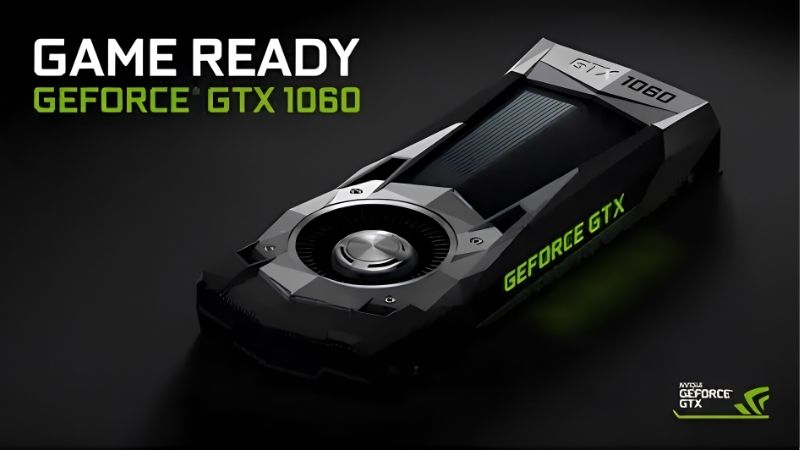
Which GTX 1060 Drivers Should You Install in 2026?
The short answer is that you want the last build of the 580 branch that runs cleanly on your system, and you want to keep a copy of it. Everything below explains why that sentence is not the usual “just update” advice, and why a card sitting in Steam’s top-25 most-used GPUs list now needs its owner to pay attention.
As an Amazon Associate we earn from qualifying purchases at no extra cost to you.




![VATH Sticker Compatible with NVIDIA GEFORCE GTX 17.5mm x 17.5mm [879]](https://m.media-amazon.com/images/I/51SbKOqt4IL._SL400_.jpg)

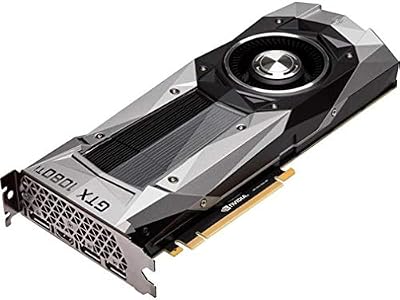

The 580 Branch Is Your Ceiling — Here Is Why
NVIDIA shipped its final Game Ready Driver for Pascal cards in October 2025. The GTX 1060 is Pascal. That release was the end of the line for game optimisations on your card.
The 580/581 driver family was the last full-feature branch for Pascal, Maxwell, and Volta. NVIDIA’s current release notes now say it outright: driver support for the GeForce 10, 900, and 700 series is discontinued.
But you are not stranded, and this is the part almost everyone gets wrong. Security updates continue on a separate track through October 2028, and they have their own version numbers. The last supported build for your card is the Game Ready Security Driver 582.66, released in June 2026.
So the practical instruction is short. Install 582.66, watch for the next quarterly security release, and ignore the 610 branch entirely — it does not include your card. What you will not get is day-one tuning for new games. What you will get is a patched, secure system until 2028.
3GB vs 6GB: They Are Not the Same Card
This trips up more 1060 owners than any driver question, and it matters if you are buying used.
The GTX 1060 3GB is not a 6GB card with less memory. It has fewer CUDA cores — 1,152 against the 6GB model’s 1,280. NVIDIA cut the shader count and the VRAM and sold both under one name.
| GTX 1060 3GB | GTX 1060 6GB | |
|---|---|---|
| CUDA cores | 1,152 | 1,280 |
| VRAM | 3 GB GDDR5 | 6 GB GDDR5 |
| Memory bus | 192-bit | 192-bit |
| Bandwidth | 192 GB/s | 192 GB/s |
| TDP | 120 W | 120 W |
| Launch price | 199 | 249 |
The drivers are identical for both. The reason to know the difference is that a used listing saying “GTX 1060” tells you almost nothing, and 3 GB in 2026 is a genuinely different experience from 6 GB. Check with GPU-Z before paying.
Where to Download and What to Avoid
Use NVIDIA’s Advanced Driver Search. Select GeForce, GTX 10 Series, GTX 1060, your Windows version, and Game Ready. It returns a list of builds rather than pushing one at you.
Do not download drivers from anywhere else. Driver files are among the most impersonated downloads on the internet because people search for them urgently. A driver runs with kernel-level access — a fake one is far worse than a bad app.
Once you have a build that works, keep the installer file. Rename it so you recognise it later and put it somewhere that survives a Windows reinstall. This is the single most useful thing a 1060 owner can do this week, and it takes two minutes.
What Changed for GTX 1060 Owners in October 2026
The transition was announced quietly and lands unevenly. Nothing broke on the day. Your card works exactly as it did. What changed is the promise attached to it, and the consequences arrive gradually enough that most owners will not connect the cause to the effect.
Game Ready Ended, Security Updates Did Not
Be precise about what happened, because the internet has been imprecise about it.
Pascal received roughly nine years of Game Ready driver support. That is genuinely long — beyond what most of the industry offers. It ended with a final release in October 2025, and the architecture moved to quarterly security updates for three more years.
Your GTX 1060 is therefore in a middle state: maintained but not developed. Patched but not optimised. This is not the same as unsupported, and articles claiming your card is dead are wrong.
What You Actually Lose Day to Day
For older and lighter games — the workload most 1060s are actually running — you lose nothing measurable. A card that runs Valorant, CS2, GTA V, or Minecraft today will run them identically for years.
For new AAA releases you lose real things. Day-one optimisation is where NVIDIA ships workarounds for the odd ways new engines stress old assumptions. Without it, expect a higher chance of crashes, visual bugs, and performance that reviewers do not see.
Anti-cheat is the underrated risk. Some systems increasingly gate on modern driver behaviour, and a driver frozen at 580 could eventually lock you out of a title — with an error message that never mentions drivers.
How Long This Card Realistically Has Left
October 2028 is the hard date for security updates. That is your outer boundary and it is more than two years away.
The softer boundary arrives earlier. Games requiring hardware ray tracing already exist, and the list grows. Your card has no RT hardware, no Tensor Cores, and therefore no DLSS. When a title requires those, no driver helps.
The realistic plan: this card is comfortable for light and older gaming into 2028. For new AAA releases, it is already on borrowed time, and that has nothing to do with drivers.
Pros and Cons of Staying on the GTX 1060
The honest position is that this card is neither finished nor fine — it depends entirely on what you do with it. Millions of people are still using one daily and most of them are getting exactly what they need. A smaller group is fighting a losing battle and does not know it yet.
Where the GTX 1060 Still Holds Up
Esports is the strongest case. CS2, Valorant, Rocket League, League of Legends — all run comfortably at 1080p. Your monitor is more likely to be the limit than your GPU.
Older libraries run beautifully. Anything from before roughly 2020 at 1080p is well within this card’s reach, and a decade of excellent games qualifies.
Power draw is the quiet advantage. 120 W means it works in almost any system with a spare 6-pin, including the modest supplies in prebuilt machines.
Where It Has Stopped Being Enough
VRAM is the first wall. 6 GB in 2026 hits its limit regularly at 1080p high settings, and the failure mode is stutter and late-loading textures rather than a smooth frame rate decline. The 3 GB model hit that wall years ago.
No DLSS is the second and it is permanent. Pascal has no Tensor Cores. Modern entry cards use upscaling to stay playable in demanding titles; your card cannot, so it must render everything natively.
Ray tracing requirements are the third. A growing number of releases assume RT hardware. Your card has none, and that is a hardware fact rather than a settings problem.
Squeezing More Out of What You Own
Before spending money, spend twenty minutes. Lower texture quality first — it is the setting that most directly relieves a 6 GB frame buffer, and it costs less visual quality than shadows or effects do.
Check your actual bottleneck. A GTX 1060 paired with 8 GB of system RAM or a mechanical hard drive is frequently not GPU-limited at all. Doubling your RAM often costs a fraction of a GPU and helps more.
Consider FSR where available. AMD’s upscaler is not hardware-locked the way DLSS is, and a growing number of games offer it. It is not as good, and it works on your card, which DLSS never will.
Upgrade Now or Ride It Out? The 2026 Price Reality
Every 1060 owner reading a driver article eventually arrives at the same question, and 2026 has an unusual answer to it. The market has behaved in a way that makes keeping a 2016 card considerably more defensible than it sounds — and the evidence for that arrived only this month.
Why a 2026 Card Is Still Rational to Keep
Consider what NVIDIA itself just did. This month the company restarted production of the five-year-old RTX 3060 12GB and put it back on shelves at roughly its original 2021 price, because manufacturing a 2021 design on an older Samsung node had become cheaper than building something current.
That is a manufacturer telling you, through its actions, that old silicon is now the economical choice. When the company that wants to sell you a new card concludes that resurrecting a five-year-old one is the sensible move, holding onto a 2016 card is not stubbornness.
Component costs never drifted back toward 2024 levels — they kept rising, with memory the main driver. That pressure is exactly why entry cards still ship with 8 GB and why your upgrade path costs more than it did two years ago.
What an Upgrade Actually Costs Today
Run the numbers honestly rather than optimistically. The realistic step up from a GTX 1060 is an RTX 3050 or better, and the tier that genuinely changes your experience — 12 GB, DLSS, modern architecture — sits meaningfully above what a 1060 cost new in 2016.
There is real good news and it should be stated without spin. The steep climb that ran through late 2025 has flattened out. Framework, among other manufacturers, has reported a stretch of comparative calm while stating plainly that it does not consider the swings finished.
Read that carefully. Prices stopped rising. They did not come down. A plateau lowers the cost of thinking it over; it does not hand you a discount for waiting.
Relief Waits Until Late 2027
Capacity genuinely is being added, and the dates are already public. Micron has two fabrication plants under construction in Idaho, and CXMT in China has broadened the pool of DDR5 suppliers manufacturers can buy from.
Neither lands this year. The Idaho plants are not scheduled to produce until the 2027 to 2028 window, and industry forecasting does not anticipate meaningful consumer price relief before late 2027 at the earliest.
Notice how neatly that lines up with your card’s own timeline. Security updates run through October 2028. Price relief is expected from late 2027. If your 1060 still does what you need, riding it out is not merely acceptable — it is the plan the calendar suggests.
See More:
- NVIDIA
- NVIDIA DeepStream
- NVIDIA GPU driver update
- NVIDIA GeForce NOW download
- NVIDIA RTX A2000 12GB driver
Conclusion
Getting your NVIDIA GTX 1060 drivers right in 2026 comes down to one number and one habit. The number is 582.66 — the current Game Ready Security Driver, and the last supported build for the GTX 10 series after Game Ready optimisation ended in October 2025. The habit is keeping that installer somewhere safe.
Take the quarterly security updates that continue through October 2028 — 582.66 is the current one. Ignore anyone telling you the card is dead; it is in maintenance, not the grave. And know the real limits, because they are not driver limits: 6 GB of VRAM and no Tensor Cores are why this card struggles in new titles, and no version number fixes either.
With component prices flat rather than falling and relief not expected before late 2027, the calendar is unusually kind to a decision to wait. Archive your driver, lower your texture settings, and spend the upgrade money when the market gives you a reason to.
Frequently Asked Questions
Which driver should I install on a GTX 1060 in 2026?
Stay within the R580 branch, which is the final line to receive Pascal feature support. Those builds carry every accumulated fix for the architecture. Security updates continue into late 2028, but no new game optimizations will arrive, so there is no benefit in waiting for a future release.
Does the 3GB or 6GB version affect driver choice?
No, both use the same package, but the 3GB model is also a slightly cut down GPU with fewer shader cores, not just less memory. In modern titles the 3GB card runs out of buffer at 1080p medium, which no driver can fix. Reduce texture quality first when troubleshooting stutter.
How do I fix stuttering and driver timeouts?
Do a clean install using Display Driver Uninstaller in Safe Mode, then set the shader cache size to unlimited in the control panel. If timeouts persist, the card may be suffering from aged thermal paste and dried pads, since most of these boards are now approaching a decade of service.
Are there any performance gains from newer drivers?
Essentially none. Pascal optimization work concluded years ago and differences between recent builds fall within run-to-run variance. Newer drivers matter for compatibility with current Windows builds and game engines, preventing crashes rather than improving frame rates. Settings adjustments are your only real performance lever.
Should I use Studio or Game Ready drivers?
For a GTX 1060 it makes little practical difference at this stage, since both branches receive the same Pascal maintenance. Studio builds update less often, which some users prefer for a stable machine. Pick one, clean install it, and avoid repeatedly switching branches on aging hardware.
Ready to decide? Our #1 pick for 2026 is the CUDA cores.
Live price & availability on Amazon.





Write Your Review
No reviews yet. Be the first to share your experience!