
The story behind nvidia data center revenue is really the story of the entire AI boom, and it has reshaped what Nvidia is as a company. Once known mainly for gaming graphics cards, Nvidia now earns the lion’s share of its money selling AI accelerators to data centers, and the numbers have reached record territory. This article explains what data center revenue means, what is driving its explosive growth, how recent chip-export news factors in, and what all of it means for everyday buyers and the wider GPU market.

Understanding Nvidia Data Center Revenue
To make sense of the headlines, you first need to know what this figure represents and why it has come to dominate conversations about the company. Data center revenue is now the core of Nvidia’s business, and understanding its parts explains why analysts, cloud giants, and gamers all watch it so closely.
What “Data Center Revenue” Actually Means
Nvidia reports its business in segments, and data center is the category covering chips and systems sold to cloud providers, enterprises, and research labs rather than to home gamers. These are the powerful accelerators that train and run artificial-intelligence models.
This segment is distinct from Nvidia’s gaming division, which sells the GeForce cards most consumers know. Understanding that split is key: when headlines celebrate Nvidia’s growth, they are usually talking about data center sales, not gaming.
In practical terms, data center revenue is the clearest single measure of how much the AI wave is paying off for Nvidia, which is why investors and analysts track it as a barometer for the whole AI industry.
It also helps to picture the physical reality behind the accounting term. Data center revenue represents warehouse-sized facilities filled with racks of Nvidia hardware, cooling systems, and networking, all working together to train and serve AI models. When you read that this segment is booming, it reflects a genuine, worldwide build-out of computing power on a scale the industry has never seen before.
How It Became Nvidia’s Biggest Segment
For years, gaming was Nvidia’s largest business. That changed as artificial intelligence took off and demand for GPUs capable of training large models surged, pushing data center sales past gaming to become the dominant share of the company’s revenue.
The shift has been dramatic rather than gradual. Data center revenue has climbed to record levels in recent reporting, driven by cloud giants and AI companies racing to build out computing capacity, and it now represents the majority of what Nvidia earns.
Because figures update every quarter, the exact numbers move quickly; for precise, current totals, Nvidia’s official earnings reports are the authoritative source. The unmistakable trend, though, is steep and sustained growth over a remarkably short period.
The AI Chips Behind the Numbers
The engines of this growth are Nvidia’s data-center accelerators, including the H100, the newer H200, and the Blackwell generation. These chips are purpose-built for the heavy math behind training and running AI models, and demand has consistently outstripped supply.
What sets them apart is not just raw speed but an entire ecosystem, including Nvidia’s CUDA software and networking, that makes them the default choice for AI developers. That software advantage is a major reason customers keep buying Nvidia rather than cheaper alternatives.
This is the forward-looking core of the story. As AI models grow larger and spread into more industries, the appetite for these accelerators is expected to keep climbing, which is what underpins much of the optimism about future data center revenue.
What’s Fueling the Growth Right Now
Record numbers do not appear from nowhere. A combination of surging AI demand and shifting trade policy is powering the current wave, and both deserve a closer look because they shape where the revenue heads next. Here are the forces doing the most work.
The AI Boom and Cloud Demand
The single biggest driver is the global build-out of AI infrastructure. Cloud providers and large enterprises are investing enormous sums in data centers packed with Nvidia accelerators, and that capital spending flows straight into Nvidia’s data center revenue.
Demand has been broad rather than narrow. It spans established tech giants, fast-growing AI startups, and increasingly governments and traditional companies adding AI capabilities, which spreads the growth across many different customers.
This diversity matters for stability. A business leaning on a single customer is fragile, but demand drawn from many sectors gives the data center segment a broader, more durable foundation, even if any one quarter can still swing on a few large orders.
Scale brings its own momentum, too. As more organizations standardize on Nvidia’s platform, switching away becomes harder and new customers tend to follow the crowd, which reinforces demand. That network effect is a big reason the growth has proven more durable than many skeptics initially expected, though it does not make the segment immune to a broader slowdown in AI spending.
The H200 Export Approval to China
A notable recent development is that the United States has cleared Nvidia to sell the H200, one of its most capable AI chips, to China. Because China is a large market that had faced tighter restrictions, this approval opens a significant new channel of potential demand.
For data center revenue, the implication is straightforward: access to more buyers for a high-end accelerator can add to sales, and analysts watch such policy shifts closely for their revenue impact. It is a reminder that Nvidia’s data-center business is shaped by geopolitics as much as by technology.
At the same time, export rules can change, so this is a factor to monitor rather than a guaranteed windfall. The direction of travel, however, currently points toward a wider addressable market for Nvidia’s top data-center chips.
For everyday readers, the key point is that a single policy decision can shift billions in potential sales. That is why chip-export headlines draw so much attention: they change not just who Nvidia can sell to, but how confidently the company can plan its production. The H200 approval is a clear example of politics and technology intersecting in ways that directly touch the revenue figures.
Pros and Cons of Nvidia’s Data-Center Reliance
The upside of this concentration is powerful. Riding the AI boom has given Nvidia record revenue, enormous scale, and the resources to invest heavily in future products, cementing its lead in a fast-growing field.
The risks are worth stating plainly. Heavy reliance on data center sales makes Nvidia sensitive to any slowdown in AI spending, to shifts in export policy, and to rising competition, any of which could cool the growth that markets have come to expect.
For readers, the balanced view is that the data center segment is both Nvidia’s greatest strength and its biggest concentration of risk, which is exactly why it dominates any serious discussion of the company’s future.
What It Means Beyond Wall Street
This is not only a story for investors. The data-center boom quietly shapes the graphics cards ordinary people buy and the features they enjoy, so it is worth understanding the ripple effects and what to keep an eye on. Here is the practical side for everyday readers.
Ripple Effects on Consumer GPUs
The data-center boom does not stay contained; it touches the gaming cards ordinary buyers want. When Nvidia prioritizes high-value AI chips, manufacturing capacity and advanced memory can tighten, which has historically influenced the supply and pricing of consumer GPUs.
There is a positive side too. The huge revenue from data centers funds research that eventually reaches gaming cards, including AI features like DLSS that grew out of data-center-style technology and now boost frame rates on home GPUs.
For everyday users, the practical takeaway is that Nvidia’s data-center success and the health of the consumer GPU market are quietly linked, for better and for worse, so this segment is worth following even if you never buy an AI chip.
There is a longer-term angle for consumers as well. The features being pioneered in data centers today, from smarter AI upscaling to new ways of generating frames, tend to trickle down into gaming cards over the following years. In that sense, watching where Nvidia’s data-center money is going offers a preview of the technologies that will eventually shape the graphics cards in ordinary gaming PCs.
What to Watch in Future Earnings
If you follow this topic, a few signals matter most. Watch whether data center revenue keeps growing quarter over quarter, how new Blackwell-generation products sell, and what management says about demand and supply going forward.
Policy is the other variable. Updates on chip-export rules, especially regarding China, can move the outlook quickly, as the H200 approval shows. These headlines often matter as much as the raw sales figures themselves.
Taken together, these indicators give a fuller picture than any single number, and they help separate durable trends from short-term noise that tends to dominate day-to-day coverage.
For Curious Readers and Buyers
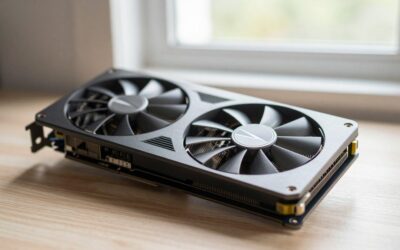
Following Nvidia’s data-center rise is fascinating, but many readers arrive here simply curious about the company whose chips power modern AI. If that is you, the most tangible way to experience Nvidia’s technology is through its consumer RTX graphics cards, which bring some of the same AI innovations to gaming and creative work.
For those weighing a purchase, comparing current RTX models on price and features is easy through the links on this page. It is a practical way to connect the big-picture AI story to a product you can actually use at home today.
Ultimately, the same company driving record data-center growth is the one designing the graphics card that could sit in your next PC, and the technologies are more connected than they look. Exploring the current lineup is the simplest way to see that link firsthand and to decide whether an RTX card fits your gaming or creative needs.
See More:
- nvidia meaning
- rx 9070 vs rx 9070 xt
- 9060 xt 16gb vs 5070 ti
- radeon rx 9070 xt vs 5080
- windows graphics driver update
Conclusion
The trajectory of nvidia data center revenue captures one of the most important shifts in modern technology: a former gaming-chip maker becoming the backbone of the AI era. Record growth, driven by relentless demand for AI accelerators and widened by developments like the H200 export approval to China, has made this segment the heart of Nvidia’s business, even as it concentrates both opportunity and risk. For the latest figures, always check Nvidia’s official earnings, and if the AI boom leaves you curious about the company’s consumer cards, compare the newest RTX options through the links on this page.
Disclaimer: This article is for informational and educational purposes only and does not constitute financial, investment, or trading advice. Company figures change frequently and should be verified against official sources. Always do your own research and consult a qualified professional before making any investment decision.
Frequently Asked Questions
What actually counts as Nvidia data center revenue?
The segment covers accelerated computing hardware and related software sold into servers, including Hopper and Blackwell GPUs, DGX systems, Grace CPUs, NVLink and InfiniBand or Spectrum-X networking from the Mellanox acquisition, plus AI Enterprise software licences. It excludes gaming GeForce cards, professional visualisation and automotive, which Nvidia reports separately.
Why has this segment grown so quickly?
Large language model training and inference need enormous clusters of GPUs, and hyperscale cloud providers plus AI labs have been buying them at scale. Networking attach rates rose alongside, because training clusters need very high bandwidth interconnect. The result is that data center now dwarfs Nvidia’s traditional gaming business by revenue.
How does this affect GeForce gaming card supply and pricing?
Indirectly but meaningfully. Advanced packaging capacity and high-bandwidth memory supply are shared constraints, and when data center demand is extreme, consumer allocations and memory pricing feel the pressure. That is one reason recent GeForce launches have had thin availability at launch prices before supply normalised.
What are the main risks to continued growth?
Customer concentration is high among a handful of hyperscalers, export controls limit sales into some markets, and competitors including AMD Instinct and in-house cloud silicon are targeting the same workloads. A slowdown in AI capital spending would show up in this line item faster than anywhere else in the business.
Where can I check the current figures myself?
Nvidia publishes quarterly results on its investor relations site, with segment breakdowns in the CFO commentary and the 10-Q or 10-K filings on the SEC EDGAR database. Those primary sources are the only reliable place for current numbers, since the figure changes materially every quarter.
As an Amazon Associate we earn from qualifying purchases at no extra cost to you.





Write Your Review
No reviews yet. Be the first to share your experience!