
The RX 6500 XT is the faster card, typically around 20-35% ahead of the GTX 1650 in a PCIe 4.0 system, so it is the better pick for a modern budget build; the GTX 1650 is the smarter choice for older PCIe 3.0 PCs, office-style prebuilts without a spare power connector, and anyone who needs hardware video encoding for streaming or recording.
As an Amazon Associate we earn from qualifying purchases at no extra cost to you.
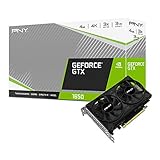


Budget Cards With Big Caveats
NVIDIA’s GTX 1650 launched in April 2019 at $149 as an entry-level Turing card. Its defining trait is a 75 W power rating, which lets most versions run entirely off the PCIe slot with no extra cable. AMD’s RX 6500 XT arrived in January 2022 at $199, during the GPU shortage, built on a tiny 6 nm RDNA 2 chip originally designed with laptops in mind. Hardware Unboxed/TechSpot’s launch review was famously harsh, mainly because of the card’s cut-down PCIe link and lack of video encoders.
In 2026 both are well behind current entry-level options such as the RTX 5050, Arc B570 and RX 9060 XT, but they remain very common in used systems and as cheap upgrades. The right choice depends less on raw speed than on what platform the card goes into.
Specification Comparison
| Specification | GTX 1650 | RX 6500 XT |
|---|---|---|
| Architecture | Turing | RDNA 2.0 |
| Release date | 23 April 2019 | 19 January 2022 |
| Launch MSRP | $149 | $199 |
| Shader cores | 896 CUDA | 1024 stream processors |
| Boost clock | 1665 MHz | 2815 MHz |
| Process | 12 nm | 6 nm |
| Memory | 4 GB GDDR5 | 4 GB GDDR6 at launch; 8 GB models later (8 GB max) |
| Bus / bandwidth | 128-bit / 128.0 GB/s | 64-bit / 143.9 GB/s |
| Cache | 1024 KB L2 | 1024 KB L2 + 16 MB L3 |
| Interface | PCIe 3.0 x16 | PCIe 4.0 x4 |
| Board power | 75 W | 107 W |
| Power connectors | None (slot powered) | 1x 6-pin |
| Length / width | 229 mm listed (many short models exist) / 2-slot | Varies by model / 2-slot |
| Outputs | 1x DVI, 1x HDMI, 1x DisplayPort | 1x HDMI 2.1, 1x DisplayPort 1.4a |
The PCIe x4 Problem Explained
The RX 6500 XT uses only four PCIe lanes. On a PCIe 4.0 motherboard, that link provides about the same bandwidth as PCIe 3.0 x8, which is generally adequate. On a PCIe 3.0 board, the link is halved again, and whenever a game’s assets overflow the card’s memory, data has to stream over that narrow link. With the original 4 GB model, this happens often.
Hardware Unboxed/TechSpot tested this directly by switching the same system between PCIe 4.0 and 3.0. In one example, PCIe 3.0 cut average frame rates by 9% and 1% lows by 14%; in the worst case, 1% lows fell by up to half. Their testing also showed the GTX 1650 Super, which runs at full x16, beating the 6500 XT by up to 16% in a PCIe 3.0 system in at least one game. The 8 GB versions released later reduce how often memory overflows, which eases the issue, but the x4 link remains.
Practical takeaway: check your motherboard. Most Intel boards before 11th-gen and AMD B450/A520 boards run their GPU slot at PCIe 3.0.
Gaming Performance
On a PCIe 4.0 system
With full PCIe 4.0 bandwidth, the RX 6500 XT performs close to a GTX 1650 Super, which places it roughly 20-35% ahead of the plain GTX 1650 in most games at 1080p, according to the relative positioning in TechSpot and TechPowerUp data. Expect something like 60-80 fps at 1080p medium in many popular titles on the 6500 XT versus around 45-60 fps on the 1650, with wide variation by game, settings and CPU.
On a PCIe 3.0 system
Here the lead shrinks, and in VRAM-heavy games it can disappear, particularly with 4 GB models at high texture settings. Keeping textures at medium and staying within 4 GB is the key to good results on either card.
Ray tracing and modern features
The RX 6500 XT technically has RDNA 2 ray accelerators and supports DirectX 12 Ultimate, which means it can launch games that require ray-tracing hardware, though performance in those titles is poor. The GTX 1650 has no RT hardware and lacks DX12 Ultimate features, so games that mandate hardware RT will not run on it. For a 1080p budget card this is a real long-term difference.
Upscaling
Neither card supports DLSS; the GTX 1650 lacks tensor cores. Both can use AMD FSR and Intel XeSS (DP4a), and both can use FSR 3 frame generation in supported games. The RX 6500 XT also supports AMD Fluid Motion Frames in the driver. On cards this slow, FSR at 1080p “Quality” mode is often the difference between playable and not.
Streaming, Encoding and Outputs
This is the GTX 1650’s biggest practical advantage. It includes NVIDIA’s NVENC hardware encoder (an older version on the original GDDR5 models), so it can stream or record gameplay with little performance cost. The RX 6500 XT has no hardware video encoder at all and limited decode support, so streaming must use the CPU.
The 6500 XT also offers only two display outputs on most models (HDMI 2.1 and DisplayPort 1.4a), while the GTX 1650 typically includes three, including DVI, which still matters for some older monitors.
Power and Compatibility
The GTX 1650’s 75 W rating means most models need no PCIe power cable. That makes it one of the few real upgrades for office prebuilts with weak, proprietary power supplies. The RX 6500 XT needs a 6-pin connector and draws 107 W.
PSU sizing with a typical 65 W CPU:
- GTX 1650: 75 + 65 + 150 headroom = 290 W; nearly any working 300 W+ unit is fine.
- RX 6500 XT: 107 + 65 + 150 headroom = 322 W, so a quality 400 W unit with a 6-pin lead is the target.
Both cards are generally short and dual-slot, and many low-profile or compact GTX 1650 variants exist for small cases.
Drivers and Longevity
Turing is still on NVIDIA’s regular Game Ready driver schedule. AMD moved RX 5000 and RX 6000 cards to a separate driver branch in late 2025, and after initial confusion stated these cards will continue to receive game support and optimizations. Both remain supported, though neither will be the focus of new features.
Price and Value
At MSRP the GTX 1650 cost $149 and the RX 6500 XT $199, a 34% premium for roughly 20-35% more performance on PCIe 4.0, so cost per frame was roughly equal at best. Used, a GTX 1650 usually sells in the $60-$90 range and an RX 6500 XT in the $80-$120 range. At those prices, a used RX 6600 or a current Arc B570 can be a much better deal for anyone with a proper PSU.
Which Should You Buy?
| Scenario | Pick |
|---|---|
| PCIe 4.0 desktop with a 6-pin connector | RX 6500 XT (8 GB if possible) |
| PCIe 3.0 motherboard | GTX 1650 or a different card |
| Office prebuilt with no PCIe power cable | GTX 1650 |
| Streaming or recording gameplay | GTX 1650 |
| Games that require ray-tracing hardware | RX 6500 XT |
| Three monitors or DVI display | GTX 1650 |
Bottom Line
The RX 6500 XT is faster on a modern PCIe 4.0 platform and supports newer DirectX features, making it the better pure gaming card for current builds. The GTX 1650 remains more versatile: it runs without a power cable, works at full speed on PCIe 3.0, has NVENC and offers more outputs. Match the card to the system rather than to the benchmark chart.
Frequently Asked Questions
Is the RX 6500 XT faster than the GTX 1650?
Yes, on a PCIe 4.0 system it is typically around 20-35% faster in games. On PCIe 3.0 the margin shrinks and can vanish in games that exceed 4 GB of VRAM. The 8 GB versions are less affected.
Can the RX 6500 XT work in a PCIe 3.0 motherboard?
It works, but its x4 link runs at reduced bandwidth, and Hardware Unboxed/TechSpot measured noticeable drops, especially in 1% lows. Keeping texture settings within the card’s memory reduces the penalty. A GTX 1650 is often a better match for PCIe 3.0 systems.
Does the GTX 1650 need a power connector?
Most GTX 1650 models do not, because the card is rated at 75 W and draws its power from the PCIe slot. A few overclocked versions add a 6-pin connector. Check the specific model before buying.
Can I stream with an RX 6500 XT?
Not with GPU encoding, because the RX 6500 XT has no hardware video encoder. Streaming must use CPU encoding, which costs performance. The GTX 1650 includes NVENC.
Is either card worth buying in 2026?
Only at low used prices or for specific situations like slot-powered upgrades. Cards such as a used RX 6600 or a new Arc B570 deliver substantially more performance and VRAM for not much more money.
Ready to decide? Our #1 pick for 2026 is the Architecture.
Live price & availability on Amazon.










Write Your Review
No reviews yet. Be the first to share your experience!