
- Top Pick: Okinos Aqua UNO Micro ATX Case, No Radiator Support, Max GPU Length 309mm, Quick-Release Panoramic Tempered Glass Front & Side, 3x120mm Non-PWM Fans Pre-Installed, Type-C 5Gbps, Black
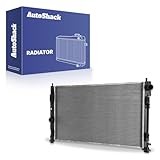
- Best Value: AutoShack Radiator 27.56" (700 mm) x 15.56" (395.2 mm) Core, 1pc
- Premium Choice: SCITOO Engine Cooling Radiator Assembly compatible with Volkswagen
When a front-mounted liquid-cooling radiator shares the same space as a graphics card, the published GPU specification is only the starting point. A case may advertise a 309 mm maximum GPU length, yet a front radiator, fan assembly, radiator bracket, pump tubing, or drive cage can reduce usable clearance by 25–65 mm. This guide explains how to calculate gpu length clearance with front radiators before buying a case, graphics card, or cooling system.
The Short Answer
Measure the distance from the rear expansion-slot bracket to the nearest front obstruction, then subtract the complete front cooling thickness. For most PC builds, use this formula:
As an Amazon Associate we earn from qualifying purchases at no extra cost to you. Product prices and availability are accurate as of the date shown and are subject to change.



Usable GPU length = case GPU clearance without front radiator − radiator thickness − fan thickness − 3 to 10 mm of safety space
A typical 27–30 mm radiator paired with 25 mm fans uses about 52–55 mm of front-to-back depth. If a case lists 309 mm of GPU clearance with no front radiator installed, the practical limit may be approximately 254–257 mm with a standard radiator-and-fan setup. Some cases use offset brackets or permit the radiator above the motherboard, so always check the case manufacturer’s configuration chart.
For a comfortable installation, leave at least 5 mm between the GPU and the radiator or fan frame. Leave 10 mm when the graphics card has a thick backplate, a rigid power cable, or a front-mounted radiator with tubes near the GPU edge. Also confirm GPU thickness: a card measuring 140 mm tall may block adjacent expansion slots even when its length is acceptable.
Standard Sizes
PC radiators are commonly described by fan size and radiator thickness. The figures below are nominal dimensions; mounting tabs, end tanks, hose fittings, and brackets can add several millimeters. One inch equals 2.54 cm.
| Component or clearance | Typical size in inches | Approximate size in centimeters | How it affects GPU fit |
|---|---|---|---|
| 120 mm radiator | 4.72 × 4.72 in | 12.0 × 12.0 cm | Fits one 120 mm fan position; usually used at the rear or top rather than as a full front radiator. |
| 240 mm radiator | 10.47 × 4.72 in | 26.6 × 12.0 cm | Uses two 120 mm fan positions and is a common front or top configuration. |
| 280 mm radiator | 12.32 × 5.51 in | 31.3 × 14.0 cm | Uses two 140 mm fan positions; it may be wider and taller than a 240 mm assembly. |
| 360 mm radiator | 14.17 × 4.72 in | 36.0 × 12.0 cm | Uses three 120 mm fan positions and often creates the greatest GPU-length restriction. |
| Standard radiator thickness | 1.06–1.18 in | 2.7–3.0 cm | Common for all-in-one coolers and slim custom-loop radiators. |
| Thick radiator | 1.42–2.00 in | 3.6–5.1 cm | May require a wider case and can interfere with long or unusually tall graphics cards. |
| 120 or 140 mm fan | 0.98 in thick | 2.5 cm thick | Usually adds the same depth as a standard case fan, even when the radiator is mounted behind it. |
| Recommended installation buffer | 0.20–0.39 in | 0.5–1.0 cm | Allows for manufacturing tolerances, cable routing, and vibration. |
As an example, a case with 309 mm of advertised GPU clearance may provide only about 254 mm after a 30 mm radiator, 25 mm fans, and a 5 mm buffer are deducted. That does not mean every 254 mm card will fit: the front radiator may be offset, and the graphics card’s power connector can require additional room.
Do not confuse an automotive radiator with a PC liquid-cooling radiator. Large automotive parts, including examples measuring roughly 27.56 × 15.56 inches (70.0 × 39.5 cm), are not compatible with standard computer cases. PC radiator sizing is based on 120 mm or 140 mm fan spacing, mounting-hole patterns, thickness, and coolant fittings.
How to Measure Your Space
- Find the case’s unrestricted GPU measurement. Locate the manufacturer’s maximum GPU length for the exact case configuration. Confirm whether the number includes front fans, a front radiator, or neither. A figure such as 309 mm is often measured with the front of the chassis empty.
- Measure from the expansion-slot bracket. Measure straight forward from the inside of the rear PCIe bracket area to the closest front mounting surface. Do not measure the outside of the case, the glass panel, or the removable front cover.
- Measure the radiator body. Check the radiator’s actual thickness and length. A nominal 360 mm radiator is not exactly 360 mm long once end tanks and mounting hardware are included.
- Add the fan depth. A standard 120 or 140 mm fan is typically 25 mm thick. Slim fans may be about 15 mm, while specialty models can be thicker. Add the fan depth if the fans sit between the radiator and the graphics card.
- Account for brackets and fittings. Front radiator brackets, hose fittings, pump blocks, and end tanks can project into the GPU area. Add 3–10 mm beyond the published radiator thickness when the layout is tight.
- Measure the graphics card itself. Use the card manufacturer’s length, height, and slot thickness. A 280 mm GPU that occupies 3.5 slots may fit in length but collide with a radiator hose or prevent access to lower expansion slots.
- Check the power cable bend. A side-mounted 12V-2×6 or 12VHPWR connector should not be sharply bent against a glass panel or radiator. Plan for roughly 30–40 mm of cable-routing room when the connector exits near the side panel.
- Test the tightest point. The shortest distance may occur at the radiator end tank, fan frame, or tubing rather than across the center of the radiator. Use the smallest measurement for your final clearance.
By Room or Use Case
Compact micro ATX gaming builds
Small cases need the most conservative calculation because the motherboard, power supply, front fans, and storage brackets compete for the same volume. An advertised 300–310 mm GPU limit can fall near 250–260 mm with a front radiator assembly. For a compact build, a 240 mm radiator is usually easier to plan than a 280 or 360 mm model. Confirm that the case supports a radiator at all; some compact cases include front fans but have no radiator mounting points.
Mid-tower gaming PCs
A mid-tower commonly supports a 240 or 360 mm front radiator and graphics cards from approximately 280–360 mm, depending on the internal layout. If you want a long, high-wattage GPU and front liquid cooling, select a case with at least 350 mm of GPU clearance before the radiator is installed. This leaves useful space after subtracting a 50–60 mm cooling stack and a safety margin.
Airflow-focused workstations
For video editing, 3D work, and other sustained workloads, front radiator placement may reduce the amount of cool air reaching the graphics card. A top-mounted radiator can preserve GPU length clearance, provided the case supports the radiator above the motherboard and the CPU block does not interfere with memory modules. A large air cooler may be simpler when the case has strong front-to-back airflow and adequate CPU height clearance.
Quiet office or creator systems
A 240 mm all-in-one cooler with low fan speeds can work well, but the radiator should not force a shorter GPU than the workload requires. Check the fan’s rated thickness and noise profile rather than assuming every 120 mm fan is identical. For a modest graphics card, choosing a shorter dual-fan model may provide more installation flexibility than buying a larger card and a thicker radiator.
Budget builds
Budget cases priced around $40–$55 may advertise useful GPU space but omit radiator support, fans, or both. For example, a case listing can show a 309 mm maximum GPU length while explicitly offering no radiator support. Treat “maximum GPU length” and “radiator compatibility” as separate specifications. A complete front cooling setup can add roughly $50–$150, depending on whether fans and the liquid cooler are included.
Common Sizing Mistakes
- Using the case’s empty-chassis number: The maximum GPU length often assumes no front fan, radiator, drive cage, or bracket.
- Subtracting radiator thickness only: A 30 mm radiator plus 25 mm fans consumes about 55 mm, not 30 mm.
- Ignoring front-mounted fans: Fans may sit in front of the radiator, behind it, or between the radiator and GPU. The arrangement changes clearance.
- Measuring only card length: GPU height, slot thickness, power connectors, and cable bend space can cause interference.
- Assuming a 360 mm radiator is exactly 360 mm: End tanks and mounting rails can make the complete assembly longer.
- Confusing product categories: An automotive radiator is not a PC radiator and will not fit standard computer-case mounts.
- Forgetting future upgrades: A 250 mm card may fit today, but a later 330 mm upgrade may require moving the radiator or replacing the case.
FAQ
How much GPU length does a front radiator use?
A standard radiator and 25 mm fans typically consume 52–60 mm of front-to-back space. Subtract that amount, plus a 5–10 mm buffer, from the case’s empty GPU-clearance figure.
Will a 309 mm GPU fit with a front radiator?
Not necessarily. If 309 mm is the clearance without front cooling, a typical radiator-and-fan installation may reduce usable length to approximately 249–257 mm. Check the case’s radiator-specific GPU limit and the exact card dimensions.
Is a 240 mm radiator better than a 360 mm radiator for GPU clearance?
Usually, yes, because a 240 mm unit occupies less vertical front space and is supported by more compact cases. Both can have similar thickness, however, so the front-to-back depth may be nearly identical. The case layout matters more than radiator length alone.
What safety clearance should I leave?
Leave at least 5 mm between the graphics card and the nearest radiator or fan. Use 10 mm when the card has a thick backplate, side-facing power connectors, stiff cables, or tubing near the GPU. In a tight 2026 build, extra clearance is often worth more than a slightly larger radiator.








Write Your Review
No reviews yet. Be the first to share your experience!