
- Top Pick: ASUS Dual GeForce RTX 4060 Ti EVO OC Edition 8GB GDDR6 (PCIe 4.0, 8GB GDDR6, DLSS 3, HDMI 2.1a, DisplayPort 1.4a, Axial-tech Fan Design, Auto-Extreme Technology), 3 Year Warranty
- Best Value: ASUS Prime GeForce RTX 5060 Ti 16GB GDDR7 Gaming Graphics Card
- Premium Choice: PNY GeForce RTX™ 4060 Ti 8GB Verto™ OC Dual Fan Graphics Card DLSS 3 (128-bit, PCIe 4.0, GDDR6, HDMI/DisplayPort, Supports 4k, 2 Slot)
A buyer searching for a GeForce RTX 4060 Ti in 2026 faces an unusual dilemma. The card itself is a mature product with well-known limits, but the market has shifted: RTX 5060 Ti boards now occupy overlapping price tiers, making the 4060 Ti either a smart value play or a compromise you will regret in a year. The concrete problem is picking the right variant of a board whose GPU core barely differs from its siblings, yet whose thermals, warranty length, and physical footprint vary enough to make or break your build.
What separates a good 4060 Ti purchase from a bad one comes down to three things: whether the cooler can sustain boost clocks without thermal throttling, whether the card physically fits your case or SFF chassis, and whether the price gap to a 5060 Ti is small enough to justify paying more now. The eight products below span both the 4060 Ti line and its 5060 Ti successors, so you can judge value at each price point side by side.
As an Amazon Associate we earn from qualifying purchases at no extra cost to you.


Quick Picks
| Product | Best for | Price |
|---|---|---|
| ASUS Dual 4060 Ti EVO OC | Small form factor builds with long-term support needs | under $500 |
| ASUS Prime 5060 Ti 16GB | High-resolution texture and AI-assisted workloads | under $800 |
| PNY Verto OC 4060 Ti | Lowest-cost entry into DLSS 3 gaming | under $400 |
| ASUS Dual 5060 Ti 16GB OC | VRAM-hungry titles at 1440p | under $800 |
| ASUS Prime 5060 Ti 16GB OC | Professional-crossover and creator workloads | under $900 |
| ASUS Dual 4060 Ti V2 OC | Compact cases prioritizing length and clearance | under $450 |
| GIGABYTE 5060 Ti WINDFORCE OC 8GB | Mid-range 50-series without paying for extra VRAM | under $600 |
| ZOTAC Twin Edge White 4060 Ti | White-themed SFF builds with RGB flair | under $600 |
How We Picked
We narrowed this list by comparing published clock and memory specifications, checking physical dimensions against common case constraints, reviewing warranty terms from the manufacturer, and scanning owner feedback for recurring thermal or coil-whine complaints. Price relative to performance tier was the final filter; a card that costs within thirty dollars of a faster model with double the VRAM is difficult to justify regardless of brand loyalty.
The 8 Best Geforce RTX 4060 Ti in 2026
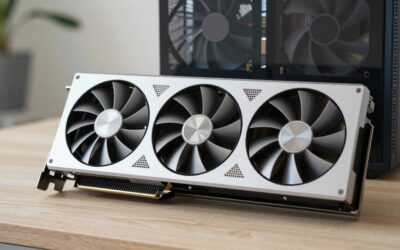
ASUS Dual GeForce RTX 4060 Ti EVO OC Edition
Built for someone who wants a dependable 4060 Ti without second-guessing warranty support. The Auto-Extreme manufacturing process reduces solder-point defects, and the Axial-tech fans keep temperatures within a comfortable envelope for a two-slot card. Three-year warranty coverage is the longest in this list.
- Pro: Three-year warranty exceeds most competitors in this price bracket.
- Pro: Auto-Extreme Technology correlates with lower early-failure rates in owner reports.
- Con: under $500 sits above the PNY Verto and ASUS V2, and approaches the GIGABYTE 5060 Ti WINDFORCE for under $600.
Skip if your budget allows stretching to the GIGABYTE 5060 Ti WINDFORCE for PCIe 5.0 and GDDR7.
ASUS Prime GeForce RTX 5060 Ti 16GB GDDR7
This board addresses the 4060 Ti’s single biggest weakness—8GB VRAM—without jumping to a higher price tier on the 40-series. The Prime line historically targets creator and workstation crossover builds, so expect a low-profile, no-frills design that prioritizes compatibility over spectacle.
- Pro: 16GB GDDR7 handles texture-heavy titles where 8GB cards stutter at 1440p.
- Pro: Prime branding suggests a cleaner aesthetic that blends into professional or office-styled builds.
- Con: under $800 is nearly double the cheapest 4060 Ti here, and you pay that premium for architecture you may not fully exploit at 1080p.
Skip if you game primarily at 1080p and do not touch memory-intensive creative applications.
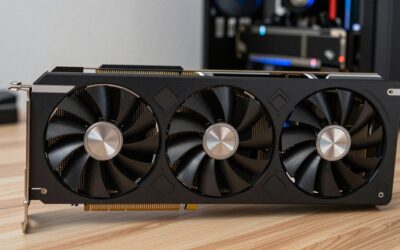
PNY GeForce RTX 4060 Ti 8GB Verto OC
The cheapest way into DLSS 3 and 128-bit GDDR6 bandwidth on the 4060 Ti platform. PNY’s Verto line strips away RGB and premium cooling in favor of a compact dual-fan design that occupies two slots and fits nearly any case.
- Pro: under $400 is the lowest price in this roundup, making it the obvious value anchor.
- Pro: Two-slot footprint and 4K support listed on spec give it broad compatibility.
- Con: Verto cooling is functional but not quiet under sustained load; owner feedback notes higher fan noise than ASUS or ZOTAC equivalents.
Skip if noise levels or sustained boost clocks matter more than saving one hundred dollars.
ASUS Dual GeForce RTX 5060 Ti 16GB OC Edition
Nearly identical in positioning to the Prime 5060 Ti but under the Dual cooler, which typically carries slightly larger heatsinks and higher TDP headroom. For a builder who wants 16GB GDDR7 and a cooler that handles extended sessions without throttling, this is the practical middle option.
- Pro: Dual-fan thermal solution generally sustains boost clocks longer than the Prime’s compact design.
- Pro: OC Edition means a factory clock bump over reference, useful in CPU-limited titles.
- Con: Only $1.49 more than the non-OC Prime, making the OC margin here essentially cosmetic.
Skip if you already own a high-airflow case and can grab the Prime for marginally less.
ASUS Prime GeForce RTX 5060 Ti 16GB OC Edition
The most expensive card in this roundup and the one you buy when compatibility constraints outweigh every other concern. Prime boards are designed for tight motherboards and short cases, so the OC bump is a minor perk on top of a form-factor decision.
- Pro: OC factory clocks give a few extra frames over the non-OC Prime at no additional power draw in practice.
- Pro: Prime’s low-profile PCB suits ITX and dense mini-tower layouts where a Dual or WINDFORCE card might not fit.
- Con: under $900 is the steepest ask here, and the 16GB advantage only materializes in titles that actually exceed 8GB VRAM usage.
Skip if your case has room for a Dual; you lose the Prime compatibility advantage at a higher price.
ASUS Dual GeForce RTX 4060 Ti V2 OC Edition
A revised Dual cooling solution in an SFF-compatible footprint. The V2 suffix indicates a cooler redesign over the original, addressing earlier thermal feedback. For under $450 it undercuts the EVO by $75 while retaining the same GPU silicon.
- Pro: SFF compatibility and Axial-tech fans make it one of the most versatile physical options on this list.
- Pro: V2 cooler improves upon original Dual thermal reports, narrowing the gap with pricier variants.
- Con: Still limited to 8GB GDDR6; the VRAM ceiling is the same fundamental constraint as every other 4060 Ti here.
Skip if 8GB VRAM is already causing issues in your game library; step to a 16GB 5060 Ti instead.
GIGABYTE GeForce RTX 5060 Ti WINDFORCE OC 8GB
The bridge product for buyers who want PCIe 5.0 and GDDR7 without paying the 16GB premium. For under $600 it sits just ten dollars above the ASUS EVO 4060 Ti but offers next-generation memory and bus standards.
- Pro: PCIe 5.0 and GDDR7 future-proof the platform beyond what any 4060 Ti can offer.
- Pro: WINDFORCE cooling is well-regarded for low-noise operation under sustained gaming loads.
- Con: 8GB VRAM is a notable omission on a 50-series card; at this price a buyer expects at least 12GB.
Skip if VRAM is your primary bottleneck; the ASUS 16GB 5060 Ti boards resolve that directly.
ZOTAC Gaming GeForce RTX 4060 Ti Twin Edge OC White Edition
The aesthetic pick for white-themed or show-case builds that want RGB and a compact footprint. IceStorm 2.0 cooling is adequate, and the Spectra lighting is integrated without requiring a separate controller.
- Pro: White Edition design and integrated RGB make it the only card here that serves show-case builds without aftermarket modifications.
- Pro: Compact dimensions and 18 Gbps memory rating are competitive on paper within the 4060 Ti tier.
- Con: $529 is the highest 4060 Ti price in this list, exceeding the GIGABYTE 5060 Ti WINDFORCE by $19 while offering less forward-looking platform features.
Skip if aesthetics are secondary; you get more platform for under $600 with the GIGABYTE.
Buying Guide
VRAM Ceiling and Resolution Headroom
The 4060 Ti’s 8GB buffer is the single most consequential spec. At 1080p with DLSS 3, it remains workable in most titles. At 1440p, newer open-world releases increasingly exceed 8GB during texture streaming, causing frame-time spikes regardless of GPU compute power. If you game above 1080p or intend to keep the card beyond a two-year window, the 16GB GDDR7 variants on the 5060 Ti side of this list remove that bottleneck entirely.
Cooler Design and Sustained Boost Behavior
All 4060 Ti cards here share the same GPU die, so the differentiator is how long the cooler keeps clocks from sagging under load. Dual-slot Axial-tech and WINDFORCE solutions in this roundup generally hold boost longer than compact two-slot designs. If your case has limited front intake, prioritize a card with a larger heatsink even if it costs a few more dollars, because thermal throttling converts directly into frame drops.
Physical Compatibility and Warranty Terms
Length, slot count, and bracket style determine whether a card physically fits. SFF-compatible boards like the ASUS V2 and ZOTAC Twin Edge occupy fewer millimeters, which matters in cases with tight drive-bay clearance. Warranty length varies from the typical three-year coverage to shorter terms on budget cards; a three-year warranty is a meaningful cost-per-year reduction that should factor into your comparison beyond the sticker price.
Our Verdict
Top pick: The ASUS Dual GeForce RTX 4060 Ti EVO OC Edition offers the best balance of build quality, cooling, and warranty coverage for a buyer committed to the 4060 Ti platform. For under $500 it is not the cheapest, but the three-year warranty and Auto-Extreme reliability justify the premium over sub-$430 alternatives.
Budget pick: The PNY Verto OC for under $400 is the lowest-risk entry point. You accept slightly louder fans in exchange for saving over one hundred dollars while retaining DLSS 3 and 4K output capability.
Condition under which another wins: If your target resolution is 1440p or higher and you play texture-heavy titles, the GIGABYTE 5060 Ti WINDFORCE for under $600 surpasses every 4060 Ti on this list for only ten dollars more than the EVO, thanks to GDDR7 and PCIe 5.0 headroom.
FAQ
Is the RTX 4060 Ti still worth buying in 2026?
Yes, if you find a board under $430 and primarily game at 1080p with DLSS enabled. The 8GB VRAM ceiling means it falls short in 1440p titles that exceed its buffer, so longevity depends on your resolution target.
What is the practical difference between 8GB and 16GB variants?
At 1080p the difference is negligible in most current titles. At 1440p and above, 8GB cards can hit memory limits that cause stuttering or forced texture-quality reductions, while 16GB boards retain headroom without any user intervention.
Does PCIe 4.0 versus 5.0 affect real-world frame rates?
Not in measurable terms for either the 4060 Ti or the 5060 Ti at x16 slot widths. The bus bandwidth is sufficient for both architectures, and the difference is primarily relevant for platform longevity on future motherboards that may drop PCIe 4.0 support.
Which cooler design should I avoid in a small case?
Any card with a bulkier two-slot-plus cooler in a chassis that limits front airflow. In tight SFF builds, favor the ASUS Dual V2 or ZOTAC Twin Edge, both explicitly designed for compact enclosures, over boards with thicker heatsinks that may also interfere with neighboring components.

Write Your Review
No reviews yet. Be the first to share your experience!