
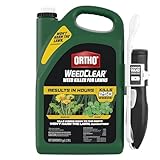
- Top Pick: Ortho WeedClear Weed Killer for Lawns Ready-To-Spray, 32 fl. oz. | Weed Killer Spray, Won't Harm Grass When Used as Directed, Kills Dandelion & Clover, Treats up to 16,000 sq. ft.
- Best Value: Spruce Weed & Grass Killer₃ Kit, Power Wand, 2 AA Batteries Included, 64 Oz | Pet Safe Weed Killer Spray, Reusable Weed Sprayer, Kills Weeds Around Lawns, Gardens, & Flower Beds, 2 AA Batteries Included
- Premium Choice: Ortho WeedClear Weed Killer for Lawns with Comfort Wand, 1 gal. | Lawn Weed Killer Spray, Won't Harm Grass When Used as Directed, Kills over 250 Listed Weeds Including Dandelion and Clover
The best thing to kill broadleaf weeds without killing the lawn is a selective lawn herbicide built for your grass type, such as a 2,4-D, MCPP and dicamba blend like Ortho Weed B Gon for common cool-season lawns, or a product such as Tenacity (mesotrione) for tougher grassy weeds and seeding situations. Warm-season lawns such as bermudagrass, zoysia and centipede have different tolerances, so the grass type on the label decides the winner. Always follow the product label, because the label is a legal document that controls where, when and on what grass the product may be used.
Selective means the product targets certain plant groups. A broadleaf killer removes dandelions and clover but spares grass blades, while a grassy weed killer such as quinclorac targets crabgrass and similar species. No single product is selective for every weed in every lawn, and misuse can injure turf, shrubs and nearby ornamentals. This guide explains the categories, compares common options and lists safety notes. It does not replace the label, your local extension service or a licensed applicator.
As an Amazon Associate we earn from qualifying purchases at no extra cost to you.



Quick Comparison
| Product type | Example | Targets | Limits |
|---|---|---|---|
| Broadleaf killer (2,4-D, MCPP, dicamba blends) | Ortho Weed B Gon, Bonide, Spectracide Weed Stop for Lawns | Dandelion, clover, plantain and other broadleaf weeds | Does not control grassy weeds; avoid near ornamentals and trees |
| Mesotrione | Tenacity | A range of broadleaf and some grassy weeds, used at seeding by some turf managers | Check label for grass type; some turf shows temporary bleaching |
| Quinclorac | Various crabgrass killers | Crabgrass | Label limits on certain grasses and timing |
| Sedge killer (halosulfuron) | Sedgehammer | Nutsedge | Specific to sedges; label rates and grass limits apply |
| Pre-emergent | Prodiamine or similar products | Prevents crabgrass and other seeds from germinating | Timing is critical; blocks grass seed too |
Know Your Grass First
Cool-season grasses such as Kentucky bluegrass, tall fescue and perennial ryegrass handle most common broadleaf formulas. Warm-season grasses such as St. Augustine, centipede and bahiagrass can be damaged by some herbicides, and certain products are labeled only for specific warm-season species. Reading the list of listed grasses on the label before buying is the most important step in this guide.
If you are unsure what grass you have, your local cooperative extension service can identify a sample, and many universities publish turf herbicide guides by region.
How to Choose
Identify the weed
A broadleaf weed has wide leaves, such as dandelion, clover, chickweed and plantain. A grassy weed, such as crabgrass, resembles lawn grass and needs a different active ingredient. Nutsedge looks grass-like but has triangular stems and needs a sedge product.
Choose the timing
Broadleaf killers work best when weeds are actively growing in mild weather, and many labels warn against applying in high heat. Pre-emergent products must go down before weed seeds germinate, which for crabgrass is commonly early spring as soil warms, per university extension guidance. Spring seeding adds another restriction, because many pre-emergents prevent grass seed from sprouting too.
Spot treat or broadcast
Ready-to-spray bottles and hose-end products let you spot treat scattered weeds without covering the whole lawn. Granular weed-and-feed products cover larger areas but apply herbicide where you may not need it. For a lawn with only a few weeds, spot treatment uses less product and reduces risk.
Weather and runoff
Wind can carry spray drift onto garden plants. Rain shortly after spraying can wash product away. Labels state rainfast times and wind limits, and applying near storm drains or on hard surfaces risks runoff.
The Main Picks
Broadleaf blend for cool-season lawns
Products such as Ortho Weed B Gon and Spectracide Weed Stop for Lawns use a combination of selective herbicides aimed at broadleaf weeds in listed turf. These are a common starting point for dandelion and clover. The label lists which grasses are safe and which are not.
Mesotrione for tougher cases
Tenacity contains mesotrione and is used by some homeowners and turf managers for broad control and in certain seeding situations. Turf can show temporary whitening. Read the label for grass species and rates, since it is not labeled for every lawn type.
Crabgrass-specific products
Quinclorac-based products target crabgrass after it appears. They have turf and timing limits on the label.
Nutsedge control
Halosulfuron products such as Sedgehammer target nutsedge specifically and are not a general weed killer.
Pre-emergent
Prodiamine-based products prevent weeds rather than killing them. They are timed for early season and are often used as a yearly routine rather than a rescue.
Pick X If You Want Y
| If you have | Choose | Reason |
|---|---|---|
| Dandelions and clover in cool-season turf | Broadleaf blend | Targets broadleaf weeds, spares listed grasses |
| Crabgrass | Quinclorac product or pre-emergent | Specific to crabgrass |
| Nutsedge | Halosulfuron product | Sedge-specific control |
| A seeding project | Mesotrione product | Some labels allow use at seeding, check species |
| A few scattered weeds | Spot spray bottle | Less product, less risk |
| Chemical-free preference | Hand pulling, mowing and overseeding | No herbicide exposure |
Budget Tiers
- Budget: store-brand broadleaf blends with the same active ingredients as name brands.
- Mid-range: name-brand ready-to-spray and concentrate products.
- Premium: mesotrione and sedge-specific concentrates, which cost more per bottle but are used in small amounts.
Safety Notes
- Read the whole label and follow it exactly. Do not exceed the stated rate.
- Wear the protective gear the label lists, such as gloves and long sleeves.
- Keep children and pets off treated areas until the label says it is safe, which often means after the spray dries.
- Do not spray near vegetable gardens, trees and shrubs unless the label allows it; some herbicides can injure trees through roots.
- Store and dispose of leftover product as the label and local rules instruct.
- If someone is exposed or a pet shows signs of illness, contact a poison control center or a veterinarian.
Non-Chemical Alternatives
Mowing higher. Taller grass shades soil and suppresses weed seedlings. Extension services commonly suggest mowing at the higher end of the recommended height for your grass.
Overseeding and fertilizing. Thick turf crowds out weeds, so annual overseeding and proper fertilization often reduce weeds over time.
Hand pulling. For small infestations, pulling dandelions with a weeding tool after rain removes the taproot without chemicals.
Corn gluten meal. Some gardeners use it as a natural pre-emergent. Research results vary, so treat it as a modest aid rather than a guarantee.
Common Mistakes
- Using a product on the wrong grass type.
- Applying in high heat or on drought-stressed turf.
- Applying a pre-emergent the same week you seed.
- Using a non-selective killer such as glyphosate on the lawn, which kills grass too.
- Skipping the label’s wait time before mowing or reseeding.
Frequently Asked Questions
What kills weeds but not grass?
Selective herbicides, such as broadleaf blends with 2,4-D, MCPP and dicamba, kill listed weeds while sparing labeled turf. The label must list your grass type.
Will vinegar kill weeds without harming grass?
Household vinegar can burn leaves of many plants, including grass. It is non-selective and usually does not kill roots, so results are temporary and uneven.
Is it safe to use weed killer on a lawn with pets?
Labels state how long to keep pets and children off treated turf, typically until the product has dried. Follow those instructions and contact a veterinarian if a pet seems unwell.
When is the best time to apply?
Broadleaf products usually work best on actively growing weeds in mild weather. Pre-emergents go down before seeds germinate, per extension guidance, and labels specify limits for heat and rain.
Why did my grass turn yellow after spraying?
Possible causes include the wrong grass type, too high a rate, hot weather or overlap. Some products cause temporary bleaching. If the damage persists, contact the maker or your extension service.
Can I reseed right after killing weeds?
That depends on the product. Many herbicides require a waiting period before seeding, though a few are labeled for use at seeding. Read the label of the exact product.







Write Your Review
No reviews yet. Be the first to share your experience!