
- Top Pick: Cheardia 20 Pack Tent Stakes Heavy Duty, 9.75 Inch Yard Stakes Non-Rust Metal Tent Pegs Ground Stakes Tent Spikes for Camping Patio, Garden, Canopies, Grassland, Outdoor, Orange
- Best Value: 12 Pack Tent Stakes Heavy Duty Camping Stakes,AVOFOREST 7.1inch Non-Rust Metal Tent Pegs with Storage Bag Ground Stakes Tent Spikes Camping,Garden,Hiking Orange (Orange 12pcs, 7.1IN)
- Premium Choice: FEED GARDEN Heavy Duty Tent Stakes 7 Inch, 10 Pack Galvanized Steel Camping Pegs, Ground Anchors Rust Resistant Metal Stakes for Tents, Canopy and Tarp, Inflatable and Outdoor Decorations
For most campers a set of aluminum Y-beam or V-shaped stakes such as the MSR Groundhog line holds well in a range of soils, titanium shepherd-hook stakes suit weight-conscious backpackers in firm ground, and long steel or nail-style stakes suit loose sand, snow and heavy-duty tarp setups.
As an Amazon Associate we earn from qualifying purchases at no extra cost to you.


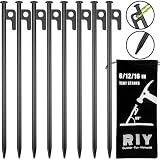
Why Stake Shape Matters
A tarp is only as secure as the stakes holding its guy lines. Wind loads concentrate at corners and ridgelines, and a stake that pulls out loosens the whole pitch. Holding power depends on length, cross-section and soil. A thin round pin grips firm dirt but slides out of sand, while a wide Y or V beam has more surface area to resist pulling.
At a Glance
| Type | Examples | Best for | Limits |
|---|---|---|---|
| Y-beam aluminum | MSR Groundhog family | General three-season use, mixed soils | Heavier than titanium pins; can bend in rocky ground |
| Titanium shepherd hook | Vargo-style titanium stakes | Ultralight backpacking, firm soil | Less holding power in loose ground; high budget tier per stake |
| Steel nail or rebar-style | Hardware nail stakes, steel pegs | Heavy tarps, hard or frozen ground | Heavier, can rust |
| Wide plastic or sand stakes | Molded polymer stakes | Sand, snow, soft soil | Can crack in cold or rocky soil |
| Spiral or screw-in stakes | Corkscrew-style anchors | Lawns and soft ground, car camping | Bulky; poor in rock |
The maker’s stated length, weight and material vary by model and sometimes by generation. Compare the current listing for length and rated use before buying.
How to Choose
Soil and ground type
Firm forest soil lets slim pins work. Sandy or loose ground needs wider stakes or alternative anchors such as buried sticks or stuff sacks filled with sand. Frozen ground may need sturdy steel nails and a small mallet.
Length
Longer stakes hold better in soft soil, while shorter stakes work in compact ground. Carrying a mix of lengths is a practical approach: longer ones at the windward corners, shorter ones elsewhere.
Material and weight
Aluminum offers a good balance of weight and strength. Titanium is lighter and tougher but costs more. Steel is the most durable and heaviest. Choose according to how far you carry the gear.
Head design and cord notches
A hook or notch that holds guy line securely helps keep it from slipping. A large head eases pulling stakes from the ground. Reflective or bright heads make stakes easier to see and avoid tripping.
Quantity
Count the tie-outs on your tarp, then add a few spares. A rectangular tarp commonly has several anchor points and often needs more stakes than a small flat sheet.
Pick X If You…
| If you… | Choose |
|---|---|
| Camp in mixed terrain with a standard tarp | Aluminum Y-beam stakes |
| Count every gram on long hikes | Titanium shepherd-hook stakes |
| Pitch large construction or canvas tarps | Steel nail-style stakes |
| Camp on beaches or snow | Wide sand or snow stakes |
| Use a tarp over a backyard woodpile or patio | Spiral or heavy plastic stakes |
Placement for Better Holding
Drive stakes at a slight angle away from the tarp, roughly 45 degrees, so the pull works against the angle instead of straight up. Position guy lines in line with the seam or ridge they support. In wind, add extra stakes at the windward side and lower the tarp edge toward the ground. If the ground is too hard to penetrate, use rocks or logs over the stake head as supplemental weight, taking care not to damage vegetation.
Common Mistakes
- Using thin pins in sand or soft soil.
- Driving stakes straight down.
- Hammering aluminum or titanium stakes onto rocks, which bends them.
- Forgetting spares.
- Skipping a stake bag, which leads to punctured packs and lost stakes.
Care
Rinse mud and dry steel stakes to limit rust. Straighten gently bent aluminum before it fatigues, and replace badly bent or cracked stakes. Store them in a pouch with the ends covered or turned inward.
Alternatives
Trekking poles, rocks and logs can anchor lines in a pinch. Sand anchors and snow flukes are made for those environments. Trees and fixed objects, such as posts, can serve as tie points when stakes cannot go in the ground. For tarps over equipment at home, ratchet straps and ballast weights work in place of stakes.
Reading Stake Specifications
Makers typically list length, weight, material and the intended ground type. Weight per stake matters when you multiply by six or eight stakes for a tarp. Length tells you how much holding surface is buried. Cross-section, whether round, V, Y or flat, tells you how it resists pulling. When two stakes look alike, the one with a wider profile usually holds better in soft ground, while the narrower one drives more easily into firm soil.
Building a Practical Stake Kit
Rather than buying one type, many campers assemble a small mixed kit: a few long Y-beam stakes for the windward corners, lightweight pins for the leeward side, and a couple of sand-capable stakes for unusual terrain. Add a small mallet or a smooth rock for driving, and a stake puller or short cord loop to extract stubborn stakes. A mesh pouch keeps the set together and lets mud dry out between trips. Replacing bent stakes before a trip is cheaper than losing a pitch in the middle of a storm.
For tarps used at home, such as covering a woodpile or equipment, longer steel stakes or ground anchors offer a more permanent hold, but be aware of buried utilities before driving anything deep into the ground. Call the local utility locating service if you are unsure.
Frequently Asked Questions
What is the best stake for sandy ground?
Wide-profile stakes or buried anchors outperform thin pins. Burying a stick or filled stuff sack horizontally gives more hold.
Are titanium stakes worth it?
For ultralight trips they save weight and resist bending. If weight is not a concern, aluminum or steel offers similar function at a lower budget tier.
How many stakes do I need for a tarp?
Match the number of tie-out points, then bring a few extra. More points are used when winds are strong.
How deep should stakes go?
Drive them until only the head or hook remains above ground, if the soil allows, and angle them away from the pull.
Can I use regular tent stakes for a tarp?
Often yes, but a heavy tarp or strong wind may call for longer or sturdier stakes than those packed with a small tent.







Write Your Review
No reviews yet. Be the first to share your experience!