
For wind, choose longer, stronger stakes that match your ground, such as Y-beam aluminum in firm soil, and add every guyline at a low angle; in loose ground, bury a sand-filled bag or flat stake instead. Wind loads a tent through the guylines, so holding power depends on stake grip, line angle and tent shape together.
- What Wind Does to a Tent
- At a Glance: Stake Types for Wind
- Y-Beam Stakes
- Nail-Style and V-Profile Stakes
- Wide Stakes for Soft Ground
- Guyline Habits That Matter More Than the Stake
- Pick X If…
- Budget Tiers
- Compatibility Notes
- Common Mistakes
- Alternatives
- Reading the Forecast and the Site
- Maintenance and Care
- How Many Stakes to Carry
- Frequently Asked Questions
As an Amazon Associate we earn from qualifying purchases at no extra cost to you.
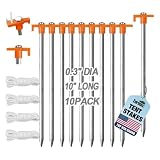

What Wind Does to a Tent
Gusts push on the tent’s side and lift the windward edge, putting most strain on the corner and mid-panel stakes. A stake that holds in calm weather can still pull out when the line is pitched too steep. Tent makers consistently instruct campers to pitch the door away from the wind, tension all guylines and use every guy point; stakes are only one part of that system.
At a Glance: Stake Types for Wind
| Type | Examples | Best for | Limits |
|---|---|---|---|
| Y-beam aluminum | MSR Groundhog, MSR Mini Groundhog | Mixed ground, strong holding for weight | Can bend in rocky soil |
| Tubular or V-profile | MSR Cyclone, Easton-style nail stakes | Firm soil and gravel | Weaker in loose sand |
| Wide snow and sand stakes | MSR Blizzard | Loose, sandy or snowy ground | Bulkier |
| Steel nail and rod pegs | Heavy-duty camping pegs | Hard, stony ground, car camping | Heavy |
| Screw-in anchors | Spiral steel anchors | Soft soil, awnings | Not for rocky ground |
Y-Beam Stakes
MSR’s Groundhog line is a Y-beam aluminum design the maker offers in several sizes. The three-sided cross-section resists bending and twisting, and the stake is a common reference when reviewers discuss wind-ready gear. In compact soil it is a strong all-round choice; in rock-strewn ground, steel pegs or rocks over the guylines may suit better.
Nail-Style and V-Profile Stakes
Thin, strong stakes such as the MSR Needle or similar nail pegs push through gravelly soil well but have little surface area. They are best as extra pegs in firm ground, not as the only line of defense against a gale in loose soil.
Wide Stakes for Soft Ground
When the ground is sand, snow or loose peat, flat-profile stakes like the MSR Blizzard spread load more broadly. The maker positions them for snow and soft surfaces. Pairing a few of these with deadman anchors is a standard approach to coastal wind.
Guyline Habits That Matter More Than the Stake
- Run lines at about forty-five degrees to the ground so the pull is partly sideways, not straight up.
- Angle each stake away from the tent, at roughly ninety degrees to the line.
- Use the full set of guy points your tent provides; manuals list them for a reason.
- Choose strong cord with tensioners and re-tighten after the first hour, as fabric relaxes.
- Pitch the tent’s lowest, most aerodynamic end into the wind.
Pick X If…
| If your site is… | Choose |
|---|---|
| Firm grassland | Y-beam aluminum stakes, standard length |
| Rocky or hard-packed | Steel or strong nail-style stakes, plus rocks on lines |
| Sand or snow | Wide stakes and deadman anchors |
| Soft, wet soil | Longer stakes or screw-in anchors |
| Backpacking light | Mini Y-beams for corners, a few longer ones for windy sides |
Budget Tiers
| Tier | Material | Trade-off |
|---|---|---|
| Budget | Steel nail pegs in bulk | Strong and cheap but heavy |
| Mid-range | Aluminum Y-beam stakes | Best weight-to-holding balance for most campers |
| Premium | Titanium or carbon-core stakes | Lightest, mostly aimed at thru-hikers |
Compatibility Notes
Check that your tent’s loops and cord can slip over the stake head without twisting. A stake with a hook and a hole gives two ways to attach, which helps if a loop is short. If your tent comes with thin wire pegs, the maker intends them for fair weather; upgrading corners and storm points is a common step among experienced campers.
Common Mistakes
- Staking only the four corners and skipping side guy points.
- Driving stakes straight down, not angled away.
- Using short stakes in soft ground.
- Staking the tent loosely so the fly flaps and loads lines in jerks.
- Ignoring a forecast for gusts beyond what the tent maker rates the tent for. If conditions exceed the manual’s guidance, take the tent down and move.
Alternatives
- Rocks and logs: tie off to heavy natural anchors.
- Deadman anchors: bury a stuff sack or stick horizontally.
- Wind-rated tent designs: low-profile tunnel and geodesic tents tolerate gusts better than tall cabin tents.
Reading the Forecast and the Site
Wind strength is only half the story. Terrain funnels air: gaps between hills, open beaches and ridge crests all produce gusts stronger than a regional forecast suggests. Pick a spot with natural cover, such as a stand of trees or a rise in the ground, but avoid camping under dead branches. Tent makers publish guidance on pitching with the narrow, low end facing the wind, and that advice matters as much as any stake choice.
Before bed, walk around the tent and press each stake with your boot to confirm it is seated, then re-tension the lines. If the wind rises overnight, adding extra guylines on the windward side is more effective than replacing stakes in the dark.
Maintenance and Care
Straighten bent aluminum stakes gently and retire any with kinks or cracked heads, since a weakened stake is the first to fail. Rinse stakes after salty or muddy trips, dry them and store them in a tough pouch so the points do not tear your tent bag. Replace worn guylines and tensioners as well, because a frayed cord can snap before a stake pulls out.
How Many Stakes to Carry
A sensible kit is one stake per pitching point plus one per guy point, with two or three spares. Windy-season campers often add several longer stakes for the windward side. Carry them in a dedicated bag so they are easy to find if weather turns.
Frequently Asked Questions
What stakes hold best in strong wind?
In firm soil, strong aluminum Y-beam stakes or steel pegs, set at an angle, are the usual choices. In loose ground, wide stakes or buried anchors outperform thin pegs.
How long should wind stakes be?
Longer stakes reach firmer soil and resist pull-out better. The maker lists length for each model, and many campers choose longer versions for windward corners.
Are titanium stakes better in wind?
They are strong for their weight, but holding power comes mostly from shape and length, not material. Titanium mainly saves weight.
How should I set the guylines?
Tension each one evenly at a low angle, point the stake away from the tent, and re-tighten after fabric settles. Use all guy points the tent has.
Can stakes keep a tent safe in a storm?
Not on their own. Tents have wind ratings in their manuals, and if forecast gusts exceed them, relocating to shelter is the safer choice.
Do I need different stakes for each ground type?
Ideally, yes. A small mixed set, such as Y-beams plus a few wide stakes, covers most conditions.







Write Your Review
No reviews yet. Be the first to share your experience!