
- Top Pick: Sony STRDH190 2-ch Home Stereo Receiver with Phono Inputs & Bluetooth Black | Phono Inputs & Bluetooth
- Best Value: Donner Stereo Receivers Home Audio Amplifier, Premium 1000W Peak Power 4 Channel Amplifier with Bluetooth 5.3, USB, FM, 2 Mic-in, Echo, RCA, Optical/Coaxial Input for Home, Karaoke, Theater Speakers
- Premium Choice: YAMAHA R-S202BL Stereo Receiver | Phono input, Subwoofer output, Bluetooth, AM FM Tuner
A stereo receiver with Bluetooth suits you if you want a single box that powers a pair of speakers, handles a turntable and TV, and lets you stream from a phone; choose a streaming-capable model from Yamaha, Denon or Cambridge Audio if you also want network features, and a simpler Bluetooth-only unit if you just want music from your phone.
As an Amazon Associate we earn from qualifying purchases at no extra cost to you.


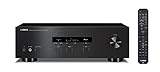
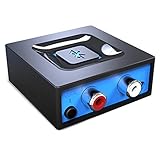
What a Bluetooth Stereo Receiver Does
A stereo receiver combines a preamplifier, a power amplifier and usually an AM/FM tuner. Many current models add Bluetooth so a phone, tablet or PC can send audio wirelessly. For gamers and PC users this is handy: a desktop or console connected over optical or analog inputs, plus a phone over Bluetooth, can all share one pair of speakers. Note that the term receiver is sometimes used loosely; models without a tuner are technically integrated amplifiers, and products such as the Denon DRA-900H and the Yamaha R-N series are sold as network stereo receivers.
At a Glance
| Option | Best for | Notable features the maker lists | Limits |
|---|---|---|---|
| Yamaha R-N series network receivers | Balanced all-rounders, vinyl owners | Bluetooth, network streaming, phono input, FM/AM tuner on the line | Model numbers change between generations; compare current spec sheets |
| Denon DRA-900H | Users who want HEOS multi-room and a modern feature set | Network stereo receiver with Bluetooth and HEOS built-in, per the maker | Larger and more expensive than entry units |
| Cambridge Audio AXR series | Compact, music-first listeners | Compact stereo receivers with Bluetooth and FM/AM tuner, per the maker | Fewer inputs than larger models |
| Budget Bluetooth stereo amplifiers | Small rooms, desks, simple setups | Basic Bluetooth and analog inputs | Lower power, few connections, limited tuner options |
Power ratings, supported Bluetooth codecs and input counts are specific to each model. Read the maker’s current specification page before buying, because lineups are refreshed regularly.
How to Choose
Power and speaker match
Match the receiver’s rated output to your speakers’ stated impedance and sensitivity. Small bookshelf speakers in a small room rarely need high power. Large floorstanders or low-sensitivity speakers benefit from more headroom. Using speakers below the impedance the receiver supports can cause overheating, so follow the manual.
Bluetooth version and codecs
Bluetooth is convenient but compressed. Basic SBC works with everything. AAC suits Apple devices, and aptX or LDAC need support on both the receiver and your source. If sound quality matters most, use a wired or network input where available, and treat Bluetooth as the convenient option.
Inputs and outputs
Count what you need to connect: a turntable (look for a phono input, and whether it is moving magnet or also moving coil), a TV via optical or HDMI ARC if offered, a CD player, and a PC. Make sure there is a subwoofer output if you plan to add one, and a headphone jack for late-night play.
Streaming and multi-room
Network receivers add features such as Wi-Fi streaming, internet radio and multi-room control through the maker’s app. Support for specific services varies by model and region, so confirm with the maker.
Size and ventilation
Receivers generate heat. Leave space around the vents as the manual directs, and make sure the shelf can handle the weight and depth.
Pick X If You…
| If you… | Choose |
|---|---|
| Want streaming, multi-room and an app | A network receiver such as the Denon DRA-900H |
| Own a turntable and want a classic layout | A Yamaha R-N series model with a phono input |
| Have a small desk or shelf | A compact Cambridge Audio receiver |
| Only need phone playback | A budget Bluetooth stereo amplifier |
| Prefer FM and AM radio | A model that lists a tuner explicitly |
Common Mistakes
- Assuming every receiver has a phono stage; many do not.
- Ignoring speaker impedance requirements.
- Choosing by wattage alone instead of overall features and fit.
- Relying on Bluetooth for critical listening when a wired input is available.
- Stacking components in a closed cabinet without airflow.
Setup Tips
Use properly sized speaker cable and connect red to red and black to black on both ends so the speakers stay in phase. Power the receiver off before changing speaker wiring. Pair Bluetooth by putting the receiver in pairing mode, then selecting it in your device’s settings. If audio drops out, move closer, remove obstructions and check for interference from other wireless devices. For any electrical concerns, such as a hot chassis or burning smell, switch off, unplug and contact the maker or a qualified technician.
Alternatives
Powered speakers with built-in Bluetooth remove the need for a separate receiver and take less space. A small streamer plus an amplifier offers more flexibility for upgrades. An AV receiver is better if you want surround sound for movies and console games, though it is overkill for stereo music. Soundbars cover casual TV audio at a lower budget level.
Reading a Spec Sheet Without Getting Misled
Power figures on spec sheets are only comparable when the test conditions match. Makers state output into a certain impedance across a certain frequency range, sometimes with one or both channels driven. A receiver quoting a higher number under looser conditions is not necessarily the more powerful machine. Look for the measurement basis in the footnotes, and treat any single headline figure with caution.
Distortion figures, signal-to-noise ratios and damping factors matter less for most home listeners than inputs, build quality and ease of use. Independent hi-fi outlets often judge receivers by usability and sound balance, so reading an independent write-up of your shortlisted model is a sound habit.
Placement and Everyday Use
Place the receiver where the remote can reach it and the vents stay clear. Keep turntables on a separate stable shelf to avoid vibration from speakers. Label cables, set a sensible volume for the first power-on and keep Bluetooth devices paired only to the receiver you use most. Firmware updates, where the maker offers them through the app, can improve compatibility and fix bugs.
Frequently Asked Questions
Is Bluetooth good enough for a stereo receiver?
It is convenient and fine for casual listening. For critical listening, wired or network inputs generally keep more detail.
Do I need a receiver or an integrated amplifier?
If you want radio, choose a receiver with a tuner. If you only stream or play from sources, an integrated amplifier is enough and sometimes simpler.
Can I connect a turntable?
Only if the model has a phono input, or you add an external phono preamp. Check the spec sheet for phono support.
Can I connect my PC or console?
Yes, through whichever input the receiver offers, commonly optical, coaxial or analog. Bluetooth also works but may add latency that is noticeable for gaming.
How much power do I need?
It depends on speaker sensitivity and room size. Compact speakers in a small room need modest power, while demanding speakers benefit from more. Follow the speaker maker’s recommended amplifier range.





Write Your Review
No reviews yet. Be the first to share your experience!