
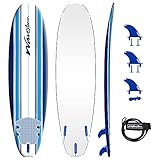
- Top Pick: Wavestorm – Classic Soft Top Foam 7ft Surfboard Surfboard for Beginners and All Surfing Levels Complete Set Includes Leash and Multiple Fins Heat Laminated, Blue Pinline (AZ22-WSSF700-PIN)
- Best Value: Wave Storm 8ft Surfboard // Foam Wax Free Soft Top Longboard for Adults and Kids of All Levels of Surfing,Mix,AZ22-WSSF800-B
- Premium Choice: Wavestorm 8ft Classic Surfboard // Foam Wax Free Soft Top Longboard for Adults and Kids of All Levels of Surfing
The best soft top surfboard for most beginners is a wide, thick, long foam board between about 7 and 9 feet, such as a Wavestorm 8 foot, a Catch Surf Odysea or a similar foam longboard from a surf brand, while lighter or more advanced riders can step down to a shorter hybrid soft top. Pick length and volume by body weight and wave size, not by style, since extra floatation is what makes first waves easy to catch.
This guide explains how soft tops are built, which designs suit which surfer, and what to check before buying. Specs vary by model and size, so compare the maker’s listed length, width, thickness and volume for each board.
As an Amazon Associate we earn from qualifying purchases at no extra cost to you.


Soft Top Options at a Glance
| Type | Best for | Typical stated traits | Limits |
|---|---|---|---|
| Wavestorm 8 ft (Costco-style classic) | First-time surfers, families, rentals | Foam deck, slick bottom, soft fins; large volume for stability | Heavy; limited performance |
| Catch Surf Odysea series | Beginners to intermediates who want more flex and style | Maker lists soft deck with stringers and construction aimed at durability | Premium over basic soft tops |
| South Bay Board Co and similar longboards | Casual surfers wanting a classic shape | Longboard outlines in foam | Fit depends on rider weight |
| Hybrid soft tops from surf brands | Improving surfers | Shorter, thinner, more performance oriented | Less forgiving to learn on |
| Kids foam boards (6 ft and under) | Children and small riders | Light and soft to handle | Rapidly outgrown |
How to Choose a Soft Top
Length and Volume
Surf instruction sources commonly suggest beginners use boards longer than their own height, with high volume. Heavier adults generally need more length and volume to paddle and catch waves, while kids need smaller boards that are easy to carry. Many makers publish a size chart by weight. Consult it for each model rather than guessing from a name.
Width, Thickness and Stability
A wide, thick board is more stable and catches waves earlier. The trade-off is that it turns more slowly and is harder to duck dive, which beginners seldom need at the start.
Construction
Soft tops usually combine an EPS foam core, a slick HDPE bottom and a foam deck. Some include stringers, which are strips of wood or composite that add stiffness. The maker’s description tells you how stiff and durable the board is; flexing too much can feel sluggish.
Fins
Many soft tops use soft, flexible fins for safety. Some boards accept hard fins for better performance, which helps as skills improve. Check what fin system the maker lists and whether fins are included.
Picks by Surfer
Absolute Beginner: Large Foam Longboard
The Wavestorm line is widely seen on beaches because it is easy to find, forgiving and generally inexpensive among soft tops. Surf schools favour similar foam boards for lessons because they are safer in crowded water.
Improving Surfer: Catch Surf Odysea or Hybrid
If you are progressing, a board with a more refined outline and a stronger build can bridge to a hard board. Catch Surf is known for its soft-board range, and reviewers in surfing outlets often highlight its design and finish compared with entry-level options.
Families and Rental Use: Durable Soft Tops
Soft deck boards take hits well and are friendlier to bystanders. They work for family trips where multiple people share a board.
Kids and Smaller Riders
Choose a short, lightweight board under about 7 feet. Check the weight rating and avoid over-sizing, as an overlong board is hard for a child to handle.
Pick X If Decision Table
| Pick this | If you |
|---|---|
| 8 to 9 ft foam longboard | Are new, heavier, or surf small mellow waves |
| Better-built soft top (Catch Surf style) | Want a board that lasts and performs a bit more |
| Hybrid soft top | Can already stand up and want to turn |
| Short kids board | Are teaching a child in small surf |
| Rental or shared board | Need something low-maintenance and soft |
Budget Tiers
- Budget: Entry soft tops sold in large volume. Very good for first sessions; expect basic construction.
- Mid-range: Soft tops with stringers, better fins and cleaner finish from surf brands.
- Premium: Higher-performance foam boards with improved materials and shaping.
Reading a Size Chart
Most makers list length, width, thickness and volume in litres. Volume is the best single number for comparing boards, because it combines all three dimensions. A heavier rider needs more litres to float and paddle comfortably, while a light child needs far fewer. When a chart gives a weight range per size, pick the size whose range sits in the upper half of your weight rather than the very bottom, since extra floatation helps early paddling. If you are between sizes, the bigger board is usually the safer bet while learning, and you can trade down once you are standing up consistently. Also consider carrying: a nine foot foam board is long to walk to the beach and awkward on small cars, so check how you will transport it before you commit.
Care and Transport
- Rinse with fresh water after each use.
- Do not leave the board in a hot car, since heat can cause bubbles or delamination.
- Use a board bag or cover when storing outdoors.
- Strap it securely to a roof rack with soft padding.
- Wax or use traction as the maker advises; soft tops often need no wax.
- Wear a leash and keep distance from other surfers.
Soft tops reduce injury risk but do not eliminate it. Learn in small, supervised surf and follow lifeguard advice.
Common Mistakes
- Choosing a board that is too short for your weight.
- Buying for looks without looking at volume.
- Leaving the board in the sun between sessions.
- Using a hard leash cuff that is too tight.
- Staying on a beginner board long after you outgrow it.
Alternatives
A foam-and-fibreglass epoxy hybrid is a step up in performance. A used hard longboard can be good value for an improving surfer. Rentals and lessons let you try before committing to a purchase.
Frequently Asked Questions
What size soft top surfboard should I buy?
Most beginners do best with 7 to 9 feet, depending on weight and wave size. Look at the maker’s size chart and volume figures. When unsure, go a size up.
Are soft top surfboards good for beginners?
Yes. They are buoyant, stable and softer on impact, which is why surf schools use them. They are slower to turn than hard boards, but that is rarely a concern at first.
Do soft top boards need wax?
Often not, since the foam deck has grip of its own. Some surfers add traction for wet conditions. Follow the maker’s guidance.
How long does a soft top surfboard last?
Lifespan depends on use, storage and sun exposure. Dings and delamination can appear over time. Rinsing and storing out of the sun help.
Can an intermediate surfer ride a soft top?
Yes, especially in small waves or crowded lineups. Hybrid models offer more performance. Many surfers keep one as a fun, low-risk board.
Which is better, Wavestorm or Catch Surf?
Wavestorm is a common starter option, while Catch Surf generally offers more refined designs. Your weight, budget and wave conditions decide. Compare listed dimensions and volume for the specific models.





Write Your Review
No reviews yet. Be the first to share your experience!