
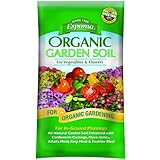
- Top Pick: Espoma Organic Vegetable & Flower Garden Soil Natural and Organic in Ground Planting Mix. Use When Planting & Transplanting. for Organic Gardening. 1 Cubic Foot Bag
- Best Value: Back to the Roots Organic Expanding Potting Soil Brick, Expands to 51 Qts | 10 lb compressed coco coir brick made of coconut coir; peat-free, OMRI Listed; seed starter soil, garden soil, indoor plants
- Premium Choice: Burpee Premium Organic Potting Mix Garden Soil with Coconut Coir for Indoor Plants & Outdoor Containers, OMRI Listed, Ideal for Vegetables, Flowers, Herbs (9 Quarts, 0.12-0.12-0.12)
For most vegetable gardens, a raised-bed or garden-soil blend from Espoma, FoxFarm, Miracle-Gro, Kellogg Garden or Coast of Maine will do the job, with organic blends suiting gardeners who want fewer synthetic fertilizers and fortified blends suiting those who want quick early growth. The key is matching the bag type to where you are planting, because potting mix, garden soil and raised-bed mix are not interchangeable.
As an Amazon Associate we earn from qualifying purchases at no extra cost to you.


Bag Types Explained
| Bag type | Use it for | Notes |
|---|---|---|
| Garden soil | Filling or topping up in-ground beds | Heavier, often blended with compost or topsoil; may compact in containers |
| Raised bed mix | Filling raised beds | Usually lighter and more open, with compost, peat or coir and aeration material |
| Potting mix | Containers and grow bags | Light and soilless; drains fast, can be costly for large beds |
| Topsoil | Levelling or bulk fill | Low in nutrients; usually blended with compost before planting |
| Compost | Amending existing soil | Rich in organic matter but not a stand-alone growing medium in most cases |
What to Look For on the Bag
Ingredients
Good vegetable blends list a mix of organic matter such as compost, aged forest products, peat moss or coconut coir, plus aeration materials such as perlite or pumice. The ingredient list tells you how the mix will drain and hold water.
Fertilizer content
Some bags include slow-release fertilizer. Others are unfertilized and depend on compost. Fertilized mixes feed seedlings for several weeks per the maker, but heavy feeders such as tomatoes and squash still benefit from extra feeding mid-season.
Organic labelling
Bags marked as suitable for organic gardening carry a listing from a recognised body such as OMRI in the maker’s materials. If you grow organically, look for this on the bag rather than assuming.
Drainage versus water holding
Peat and coir hold water, perlite and bark drain. For raised beds in hot climates, a moisture-retaining blend saves watering. In rainy areas, a free-draining mix reduces root disease.
Brands Gardeners Commonly Choose
Espoma Organic Garden Soil
Espoma is known for organic fertilizers and soil products. Its garden soil is marketed for vegetables and raised beds, and its materials note use for organic gardening. It is a common mid-range pick for gardeners who want organic inputs.
FoxFarm Ocean Forest
FoxFarm makes rich, nutrient-dense soils that include ingredients such as forest humus and fish emulsion according to its materials. Ocean Forest is a premium-tier potting-style soil often used in containers and raised beds. Because it is nutrient-rich, seedlings may need a lighter blend.
Miracle-Gro Garden Soil
Miracle-Gro sells garden soil and raised-bed mixes with added plant food. They are widely available and aimed at quick growth. Reviewers note that fortified mixes still need ongoing watering and mid-season feeding.
Kellogg Garden Organics
Kellogg Garden sells raised-bed and garden soils with organic labelling in some lines. Its blends suit buyers in regions where the brand is stocked.
Coast of Maine
Coast of Maine offers blends such as Bar Harbor Blend aimed at raised beds. It is a premium option and is sold regionally.
Pick X If
| Situation | Pick |
|---|---|
| You garden organically and want a mid-range bag | Espoma Organic Garden Soil |
| You grow heavy feeders in containers | FoxFarm Ocean Forest |
| You want a widely stocked fortified mix | Miracle-Gro garden or raised-bed soil |
| You are filling a large raised bed on a budget | A blend of topsoil, compost and aeration material |
| You want premium organic raised-bed mix | Coast of Maine |
How Much Soil Do You Need?
Multiply length, width and depth of the bed in feet to get cubic feet. A bed that is 4 by 8 feet and 10 inches deep needs roughly 27 cubic feet. Bags are listed by volume, often in cubic feet or quarts, so check the label and divide. Many gardeners fill part of a deep bed with logs or coarse compost at the bottom and top it with a quality bagged mix, to reduce cost.
Common Mistakes
- Using potting mix for large in-ground beds, which dries out fast and costs more.
- Using heavy garden soil in containers, where it compacts and drains poorly.
- Ignoring bag volume differences between brands.
- Skipping the soil test. A basic home kit or extension service test shows pH and nutrients.
- Overfeeding a pre-fertilized mix, which can burn seedlings.
Improving a Bagged Mix
Mixing in extra compost raises organic matter, while a handful of perlite improves drainage in clay-heavy blends. After each season, top the bed with compost to replace what vegetables use. If your plants show yellowing leaves or poor fruit set, a soil test is a better first step than guessing at fertilizer.
Safety Notes
Bagged soils can contain dust and microorganisms. Wear gloves, open bags in well-ventilated spaces, and wash hands after use. Some people choose a dust mask when handling dry mixes. Store opened bags closed and dry.
Matching Soil to Crop
| Crop group | Soil preference | Notes |
|---|---|---|
| Tomatoes, peppers, squash | Rich, well-drained, steady moisture | Heavy feeders; benefit from compost and mid-season feeding |
| Leafy greens | Fine, moisture-holding, nitrogen-rich | Shallow roots dry out quickly |
| Carrots, beets, radishes | Loose, stone-free, deep | Compacted mix causes forked roots |
| Beans and peas | Moderate fertility | Fix some of their own nitrogen; avoid overly rich mix |
| Herbs | Free-draining | Many Mediterranean herbs dislike wet roots |
Budget, Mid-Range and Premium Tiers
Budget bags often rely on bulk forest products and basic compost and suit large beds where you add your own compost. Mid-range bags such as many Espoma and Miracle-Gro blends add fertilizer or more varied organic matter. Premium bags such as FoxFarm and Coast of Maine blends use richer ingredient lists and cost more per cubic foot, so they make sense for containers and smaller beds where quality counts more than volume.
Watering a New Bed
Newly filled beds settle by a few inches in the first weeks, so top up before planting. Water deeply after filling so the mix is evenly moist, then keep the top layer from crusting. A layer of mulch such as straw reduces evaporation and weeds. If water runs off the surface instead of soaking in, the mix may be dry or compacted, and loosening the top few inches helps.
Frequently Asked Questions
Can I use potting mix in a raised bed?
Yes, but it is usually costly in large volumes and may dry quickly. Many gardeners blend potting mix with compost or use a raised-bed mix made for that purpose.
Do I need to add fertilizer to bagged soil?
That depends on the bag. Pre-fertilized mixes feed plants for a while according to the maker, but heavy feeders often need more later. Unfertilized mixes need compost or fertilizer from the start.
Is organic soil better for vegetables?
Organic labelling reflects ingredients and production rules, not a guarantee of higher yield. It suits gardeners who prefer to avoid synthetic fertilizers.
How deep should a raised bed be?
Many guides suggest around 8 to 12 inches for most vegetables, deeper for root crops like carrots. Deeper beds need more soil.
Can I reuse bagged soil next year?
Generally yes. Refresh it with compost, remove old roots and rotate crops to reduce disease buildup.
What pH do vegetables prefer?
Most vegetables grow well in slightly acidic to neutral soil. A home test or your local extension service can tell you the actual number for your bed.





Write Your Review
No reviews yet. Be the first to share your experience!