
- Top Pick: Trap a Pest Sticky Indoor Roach Traps – Non-Toxic Glue Traps – 18 Pack | Heavy-Duty Glue Traps for Roaches, Waterbugs & Crawling Insects – Safe Around Children & Pets – Long-Lasting Indoor Use
- Best Value: 20 Pack Roach Traps, Cockroach Traps Indoor Home, Glue Roach Traps, Child & Pets Safe(Upgrade Recipe)
- Premium Choice: Catchmaster Max-Catch Glue Traps 36pk, Sticky Mouse Traps Indoor for Home | Bulk glue boards for mice & insects, pesticide-free sticky traps for spiders, crickets & roaches, home & garage pest control
For most households, an open glue board such as Catchmaster suits monitoring and light problems, an enclosed trap such as Black Flag Roach Motel suits homes with children or pets, and Harris glue traps are a discreet bait-assisted option; none of them replaces bait or professional treatment for a heavy infestation.
As an Amazon Associate we earn from qualifying purchases at no extra cost to you.
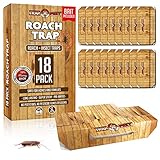


What Glue Traps Do and Do Not Do
A roach glue trap is a sticky surface that catches insects walking across it. Pest-control writers consistently describe these as monitoring tools: they show which rooms have activity and roughly how many roaches are present, and they can reduce a small population. Reviewers report that they struggle against a large or established infestation, because roaches hide in walls and cracks and only a fraction wander onto a trap. For anything serious, pest-control sources suggest combining traps with gel bait, sanitation and, when needed, a licensed professional.
Quick Comparison
| Trap | Format | Best for | Limits reviewers mention |
|---|---|---|---|
| Catchmaster roach glue boards (72MAX and related) | Open folding boards; the 12-board pack lists 8 by 5 inch boards | Monitoring, larger coverage, value | Glue can lose tack in humidity; paper construction suffers when wet; best on small roaches |
| Black Flag Roach Motel | Enclosed tent-style trap | Households with kids or pets, light to medium problems | Cannot handle a serious infestation by itself |
| Harris Roach Glue Traps | Discreet bait-assisted traps | Pesticide-free approach, out-of-sight placement | Small pack sizes; still not a full treatment |
Specifications above come from the makers’ listings and outlet summaries such as Today’s Homeowner and PestProper; pack sizes vary by retailer and year, so read the package.
Budget Tier
The Black Flag Roach Motel is the familiar budget pick, and Burning For Success names it as a budget choice. Its enclosed design hides caught insects and keeps the adhesive away from fingers and fur, which reviewers cite as its main advantage. It is a good fit for a rental, a pantry corner or a spot behind the fridge where a few roaches are suspected.
Mid-Range Tier
Catchmaster boards sit here. Today’s Homeowner ranks Catchmaster first among traps that avoid pesticides, and PestProper picks the 72MAX as the strongest of the three it compared. The boards are slightly larger than many rivals and are sold in multi-board packs, which allows coverage of several rooms. The trade-offs are that the glue is not especially thick, the boards are fragile once folded, and humidity or moisture can weaken the adhesive. Keep them in dry places and replace them when they collect dust.
Premium Tier
Harris glue traps are the higher-cost option in outlet comparisons. Pest Wiki describes them as discreet and pesticide-free, with bait that helps draw insects in. A discreet appearance can matter in a kitchen used by guests or in an office. As with the others, they are more useful for light activity than for knocking down a large population.
Where to Place Traps
- Along walls and in corners, since roaches tend to travel edges.
- Under sinks, behind refrigerators and stoves, and near water pipes.
- Near trash areas and pantry shelves, but not directly on food surfaces.
- Inside cabinets away from children and pets, and out of reach of curious animals.
Place several traps and note which catch the most. That map tells you where to concentrate cleaning and bait.
Safety and Handling
Keep all traps out of reach of children and pets and follow the label. If a pet or child touches the adhesive, vegetable oil is commonly suggested for gentle removal, but contact a veterinarian or doctor if there is distress, fur loss or any skin reaction. Wear disposable gloves when throwing traps away. Do not place traps in contact with food or food-prep surfaces.
Pick X If You Want Y
| If you want… | Pick | Reason |
|---|---|---|
| Lots of coverage for the least outlay | Catchmaster multi-board pack | More boards per pack, larger surface |
| A closed trap for a home with pets | Black Flag Roach Motel | Glue is inside the enclosure |
| A trap that blends in | Harris | Discreet design with bait |
| To monitor before treating | Any glue board | Shows hot spots and activity level |
| To end a big infestation | Professional service plus bait | Traps alone will not reach hidden harborages |
Common Mistakes
- Expecting glue traps alone to remove a large infestation.
- Putting boards in the middle of open floors where roaches rarely walk.
- Leaving traps in damp areas where the glue fails.
- Leaving crumbs and open food out, which keeps roaches fed and ignoring the traps.
- Skipping a count. Check traps regularly and write down how many insects each spot catches.
Reading the Results
A trap is only useful if you look at it. Check boards every few days at first and note the date, location and approximate count. Small nymphs on a trap suggest a breeding population nearby, while a few large adults may be wanderers from outside. Catches that drop over several weeks, alongside better sanitation, are a good sign. Catches that rise, or roaches seen in daylight, point to a larger problem than glue can handle. Because the traps are inexpensive relative to a pest service call, many households use them as an early-warning system in apartments, where neighboring units can be a source.
Housekeeping makes every trap work better. Roaches follow food, water and shelter, so wipe counters, fix dripping taps, seal food in lidded containers and take out the trash regularly. Pest-control sources also suggest sealing gaps around pipes and baseboards so insects have fewer routes in.
Alternatives
Gel baits are the standard follow-up for ongoing activity, because roaches carry bait back to their hiding places. Boric acid products, sealed food storage, fixing leaky pipes and caulking gaps reduce what draws roaches in. For a big or recurring problem, a licensed pest-control operator can identify species and apply a plan matched to your home.
Frequently Asked Questions
Do roach glue traps work?
They catch roaches and are useful for monitoring light activity. Pest-control sources say they rarely solve a heavy infestation on their own.
Which is safer around pets, open boards or enclosed traps?
Enclosed designs such as the Roach Motel keep the adhesive inside the trap, which reviewers cite as an advantage for homes with children or pets. Place any trap where animals cannot reach it.
How many traps should I use?
Use several, spread across suspected areas. Multi-board packs make that easier, and comparing catches helps locate the problem.
How often should I replace them?
Replace a trap when it is full, dusty or no longer sticky. Humid conditions can shorten the useful life of an open board.
Are glue traps poison-free?
Reviewers describe boards such as Catchmaster and Harris as nontoxic or pesticide-free, but read the label on the exact product, since formulations vary.
When should I call a professional?
Call when you see roaches in daylight, find many on a single trap, or notice activity returning after cleanup. Those signs suggest a larger population that needs a coordinated treatment.





Write Your Review
No reviews yet. Be the first to share your experience!