
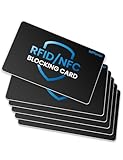
- Top Pick: WHonor RFID Blocking Card 6 Pack, Anti-Theft Debit & Credit Card Protector | Contactless NFC Blocker, Slim Security Card, Wallet Shield & Purse Protection, Premium PVC, Waterproof & Scratch-Resistant
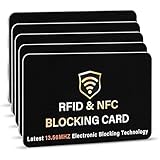
- Best Value: SaiTech IT 5 Pack RFID Blocking Card for Credit Debit ID Card, Black | Slim Anti-Theft Contactless NFC RFID Blocker Protector, Easy Fit into Wallet & Purse, for Men & Women, for Travel & Business
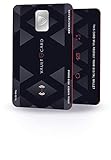
- Premium Choice: VAULTCARD RFID Blocking Card, NFC Jamming, Protects Wallet and Passport | Vaultskin Patented Multi-Card Defense, superior military-grade 13.56 MHz signal blocker, no battery or credit sleeves needed
A single slim wallet card suits most people who carry several contactless cards, while a passive sleeve set suits anyone who only wants to cover one or two cards on a tight budget. The brands that keep surfacing in 2026 roundups are Credifence, VAULTCARD, ODIN, Cardian, SignalVault and TICONN, and the real decision comes down to how the card blocks, how many cards it covers and how long it lasts in a wallet.
As an Amazon Associate we earn from qualifying purchases at no extra cost to you.

What an RFID blocking card actually does
Contactless bank cards, transit passes, office badges and passports use short-range radio at 13.56 MHz. A blocking card sits in the same wallet slot and interferes with a reader trying to talk to the cards next to it. Makers describe two approaches. Passive designs use a layer of metallic mesh or foil that absorbs or redirects the reader’s field. Active designs, such as the ones Credifence, VAULTCARD and Cardian describe, claim to disturb the reader’s signal instead, so one card can cover a stack.
It is worth keeping expectations realistic. Many of the “best of” pages online look like affiliate content, and several rank the same brand first with near-identical wording. Independent evidence that skimming of bank cards is a common real-world crime is thin, and banks add their own protections such as per-transaction limits and fraud refunds. A blocking card is a cheap extra layer, not a security system. Treat any claim of “100 percent protection” as marketing language.
At a glance
| Option | Type (as the maker describes it) | Best for | Limits |
|---|---|---|---|
| Credifence | Active, wide protection radius covering 13.56 MHz cards and passports, per the maker | People with many cards in one wallet | Independent lab data is hard to find |
| VAULTCARD | Active; Cybernews calls it the most durable | Daily carry in a well-used wallet | Premium tier of the group |
| ODIN | Thin card; The Daily Consumer ranks it first for compatibility | Slim wallets and card holders | Ranking comes from a single review site |
| Cardian (The Safe Card) | Active; tops several look-alike review pages | Shoppers who want a well-known name | Praise appears on pages that read as promotional |
| SignalVault | Maker says it protects up to six nearby cards with no setup | Simple set-and-forget use | Newer to the market |
| TICONN / CardShield style passive cards | Passive mesh layer | Budget buyers | Cover fewer cards, usually in immediate contact |
How to choose
Passive versus active
Passive cards cost less and have no electronics to fail, but they work best when the card you want to protect is touching or very close to them. Active cards claim a larger radius, which helps if your wallet has a thick stack. If you only carry one bank card and one transit pass, a passive card or sleeve is usually enough.
Thickness and wallet fit
A blocking card has the same footprint as a bank card, but thickness varies. Slim wallets and elastic card holders can bulge if the card is thicker than average. Check the maker’s listed thickness before ordering, especially for minimalist wallets.
Durability
Cards that live in a back pocket get bent. Reviewers flag VAULTCARD for durability, while thin laminated cards can crease. Replace any blocking card that cracks, since a damaged shield may not behave as described.
Placement
Makers generally advise keeping the card directly against the cards you want to cover, and carrying the wallet normally rather than leaving a gap. A card in a different pocket from your bank card does nothing.
Who each type suits
| Pick this if you | Choose | Why |
|---|---|---|
| Carry five or more contactless cards | An active card such as Credifence or VAULTCARD | Wider claimed coverage per card |
| Use a very slim wallet | ODIN or another thin card | Less bulk |
| Want the cheapest option | A passive card or sleeve set | No electronics, lower cost tier |
| Travel with a passport | A card whose maker lists passport coverage | Passports use the same 13.56 MHz band |
| Rarely tap to pay | Skip the card or use a passive one | Little to gain |
Alternatives to a blocking card
- Blocking sleeves. Foil-lined sleeves protect individual cards. They work, but you need one per card.
- RFID-lined wallets. A wallet with a built-in mesh layer protects everything inside it with nothing extra to remember.
- Bank settings. Many banks let you turn off contactless on a card or lower the tap limit through the app. Some issue cards without the contactless feature on request.
- Digital wallets. Phone payments use tokenised numbers and require unlocking the device, which sidesteps card skimming entirely.
Common mistakes
- Buying on a “100 percent” claim from a page that shows no method.
- Placing the blocker in a different pocket from the cards.
- Forgetting that blocking also stops your own card from working if it sits against the reader and the blocker together, such as at a gate.
- Assuming a blocker protects magnetic stripes or chip-and-PIN swipes; it does not.
- Keeping a bent or cracked card in service.
Why this belongs on a gamer’s checklist
Gamers who travel to LAN events, conventions and tournaments carry a lot of tappable cards: bank cards, hotel keys, badges and transit passes. A crowded event is the classic scenario people worry about. A single card in the wallet is a low-effort habit, but it is no substitute for sensible basics such as watching your pockets and checking statements.
Frequently Asked Questions
Does an RFID blocking card work on every contactless card?
Makers say their cards cover 13.56 MHz cards, which includes most bank cards, transit passes and many badges. Cards on other frequencies, such as some older access fobs, may not be covered. Read the maker’s coverage list before buying.
Can I put the blocking card in a separate pocket?
Generally not. The card needs to sit with or very close to the cards it protects. Active cards claim a wider radius, but the closer the better.
Will it stop my card from working at a terminal?
It can if the blocker is between the card and the reader. Take the card you want to use out of the wallet, or turn the wallet so the payment card faces the terminal.
Are active cards safe to carry?
Makers present them as safe for daily use and powered without a battery you need to charge. If you have a medical implant, ask the device maker or your doctor before carrying any active product close to your body.
Is a blocking card worth it?
For many people it is a minor, low-cost layer. Banks already limit contactless amounts and usually refund fraud, so the benefit is peace of mind rather than a need. If you rarely tap to pay, turning off contactless in your banking app does the same job.
How long does one last?
There is no fixed lifespan in the sources. Replace it if it bends, cracks or the maker advises replacement.







Write Your Review
No reviews yet. Be the first to share your experience!