
- Top Pick: Veepeak OBDCheck BLE Bluetooth OBD II Scanner for iOS & Android, Car Wireless Check Engine Light Code Reader Diagnostic Tool
- Best Value: OBD2 Scanner Diagnostic Tool, Car Scanner for iOS & Android, Bluetooth 5.4
- Premium Choice: Veepeak OBDCheck BLE+ Bluetooth OBD II Scanner for iOS & Android, Car Check Engine Code Reader Wireless OBD Diagnostic Scan Tool
A check engine light pops on, and the first instinct is to pull into a shop and pay a diagnostic fee just to find out what the code means. An OBD2 scanner app changes that equation entirely. You plug a small dongle into the port under your dashboard, connect it to your phone over Bluetooth, and read codes yourself in seconds. The market is crowded, though, and the difference between a scanner that reliably pulls live sensor data and one that drops connection halfway through a scan is the difference between a tool you use and a tool you curse.
We compared every product on this list against published specifications, listed prices, and aggregated owner feedback to sort out which scanners actually deliver. The best options share a few traits: stable Bluetooth connections, broad protocol coverage, and companion apps that present data clearly. The worst ones struggle with connectivity, lock basic functions behind subscriptions, or offer software so buggy that reading a code becomes a project. What follows is our breakdown of the eight that stand out in 2026.
As an Amazon Associate we earn from qualifying purchases at no extra cost to you.




Quick Picks
| Product | Best for | Price |
|---|---|---|
| Veepeak OBDCheck BLE | Reliable iOS and Android compatibility | under $40 |
| OBD2 Scanner Bluetooth 5.4 | Lowest price with modern Bluetooth | under $30 |
| Veepeak OBDCheck BLE+ | Enhanced compatibility and stability | under $50 |
| FIXD | Beginners who want plain-language guidance | under $40 |
| Tor OBD2 | Android power users wanting deep diagnostics | n/a |
| BlueDriver (Full Kit) | Pro-level module coverage without a subscription | under $150 |
| Panlong | Tightest budget under fifteen dollars | under $20 |
| BlueDriver (Base) | Same hardware, better price at select retailers | under $100 |
How We Picked
Three criteria drive our selections in this category. First, connection reliability: a scanner that drops Bluetooth mid-session is worse than no scanner at all, so we weighted owner reports about pairing stability heavily. Second, protocol breadth: OBD2 covers multiple communication protocols, and a scanner that only handles one or two will fail on a significant percentage of vehicles. Third, software quality: the hardware is cheap to manufacture, so the real value lives in the companion app—whether it presents codes clearly, supports live data graphs, or locks meaningful features behind a paywall. A fourth factor, price-to-feature ratio, breaks ties when two products perform comparably.
The 8 Best Obd2 Scanner App in 2026
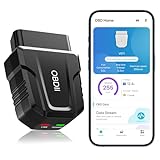
Veepeak OBDCheck BLE
This is Veepeak’s long-running staple, and it earns its position through consistency rather than novelty. The BLE hardware connects cleanly to both iOS and Android, and Veepeak’s own app presents fault codes with repair estimates that help you gauge urgency before visiting a shop. Owner feedback repeatedly highlights stable pairing across multiple drives, which matters more than raw speed in this category.
- Pro: Works seamlessly across iOS and Android with no configuration headaches.
- Pro: Repair estimate feature puts codes in practical context.
- Con: The app occasionally fails to pull enhanced manufacturer-specific codes on older vehicles.
Skip this if you need ABS or transmission module access as a priority—stick with a scanner that explicitly covers extended protocols.
OBD2 Scanner Bluetooth 5.4
For under $30, this adapter packs Bluetooth 5.4, a newer radio standard than what most competitors at this price offer. The newer chip means faster handshake and, in theory, better range. The companion app covers standard OBD2 functions—reading and clearing codes, viewing live sensor data, and checking readiness monitors. Owners appreciate the snappy connection, though the app’s interface feels utilitarian compared to more polished alternatives.
- Pro: Bluetooth 5.4 hardware is ahead of most competitors in this price bracket.
- Pro: Sub-$30 entry point with no recurring fees.
- Con: The software lacks the polish and guidance features of pricier options.
Skip this if you want repair guidance or plain-language explanations alongside your codes—you will be reading raw definitions on your own.
Veepeak OBDCheck BLE+
The BLE+ is the upgraded sibling of the standard OBDCheck, and the extra ten dollars buys improved chip handling and broader protocol coverage. Owners with mixed-model garages report fewer connection failures on this version, particularly on vehicles that use less common OBD2 protocol variants. The software experience mirrors the standard model, so you still get Veepeak’s clean interface and repair estimates.
- Pro: Broader protocol support reduces the chance of a failed scan on a given vehicle.
- Pro: Same intuitive app experience as the base model at only a modest markup.
- Con: For under $50, the price gap versus the base model narrows the value proposition for single-car households.
Skip this if you only drive one modern vehicle and the base OBDCheck already handles it—save the ten dollars.
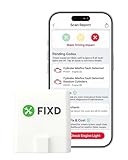
FIXD
FIXD targets the person who has never cleared a code and does not want to learn. The app translates fault codes into severity levels, suggests whether the issue is safe to drive on, and recommends repair types. The hardware itself is a simple Bluetooth dongle, but the software layer does the heavy lifting. Owner reviews consistently praise the beginner-friendly experience, while experienced users find the interface oversimplified.
- Pro: Severity scoring and driving safety recommendations reduce guesswork for new users.
- Pro: Clean, modern app design with minimal configuration.
- Con: Advanced features require a subscription, which erodes the value for under $40 hardware cost.
Skip this if you already understand what codes mean—you will be paying for guidance you do not need.
Tor OBD2
Tor is not a hardware product; it is an Android application that pairs with compatible OBD2 adapters to deliver deeper diagnostics than most stock scanner apps. It supports a wide range of manufacturer-specific PIDs, live graphing, and customizable dashboards. Power users appreciate the level of control, though the learning curve is real. Because it is software-dependent, its performance hinges entirely on which adapter you pair it with.
- Pro: Access to manufacturer-specific PIDs that many consumer scanners ignore entirely.
- Pro: Fully customizable live data dashboards for monitoring multiple parameters simultaneously.
- Con: Android only, and requires a compatible adapter to function—no standalone value.
Skip this if you are on iOS or want a plug-and-play experience without configuring PIDs yourself.
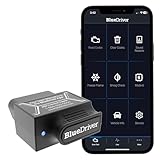
BlueDriver OBD2 Scanner (Full Kit)
For under $150, BlueDriver occupies the professional-adjacent tier and justifies it with expanded module coverage. ABS, SRS, and TPMS diagnostics go beyond basic engine codes, which matters when a shop charges separately for those systems. The app offers guided troubleshooting that walks you through possible causes step by step. No subscription is required for core functionality, which sets it apart from FIXD’s model.
- Pro: Covers ABS, SRS, and TPMS modules—rare at any price without a subscription.
- Pro: No recurring fees for full diagnostic access.
- Con: The hardware is bulkier than simpler dongle-style adapters, which can be awkward in tight dashboards.
Skip this if you only need engine codes and are on a tight budget—the price premium buys capabilities you may never use.
Panlong OBD2 Scanner
Panlong is the cheapest entry on this list for under $20, and it does exactly one thing: reads and clears codes, then turns off your check engine light. The companion app is Android-only, and that limitation filters out a large share of potential buyers immediately. For Android users who just need a quick reset after a repair, the value proposition is hard to argue with at this price.
- Pro: Lowest price point on the list, making it a reasonable backup or gift.
- Pro: Straightforward read-and-clear function with minimal setup steps.
- Con: Android-only support excludes iPhone users entirely.
Skip this if you own an iPhone or want live data, readiness monitors, or any diagnostic depth beyond code reading.
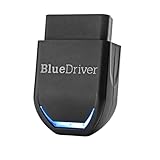
BlueDriver OBD2 Scanner (Base)
This is the same BlueDriver hardware and software listed above, available for under $100 through select retailers. The price difference typically reflects a smaller bundle—fewer accessories or no carrying case—rather than reduced capability. For buyers who already know they want BlueDriver, hunting for this variant makes sense because you save meaningful money without losing any diagnostic function.
- Pro: Identical diagnostic capabilities to the Full Kit at roughly thirty percent less cost.
- Pro: Still includes ABS, SRS, and TPMS coverage with no subscription.
- Con: Retail availability fluctuates, so this price is not always the one you will find.
Skip this if you want a carrying case or extra accessories included—those tend to come with the higher-priced bundle.
Buying Guide
Protocol Coverage Determines Whether a Scanner Works on Your Car
OBD2 is not a single protocol—it is a framework that encompasses several communication methods, including ISO 9141-2, KWP2000, CAN, J1850 PWM, and J1850 VPW. Older vehicles often use non-CAN protocols, and a scanner that only speaks CAN will simply fail to connect. Look for adapters that explicitly list all five protocols. This is where the Veepeak BLE+ pulls ahead of the base model, and where the cheapest adapters sometimes fall short.
Module Access Is the Real Price Differentiator
Every scanner on this list reads engine codes. The expensive ones also read ABS, SRS, transmission, and TPMS modules. Those systems generate their own fault codes that do not trigger the check engine light, meaning a basic scanner will miss them entirely. If you are diagnosing a traction control warning or an airbag light, you need module coverage. BlueDriver is the clearest example of paying for breadth, while FIXD and Veepeak focus almost exclusively on the powertrain.
Companion App Quality Outweighs Hardware Specs
The physical dongle is a commodity at this point—most use similar chipsets and the form factor barely varies. What separates a good purchase from a frustrating one is the software layer. Does it translate codes into understandable language, or just dump alphanumeric strings? Does it support live sensor data with graphs? Does it lock meaningful functions behind a subscription? Tor OBD2 wins on software depth, FIXD wins on software simplicity, and that split tells you which matters more to your situation.
Our Verdict
BlueDriver for under $100 is our top pick. It offers the broadest module coverage without a subscription, and at that price the value gap versus cheaper options that lack ABS and SRS access is substantial. For a budget pick, the Veepeak OBDCheck BLE for under $40 delivers the most polished experience under thirty-five dollars, with reliable cross-platform connectivity that owners consistently confirm. If you are an Android power user who wants manufacturer-level PID access, Tor OBD2 paired with a cheap adapter like the Panlong will outperform every consumer product here on raw diagnostic depth.
FAQ
Do I need a separate app, or does the scanner come with software?
Most hardware scanners include a companion app, and you download it free from your phone’s app store. A few, like Tor OBD2, are the app itself and you supply compatible hardware separately. Always confirm what software is bundled before purchasing, since some manufacturers gate features behind paid tiers.
Will any OBD2 scanner work on my car?
Not universally. Vehicles built after 1996 in the US are required to support OBD2, but the specific protocol implementation varies by manufacturer and market. Checking the protocol list on the product page against your vehicle’s year and origin is the fastest way to confirm compatibility before you buy.
Can I drive with the scanner plugged in?
Yes, and many users do exactly that to monitor live data during a drive cycle. The adapter draws negligible power and sits unobtrusively in the port. Be aware that a persistent connection can occasionally interfere with vehicle sleep modes on cars with sensitive electronics, so unplugging between drives is a reasonable habit.
What does “no subscription” actually mean for my use case?
No subscription means every diagnostic function is unlocked after the one-time hardware purchase. With subscription-based tools like FIXD, features such as guided repair assistance or extended reports require ongoing fees. If you plan to use the scanner regularly, a subscription can eclipse the hardware cost within a year, making no-subscription options like BlueDriver more economical long-term.

Write Your Review
No reviews yet. Be the first to share your experience!