
A milling vise is the reference surface your whole setup depends on. If the jaws lift, the slides wander, or the base flexes, every cut that follows inherits that error, no matter how good the machine or the cutter is. The five vises below cover the main machinist classes: large and small cross-slide vises for positioning work under the spindle, a compact two-way tilting vise for angled work, a small quick-acting drill and milling vice, and a cross-sliding vise with an anti-tilt slide bar. They suit benchtop mills, mill-drills, and drill presses used for light milling, drilling, and tapping in home shops and small job shops.
- Quick Answer
- How to Choose
- Wilton Cross-Slide Drill Press Vise, 6 Inch (Model CS6)
- HFS 2 Way 4-Inch Drill Press X-Y Compound Vise Cross Slide Mill
- Precision Milling Vise Swivel and Angle Tilting 2 Way, 2 Inch
- MachEl Enhanced Unigrip Cast Iron Nippy Drill and Milling Vice, 82 mm
- Shop Fox D4082 4-Inch Cross-Sliding Vise
- Who Should Skip It
- Work Stops, Clamps and Setup Tools for a Mill
- FAQ
- Final Verdict
- Product and ASIN Reference


As an Amazon Associate, we earn from qualifying purchases.
Quick Answer
For most benchtop mills and mill-drills, start with a cross-slide vise sized to your table: the Wilton CS6 for large work, the HFS 4-inch or Shop Fox D4082 for mid-size tables, the tilting 2-inch vise for angled small parts, and the MachEl 82 mm vice for compact, quick clamping jobs.
How to Choose
Start with jaw width and opening, because those two numbers decide what stock you can hold at all. A 6-inch vise suits full-size benchtop mills and larger blocks, while a 4-inch vise is the practical sweet spot for most mill-drills and smaller knee mills. Compact 2-inch and 82 mm vises are for small parts, toolroom work, and machines with limited table travel, where a big vise would crowd out the work envelope and eat daylight under the spindle.
Next, decide whether you need slides. A plain precision vise bolts down and stays put, which is the stiffest arrangement for milling cuts. A cross-slide vise adds X and Y movement under the spindle, so you can step a part across a row of holes or along a slot without unclamping it. That convenience costs rigidity and height, so cross-slide models fit drilling, tapping, and light milling better than heavy side milling. Check the travel figures against your hole patterns, and check the overall height against the distance between your table and spindle.
Jaw design matters more than headline clamping force. Hardened, replaceable jaw faces last longer and can be swapped when they wear or get damaged. V-grooves in the jaws hold round stock upright or on its side without extra fixtures. On tilting vises, look for positive angle stops and a locking cradle, so an angled setup returns to the same position instead of drifting under load.
Mounting is the detail buyers most often skip. Count the bolt lugs or slots, measure them against your table T-slots, and confirm the footprint before ordering. Weight matters too: a 59-pound vise is stable once placed, but it is a two-hand lift every time you swap it.
Finally, match the vise to the work, not the badge. If your parts are large, your cuts are heavy, or your tolerances are tight across long runs, budget for a dedicated lockdown CNC vise instead and treat these as secondary workholding.
Wilton Cross-Slide Drill Press Vise, 6 Inch (Model CS6)
The Wilton CS6 is the largest vise in this group and the natural pick when table space is not the limiting factor. Its listing states a 6-inch jaw width with a matching 6-inch maximum opening and a 2-inch jaw depth, so it can swallow blocks that would hang out of a 4-inch vise on both sides. Travel is generous for a cross-slide design, at 7-9/10 inches in each direction, which lets you step across long hole patterns or traverse a slot without re-clamping the part and losing your datum.
The listing describes hardened V-grooved jaws that hold round work both vertically and horizontally, cast side knobs that dial in 0.1 mm increments, and a base with five bolt lugs for mounting on a machine table. The body is fine grain cast iron with hardened steel in the jaw area, and the vise weighs 59 pounds, so once it is bolted down it stays planted during drilling and light milling passes. Wilton backs the CS6 with its lifetime warranty against manufacturing defects, per the listing.
The trade-offs are size and mass. At 9.5 by 14 by 7.25 inches, it needs a table with real travel, and its height reduces space under the spindle on short benchtop machines. Choose it for a larger mill-drill or a drill press dedicated to bigger work, and pick a 4-inch model below if your table is compact.
Specs
| Spec | Value |
|---|---|
| Jaw width | 6 inches |
| Maximum jaw opening | 6 inches |
| Jaw depth | 2 inches |
| X and Y travel | 7-9/10 inches each way |
| Material | Cast iron and hardened steel |
| Item weight | 59 pounds |
| Model number | CS6 |
HFS 2 Way 4-Inch Drill Press X-Y Compound Vise Cross Slide Mill
The HFS compound vise is the straightforward mid-size option: a 4-inch cross-slide vise in cast iron, sized for the mill-drills and drill presses found in most home shops. Its listing gives overall dimensions of 10 by 6.5 by 10 inches and a weight of 15 pounds, which makes it far easier to lift on and off the table than the Wilton above, while still giving you movement in two axes for positioning holes, slots, and pockets without unclamping the work.
That two-way slide is the reason to buy it. Instead of loosening the vise, tapping the part across, and re-indicating, you turn the handles and move the clamped part under the spindle, which saves real setup time when drilling rows of holes or taking light milling passes. Keep expectations in class, though: a 15-pound compound vise is not a substitute for a ground CNC vise on heavy cuts, and slide play is the first thing to check on any cross-slide design. The listing identifies the model as 16037, in blue.
Specs
| Spec | Value |
|---|---|
| Jaw size | 4 inches |
| Material | Cast Iron |
| Product dimensions | 10 x 6.5 x 10 inches |
| Item weight | 15 pounds |
| Model number | 16037 |
| Style | Cross slide, two way |
Precision Milling Vise Swivel and Angle Tilting 2 Way, 2 Inch
This compact tilting vise solves a different problem: holding small parts at an angle. The listing describes a 2-inch, 50 mm jaw vise that both swivels and tilts, so a workpiece can be rotated and inclined for angled holes, chamfers, and small angled faces without building a separate angle fixture. The body is cast iron and steel, the jaws are hardened, and the whole unit weighs 8.27 pounds, so it mounts happily on small mills, drill presses, and toolroom machines where a larger vise would not fit.
Small size is both the strength and the limit. A 2-inch jaw suits instrument parts, model work, and small brackets, and the tilt earns its keep whenever a hole or face sits off the main axes. It will not hold large stock, and angled setups need care: lock the tilt firmly and take lighter cuts than with work flat on the table. The listing names the maker as ASSORTS Machine Tools, part number 3WMV-75. If your work is mostly small and frequently angled, this is the specialist the flat vises cannot replace.
Specs
| Spec | Value |
|---|---|
| Jaw width | 2 inches (50 mm) |
| Material | Cast iron and steel |
| Item weight | 8.27 pounds |
| Part number | 3WMV-75 |
| Style | Angular and swivel, hardened jaws |
| Movement | Swivel and angle tilting, two way |
MachEl Enhanced Unigrip Cast Iron Nippy Drill and Milling Vice, 82 mm
The MachEl Unigrip is the compact quick option in this lineup: an 82 mm jaw vice in cast iron with hardened steel jaws, listed at 8.8 pounds. The listing identifies the model as UC-IN82MM, with part number UDV82MM, and describes it as a nippy drill and mill vice, which points to fast, one-handed style clamping for small parts rather than slow, high-force workholding on big stock.
That makes it a useful second vice for small brackets, plates, and fittings, where a full-size vise is slow to set up and oversized for the part. The hardened jaws give small work a firm grip, and the cast iron body keeps it planted despite its low weight. The limits follow from the size: an 82 mm jaw cannot hold wide stock, and a light vice is the wrong tool for heavy cuts. Buy it as a complement to a main vise, not a replacement.
Specs
| Spec | Value |
|---|---|
| Jaw width | 82 mm |
| Material | Cast iron |
| Jaws | Hardened steel |
| Item weight | 8.8 pounds |
| Model number | UC-IN82MM |
| Part number | UDV82MM |
Shop Fox D4082 4-Inch Cross-Sliding Vise
The Shop Fox D4082 is a 4-inch cross-sliding vise built around jaw control. Its manual, reproduced on manuals.plus, describes an exclusive slide bar that keeps the jaws from tilting up or sideways when tightened, plus adjustable gibs on both slides to take up slack. Jaw lift and slide play are the two accuracy killers in this class, so those two features are aimed at exactly the right problems for drilling and light milling work.
The stated figures are a 4-inch jaw width, a 3-3/4-inch jaw opening, and 4 inches of travel on both the bottom and top slides, in a vise 5-1/4 inches tall weighing about 22 pounds. That height is relatively low for a two-slide vise, which helps on benchtop machines where the space between table and chuck is already tight. The manual lists a one-year warranty from the manufacturer.
Note the evidence honestly: this pick rests on the manuals.plus reproduction of the maker manual and listing data, which is thinner sourcing than the full Amazon listing content behind the other picks, so confirm the current listing details before ordering. On paper, though, it is the most deliberately anti-tilt design among the 4-inch cross-slide options here, and a sensible choice for benchtop drill press and mill-drill owners who drill precise hole patterns.
Specs
| Spec | Value |
|---|---|
| Jaw width | 4 inches |
| Jaw opening | 3-3/4 inches |
| Slide travel | 4 inches, top and bottom |
| Overall height | 5-1/4 inches |
| Weight | About 22 pounds |
| Model number | D4082 |
Who Should Skip It
Skip this whole category if your work is woodworking or bench carpentry: a woodworking vise is cheaper, kinder to timber, and better shaped for boards. Skip the cross-slide models if your milling is heavy, because deep cuts call for a fixed precision vise bolted straight to the table. Skip the compact vises if your stock is routinely wider than their jaws, and skip every vise here for production CNC work to tight tolerances, which deserves a dedicated lockdown vise.
Work Stops, Clamps and Setup Tools for a Mill
A vise holds the part, but accurate work also depends on setup tools. These items help you locate edges, hold odd shapes and stay repeatable.
VEVOR 4 Inch Milling Vise

A ductile iron bench clamp vise with a 4 inch jaw. A compact size that suits smaller mills and hobby benches.
Mitutoyo 050102 Edge Finder

A dual-end edge finder with a 0.200 inch tip and a half inch shank. A trusted tool for finding the edge of a part before cutting.
HFS 58 Piece T-Slot Hold Down Clamp Set

A kit with studs, nuts and clamps for a milling machine table. Helps when a part is too large or odd for a vise.
Adjustable Milling Vise Jaw Stop
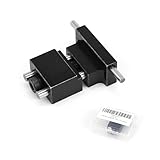
A work stop that clamps to compatible vises. It gives repeatable part positions when you machine several identical pieces.
FAQ
Can a cross-slide vise replace a milling table?
No. A cross-slide vise moves a clamped part in two axes for drilling patterns and light milling, but its slides are not built to the stiffness or accuracy of a machine table. Use it for positioning and light cuts, and use the machine table and a fixed vise for heavier milling.
What jaw width should a home shop buy first?
A 4-inch vise is the safest first buy for most benchtop mills and mill-drills. It holds the widest range of small and mid-size parts without crowding the table. Move to a 6-inch model only when your table travel and your typical stock size both justify the extra mass.
How do I stop a workpiece lifting in the vise?
Seat the part fully on parallels or the vise bed, tap it down lightly as you tighten, and keep the jaws and bed clean of chips before clamping. Designs that resist jaw tilt, such as a slide bar or a lockdown mechanism, also help, but clean setup matters more than any single feature.
Can I use a drill press vise on a milling machine?
Yes, for drilling and light milling, provided it bolts down securely and the work is small. Many vises in this guide are listed for both machines. For heavy milling cuts, switch to a dedicated milling vise, because drill press vises and cross-slide models give up rigidity for positioning convenience.
Final Verdict
Match the vise to the table and the work. The Wilton CS6 is the pick for larger machines and bigger stock, with the longest travel in this group. The HFS 4-inch compound vise is the simplest all-round cross-slide choice, and the Shop Fox D4082 adds anti-tilt jaw control at the same jaw size. The tilting 2-inch vise is the specialist for small angled parts, and the MachEl 82 mm vice is the quick second vice for compact jobs. Buy the size your table can carry, bolt it down properly, and keep the jaws clean, and any of these will hold work more honestly than clamping to the table alone.
Product and ASIN Reference
| Product | ASIN |
|---|---|
| Wilton Cross-Slide Drill Press Vise, 6 Inch (Model CS6) | B009E0EA3A |
| HFS 2 Way 4-Inch Drill Press X-Y Compound Vise Cross Slide Mill | B00L5RXFTU |
| Precision Milling Vise Swivel and Angle Tilting 2 Way, 2 Inch | B07GBQK9N2 |
| MachEl Enhanced Unigrip Cast Iron Nippy Drill and Milling Vice, 82 mm | B0DHL6RY9Y |
| Shop Fox D4082 4-Inch Cross-Sliding Vise | B005W16WT0 |


Write Your Review
No reviews yet. Be the first to share your experience!