
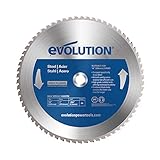
- Top Pick: Evolution Power Tools 14BLADEST Blade for Cutting Mild Steel, For Circular and Chop Saws, No Heat, No Burrs & Virtually No Sparks, Carbide-Tipped TCT Blade For Cold Metal Cutting,14-Inch x 66-Tooth
- Best Value: DEWALT 14" Chop Saw Blade, Metal Cut-Off Wheel (DW8001)
- Premium Choice: Diablo Steel Demon Cermet II Saw Blade for Medium Metal – 14" x 72-Teeth | 1800 Max RPM, Triple Chip Cutting Action – D1472CF
For clean, cool cuts in steel with minimal sparks, a carbide-tipped cold-cut blade is the best metal chop saw blade for most workshops, while a thin abrasive cut-off wheel is the budget route for rough work and a diamond or dry-cut specialty blade suits specific jobs. The deciding factors are not brand loyalty but whether your saw is built for the blade type, the blade diameter and arbor size, and the maximum RPM printed on the blade versus your saw.
As an Amazon Associate we earn from qualifying purchases at no extra cost to you.


At a glance: chop saw blade types
| Type | Example makers | Best for | Limits |
|---|---|---|---|
| Carbide-tipped cold-cut blade | Evolution, Diablo, Milwaukee | Cleaner burr-free cuts in mild steel, tube and angle | Needs a saw rated for it, and a speed suited to the blade |
| Abrasive cut-off wheel | Diablo, DeWalt, Norton, others | Cheap cutting on abrasive chop saws | Sparks, heat, dust, wears down, rough edge |
| Dry-cut steel blade (high speed steel or cermet tipped) | Various makers | Dry-cut metal saws with low RPM | Specific to saw speed and material |
| Thin kerf specialty metal blade | Various makers | Light-duty cutting of thin stock | Not for thick steel |
Maker names are examples of companies that sell blades in these categories, not a ranking. Model lines change, so use the printed specifications on the blade you buy.
Know your saw before choosing a blade
This single point trips up more buyers than any other. A traditional abrasive chop saw spins fast, commonly around 3,800 RPM, and is built for abrasive wheels. A cold-cut or dry-cut metal saw spins much slower and is built for toothed blades. Mounting a toothed carbide blade on a saw that is not designed for it is dangerous, because high speed and blade design can combine badly. Read the saw’s manual and nameplate, and use only blades that the saw maker approves.
Check three numbers before buying: blade diameter, arbor (centre hole) size and maximum RPM. The blade’s printed maximum speed must be equal to or above the saw’s rated speed.
Key features to compare
Tooth type and count
Carbide-tipped cold-cut blades use specialised tooth geometry for metal. Makers sell different tooth counts for thin-wall tube versus thick plate. Follow the maker’s chart for the material thickness you cut.
Material rating
Many blades are rated for mild steel only. Stainless steel and hardened metals often need blades the maker specifically labels for them. Using the wrong blade overheats the edge.
Kerf
Thinner kerfs remove less material and need less power, but they flex more. A thicker blade is stiffer and often lasts longer.
Coating and heat management
Some makers add coatings or expansion slots to reduce heat and noise. These features are marketing claims from makers, so weigh them with reviewer comments about durability.
Blade diameter
Common sizes for chop saws include 10 inch, 12 inch and 14 inch. Only use the diameter listed in the saw manual.
Budget tiers
| Tier | What to expect | Trade-off |
|---|---|---|
| Budget | Abrasive cut-off wheels | Cheap per cut but wear fast, throw sparks, leave burrs |
| Mid-range | Quality carbide cold-cut blades from established brands | Cleaner cuts and longer life, if the saw is compatible |
| Premium | Top-line carbide and specialty metal blades | Best life for repeated work, higher up-front spend |
Pick X if …
| If you … | Pick | Why |
|---|---|---|
| Own an abrasive chop saw and cut occasionally | Abrasive wheel rated for the saw | Matches the saw and keeps cost down |
| Own a cold-cut saw and cut steel often | Carbide-tipped blade for ferrous metal | Cooler cuts and less burr |
| Cut aluminium or thin tube | Blade labelled for nonferrous or thin metal | Reduces grabbing |
| Cut stainless steel | Blade the maker labels for stainless | Material-specific heat management |
Safety notes
- Use eye, hearing and face protection. Sparks and metal chips are routine hazards.
- Clamp the workpiece firmly; never hold small pieces by hand.
- Replace cracked, chipped or visibly worn blades. Abrasive wheels also have a shelf life printed on them.
- Let the blade reach full speed before cutting and never force it.
- Keep flammable materials away from sparks.
Alternatives to consider
- Metal-cutting bandsaw. Quieter, with a clean cut and little spark, but slower for quick cutoffs.
- Angle grinder with cut-off wheel. Portable and cheap for field work, but less accurate.
- Portable dry-cut saw. A complete tool rather than just a blade.
Common mistakes
- Mounting a toothed blade on an abrasive-only saw.
- Ignoring the maximum RPM rating.
- Using a blade made for mild steel on stainless.
- Forcing the cut, which glazes abrasives and dulls teeth.
- Skipping the arbor-size match, which causes wobble.
Cutting different shapes of metal
Thin-wall tube, angle iron, flat bar and solid rod each behave differently under a blade. Thin-wall tube needs enough teeth in contact with the work to avoid grabbing, while thick plate or solid stock calls for a blade that clears chips and resists heat. Makers of cold-cut blades publish charts linking tooth count and material thickness, and following those charts typically gives a cleaner result than guessing.
Support is part of the cut. Long stock should rest on stands level with the table, so that the piece does not pinch the blade as it falls free. Clamp pressure should hold the work firmly without squeezing thin tubing out of shape.
Making blades last
Let the blade do the work with steady, moderate feed pressure. Excess force overheats carbide tips and glazes abrasive wheels. Use the coolant or lubricant only if the saw maker calls for it, since some dry-cut saws are designed to run without any. Store blades flat or hung, clean of debris, and away from moisture. Abrasive wheels should be kept dry and handled gently, because hairline cracks can lead to failure at speed.
Frequently Asked Questions
Can I use a carbide blade on any chop saw?
No. Use one only if the saw maker approves toothed blades for that model, because abrasive-wheel saws run at a different speed and design. The manual and nameplate are the authority.
What does arbor size mean?
It is the diameter of the centre hole that fits the saw’s spindle. It must match, or use only a reducer approved by the saw maker.
How do I know when to replace a blade?
Replace carbide blades when teeth are chipped, missing or dull and cuts need more force. Replace abrasive wheels when they wear down, crack or pass their printed expiry.
Are abrasive wheels or carbide blades cheaper over time?
Wheels cost less up front but wear out fast. Carbide blades cost more, last longer and often work out better for frequent cutting.
Can the same blade cut steel and aluminium?
Only if the maker lists both. Many blades are material-specific, and the wrong choice can overheat or gum up.







Write Your Review
No reviews yet. Be the first to share your experience!