
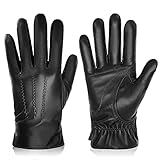
- Top Pick: Alepo Genuine Sheepskin Leather Gloves For Men, Winter Warm Touchscreen Texting Cashmere Lined Driving Motorcycle Gloves (Black-L)
- Best Value: OZERO Winter Mens Gloves Genuine Nappa Leather Warm Wool Lining Touchscreen | Soft Driving,Phone Texting,Dress,Casual Walks Lined Glove in Cold Weather-Thermal Gifts for Men Husband Dad
- Premium Choice: BISON DENIM Winter Sheepskin Leather Gloves for Men Warm Driving Gloves | Touchscreen Texting, Cashmere Lined, Keep Warm, Stretch Fit, Genuine Leather
For most men, an unlined or lightly lined goatskin or deerskin glove with a wool or fleece liner covers everyday winter commuting, while heavier insulated gloves with a waterproof insert suit long stretches outdoors in snow and wind. The right pair depends less on brand and more on four choices: the type of leather, the lining, the fit, and whether you need to use a touchscreen. Gamers who walk to a LAN event, cycle to a store or simply want warm hands at a cold desk face the same questions, so this guide sticks to what the makers of these gloves generally state and how to match it to your own winter.
- At a glance: glove types and who they suit
- Leather types and what they mean for winter
- Linings: where the warmth actually comes from
- Waterproof or water resistant: read the wording
- Fit and sizing
- Touchscreen and gaming use
- Pick-by-need decision table
- Budget tiers without the price tags
- Care: keeping leather soft
- Common mistakes
- Alternatives to leather
- Frequently Asked Questions
As an Amazon Associate we earn from qualifying purchases at no extra cost to you.



At a glance: glove types and who they suit
| Glove type | Typical leather and lining | Best for | Limits |
|---|---|---|---|
| Dress glove, lightly lined | Lambskin or goatskin, silk, cashmere or thin fleece | Commuting, office, cool dry days | Not built for deep cold or wet snow |
| Classic wool or cashmere lined | Lambskin or goatskin, knit wool or cashmere liner | City winters, long walks | Liner can bunch if the glove is too tight |
| Insulated everyday glove | Cowhide, goatskin or deerskin with synthetic insulation such as Thinsulate | Cold mornings, driving, shovelling light snow | Bulkier, less feel for fine tasks |
| Waterproof insert glove | Leather shell with a membrane insert such as Gore-Tex | Wet snow, slush, ski days | Stiffer, takes longer to break in, can feel warm indoors |
| Work-style leather glove | Thick cowhide with fleece or insulated lining | Yard work, tools, scraping ice | Plain style, thicker palm reduces dexterity |
Leather types and what they mean for winter
Lambskin is soft and thin, which gives the best dexterity and a refined look, but it is the least durable and offers little warmth without a good liner. Goatskin is a popular middle path: makers describe it as supple yet tough, and it tends to hold its shape after repeated wetting and drying better than lambskin. Deerskin is known for softness and for staying flexible after getting damp, which is why several outdoor brands use it. Cowhide is the heaviest and most abrasion resistant, a common choice for work gloves and rugged styles, though it can feel stiff until it breaks in. Pigskin is sometimes used for budget gloves and handles moisture reasonably, but quality varies widely.
Brand names that regularly appear in leather glove roundups from outdoor and menswear outlets include Hestra, Dents, Fownes, Carhartt, Isotoner, Ugg, Timberland and Auclair. The lineups change by season, so treat the categories above as the stable part and read the maker’s own product page for the current liner and shell details of any specific pair.
Linings: where the warmth actually comes from
Leather by itself blocks wind but does not insulate much. Warmth comes from the lining, so compare these options:
- Cashmere or wool knit: soft, breathable and slim, good for city winters with temperatures around freezing. Comfortable indoors too.
- Fleece: inexpensive and warm for its weight, but can pill and holds less shape than wool.
- Thinsulate or similar synthetic insulation: the maker lists it as thin insulation that keeps warmth even when slightly damp. It adds bulk, so fit matters.
- Primaloft or removable liners: found on higher-end outdoor gloves; a removable liner lets you dry it separately and adjust to the weather.
- Silk liners: very thin, mostly used as an add-on layer inside any glove.
If a listing only says “warm lining” without naming a material, read other buyers’ descriptions cautiously and prefer products from makers that name the insulation.
Waterproof or water resistant: read the wording
Untreated leather soaks up water, stiffens as it dries and can crack. Gloves with a membrane insert, such as Gore-Tex, are described by makers as waterproof and breathable, but the insert sits between shell and lining, which makes the glove thicker. Gloves that only mention “water resistant” or a treated leather finish handle light snow and drizzle, not hours in slush. For a commuter who mostly walks between a car and a building, a treated leather shell is usually enough; for wet snow, choose a membrane.
Fit and sizing
Measure around your dominant hand across the knuckles, excluding the thumb, and compare that to the maker’s size chart; sizing differs between European and US brands. Leather stretches a little with wear, so choose a snug but not tight fit, especially for lined gloves where a tight shell compresses the insulation and loses warmth. Check finger length: if your fingertips push against the end, trapped air is reduced and cold gets through. Gloves with a wrist strap, snap or elastic cuff keep drafts out; longer cuffs tuck under a coat sleeve.
Touchscreen and gaming use
Some leather gloves add conductive thread or patches on the thumb and index finger so a phone responds through the material. Makers that offer this feature describe it on the product page. Expect it to work for taps and swipes but not for precise mobile gaming, so keep a thin touch-compatible liner if you play on the go. Thick insulated gloves are generally too bulky for controllers; take them off or choose a dress-style glove if you need dexterity.
Pick-by-need decision table
| Pick this if … | Choose | Watch out for |
|---|---|---|
| You commute in a city and want a neat look | Lined goatskin or lambskin with wool or cashmere | Not for heavy snow |
| Your winter is long and wet | Leather with a membrane insert and synthetic insulation | Break-in period and bulk |
| You drive or work outdoors | Cowhide work-style glove with insulated lining | Reduced finger feel |
| You want one glove that stays flexible when damp | Deerskin with removable liner | Often a premium purchase |
| You tap your phone often | Gloves stated as touchscreen compatible | Precision gaming still needs bare fingers |
| You are on a tight budget | Fleece-lined cowhide or pigskin from a known maker | Shorter lifespan, variable stitching |
Budget tiers without the price tags
At the budget tier you will see mostly cowhide or pigskin with fleece lining, from mainstream brands such as Isotoner or Carhartt. These are fine for mild winters, and the weak points tend to be seams and thin leather at the fingertips. Mid-range gloves from Fownes, Dents or similar makers usually move to goatskin or lambskin with cashmere or wool linings and better stitching. The premium tier, where Hestra and comparable outdoor makers sit, adds careful pattern cutting, removable liners, membrane inserts and more durable goat or deer leather; the benefit is fit and longevity rather than only warmth.
Care: keeping leather soft
- Let wet gloves dry at room temperature, away from radiators or hair dryers; heat can shrink and crack leather.
- Stuff the fingers with paper if soaked to keep their shape.
- Apply a leather conditioner or protector sparingly once or twice a season, following the maker’s instructions.
- Do not machine wash unless the label says so.
- Store them flat in a cool spot in the off season.
Common mistakes
- Buying a size too small because leather will “stretch”; lined gloves stretch less than people expect.
- Choosing lambskin for heavy daily use and then being disappointed by wear.
- Assuming leather means waterproof.
- Ignoring the cuff, which is where cold air gets in.
- Skipping a liner glove in extreme cold when a thin silk layer would add warmth with little bulk.
Alternatives to leather
If leather does not suit your climate or preferences, consider synthetic-shell insulated gloves such as those from The North Face or Outdoor Research, which dry faster and handle constant wetness better. Mittens with a liner are warmer than gloves of similar thickness because fingers share heat. For mild days, a pair of merino wool liners with a pair of thin leather overgloves gives you adjustable layers.
Frequently Asked Questions
Which leather is warmest for men’s winter gloves?
The leather itself adds little warmth, so the lining decides. Cowhide and deerskin are thicker and block more wind, but a wool, cashmere or synthetic insulated lining gives the real heat. Compare linings rather than hides when picking for cold weather.
Are leather gloves good in snow?
Treated leather handles light snow, but wet snow and slush soak through untreated shells. Look for a membrane insert or a maker’s waterproof claim, and dry the gloves slowly after use.
How should leather gloves fit?
Snug across the palm with a little room at the fingertips, and the thumb should not pull when you close your hand. Use the maker’s size chart because European and US sizing differ.
Can I use my phone with leather gloves?
Only if the glove has conductive fingertips, which the maker will state. Even then expect basic taps, not fast gaming input.
How do I clean and restore stiff leather gloves?
Wipe off dirt with a damp cloth, dry at room temperature, then use a leather conditioner according to the label. Avoid heat sources and machine washing unless the care label allows it.
Is it better to buy lined or unlined gloves?
Lined gloves are better for most winters. Unlined gloves suit cool autumn days or serve as a base layer under a heavier shell.





Write Your Review
No reviews yet. Be the first to share your experience!