
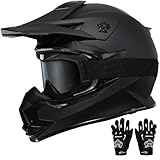
- Top Pick: CARTMAN Matte Black Adult Full Helmet Large, DOT Approved ATV Dirt Bike | Matte black full-face. Adult/Teen. DOT ABS, vented, weatherproof, adjustable. Goggles/gloves. Street, dirt, snow.
- Best Value: TRIANGLE Adult Dirt Bike Helmet Full Face Motocross Helmets DOT Certified | Motorcycle Helmets with Adjustable Goggles & Gloves for Men & Women – DOT/FMVSS-218 Certified for Off-Road ATV BMX UTV
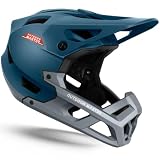
- Premium Choice: OutdoorMaster Full Face Mountain Bike Helmet for Men & Women-Two Removable Chin Pad Mountain Bike Helmet Grizzly, Ventilation Lightweight Racing Downhill DH BMX MTB Helmet (Azure Blue, Large)
For bike park and downhill riding, a dedicated full-face helmet such as the Troy Lee Designs D4 Carbon, Fox Rampage Pro Carbon, or Bell Full-9 gives the most coverage, while convertible helmets like the Giro Switchblade and Bell Super Air R suit riders who pedal uphill and want a removable chin bar. The best choice depends on whether you shuttle, pedal, or race, and on a correct fit.
As an Amazon Associate we earn from qualifying purchases at no extra cost to you.


Full-Face Bike Helmets at a Glance
| Helmet | Best for | Key traits the maker lists | Limits |
|---|---|---|---|
| Troy Lee Designs D4 Carbon | Downhill and bike park racing | Carbon shell, MIPS-equipped versions, downhill certification | Premium tier; warm for long climbs |
| Fox Rampage Pro Carbon | Aggressive enduro and downhill | Carbon shell, rotational-impact protection option, DH-rated | Premium tier |
| Bell Full-9 / Full-9 Fusion | Trail riders wanting a lighter full-face | Lighter build, removable chin bar on some versions | Check which version carries which certification |
| Giro Switchblade MIPS | Pedal-friendly convertible | Removable chin bar, MIPS, ventilation focus | Convertible chin bar designs may differ in certification from fixed DH helmets |
| Bell Super Air R | Enduro riders who climb | Detachable chin bar, MIPS, ventilation | Premium to mid tier |
| POC Coron Air MIPS | Safety-minded riders who like a distinctive design | MIPS-style protection, ventilation | Premium tier |
| Smith Mainline / Specialized Gambit | All-around riders | Full-face coverage with various fit systems | Fit depends on head shape |
How to Choose a Full-Face Helmet
Certifications
Helmets are tested against different standards. Fixed full-face downhill helmets usually advertise ASTM F1952, a downhill standard. Convertible and lighter helmets usually list the standards that apply to their configuration, and some detachable chin bars are not certified when attached. Read the maker’s page and the label inside the helmet to see which standards apply to which configuration.
Rotational impact systems
MIPS and similar systems are designed to reduce rotational forces during some impacts. Makers describe them as an added layer of protection. Independent organisations are studying their effectiveness, so treat them as one feature among others and not a guarantee.
Fit and sizing
Fit is the most important criterion. Measure your head circumference above the eyebrows and compare it with the maker’s size chart. The helmet should sit level, feel snug without pressure points, and not shift when you shake your head. Cheek pads are often replaceable in different thicknesses on better helmets. Head shapes vary, with some brands fitting rounder heads and others fitting more oval heads.
Ventilation and weight
Fixed carbon full-face helmets give maximum protection and lower weight but can be hot while climbing. Convertible helmets give airflow with the chin bar off. If you ride lift-served terrain and shuttle runs, heat is less of an issue.
Goggle and visor compatibility
Check that your goggles fit the eyeport and strap area. Adjustable visors help with sun and roost. Some helmets include a goggle strap gripper.
Neck braces and Fidlock features
Some riders use neck braces. Check the maker’s compatibility notes. Many helmets offer magnetic or quick-release chin straps for convenience; confirm they are secure and easy for you to operate with gloves on.
Helmet Notes
Troy Lee Designs D4 Carbon
Often cited in reviews as a benchmark for downhill racing. It is a fixed full-face design with a carbon shell. It suits riders who spend most of their time on descents.
Fox Rampage Pro Carbon
Another carbon downhill-oriented model. Reviewers highlight its fit and coverage. It is generally a premium-tier choice, and like all premium helmets, fit comes first.
Bell Full-9 Fusion and Super Air R
Bell’s detachable-chin-bar designs are popular among enduro riders who need protection on descents but airflow on climbs. Check the maker’s guidance on use with the chin bar attached or removed.
Giro Switchblade MIPS
A well-known convertible helmet with a removable chin bar. It suits riders who like lift-served and pedal-friendly days. Look at the maker’s certification notes for each configuration.
POC, Smith and Specialized options
These offer alternative shapes and fit systems. If mainstream models do not fit your head, trying one of these brands may help.
Pick X If… Decision Table
| Pick | If you… |
|---|---|
| Troy Lee D4 Carbon | race or ride lift-served terrain and want a purpose-built downhill helmet |
| Fox Rampage Pro Carbon | want a premium downhill shell with a different fit |
| Bell Super Air R | pedal uphill and want the chin bar off |
| Giro Switchblade | want a convertible helmet for mixed riding |
| Bell Full-9 Fusion | want a lighter full-face for trail riding |
| POC Coron Air | have a head shape that suits POC’s fit or want an alternative style |
Budget Tiers
Budget tier: lighter full-face designs from value brands and older-generation models. Mid-range: Bell and Giro convertibles. Premium: Troy Lee Designs, Fox, POC and carbon-shell models. Higher tiers typically add lighter carbon shells, advanced fit systems and extra ventilation, but any certified helmet that fits well is better than an expensive one that does not.
Care and Replacement
- Replace a helmet after a significant crash even if it looks fine, since foam may be compressed.
- Follow the maker’s replacement guidance on age, commonly several years.
- Clean with mild soap and avoid solvents, which can damage foam and shell.
- Do not alter the shell with stickers or paint without checking the maker’s guidance.
Common Mistakes
- Buying on looks without checking fit.
- Assuming every convertible helmet is certified with the chin bar removed.
- Ignoring goggle compatibility.
- Wearing a hand-me-down helmet with unknown crash history.
- Over-tightening or under-tightening the strap.
Fit Check in Five Steps
First, size the helmet using the maker’s chart. Second, set the retention dial or pads so the helmet is snug without a headache. Third, buckle the chin strap so you can fit about one finger between strap and chin. Fourth, shake your head and nod; the helmet should not slide over your eyes or lift at the back. Fifth, put your goggles on and confirm the strap sits comfortably over the shell without pushing the helmet around. Wear the helmet for about ten minutes at home to find pressure points before committing, and keep the original packaging so that you can return it if the shape is wrong. Riders with glasses should also check clearance. Pair the helmet with knee pads, gloves and body armour appropriate for your terrain, since a helmet protects only the head.
Frequently Asked Questions
What is the safest type of full-face bike helmet?
A properly fitted helmet that meets the relevant certification for your discipline is the safest choice. Fixed downhill-certified full-face helmets provide the most coverage, while convertibles trade some of that for versatility.
Are convertible helmets as safe as fixed full-face helmets?
It depends on the model and the configuration. Read the maker’s certification notes, because some detachable chin bars are not rated in all modes.
Do I need MIPS?
MIPS is designed to reduce some rotational forces and many riders choose it. It is not a replacement for good fit and a certified shell.
How do I know what size to buy?
Measure your head above the eyebrows and compare with the maker’s chart. Try the helmet on and check for pressure points and shifting.
When should I replace a helmet?
After any significant impact, or when the maker’s guidance says it is due, whichever comes first. If in doubt, contact the maker.
Can I use a full-face helmet for pedalling?
Many riders do, especially with ventilated convertible designs. Fixed downhill helmets can be hot on long climbs.







Write Your Review
No reviews yet. Be the first to share your experience!