
- Top Pick: marctronic Floor Lamp, 18W 1800LM Super Bright LED Floor Lamp with Remote & Works with Smart Plug, Dimmable Timing Eye Caring Reading Lamps Floor Standing for Living Room Bedroom Office
- Best Value: PACOVY Floor Lamp, Adjustable Height Floor Lamps for Living Room Bedroom, 120 LED Super Bright Standing Lamp Remote & Touch Control Dimmable Gooseneck Tall Stand Reading Lamp for Office Craft, Black
- Premium Choice: SUNMORY Floor Lamps for Living Room,LED Standing Lamp with Remote Control | 32W/3000LM Super Bright, 69" Tall Floor Lamp with Stepless Dimmable, Modern Torchiere Corner Lamp for Bedroom, Office
The best LED floor lamp for most rooms is a dimmable model with an adjustable color temperature between roughly 2700K and 5000K and a stated output of at least a thousand lumens; a tall torchiere-style or arc lamp suits living rooms, a slim reading lamp with a flexible neck suits a gaming chair or desk corner, and a smart RGB corner lamp suits a gaming setup. Fixtures from Govee, Philips Hue, Nanoleaf, Brightech, Lepro and IKEA cover these needs at different budget tiers, so the decision comes down to how you will use the light.
As an Amazon Associate we earn from qualifying purchases at no extra cost to you.


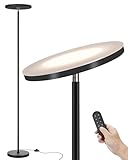
At a glance
| Lamp style | Example makers and lines | Best for | Limits |
|---|---|---|---|
| Smart RGB corner lamp | Govee Floor Lamp series, Philips Hue Signe, Nanoleaf | Gaming rooms, ambient bias lighting, app and voice control | Color output is for mood, not for reading; needs Wi-Fi or Bluetooth |
| Torchiere uplight | Brightech, Lepro, many generic makers | Filling a room with soft indirect light | Less useful for focused task light |
| Arc or tree lamp | IKEA, Brightech, other makers | Reading chairs and sofas where the light has to reach over you | Heavier base, larger footprint |
| Adjustable task floor lamp | BenQ, Anglepoise, Brightech, Lepro | Desks, craft areas, gaming and study corners | Narrower light spread |
| Dimmable smart bulb in a standard lamp | Philips Hue, Wiz, IKEA smart bulbs | Upgrading an existing lamp cheaply | Depends on the lamp shade and socket rating |
Specific model numbers and ratings change, so treat the lines above as families and read the maker’s product page for current output, dimension and certification details.
How to choose an LED floor lamp
Brightness in lumens
Watts mean little on LED lamps, so look for lumens. Makers list the output of a lamp or its bulb, and a living room fixture that is meant to be a main light typically needs more output than an accent lamp. For reading, lighting designers often cite a few hundred lumens aimed at the page as enough, but a lamp with a dimmer lets you decide. Choosing a lamp that is a little brighter than you expect is safer than choosing a dim one, because you can always turn it down.
Color temperature
Warm white at 2700K to 3000K feels cozy and suits evenings. Neutral to cool white at 4000K to 5000K is crisper and works better for reading, crafts and daytime tasks. A lamp with adjustable color temperature spares you from choosing one setting for every situation. If you game or watch films, a warm setting avoids the harsh look of a cold bulb at night.
Color rendering
The color rendering index, or CRI, describes how natural colors look under the light. A listed CRI of 90 or more is preferred when you paint, draw or care about skin tones and screen colors. Many budget lamps do not publish a CRI, which tells you something about where the money went.
Dimming and controls
A basic touch or rotary dimmer is enough for most households. Smart lamps add app control, scenes, schedules and voice assistants, and brands such as Philips Hue and Govee support common platforms. Check that the lamp supports the platform you already use, such as Alexa, Google Home, Apple Home or Matter, before buying.
Flicker
Low-quality LED drivers can flicker at a rate that some people notice as eye strain or headaches. Reviewers who use flicker meters sometimes publish results, and a lamp from a known maker with a stated flicker-free design is usually safer. If you feel discomfort near a lamp, stop using it and speak with a doctor if symptoms continue.
Size, base and stability
Measure the height and the base footprint. Torchieres are tall, arc lamps need floor space for the base and a clear zone for the arm, and corner lamps need a plug within reach. A heavy base or a wide round base resists tipping, which is relevant in homes with children or pets.
Electrical safety
Look for a recognized safety certification mark such as UL, ETL or an equivalent for your region, and use only the bulb type and wattage the lamp is rated for. Do not cover the lamp with fabric, and do not run damaged cords. If the plug, switch or cord gets hot or sparks, unplug it and ask a qualified electrician.
Picks by buyer
For a gaming room: Govee and Philips Hue
Govee sells RGB corner and floor lamps that the maker describes as app-controlled, with scene and music modes. Philips Hue offers its own lamps and a larger ecosystem, with a hub that supports many accessories. Reviewers generally describe Hue as more polished and more expensive and Govee as the lower-cost option with plenty of features. Both are best used as ambient light behind a monitor, not as the only light in the room, because a dim, colorful room with a bright screen can strain eyes.
For a living room: torchiere and arc lamps
Brightech and Lepro sell dimmable LED torchieres and arc lamps across the budget and mid-range tiers, and IKEA’s lamp lines add a simple, clean look. A torchiere throws light upward and spreads it over a ceiling, which softens glare. An arc lamp is better where you want the light over a chair without a wall-mounted fixture.
For reading and desk corners: task lamps
Slim floor lamps with an adjustable neck and a focused head are the better choice for a chair or a gaming desk. Makers such as BenQ, with its focus on eye-comfort lighting, and Anglepoise at a premium tier, are often named by reviewers for build quality. Many lower-cost lamps copy the shape; the difference is usually in light quality and long-term durability.
For renters and tight budgets: smart bulbs in a basic lamp
A plain floor lamp that takes a standard socket becomes a smart lamp when you add a bulb from Philips Hue, Wiz or IKEA. This gives you color or tunable white at a smaller outlay. Check the socket’s maximum wattage and whether the shade is enclosed, since some bulbs state that they are not for fully enclosed fixtures.
Decision table
| Pick this if you want | Choose | Watch for |
|---|---|---|
| Ambient glow for a gaming setup | RGB corner lamp from Govee or Philips Hue | Ecosystem compatibility, app reliability |
| Main light for a living room | Dimmable torchiere or arc lamp | Stated lumens, dimmer range |
| Reading light for a chair | Arc lamp or adjustable task lamp | Neck stability, head size, warm to neutral white |
| Accurate colors for art or crafts | Lamp with stated CRI 90 or higher | Many budget lamps omit CRI |
| Lowest cost upgrade | Smart bulb in an existing lamp | Socket rating, enclosed shade warnings |
| Quiet, simple design | IKEA or similar plain LED floor lamp | Fewer features, limited warranty detail |
Common mistakes
- Buying on color options alone and ending up with a lamp that is too dim for reading.
- Choosing a cool, high-kelvin setting for evening use and finding it harsh.
- Ignoring flicker and CRI because makers rarely highlight them.
- Skipping the smart-home compatibility check and finding the lamp cannot join your system.
- Placing a tall torchiere where it can tip or where a cord crosses a walkway.
- Using a bulb whose wattage or type does not match the lamp’s rating.
Alternatives
- Monitor light bars and bias lights: for a desk, a bar or strip behind the screen can reduce contrast without taking floor space.
- LED strip lighting: cheap and flexible for edges, shelves and behind furniture, but not a replacement for a true room or reading light.
- Wall sconces and plug-in lamps: useful in a small room where a floor base does not fit.
Frequently Asked Questions
How many lumens does a floor lamp need?
It depends on the job. An accent lamp can work with a few hundred lumens, while a lamp meant to be a room’s main light needs noticeably more, and makers list the figure on the product page. A dimmer lets a brighter lamp serve both purposes.
What color temperature is best for gaming or evenings?
Warm white in the 2700K to 3000K range is easier on the eyes at night and feels relaxed. Many people also use a soft colored backlight behind the monitor. Save cooler white for daytime reading or study.
Do LED floor lamps use much electricity?
LED lamps draw far less power than older incandescent floor lamps for similar brightness. The maker lists the wattage on the product page, and most home LED fixtures are modest users. Smart models also draw a small amount in standby.
Are RGB floor lamps good for reading?
Usually not as the main source. They are designed for mood and ambient effects, and their white light may be weaker or lower in color quality than a dedicated reading lamp. Check whether the lamp has a proper tunable white mode.
Can I use a smart bulb in any floor lamp?
Often yes, but match the base type and stay within the lamp’s wattage rating. Some bulbs say they should not be used in fully enclosed shades because heat can shorten their life. Follow the lamp and bulb instructions.
Why does my LED lamp flicker or buzz?
A common cause is an incompatible dimmer or a low-quality driver. Try a different outlet or a different bulb, and if the problem continues, stop using it and contact the maker. If you notice heat, a burning smell or sparks, unplug it and ask an electrician.







Write Your Review
No reviews yet. Be the first to share your experience!