
- Top Pick: KitchenAid Variable Speed Corded Hand Blender, KHBV53, Matte Black | Removable 8" Blending Arm, Blending Jar with Lid, BPA-Free Material, Blends Smoothies, Shakes, Soups
- Best Value: Turelar Immersion Blender Handheld Corded, 1100W 5 in 1 Hand Blender Set | Trigger Variable Speed, Emulsion Stick Mixer with Food Processor, Whisk, Frother, for Soup, Puree, Baby Food, Anti-scratch
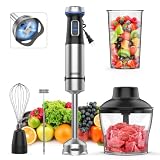
- Premium Choice: Ganiza Immersion Blender 5 in 1 Hand Blender Max 1000W Heavy Duty Motor | 16 Speed Mode Handheld Blender, Stainless Steel Blade With 800ml Mixing Beaker, 600ml Chopper, Whisk and Milk Frother
The best immersion blender for most kitchens is a corded model with a stainless steel shaft, variable speed and a bell-shaped blending foot, such as the Breville Control Grip, while cordless models like KitchenAid’s battery line suit people who value freedom from an outlet over sustained power. The right choice depends on what you blend, how often, and in which pot or jug.
Specifications below are limited to what makers publish. For example, Breville’s product page lists a stainless steel blending shaft, an 8-inch immersion depth, and a kit that includes a 42 oz jug, a 25 oz chopping bowl and a whisk, and describes an anti-suction bell-shaped base with internal ribbing. Wattage and speed counts differ across brands and models, so read each spec sheet.
As an Amazon Associate we earn from qualifying purchases at no extra cost to you.



At a Glance
| Option | Best for | Maker-stated points | Limit |
|---|---|---|---|
| Breville Control Grip | Soups, sauces and smoothies with a full kit | Stainless shaft, 8-inch immersion depth, jug, chopping bowl and whisk included, anti-suction base | Larger footprint with accessories |
| Braun MultiQuick line | Everyday corded blending, wide model range | Several models and attachment sets across tiers | Tiers differ, so match model to attachments |
| KitchenAid cordless immersion blender | Blending without a cord, light jobs | Battery powered, detachable blending arm on some kits | Runtime limits on big batches |
| Cuisinart Smart Stick class | Mid-range corded all-rounder | Variable speed on many models | Attachments vary by version |
| All-Clad and other premium corded blenders | Buyers wanting heavier builds | Metal bodies and speed controls on some models | Heavier in the hand |
What to Look For
Shaft material
Stainless steel shafts resist staining from tomato-based sauces and handle heat well. Plastic shafts can discolor and are generally not designed for use in a hot pan, so read the manual before blending near the stove.
Power and speed control
More watts usually means less strain on thick mixtures, but blade design and the shape of the foot matter as much. Variable speed, either a dial or a pressure-sensitive trigger, lets you start slowly to cut splatter. Makers list motor power in watts; use it to compare within a brand more than across brands.
Blending foot design
A bell-shaped foot with ribbing, as Breville describes, is intended to reduce suction against the pot floor. Some makers use a guard that protects non-stick cookware, which is helpful if you blend soup in coated pans.
Immersion depth and length
A longer shaft reaches the bottom of tall stockpots. An 8-inch depth, as Breville lists, covers most home pots, but stockpots for large batches may need longer reach.
Attachments
Whisks, chopper bowls and measuring jugs are worth having if you plan to whip cream, chop herbs or make mayonnaise. If you only purée soup, a simple stick may be enough.
Corded versus cordless
Corded blenders run as long as you need. Cordless blenders offer mobility, but battery runtime limits large jobs, and you must keep the battery charged. Check the maker’s stated runtime.
Pick X If You Want Y
| Pick this | If you want | Trade-off |
|---|---|---|
| Breville Control Grip | A full kit with jug, chopper and whisk | More parts to store |
| Braun MultiQuick | A well-known corded line with options across tiers | Read the exact model’s attachments |
| KitchenAid cordless | No cord and a quick grab-and-go tool | Battery limits and charging |
| Cuisinart Smart Stick | A mid-range corded choice | Fewer premium touches |
| Premium metal-body blender | A solid, durable feel | Weight and a higher budget tier |
Budget Tiers
- Budget: basic corded sticks with one or two speeds. Fine for occasional soup and smoothies.
- Mid-range: stainless shafts, variable speed and a small set of attachments. Best value for most households.
- Premium: heavier builds, extra accessories and finer speed control.
Safety and Care Notes
- Unplug or remove the battery before changing blades or attachments.
- Keep the blade submerged before switching on, to limit splatter.
- Let very hot liquids cool slightly, as makers often advise, and blend in a deep vessel.
- Detach the shaft and clean as the manual instructs; do not submerge the motor body.
Common Mistakes
- Choosing by wattage alone.
- Blending in a narrow, shallow container that increases splatter.
- Scratching non-stick pans with a bare blade.
- Buying a cordless model for large batch cooking.
- Paying for attachments you will not use.
Alternatives
- Countertop blenders: better for ice, large smoothies and silky purées.
- Food processors: better for chopping and doughs.
- Hand mixers: a better tool for whipping and baking.
Matching a Blender to the Job
| Task | What helps | Notes |
|---|---|---|
| Puréeing soup in the pot | Stainless shaft, deep immersion reach, splatter-limiting foot | Move the pot off the heat first and keep the head submerged |
| Smoothies | A tall jug and a decent motor | Use soft or thawed fruit unless the maker states frozen blending is supported |
| Whipping cream or eggs | Whisk attachment | Not every kit includes one |
| Mayonnaise and emulsions | Narrow jug that fits the blade closely | Many makers include a suitable beaker |
| Chopping herbs, nuts and onions | Chopper bowl attachment | Short pulses give more even results |
| Baby food and purées | Easy-to-clean shaft | Clean immediately to avoid residue drying on |
Ergonomics and Storage
An immersion blender is held at arm’s length for minutes at a time, so weight and grip shape matter. Breville’s Control Grip name points to a trigger-style handle, which some cooks prefer to button-only controls because speed can be varied by pressure. Cordless models trade cord management for the weight of a battery. Consider where the kit will live; a blender with a jug, chopper and whisk takes more drawer or cabinet space than a bare stick, and a wall hook or a deep drawer can help. Dishwasher-safe parts, as stated by the maker, save time, but the motor body is generally never meant to be immersed.
Warranty length varies by brand and is stated on each maker’s support pages, so read it, along with the availability of replacement parts such as blending shafts or beakers, before choosing. A model with readily available spare parts tends to stay useful for longer, and that matters more over several years than a small difference in motor power.
Frequently Asked Questions
Are cordless immersion blenders strong enough?
They handle soups, sauces and small smoothies well, but battery limits make them less suitable for big batches. Check the maker’s stated runtime and charging details before deciding.
Can I use an immersion blender in a hot pot?
Many stainless-shaft models are designed for it, but follow the manual. Remove the pot from the heat first and keep the head submerged to avoid splatter.
Will an immersion blender damage non-stick pans?
It can scratch them if the blade contacts the surface. Look for a protective guard or blend in a separate jug.
How many watts do I need?
There is no universal number. Higher wattage helps with thicker mixtures, but blade design and speed control also matter, so compare within the same brand.
Can an immersion blender crush ice?
Only if the maker says so. Many are not designed for ice, and doing so could damage the blade or motor.
How do I clean one?
Detach the blending shaft, rinse it soon after use and wash as the manual directs. Keep the motor body out of water.


Write Your Review
No reviews yet. Be the first to share your experience!