
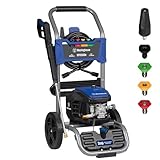
- Top Pick: Westinghouse WPX3000e Electric Pressure Washer, 3000 Max PSI and 1.76 Max GPM, Induction Motor, Onboard Soap Tank, Spray Gun and Wand, 5 Nozzle Set, for Cars/Fences/Driveways/Homes/Patios/Furniture
- Best Value: Greenworks Brushless Electric Pressure Washer, 3000 PSI Max, 2.0 GPM Max | Includes 15°, 25° and 40° tips, soap and turbo nozzles, 25-F kink-resistant hose, 35-FT power cord with GFCI, detergent tank
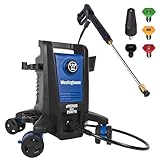
- Premium Choice: Westinghouse ePX3500 Electric Pressure Washer, 2500 Max PSI 1.76 Max GPM with Anti-Tipping Technology, Onboard Soap Tank, Pro-Style Steel Wand, 5-Nozzle Set, for Cars/Fences/Driveways/Home/Patios
The strongest electric pressure washers sold to home users generally sit in the 2000 to 3000 PSI range at around 1.2 to 2.0 gallons per minute, and the best one for you is the model whose cleaning units (PSI times flow) match your toughest regular job rather than the biggest headline pressure. Heavy-duty corded induction models suit driveways and decks, while compact 1500 to 1900 PSI units cover cars, patio furniture and siding.
As an Amazon Associate we earn from qualifying purchases at no extra cost to you.


At a Glance
| Class | Example makers and lines | Maker-stated range | Best for | Limit |
|---|---|---|---|---|
| Premium induction motor | Kärcher K5 and K7 series, Sun Joe SPX series, Greenworks Pro lines | Roughly 2000 to 3000 PSI, around 1.4 to 2.0 GPM | Driveways, decks, fences, oxidised siding | Heavy, needs a dedicated hose and a good outlet |
| Mid-range universal motor | Ryobi, Sun Joe, Greenworks mid lines | Roughly 1700 to 2100 PSI, around 1.2 to 1.5 GPM | Cars, patios, grills, general home use | Slower on stubborn stains, louder |
| Compact budget | Entry lines from Sun Joe, Karcher K2/K3 class, Ryobi | Roughly 1300 to 1800 PSI, around 1.1 to 1.3 GPM | Bikes, furniture, light cleaning | Too slow for large concrete areas |
| Cordless battery | Ryobi, Greenworks, DeWalt battery units | Lower maker-stated output | Quick spot cleaning, no cord | Run time, not high power |
Check the exact numbers on a specific listing because makers revise series each year and the same name can hide several variants.
What Counts as High Power for an Electric Washer
Electric units are limited by what a household outlet can deliver. Standard 120 volt circuits in North America generally cap out around 15 amps for the plug, which keeps most corded machines below about 2300 to 3000 PSI as stated by makers. Gas models go higher, but electric models are quieter, need less maintenance and avoid exhaust, which is why they dominate home use.
Pressure alone is a half-truth. Flow in gallons per minute decides how fast dirt is carried away. Cleaning units, the product of PSI and GPM, are a quick way to compare models. A machine with 2000 PSI at 1.8 GPM can outwork one at 2300 PSI and 1.2 GPM on large flat areas, because it moves more water over the surface.
Motor Type Matters
Induction motors
Induction motors run cooler, quieter and tend to last longer, according to maker descriptions and reviewers such as Consumer Reports and Pro Tool Reviews. They are heavier and cost more, so they suit regular heavy use.
Universal motors
Universal motors keep weight and price down, which is why many lightweight home units use them. They are louder and generally built for shorter, lighter jobs.
Features Worth Looking For
- Pump type: Axial cam pumps are common at the lower end, while triplex or higher-grade pumps in premium models are stated by makers to last longer.
- Quick-connect nozzles: A set including 0, 15, 25, 40 degree tips and a soap tip covers most jobs. Some units offer a variable or turbo nozzle.
- Onboard detergent tank: Handy for car washing and siding, as long as the maker allows the detergent type you plan to use.
- Hose length and material: A longer, flexible hose of 25 feet or more cuts down on dragging the unit around.
- Cord length and ground fault protection: A built-in GFCI plug is common on corded washers. Follow the manual on extension cords and avoid using a cord that is not rated for outdoor use.
- Wheels and storage: A stable base and nozzle storage speed up the job.
- Water-source flexibility: Some models can draw from a bucket, helpful when you do not have a hose bib nearby.
Tasks Matched to Power
| Task | Reasonable maker-stated range | Notes |
|---|---|---|
| Cars, bikes, outdoor furniture | 1200 to 1800 PSI | Wide-angle nozzles protect paint and plastics |
| Vinyl siding, fences, grills | 1600 to 2000 PSI | Soap and a wide nozzle, keep distance |
| Wood decks | 1500 to 2000 PSI, wide nozzle | Too much pressure can damage wood fibres |
| Concrete driveways and patios | 2000 to 3000 PSI, higher GPM | A surface cleaner attachment speeds this up |
| Brick and stone | Moderate pressure, test an area first | Mortar can erode under high pressure |
Pick It If
| Pick this if you | Choose |
|---|---|
| Clean driveways and decks every season | Premium induction unit around 2000 to 2300 PSI at 1.6 GPM or higher |
| Mostly wash cars and furniture | Compact 1500 to 1900 PSI model with soap tank |
| Want the most power from a household outlet | Top corded unit near the 2300 to 3000 PSI stated range, with a surface cleaner |
| Live in a small home with limited storage | Lightweight universal motor model that stows on its own |
| Hate cords | Battery-powered unit, accepting lower stated output |
Budget, Mid and Premium Tiers
Budget machines cover light cleaning and car washing but struggle on moss, oil stains and large concrete areas. Mid-range models offer better hoses, nozzles and often a stronger pump. Premium units add induction motors, metal fittings, extended warranties and the highest stated flow. If you only use the washer a few times a year, mid-range is sensible. For weekly use or business-like workloads, premium electric models justify the extra spend.
Alternatives
- Gas pressure washers: Higher stated PSI and GPM, but louder, heavier and needing fuel and maintenance.
- Surface cleaner attachments: Pairing a surface cleaner with a mid-range washer often beats a more powerful unit used with a lance.
- Garden hose nozzles and foam cannons: Fine for light washing, with no motor to maintain.
Common Mistakes
- Choosing by PSI alone and ignoring GPM.
- Using a zero-degree nozzle on wood, paint or soft stone, which can cause damage.
- Running the pump dry, which can wreck it. Let water flow before pulling the trigger.
- Using an under-rated extension cord, which is a fire and shock risk. Follow the manual and use a licensed electrician for any outlet question.
- Pointing the jet at people, pets, windows or electrical fittings. High-pressure water can injure skin and break glass.
Frequently Asked Questions
How many PSI do I need to clean a driveway?
Many makers and reviewers suggest around 2000 PSI or higher with a flow near 1.5 GPM or more for concrete. A surface cleaner attachment helps even out the job and reduces streaking.
Is an electric pressure washer strong enough for deck cleaning?
Yes, most electric models are adequate. Use a wide-angle nozzle, keep a consistent distance and avoid concentrating on one spot to protect the wood.
What is the difference between PSI and GPM?
PSI measures how hard the water hits, while GPM measures how much water the unit delivers each minute. Cleaning speed depends on both numbers working together.
Can I use an extension cord?
Some manuals allow it with a specified gauge and length, and others advise against it. Follow the maker’s instructions, and if in doubt ask a qualified electrician.
Does a higher-powered unit last longer?
Not necessarily. Pump quality, motor type and care matter more. Winterising, draining water and cleaning inlet filters according to the manual extend life.
Can a pressure washer damage my car?
It can if the nozzle is too narrow or too close. Use a wide-angle tip, keep distance and avoid trim edges, seals and damaged paint.





Write Your Review
No reviews yet. Be the first to share your experience!