
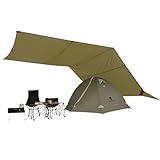
For camping in rain, a hard-framed gazelle-style canopy with sealed seams or a lightweight waterproof tarp rig from makers such as Kelty or ENO is the safer choice than a basic pop-up canopy, because rain shelter depends on fabric coating, seam construction, roof pitch and anchoring far more than on size alone.
As an Amazon Associate we earn from qualifying purchases at no extra cost to you.

Options at a Glance
| Type or model | Best for | What makers state | Limits |
|---|---|---|---|
| Eurmax USA instant canopy lines | Campsite and event shelter | Steel or aluminum frames with water-resistant polyester roofs, sizes from small to large | Seams may need sealing; wind can lift flat roofs |
| Coleman instant canopies and screen shelters | Family car camping | Quick setup and UV-protective fabric; some lines mention water-resistant roofs | Water resistance is not the same as waterproof |
| Gazelle G-series gazebos | Larger groups, sturdier shelter | Hub-style frame with a roof and sidewalls designed for quick setup | Heavy and bulky |
| Kelty Noah’s Tarp | Flexible rain shelter | Kelty lists waterproof fabric and multiple pitch options | Needs poles, guylines and setup practice |
| ENO Profly or similar rain tarps | Hammock or backpacking camps | ENO lists waterproof coating and lightweight packing | Smaller coverage |
| Quest and Ozark Trail style pop-ups | Budget shelter | Basic frame and fabric roof | Lower wind and rain tolerance |
Check the maker’s page for the version currently sold, since colours, materials and dimensions change between production runs.
Water Resistant or Waterproof?
Most pop-up canopies are sold as water resistant, meaning a coating sheds light rain. Heavier rain can soak through fabric, drip at seams and pool in sagging roofs. Waterproof designs usually rely on a polyurethane or silicone coating plus taped or sealed seams. Look for terms such as taped seams, PU coating and denier rating. A hydrostatic head figure, where the maker lists it, indicates how much water pressure fabric can withstand before leaking.
Camping outlets such as REI Co-op’s expert advice articles explain that tarps need a taut pitch with enough slope for water to run off, rather than hanging flat. The same principle applies to a canopy roof.
What to Look For
Roof shape and pitch
A peaked or slightly angled roof drains faster than a flat one. Flat canopies can sag under water weight, which can bend the frame. Remove pooled water promptly by pushing up the fabric from underneath.
Frame material
Steel frames are heavier and typically less expensive, while aluminum frames are lighter and resist rust. Look for thicker leg profiles when you expect wind alongside rain.
Seams and coatings
Sealed or taped seams reduce drips. If a seam leaks, a seam sealer recommended by the maker can help. Do not use solvents on coatings without checking the manual.
Sidewalls
Wind-driven rain enters from the side. Removable sidewalls or a gazebo with walls offer meaningful extra protection, though they raise wind load.
Anchoring
Stakes, guylines and weight bags matter more than most buyers expect. A canopy in wind acts like a sail and can become a hazard. Follow the manufacturer’s guidance and take it down if gusts increase.
Size and packed weight
Measure the area you need. A 10 by 10 foot canopy covers a small table and a few chairs. Packed length and weight matter for car boot space and carrying distance.
Budget Tiers
| Tier | What to expect | What to watch |
|---|---|---|
| Budget | Basic pop-up, water-resistant fabric, light frame | Leaks in steady rain, wind vulnerability |
| Mid-range | Sturdier frame, coated fabric, optional walls | Seams may still need sealing |
| Premium | Heavy-duty frame, waterproof coated fabric, vented tops | Heavy and costly to replace |
Pick X If
| If you need… | Choose |
|---|---|
| A sturdy group shelter | Gazelle gazebo or heavy-duty Eurmax |
| Quick family setup for light showers | Coleman instant canopy |
| Flexible and packable rain cover | Kelty Noah’s Tarp |
| Hammock or backpacking cover | ENO rain tarp |
| Cheapest shade with occasional rain use | Quest or similar basic pop-up |
Alternatives
- Screen houses: Provide bug protection and some rain cover.
- Vehicle awnings: Attach to a roof rack and use the vehicle for support.
- Tent vestibules: Lightweight, built-in cover for gear.
Common Mistakes
- Buying a flat-roof canopy and expecting heavy rain protection.
- Not sealing seams before the trip.
- Using too few stakes in soft ground.
- Cooking with a flame under a canopy; fire and fuel stoves need safe ventilation and clearance, so follow stove and canopy manuals.
- Leaving a canopy up in storm wind or lightning; take shelter in a vehicle or building when storms approach.
Care Notes
Dry fabric thoroughly before packing to prevent mildew, and store it loosely in a dry place. Clean with mild soap and water instead of harsh detergents. Check poles for bends and replace damaged parts. Treat fabric with a spray recommended by the maker if water stops beading.
Setting Up for Wet Weather
Technique matters as much as gear. Pitch the canopy before the rain starts when possible, and angle one side lower so water drains away from the group rather than onto the seating area. Keep the fabric taut; wrinkles and sags collect water. If the roof is flat, loosen one leg slightly to make a slope, or place a small pole under the centre to create a peak. Do not let water accumulate, because the weight can bend the frame. Use all the stake points and guylines the maker provides and add extra on soft ground. Avoid low spots that flood, and dig no trenches without checking campsite rules. Keep electrical equipment and cooking appliances out from under the roof unless the maker’s manuals say it is safe, and keep a safe distance from flames and fuel. After the trip, hang the canopy to dry completely before packing it away, because damp fabric can develop mildew and damage the coating.
Frequently Asked Questions
Is a pop-up canopy good for camping in rain?
It can handle light rain, especially with a pitched roof and sealed seams, but sustained downpours and wind can overwhelm basic models. Anchoring and sidewalls improve performance.
What is the difference between a canopy and a tarp?
A canopy has a frame and sets up quickly. A tarp is a sheet you pitch with poles and guylines, which is lighter and more flexible but needs skill.
Can I waterproof a canopy myself?
Seam sealer and fabric spray can improve water resistance if compatible with the material. Follow the maker’s advice and test in light rain before relying on it.
How much wind can a canopy handle?
Makers often give guidance rather than a single number. Gusty weather can lift or damage a canopy, so lower or take it down when wind increases.
Where should I pitch it in the rain?
Choose ground that slopes slightly away from your sleeping and cooking area to avoid pooling. Avoid camping beneath dead branches or in dry stream beds.





Write Your Review
No reviews yet. Be the first to share your experience!