
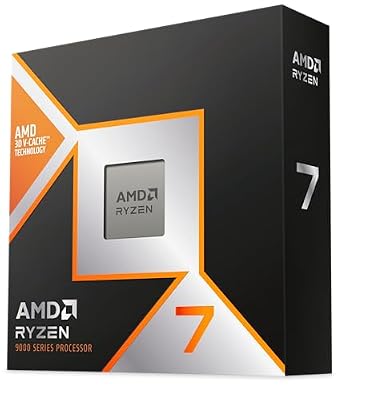
The best CPU for Helldivers 2 in 2026 is the AMD Ryzen 7 9800X3D for most players: its large 3D V-Cache and strong gaming performance make it especially effective at keeping frame times stable when a squad fills the screen with enemies, explosions, physics effects, and stratagems.
- What matters most in Helldivers 2
- CPU ranking for large enemy encounters
- 1. Ryzen 7 9800X3D: the best CPU for Helldivers 2
- 2. Ryzen 9 9950X3D: best for gaming plus serious workloads
- 3. Ryzen 7 7800X3D: the value choice at the right price
- Intel alternatives: capable, but check the whole system cost
- Decision matrix: which CPU should you buy?
- Platform and power costs you should calculate
- Cooling and BIOS setup for smoother frame times
- Final recommendation
If you also render, compile, stream heavily, or run other demanding applications, the Ryzen 9 9950X3D is the stronger all-rounder. Players upgrading an existing AM5 system should first consider the 9800X3D, while budget buyers can still make a sensible choice with the Ryzen 7 7800X3D or a discounted Intel Core i7-14700K-class system.
As an Amazon Associate we earn from qualifying purchases at no extra cost to you.


What matters most in Helldivers 2
Helldivers 2 can become CPU-limited during large encounters, particularly when many enemies are active and the game is processing AI, animation, destruction, particles, and physics at the same time. Average FPS is useful, but it does not fully describe the experience. A CPU that produces a high average can still feel uneven if its slower frames become much slower during a bug breach or Automaton assault.
For this game, prioritize the following in order:
- Stable frame times: consistent delivery of frames matters more than a small peak-FPS advantage.
- Strong gaming performance: high per-core speed and low-latency cache help in CPU-heavy scenes.
- Cooling headroom: a CPU that constantly reaches thermal or power limits can produce less consistent performance.
- Platform value: motherboard and memory costs can outweigh a modest CPU price difference.
- Upgrade path: a current socket may let you replace the CPU later without rebuilding the entire PC.
CPU ranking for large enemy encounters
| Rank | CPU | Expected Helldivers 2 behavior | Typical power class | Recommended cooler | Platform |
|---|---|---|---|---|---|
| 1 | Ryzen 7 9800X3D | Excellent frame-time stability and top-tier gaming performance | 120 W TDP; roughly 150 W package power under demanding loads | Quality dual-tower air cooler or 240 mm liquid cooler | AM5, DDR5 |
| 2 | Ryzen 9 9950X3D | Near-top gaming performance with much stronger heavy multitasking | 170 W TDP; substantially higher sustained platform power | High-end dual-tower air cooler or 280/360 mm liquid cooler | AM5, DDR5 |
| 3 | Ryzen 7 7800X3D | Still very strong in games; usually a good used or discounted option | 120 W TDP; commonly well below flagship CPU power | Good tower air cooler | AM5, DDR5 |
| 4 | Core i7-14700K | Strong performance, but higher heat and less predictable power behavior | 125 W base power; up to 253 W maximum turbo power | Large dual-tower cooler or 280/360 mm liquid cooler | LGA1700, DDR4 or DDR5 |
| 5 | Core Ultra 7 265K | Good modern all-round performance, with gaming results varying by title and settings | 125 W base power; up to 250 W maximum turbo power | Strong tower cooler or 240 mm liquid cooler | LGA1851, DDR5 |
| 6 | Ryzen 7 9700X | Efficient and capable, but usually behind X3D chips in CPU-limited gaming | 65 W default TDP; configurable higher with motherboard settings | Midrange tower air cooler | AM5, DDR5 |
These rankings describe the expected order for CPU-limited frame-time consistency, not a guaranteed FPS result. Performance varies with resolution, graphics settings, GPU, memory configuration, background software, and Helldivers 2 patches. At 4K with a graphics-card limit, the differences can become small; at 1080p or 1440p with a fast GPU, the CPU ranking matters more.
1. Ryzen 7 9800X3D: the best CPU for Helldivers 2
The Ryzen 7 9800X3D is the easiest recommendation for a gaming-first build. It combines eight Zen 5 cores with a large stacked cache designed to reduce trips to system memory in workloads that benefit from fast access to game data. That does not eliminate CPU bottlenecks, but it can help reduce the severity of frame-time spikes when the game becomes simulation-limited.
Its eight cores are sufficient for Helldivers 2, voice chat, browser tabs, and normal background tasks. It also avoids the extreme power draw associated with high-end hybrid desktop processors. A quality air cooler is usually enough, which reduces both purchase cost and the chance of thermal noise during long missions.
Choose it when gaming is your priority and you want a new system that should remain competitive for several GPU upgrades. AM5 also provides a better forward path than buying into an end-of-life motherboard socket.
2. Ryzen 9 9950X3D: best for gaming plus serious workloads
The Ryzen 9 9950X3D is the better choice if Helldivers 2 is only one part of your workload. Its 16 cores can handle video production, software development, virtual machines, streaming, and heavy multitasking more comfortably than an eight-core processor.
For gaming alone, its advantage over the 9800X3D is usually not proportional to its higher price. It also needs a more capable cooler and a stronger power supply. Buy it when the extra cores will be used; do not choose it simply because a higher core count sounds faster in a game.
3. Ryzen 7 7800X3D: the value choice at the right price
The 7800X3D remains a strong option when its market price is meaningfully below newer X3D models. It is particularly attractive as a platform upgrade because an existing AM5 owner may only need a BIOS update and the CPU itself.
It uses less power than many high-end Intel alternatives and is easy to cool with a capable tower cooler. Its main drawback is opportunity cost: if the price gap to the 9800X3D is small, the newer CPU is the more durable purchase for a fresh build.
Intel alternatives: capable, but check the whole system cost
The Core i7-14700K can deliver strong gaming and excellent multithreaded performance, especially if you already own an LGA1700 motherboard and DDR5 memory. However, its maximum power limits can be high. Motherboard firmware settings, cooling quality, and power limits have a larger effect on sustained behavior than they do with an efficient gaming-focused X3D system.
The Core Ultra 7 265K is a newer LGA1851 option with good productivity performance and a current platform. Its gaming position varies more by game than the X3D alternatives, so it makes the most sense when you value newer platform features, application performance, or a specific motherboard configuration.
For either Intel option, configure sensible power limits rather than assuming unlimited motherboard defaults are ideal. A small reduction in peak power can lower noise and temperature while preserving most gaming performance.
Decision matrix: which CPU should you buy?
| Your situation | Best choice | Why |
|---|---|---|
| New gaming PC with a fast graphics card | Ryzen 7 9800X3D | Best balance of frame-time stability, efficiency, and upgrade path |
| Gaming plus rendering, compiling, or virtual machines | Ryzen 9 9950X3D | More cores without giving up high-end gaming performance |
| Existing AM5 motherboard | 9800X3D or 7800X3D | Potentially avoids replacing the board and memory |
| Existing LGA1700 system | Core i7-14700K, if priced well | Useful drop-in upgrade when board and cooler are already suitable |
| Lower-cost new build | Ryzen 7 9700X or discounted 7800X3D | Efficient performance without flagship cooling costs |
| Already GPU-limited at 4K | Any modern six- or eight-core CPU | Spend the saved money on the graphics card unless you plan a future GPU upgrade |
Platform and power costs you should calculate
CPU price is only one part of the build. A 9800X3D system needs an AM5 motherboard and DDR5 memory, while an existing AM5 owner may already have both. General market pricing commonly places a suitable B850 or B650-class motherboard around $150–$250 and a 32 GB DDR5-6000 kit around $90–$160, depending on timings and sales. A 9950X3D build may justify a stronger motherboard and cooling setup, pushing the platform total higher.
Here is a simple power-budget example. Suppose a graphics card draws 320 W in a demanding mission, the 9800X3D system’s CPU package averages 100 W during a heavy gaming load, and the motherboard, drives, fans, and memory use another 70 W:
320 W + 100 W + 70 W = 490 W during the assumed gaming load.
Allowing roughly 30 percent headroom for transient spikes, aging, and quieter operation gives:
490 W × 1.3 = 637 W.
That makes a quality 750 W power supply a sensible minimum for this example, while an 850 W model gives more room for a future graphics-card upgrade. The correct choice still depends on the exact GPU and its connector requirements; do not size the power supply from the CPU alone.
Cooling and BIOS setup for smoother frame times
Use a proper tower cooler rather than a small low-profile heatsink. For the 9800X3D or 7800X3D, a good dual-tower air cooler is normally sufficient. Keep the case airflow balanced, with front or bottom intake and rear or top exhaust.
After assembling the system:
- Update the motherboard BIOS before judging performance, especially on an older AM5 board.
- Enable the memory profile, such as EXPO on AMD systems, so DDR5 runs at its rated speed.
- Use a current chipset driver and graphics driver.
- Monitor CPU temperature, clocks, GPU utilization, and frame-time graphs during a large mission rather than relying only on the FPS counter.
- If temperatures or noise are excessive, use a modest curve optimizer or power-limit adjustment and retest stability.
If the GPU is near full utilization most of the time, a faster CPU will not transform performance. If GPU utilization repeatedly falls while frame times worsen during enemy surges, the CPU is more likely to be the limiting component.
Final recommendation
Buy the Ryzen 7 9800X3D for the best combination of Helldivers 2 frame-time stability, manageable cooling, reasonable power use, and AM5 upgrade potential. Choose the Ryzen 9 9950X3D when demanding productivity workloads justify its extra cores. Pick the Ryzen 7 7800X3D when it is substantially cheaper or when you already own an AM5 system. Intel’s Core i7-14700K and Core Ultra 7 265K remain viable alternatives, but they deserve a closer look at motherboard, cooler, and power costs rather than being judged by CPU price alone.





Write Your Review
No reviews yet. Be the first to share your experience!