
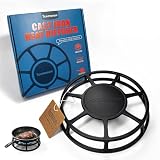
- Top Pick: 9.5 Inch Cast Iron Heat Diffuser for Gas Stove, Flame Tamer Simmer Ring
- Best Value: Cast Iron Heat Diffuser for Gas Stove,Simmer Plate for Kitchen Slow Cooking
- Premium Choice: 9.45 Inch Heavy Duty Cast Iron Heat Diffuser for Gas Stove, Raised Simmer Plate and Flame Tamer, Even Heat Diffuser Plate for Temperature Control, Low and Slow Cooking
Best Flame Tamers for Gas Stoves: The Short Answer
The best flame tamer for gas stoves is a flat, uncoated cast-iron diffuser sized to cover the burner without extending beyond the pot, typically about 7–8 inches across for a standard home burner. Choose a thinner steel or aluminum model when you want faster heat response; choose cast iron for slower, steadier heat. Before buying, check the diffuser’s burner clearance, handle, and manufacturer guidance: a tamer that sits too close to the flame or obstructs combustion can be unsafe.
A flame tamer—also called a heat diffuser—sits between a gas burner and cookware to spread heat and soften hot spots. It can help with simmering sauces, melting chocolate, or keeping a small pot from scorching, but it does not make every burner suitable for every pan. The useful choice depends on burner size, pot base, cooking task, and how much added heat lag you can tolerate.
As an Amazon Associate we earn from qualifying purchases at no extra cost to you.



Choose by Burner and Cooking Task
| Stove and cookware situation | Useful diffuser size | Material and thickness to consider | Why this pairing works |
|---|---|---|---|
| Small burner, saucepan with a 4–6-inch base | About 5–6 inches | Steel, roughly 1–2 mm | Lower thermal mass responds more quickly and avoids an oversized plate projecting around a small pot. |
| Standard burner, everyday 6–8-inch pot base | About 7–8 inches | Steel, roughly 2–3 mm, or a cast-iron plate | A plate wider than the flame footprint helps distribute heat; the pot should still sit securely on the grate. |
| Low-and-slow simmering in a heavy pot | About 7–9 inches, if the stove and maker allow it | Cast iron, commonly around 3–6 mm | More mass buffers burner cycling and reduces concentrated heat, but takes longer to warm and cool. |
| Large burner or broad stockpot | Match the burner and cookware; do not assume a small plate is enough | Thick steel or cast iron, subject to stove clearance | A small diffuser under a wide pot can leave the outer cooking area uneven; oversized plates may interfere with airflow. |
These dimensions are selection ranges, not universal safe-fit specifications. Measure the grate’s supported area and consult the stove and diffuser instructions. A diffuser should not wobble, block burner openings, or bridge an unstable gap.
Material: What Changes on the Stove
Cast iron for stable, gentle heat
Cast iron stores substantial heat and releases it gradually. That makes it a strong choice for simmering and tasks where burner flames create a central hot spot. The trade-off is sluggish adjustment: when you turn the flame down, the plate remains hot, so a delicate sauce may keep cooking. Cast iron is heavy, can rust if left wet, and needs careful handling after use.
Steel for quicker response and easier handling
Steel diffusers are usually lighter and heat up faster than thick cast iron. A solid steel plate can suit routine simmering when you want some buffering without a long wait for temperature changes. Thin steel may warp or transmit heat less evenly, while heavier steel adds weight and thermal lag. Look for a flat plate with a secure handle and no loose parts.
Aluminum and layered designs
Aluminum conducts heat readily and is light, but a very thin aluminum disc can heat unevenly or distort over a direct flame. Some products use a layered construction to combine a spreading layer with a more rigid base. Since designs vary, prioritize stated burner compatibility, thickness, and stable support over a material label alone. Avoid assuming that a nonstick coating is suitable for direct-flame use unless the maker explicitly says so.
Diameter and Thickness: Make the Fit Work
Measure the burner’s flame footprint at a low-to-medium setting and the flat base of the pot you use most. The diffuser should be broad enough to spread the flame’s central heat, but it should not extend so far that its hot edge is exposed beyond the cookware or interferes with the grate. In general, the pot base should be close to the diffuser’s useful heating area; a small plate beneath a very wide pan can simply move the hot spot rather than eliminate it.
Thickness affects both durability and response. A thin plate heats quickly but offers less buffering and may be more prone to distortion. A thick plate is steadier but takes longer to preheat and remains hot after the flame is lowered. For a gentle simmer, start with a low flame and give a heavy diffuser several minutes to warm; then adjust in small steps rather than expecting an immediate temperature change.
Example: If your burner’s flame spans roughly 4 inches and your saucepan base is 6 inches wide, a stable diffuser around 6–7 inches is a reasonable starting point, provided the grate supports it and the stove maker permits diffuser use. A 9-inch plate would add unnecessary exposed hot surface for this setup, while a 4-inch plate would barely spread heat beyond the flame. The numbers guide sizing; they do not override the appliance’s clearance instructions.
Handle, Cleaning, and Everyday Use
A handle is useful for lifting the plate, but it can become dangerously hot and may project into adjacent burners. Prefer a securely attached, heat-resistant handle that stays clear of neighboring flames and cookware. If the model has a removable handle, verify that it locks firmly before use. Never move a hot diffuser with a bare hand; use suitable oven mitts and let it cool on a heat-safe surface.
For easier cleaning, choose a smooth, uncoated surface without deep grooves that collect grease. Let the diffuser cool completely, then clean it according to the maker’s instructions. Mild detergent and a non-abrasive sponge suit many steel and aluminum plates. Cast iron generally needs prompt drying, and some makers recommend a light oiling to limit rust. Avoid soaking cast iron for long periods, and do not put any diffuser in a dishwasher unless its instructions specifically permit it.
Compatibility Checks Before You Buy
- Standard sealed-burner gas range: Check the appliance manual first. Use only a diffuser designed for gas burners, with enough space for normal combustion and a stable position on the grate.
- High-output or wok burner: A standard small diffuser may be overwhelmed or may disrupt the intended flame pattern. Confirm the maker allows use on that burner, and do not use a diffuser as a substitute for cookware designed for high heat.
- Portable butane or propane stove: Check both the stove and diffuser instructions. Compact stoves can have different clearances and ventilation requirements; a plate that traps heat near the canister or body is not an acceptable fit.
- Glass-top or unusual grate design: Do not place a diffuser directly on a surface unless the appliance maker approves it. Confirm that the plate is supported as intended and cannot slide or concentrate heat against a component.
- Very small cookware: A simmer burner or a smaller diffuser may be a better match than a large plate. Make sure the pot remains stable and centered.
Safe Setup and Troubleshooting
Place the diffuser centrally on a cool, stable grate, then set the pot on it before lighting if the instructions recommend that sequence. Keep the flame low enough that it does not lick around the plate’s edges. Watch for a flame that turns yellow, soot on cookware, unusual odors, or a diffuser that rocks; turn the burner off and stop using the setup until you have checked the appliance and product instructions. A diffuser should never cover burner ports or be used to correct a burner that is already burning abnormally.
If food still scorches, first check that the flame is not too high and that the pot is centered. If heat remains uneven, try a wider diffuser only if the grate and stove manual permit it. If the pot responds too slowly, switch to a thinner plate or use the burner’s lowest setting without a diffuser when appropriate. If cleaning leaves sticky residue, let the surface cool and use a cleaner approved for its material rather than scraping or heating residue away.
Bottom Line
For a typical gas range and medium saucepan, begin with a stable 6–8-inch diffuser whose instructions explicitly allow gas-burner use. Choose cast iron when steady, slow heat matters most; choose a moderate-thickness steel plate when easier handling and quicker response matter more. The best flame tamer for gas stoves is not simply the thickest or largest one: it is the model that matches the burner, stays securely supported, leaves combustion unobstructed, and suits the cookware and cooking task.
Ready to decide? Our #1 pick for 2026 is the Small burner, saucepan with a 4–6-inch base.
Live price & availability on Amazon.




Write Your Review
No reviews yet. Be the first to share your experience!