
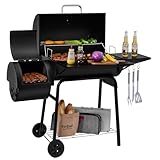
- Top Pick: FDW Charcoal Grills 43-inch Outdoor Grill,Multiple People BBQ Grill with Double Grill Mesh Design,Smoker Grill for Camping,Outdoor Backyard,Patio and Parties,Black
- Best Value: Royal Gourmet CC1830S BBQ Charcoal Grill and Offset Smoker, Outdoor Camping | 783 Square Inch Barrel Charcoal Grill, Front and Side Table, Adjustable Charcoal Pan, Side Door, Lid Thermometer | Black
- Premium Choice: ROVSUN 18 Inch Multi-Layer Charcoal BBQ Smoker Grill, Heavy Duty Round Grill, Vertical Smoker with Thermometer, for Outdoor Cooking, Patio, Parties, Backyard
The simplest cheap grill that works well is a charcoal kettle such as the Weber Original Kettle line, a compact gas model from Char-Broil or Weber’s Spirit range if you want propane convenience, or a small portable such as the Weber Smokey Joe for balconies and camping. Budget buyers should pick by how they cook and where they live rather than by the lowest sticker: charcoal gives flavour and low running cost, gas gives speed, and flat-top griddles from Blackstone suit breakfast-style cooking.
As an Amazon Associate we earn from qualifying purchases at no extra cost to you.



Start with the way you cook
A cheap grill disappoints when it does not match the job. Decide on fuel and size first.
- Charcoal: lowest entry cost, strong sear and smoky taste, but slower to start and needs ash cleanup.
- Gas (propane): quick start, easy temperature control, higher purchase cost and gas bottle upkeep.
- Portable or tabletop: small footprint for balconies, tailgating and camping; limited cooking space.
- Flat-top griddle: good for smash burgers, eggs and vegetables; not a traditional grill.
At a glance: budget-friendly grill types
| Type | Examples | Best for | Limits |
|---|---|---|---|
| Kettle charcoal grill | Weber Original Kettle, Char-Broil kettle models | Families, flavour lovers, first grills | Needs charcoal and cleanup; slower to heat |
| Portable charcoal | Weber Smokey Joe | Balconies, camping, couples | Small cooking surface |
| Compact gas grill | Char-Broil Performance series, Weber Spirit line, Royal Gourmet | Weeknight cooking, quick starts | Thinner steel on cheaper models; gas cylinder needed |
| Tabletop gas | Weber Q series, Cuisinart portable grills | Small patios, tailgates | Limited capacity |
| Flat-top griddle | Blackstone tabletop and standing models | Breakfast, stir-fry, smash burgers | Needs seasoning and careful grease management |
What to check before buying
Cooking area
Makers list cooking surface in square inches or grate diameter. A 22 inch kettle, such as the maker lists for the standard Weber Original Kettle, is generally treated as the family-size standard, whereas a 14 inch portable suits one or two people. Match the area to the number of people you cook for.
Build quality
Thin metal warps, rusts and loses heat. Look for porcelain-enamel lids and bowls on charcoal grills, sturdy legs and a lid that fits well. On gas grills, heavier burners and cast iron or thick wire grates tend to last longer; the maker’s warranty terms on burners and firebox are a clue to durability.
Heat control
Kettle grills control heat via top and bottom vents. Gas models use knobs and sometimes multiple burners, which let you cook with direct and indirect zones. Single-burner designs are cheap but less flexible.
Ignition and fuel
Charcoal grills need a chimney starter or lighter; skip lighter fluid if you can. Gas models need a standard propane cylinder, and some portable units use small canisters. Check which fuel type each model uses before buying.
Portability and storage
Wheels, handles and folding legs matter for patios and camping. Consider where you will store the grill and whether a cover is available.
Budget tiers
| Tier | What to expect | Trade-off |
|---|---|---|
| Entry | Small portable charcoal grills and basic tabletop gas models | Limited size and shorter lifespan |
| Value mid-range | Kettle grills, two or three burner gas grills, basic griddles | Good for most households; some assembly and tuning |
| Step-up budget | Weber Spirit-class gas grills and larger kettle models | Better build and warranty, higher outlay |
Pick this if you…
| If you… | Pick |
|---|---|
| Want the best flavour for the least spend | Charcoal kettle grill |
| Have a balcony or travel often | Portable charcoal or tabletop gas |
| Want fast weeknight dinners | Compact gas grill with two burners |
| Cook breakfast and stir-fry outdoors | Flat-top griddle |
| Feed a crowd occasionally | 22 inch kettle or a larger gas grill |
Safety and setup notes
- Use grills outdoors only, well away from walls, railings, trees and overhanging eaves.
- Many apartments and rental agreements restrict charcoal or propane on balconies; check building rules and local fire regulations before buying.
- On gas grills, check hose and connections for leaks using soapy water, as many makers advise, and shut off the cylinder when finished.
- Let charcoal ash cool fully and dispose of it in a metal container.
- Follow the maker’s assembly instructions carefully, since poor assembly is a common source of problems on budget grills.
Common mistakes
- Buying too small and then struggling to cook for guests.
- Choosing gas without budgeting for cylinders and refills.
- Skipping a cover, which shortens the life of cheaper steel and paint.
- Cleaning the grate rarely, leading to flare-ups and poor taste.
- Over-relying on lighter fluid rather than a chimney starter.
- Ignoring where the grill will physically sit.
Alternatives to consider
- Electric grills: suit apartments that ban open flame; they lack real charcoal flavour.
- Pellet grills: offer automated heat control but sit well above the budget tier.
- Portable kamado-style cookers: retain heat and fuel well, but cost more than basic kettles.
- Secondhand grills: a used kettle can be a bargain if the bowl and lid are intact.
Maintenance that keeps a cheap grill going
Budget grills live or die by upkeep. After each cook, brush the grate while it is still warm to remove residue, and empty the ash catcher on charcoal models once it is cold. Rust usually starts where paint chips or where grease sits, so wipe grease trays and touch up exposed spots with high-heat paint. A light coat of cooking oil on the grates before storage helps protect bare metal.
For gas grills, inspect burners periodically for blocked ports, which cause uneven flames, and replace worn regulators or hoses according to the maker’s guidance. Keep the propane cylinder upright and stored outdoors, away from heat. Griddle owners should season the plate with thin layers of oil and clean it while warm to prevent rust. Done consistently, this routine can stretch the life of an inexpensive grill well beyond what its price suggests, and it also keeps flare-ups and off flavours under control.
Frequently Asked Questions
Is charcoal or gas better for a cheap grill?
Charcoal is usually cheaper to buy and gives smoky flavour, while gas is faster and more convenient. Choose based on how much time you are willing to spend lighting and cleaning.
How long does a budget grill last?
It depends on build quality, care and weather. Covering the grill, cleaning grease and keeping it dry extend its life, and the maker’s warranty gives a rough indication of expected durability.
What size grill do I need?
For two people a portable or compact gas grill is enough. A family of four generally wants a 22 inch kettle or a two to three burner gas model.
Can I use a charcoal grill on a balcony?
Often not. Many buildings ban charcoal and propane on balconies, so confirm with your landlord or local fire rules before buying.
Do I need a cover?
It is a good idea. A fitted cover protects against rain and sun, and it is a cheap way to extend the life of an inexpensive grill.
Are flat-top griddles worth it?
They suit breakfast foods, fried rice and smash burgers well, but they do not produce grill marks or char-grilled flavour. Consider one if that matches how you cook.







Write Your Review
No reviews yet. Be the first to share your experience!