
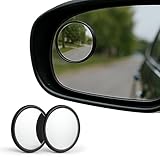
- Top Pick: LivTee 2PCS Round Blind Spot Mirror, HD Glass and ABS Housing Convex Wide Angle Rearview Mirror with Adjustable Stick for Universal Car, Black
- Best Value: SteadMax 2 Pack Blind Spot Mirrors, HD Wide Angle Convex for Cars
- Premium Choice: XLarge Blind Spot Mirror for Trucks 3.6"X2.5" – HD Glass Frameless Convex Mirror for Truck with Wider View and Improved Traffic Safety
For most drivers, a frameless convex glass stick-on mirror with a pivoting base, such as the LivTee or Ampper two-packs that roundups keep naming, is the simplest fix, while towing and trucks call for larger, wider-coverage shapes like the Utopicar style and a more permanent mount. If your car already has factory blind spot monitoring, an add-on mirror is a backup for the spot the radar light does not show, not a replacement. Here is how to choose, with the trade-offs laid out by budget tier.
As an Amazon Associate we earn from qualifying purchases at no extra cost to you.



Why gamers and desk-bound drivers should care
Long sessions, late nights and a rushed commute add up to tired eyes. A blind spot mirror costs very little compared with the risk of changing lanes on a glance. Reviewers who compile roundups for 2026 mostly agree on one point: no stick-on mirror removes the need for a shoulder check. It widens what you see, and that is all it should be trusted to do.
At a glance: the names reviewers keep returning to
| Product style | Best for | Commonly reported traits | Limits |
|---|---|---|---|
| LivTee HD frameless convex | Everyday cars and SUVs | Frameless glass, adjustable swivel base; several roundups name it a top pick | Stick-on mount can shift if placed on a dirty or curved surface |
| Ampper 2-pack | Budget buyers wanting a pair | HD optical glass and adhesive backing, described as good value | Basic fit; coverage is standard round convex |
| SteadMax 2-pack | Balance of coverage and durability | Named best overall in at least one roundup | Rankings vary between outlets |
| Essential Contraptions | Value for heavier vehicles | Real glass, strong adhesive, sold as a pair | Less refined swivel feel in some reports |
| Utopicar wide-angle style | Wider view, trucks, towing | Reviewers describe a larger image than a round mirror | Bigger shape can intrude on the factory mirror view |
Most of these lists are affiliate-style roundups, so treat their ordering as a guide to what exists rather than a verdict. The maker listing for each model is the place to confirm glass type, diameter and mount style.
What to look for
Glass, not plastic
Makers of the better-reviewed units list HD optical glass. Glass resists the warping and scratching that makes cheap plastic images blurry after a few car washes. Frameless designs also cut the plastic rim that can hide a small object.
Shape and size
Round convex mirrors are the standard. Rectangular and wide-angle shapes give a broader horizontal sweep at the cost of covering more of the factory mirror. A smaller unit placed in the lower outer corner usually keeps the main view intact. Larger shapes make more sense on trucks and SUVs where the mirror face is already large.
Mount type
Two designs dominate. A stick-on base with a pivot lets you aim the mirror after installing. A clip-on version wraps the housing and is easier to remove. Adhesive types rely on 3M-style tape, so a clean, dry surface and room temperature application matter. A mirror that falls off at speed is a nuisance, so follow the instructions on cure time before driving.
Weather resistance
Some listings mention IP65 water resistance. That is a maker claim worth noting if you park outside or drive in rain, since moisture behind the glass can cloud it over time.
Budget tiers explained
| Tier | What you get | What you give up |
|---|---|---|
| Budget | A two-pack of small round glass mirrors with adhesive | Fine adjustment, premium finish, long-term adhesive reliability |
| Mid-range | Frameless glass, a swivel base and better water sealing | Still stick-on, still limited by size |
| Premium | Larger or custom-shaped towing mirrors and proper mount hardware | More bulk, more installation effort |
For a standard commuter, the mid-range tier is where reviewers keep landing: the gap between a bargain pair and a better one is mostly in the pivot and the adhesive.
Fit and compatibility notes
- Mirrors with heated glass, built-in turn signals or radar lights have uneven surfaces. Stick on a flat patch of glass, not on a sensor area.
- Check local rules before attaching anything to a mirror on a trailer rig or commercial vehicle; mirror requirements for towing differ by region.
- If your vehicle has a camera built into the mirror housing, avoid covering the lens.
- Do not attach a mirror where it blocks the factory blind spot indicator light.
Pick X if…
| If you… | Pick |
|---|---|
| Drive a sedan or compact and want a quick upgrade | Ampper or LivTee style frameless round glass |
| Want the most adjustable base | A 360-degree swivel model such as the LivTee style |
| Drive an SUV or pickup | A wide-angle or rectangular style such as Utopicar |
| Tow trailers regularly | A towing-focused mirror set and a proper extension mirror |
| Want a pair at a modest tier | SteadMax or Essential Contraptions two-packs |
| Already have radar blind spot warning | A small supplementary round mirror in the lower corner |
Alternatives to a stick-on mirror
- Factory blind spot monitoring: Many newer cars offer it as an option, and aftermarket radar kits exist. They warn rather than show.
- Clip-on wide mirrors for the interior rear-view: These widen the rear view but do not cover the side blind spot.
- Adjusting your existing mirrors outward: Set the side mirrors so they barely show the car body. Many driving instructors teach this because it shifts coverage into the zone beside the car.
Common mistakes
- Placing the mirror in the middle of the glass, where it hides traffic you can already see.
- Skipping surface cleaning, then blaming the adhesive.
- Judging distance by the mirror image. Convex glass makes vehicles appear smaller and farther than they are.
- Skipping the shoulder check.
Installation and care
Clean the mirror surface with glass cleaner and let it dry fully. Sit in your normal driving position and have the mirror held where you want it before peeling the backing, because adhesive grips hard once pressed. Press firmly for the time the maker states, and avoid washing the car for the period given on the packaging. In winter, wipe frost off gently rather than scraping, which can scratch glass. If the image looks warped or the mirror loosens, replace it instead of leaving it half-attached. Two-packs are handy because you can fit both sides and keep a spare.
Remember that a convex surface compresses the scene. Objects look smaller and farther away than they really are, so judge gaps with a shoulder check before moving over.
Frequently Asked Questions
Do blind spot mirrors really work?
They widen your view toward the rear corner, which helps reveal cars that sit beside you. They do not show everything, and the image is distorted, so a quick shoulder check is still needed before changing lanes.
Where should I place a blind spot mirror?
Most guidance points to the lower or upper outer corner of the side mirror glass. Sit in your normal driving position, then adjust the pivot until you can see the lane beside you without losing the main reflection.
Are stick-on mirrors safe in car washes?
Well-applied adhesive mirrors usually survive, but a loosely placed one may come off. Follow the cure time on the packaging and consider removing it before an automatic wash with strong brushes.
Can I use these on a car with factory blind spot monitoring?
Yes, but keep the mirror clear of any indicator light or sensor surface. Treat it as an extra view, not a replacement for the monitor.
Glass or plastic, which is better?
Glass is generally preferred, since makers and reviewers cite sharper images and better scratch resistance. Plastic can suffice for a short-term fix.
Are these legal on towing rigs?
Mirror rules vary by place, particularly for trailers. Check your local transport authority and the trailer maker guidance rather than relying on a product listing.







Write Your Review
No reviews yet. Be the first to share your experience!