
- Top Pick: SANWAY 10×10 Pop Up Canopy Tent, One Push One Person Setup, Silver White | Waterproof, Instant Portable for Outdoor Events, Parties & Camping with 8 Stakes, 4 Sand bags and Carry Bag,Silver-Coated Top
- Best Value: CROWN SHADES 10×10 Pop Up Canopy Tent with One Push Setup, Grid White | Patented CenterLok, Easy Outdoor Sun Shade for Events, Parties, Camping – Gazebo with STO-N-Go Cover Bag, Silver-Coated Top
- Premium Choice: JEAREY 10×10 Pop Up Canopy Tent, Easy Up Outdoor Market Canopy, White | Center Lock, 1-Push Setup, Silver-Coated Top, Wheeled Bag, 4 Sandbags, 8 Stakes for Beach, Markets, Camping, Sports Events
A 10×10 canopy built on a steel frame, such as the E-Z UP and Coleman style pop-ups, suits casual backyard and tailgate use, while an aluminum or heavy-duty commercial-grade frame suits vendors, sports teams and anyone who sets up often or faces wind. Choose by frame material, fabric rating, setup method and how you plan to anchor it. This guide explains the specs makers list, what they mean and what to avoid, so you can match a canopy to your events.
As an Amazon Associate we earn from qualifying purchases at no extra cost to you.


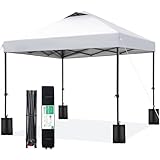

At a Glance: Canopy Types
| Type / example brands | Best for | Features the makers list | Limit |
|---|---|---|---|
| Steel-frame pop-up (Coleman, Ozark Trail, Abccanopy entry models) | Backyard, picnics, occasional use | Quick setup, lower cost, roomy 100 square foot footprint | Heavy; steel can rust and bend in wind |
| Aluminum pop-up (E-Z UP, Abccanopy aluminum, Core) | Frequent use, vendors, sports | Lighter frames with stronger joints, replaceable parts | More costly |
| Commercial hex-leg frames (E-Z UP Pyramid and Eclipse style) | Markets and events | Heavier-gauge leg profiles and stable footprint | Larger packed size |
| Instant shelters with sidewalls (Quik Shade) | Sun and bug protection, camping | Optional walls and mesh screens | Walls act like sails in wind |
| Screen house style (Coleman, Core, Eureka) | Bug-heavy areas | Mesh sides, more enclosure | Less airflow in heat |
What 10×10 Means
A 10×10 canopy covers about 100 square feet at the base. Usable shade is smaller than the label because the sun moves and the leg footprint is spread out. Makers usually list the footprint as well as the peak and eave heights. The height matters if you are tall or want a table under it: lower eave heights can make the sides uncomfortable to stand under.
Frame Material and Build
Steel
Steel frames are common in budget canopies. They are strong in a static position and inexpensive, but they are heavy, and some models can rust if not dried. Reviewers often note that cheap steel can bend in gusts.
Aluminum
Aluminum frames weigh less, do not rust and are common in mid-range and premium designs. Look at the thickness of the leg profile: thicker, square or hex legs resist bending better than thin round tubes. Makers of commercial-grade models usually describe the leg profile or gauge in their listing.
Joints and truss
Joints are where canopies fail. A frame with riveted or reinforced slider mechanisms and metal rather than plastic parts generally lasts longer. Check whether replacement parts are sold by the maker, which extends the life of the canopy.
Canopy Fabric and Sun Protection
- Denier: a higher number such as 300D or 500D indicates a heavier polyester or similar, but weave, coating and construction matter too.
- UV rating: UPF 50 plus is a common claim. If a maker lists it, it describes the fabric, not how much heat will be blocked.
- Water resistance: many fabrics are water-resistant rather than fully waterproof. Seams may leak in heavy rain unless taped.
- Color: light colors reflect heat; darker interior fabrics can reduce glare.
- Vents: a vented top lets hot air and gusts pass through, which makes a canopy more stable.
Setup and Portability
Pop-up canopies usually need two people to expand and one to adjust leg height. Look for push-button leg locks, because pins can be lost. Weight matters when you carry it: aluminum models are lighter to move than steel. Many canopies come with a wheeled roller bag, which saves your back. Measure the packed length against your trunk before you buy, since a 10×10 canopy typically folds to a long bundle.
Wind, Weight and Anchoring
This is the most important safety point. Makers state that canopies are meant for shade and should be taken down in strong wind or storms. A gust can lift a canopy and cause injury or damage. Always anchor the legs with weights or stakes; the maker’s manual will specify what to use. Many event organizers require a certain weight per leg, so ask your venue. Do not rely on the canopy’s own weight to hold it down, and do not use it in severe weather.
Use stakes on soft ground and weight bags or plates on hard surfaces. Lowering the canopy leg height can improve stability in breezy conditions, and removing sidewalls lowers the wind load.
Budget Tiers
| Tier | What to expect | Trade-off |
|---|---|---|
| Budget | Steel frame, basic polyester, one-season use | Heavy, less durable, may bend |
| Mid-range | Aluminum or heavier steel, better fabric, roller bag, spare parts | Best balance for regular use |
| Premium | Commercial-grade aluminum, heavy fabric, long warranty | Higher outlay and size |
Pick X If You Want Y
| If you … | Choose |
|---|---|
| Need shade for a few backyard parties a year | A budget steel-frame pop-up |
| Set up weekly at markets or sports | A commercial-grade aluminum model such as E-Z UP or a similar maker |
| Camp in buggy areas | A canopy with mesh sidewalls or a screen house |
| Travel alone and need to carry it | A lighter aluminum frame with a wheeled bag |
| Live in a windy area | A vented canopy with a heavy frame, good weights and a plan to take it down in a storm |
| Want a shelter for a long season | A model with replaceable parts |
Common Mistakes
- Skipping weights. A bare canopy can become airborne in a moderate gust.
- Choosing by the largest advertised dimension instead of leg footprint and height.
- Leaving it up unattended or in storms.
- Putting it away damp, which promotes mildew and rust.
- Not checking that replacement tops and parts exist for your model.
- Ignoring venue rules that may specify weight per leg or flame-retardant fabric for events.
Alternatives
If 10×10 is too big or heavy, a 8×8 or 6×6 compact shelter may suit one family and is easier to carry. A pop-up beach tent offers wind resistance for sand. For a permanent patio, a pergola or a shade sail anchored to posts provides more durable cover. A pop-up screen house suits bug-heavy campsites where shade is less important than mesh.
Frequently Asked Questions
Is aluminum better than steel for a canopy?
Aluminum is lighter and does not rust, which makes it popular for frequent use. Steel is heavier and typically cheaper. A thick steel frame can be sturdy, but weight and rust are the trade-offs.
How many weights do I need for a 10×10 canopy?
Follow the manual from the maker and the rules of your event or venue. Anchor all four legs, and use more weight when wind is expected. Do not use it in severe weather.
Are pop-up canopies waterproof?
Most are water-resistant rather than fully waterproof, so seams can leak in heavy rain. Look for sealed seams if rain protection matters, and avoid pooling water on the top.
Can one person set up a 10×10 canopy?
Many makers recommend two people. One person can do it with practice on some lighter models, but the frame can be awkward to expand alone.
What does UPF 50 plus mean on a canopy?
It describes how much ultraviolet radiation the fabric blocks. It does not mean you cannot get sunburn from reflected light, so still use sunscreen and shade your skin.
How do I store a canopy so it lasts?
Dry it fully before packing, clean off dirt and keep it in its bag in a dry place. Occasionally lubricate sliding joints if the maker advises it.





Write Your Review
No reviews yet. Be the first to share your experience!