

Prime
Best Seller
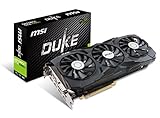
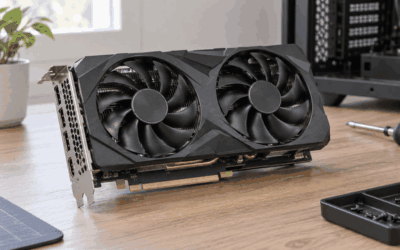
ASUS SFF-Ready Prime NVIDIA GeForce RTX 5070 Graphics Card (PCIe 5.0, 12GB GDDR7, HDMI/DP 2.1, 2.5-Slot, Axial-tech Fans, Dual BIOS), 3 Year Warranty


If you have ever wondered what does Ti mean on a GPU, here is the short answer: Ti stands for Titanium, and it marks a more powerful version of a standard Nvidia card. Confused by names like RTX 4070 versus RTX 4070 Ti? You are not alone, and this quick guide clears it up completely. In a few minutes you will know exactly what the Ti badge means, how much extra performance it buys, and whether it is worth your money.
As an Amazon Associate we earn from qualifying purchases at no extra cost to you.
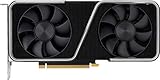
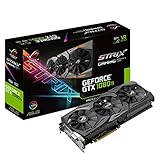


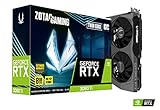
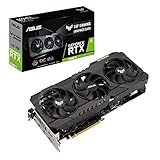

What the Ti Badge Actually Means
The Ti suffix is Nvidia’s way of labelling an upgraded version of an existing card. Understanding where it sits and how much extra it delivers is the key to reading Nvidia’s naming and choosing the right card for your budget.
Ti Stands for a Faster Version
When Nvidia adds Ti to a card’s name, it signals a more powerful variant of that model. An RTX 4070 Ti, for example, is a faster, beefed-up version of the standard RTX 4070.
The Ti card typically has more processing cores, higher clock speeds, or faster memory. These improvements combine to deliver noticeably more performance than the non-Ti version of the same card.
Think of it as a mid-step upgrade. A Ti card slots in above the standard model but usually below the next full tier up, filling a useful gap in Nvidia’s line-up.
This gap-filling role is genuinely helpful when you are shopping. Without Ti variants, you would often face a large jump in both price and performance between one tier and the next, forcing you to either overspend or settle for less than you wanted. The Ti card gives you a middle option, so if a standard model feels slightly underpowered for your needs but the next tier up feels like overkill or too expensive, the Ti version frequently lands exactly in the sweet spot you were looking for. Recognising that role makes Nvidia’s line-up far easier to navigate.
How Much Performance Ti Adds
The performance jump from a standard card to its Ti version is real and worthwhile. In most cases a Ti model delivers roughly ten to twenty percent more gaming performance than the non-Ti card.
That extra performance can change what a card is comfortable at. A Ti version might push a card from solid 1440p gaming into confident high-refresh 1440p or even entry-level 4K, depending on the model.
The table below shows the idea clearly:
| Card | Relative performance | Comfortable at |
|---|---|---|
| RTX 4070 | Baseline | Smooth 1440p |
| RTX 4070 Ti | ~10 to 20% faster | High-refresh 1440p |
Ti Versus Other Nvidia Suffixes
Ti is not the only suffix Nvidia uses, which adds to the confusion. You may also see Super, which similarly marks an upgraded version, so both Ti and Super signal a step up from the base card.
The key point is that any suffix after the number usually means more performance. A plain number is the standard card, while Ti or Super indicates a faster variant of that same model.
Reading the whole name in order helps. The generation, the tier number, and then any suffix together tell you roughly where a card sits, which is exactly what you need when comparing options.
It also helps to know that a higher-numbered plain card is not always slower than a lower-numbered Ti card, which trips up many newcomers. Performance depends on the specific models being compared, so the safest habit is never to assume based on the badge alone. When two cards are close, checking their actual measured performance rather than guessing from the name prevents the common and expensive mistake of paying more for a card that is not genuinely faster for your games. The suffix is a strong hint, but real numbers are the final word.
Is a Ti GPU Worth the Extra Money?
Knowing what Ti means is only half the decision; the other half is whether the upgrade is worth its higher price for you. This depends on how you play, your budget, and the current state of graphics card pricing.
When a Ti Card Makes Sense
A Ti card is worth it when the extra performance matches your goals. If you game at higher resolutions or want a card that stays capable for longer, the ten to twenty percent boost genuinely helps.
It is also worthwhile if the price gap is small. When a Ti version costs only a little more than the standard card for a meaningful performance gain, it often represents better long-term value.
For future-proofing, Ti can be the smart pick. A slightly faster card today tends to stay comfortable in demanding games for longer, delaying your next upgrade.
There is a psychological benefit worth mentioning too. Buyers who choose the slightly stronger Ti card often report feeling more relaxed about new game releases, because they trust their card has a little headroom to spare rather than sitting right at the edge of what they need. That confidence has real value over the years you own the card, since it means fewer moments of wondering whether your hardware can keep up. For anyone who dislikes the stress of feeling constantly on the verge of needing an upgrade, the modest extra cost of a Ti card can be money very well spent.
When to Save Money With the Standard Card
The standard card is the better buy when the price gap is large. If the Ti version costs significantly more for only a modest gain, that money may be better spent elsewhere in your build.
It also makes sense if you game at lower resolutions. For 1080p gaming, the standard card is often more than enough, and the Ti version’s extra power would go partly unused.
Matching the card to your actual needs saves money. Buying more performance than you will use is a common and avoidable mistake, so honest self-assessment pays off.
A useful exercise is to picture how you actually spend your gaming time. If most of your hours go into competitive titles that already run fast on a standard card, the Ti upgrade may barely change your experience while costing noticeably more. If instead you love pushing the latest visually demanding games at high settings, the extra performance will be felt in almost every session. Being clear-eyed about the games you genuinely play, rather than the ones you imagine you might, is the surest way to avoid overpaying for power that sits idle.
Prices, Timing and Buying in 2026
Graphics card prices matter to this decision, and they have trended upward, driven largely by memory costs feeding through the supply chain. The encouraging news is that the sharp climb of late 2025 has flattened into a stretch of relative stability, even as makers warn prices could move again.
A real drop is not close. New memory supply is coming, including Chinese DDR5 sources and two Micron plants under construction in Idaho, but those plants are not expected to run until 2027 or 2028. With prices plateaued rather than falling, waiting for a cheaper Ti card is unlikely to pay off.
Given that, buying the right card now beats waiting. Whether you choose a standard or Ti model, compare current prices through the links on this page and secure the one that fits your goals before prices shift again.
How to Choose Between a Card and Its Ti Version
With the meaning and value clear, choosing between a card and its Ti version comes down to a simple, practical process. A few quick checks lead you to the right decision with confidence.
Match the Card to Your Resolution
Start with the resolution you play at, since it decides how much power you need. For 1080p, a standard card usually suffices, while 1440p and above is where a Ti version starts to earn its keep.
Higher resolutions demand more graphics power, so the Ti card’s extra performance is felt most there. Matching the card to your monitor is the single most important step in choosing wisely.
Be honest about your monitor and goals. Buying a Ti card for a 1080p sixty-hertz screen wastes potential, while pairing it with a high-refresh 1440p display uses it fully.
Compare the Real Price Gap
Look at the actual price difference before deciding. Divide the extra cost by the performance you gain, and the value of the Ti version becomes clear rather than guesswork.
A small premium for a solid boost is usually worth it, while a large premium for a modest gain often is not. Checking current prices is the only way to judge this accurately.
A simple rule of thumb helps here. If the Ti version costs only a little more, say a fraction of the base card’s price, for its ten to twenty percent performance gain, it is usually the smarter buy. If the premium climbs toward the price of the next tier up entirely, it may be worth stretching to that stronger card instead, or dropping back to the standard model and saving the difference. Framing the choice as value per dollar rather than raw performance keeps you from being swayed by the more impressive-sounding name.
Ready to compare and choose? Use the links on this page to check the latest prices on both the standard and Ti versions, and pick the card that offers the best value for how you actually game.
Remember the Rest of Your System
A faster card needs support to shine. Ensure your processor and power supply can handle a Ti card, since a strong graphics card paired with a weak system will not reach its potential.
Cooling matters too. A more powerful Ti card can run warmer, so good case airflow helps it perform at its best, which is worth planning for alongside the purchase.
Plan the whole build, not just the card. Checking that your system supports your chosen card is the final step to turning the right choice into a genuinely great gaming experience.
See More:
Conclusion
So, what does Ti mean on a GPU? It marks a faster, upgraded version of a standard Nvidia card, typically delivering ten to twenty percent more performance for a higher price. Whether it is worth it depends on your resolution, your budget, and the size of the price gap, so match the card to how you actually play rather than the badge that sounds best. With prices flat rather than falling, there is little reason to wait, so use the links above to compare a standard card against its Ti version and secure the best value for your next build.
Frequently Asked Questions
What does Ti actually stand for?
It is short for Titanium and is purely a marketing suffix, not a material or a technology. Nvidia uses it to mark a higher performing variant within an existing tier, sitting between the base card and the next number up, so an RTX 5070 Ti slots between the 5070 and the 5080.
How much faster is a Ti card in practice?
Historically a Ti delivers roughly ten to twenty five percent more frames than the base model at the same resolution, driven by extra shader cores, higher clocks and occasionally a wider memory bus. The gap tends to widen at 4K where memory bandwidth matters more, and narrow at 1080p where the CPU limits results.
How do Ti, Super and Ti Super differ?
Ti is the original higher variant of a tier, Super is a mid-generation refresh that unlocks more of the die, and Ti Super combines both, usually as the fastest configuration of that tier. Because naming has grown crowded, compare CUDA core counts, memory capacity and bus width rather than relying on the label.
Does a Ti card need more power or a bigger case?
Generally yes on both counts. A Ti typically raises board power by 30 to 80 watts, so the recommended power supply rating climbs accordingly, and partner coolers are often longer and thicker to handle the extra heat. Measure your case clearance and check for a 12V-2×6 connector before committing.
Is a Ti worth it for 1440p gaming?
Often yes, because the extra headroom keeps a 1440p high refresh display fed for longer, especially with ray tracing enabled. If the Ti also adds VRAM, that is a stronger argument still, since frame buffer pressure at 1440p with high textures is the most common cause of stutter on mid-tier cards.
Ready to decide? Our #1 pick for 2026 is the RTX 4070.
Live price & availability on Amazon.



Write Your Review
No reviews yet. Be the first to share your experience!