
- Top Pick: SRhonyra RX 580 8GB Graphics Card GDDR5 256-Bit
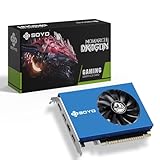
- Best Value: SOYO Geforce GT 730 Graphics Card, 4GB DDR3 64 Bit 4xHDMI 2.0B 4K Quad Monitors Multiple Displays, PCI-E x8 2.0 Single Fan Cooling GPU for Video Wall, Stock Trading & Monitoring (Blue)
- Premium Choice: GPU-Accelerated Research in Quant Finance: Using CUDA to Speed Up Backtests and Analytics (Trading System Architecture & DevOps)
Newegg GPU trade-in promises a frictionless way to turn your old graphics card into store credit toward a new one — no listings to write, no scams to dodge, no haggling with strangers. But “convenient” and “worth it” are not the same thing, and this review puts the program through the only test that matters: how much it actually pays, what it risks, how long you wait for your money, and whether you would simply be better off selling the card yourself. Here is our honest verdict before you commit a single dollar.
Our Verdict: 3/5 — genuinely convenient, but you pay for that convenience.
As an Amazon Associate we earn from qualifying purchases at no extra cost to you.




- Best for: older or low-demand cards, sellers who hate listing and shipping, and anyone who values a guaranteed, scam-free payout over squeezing out maximum cash.
- Skip it if: you own a clean, in-demand GPU — selling it yourself typically nets noticeably more money.
- What it really pays: roughly 35% below open-market eBay resale value, on average.
- The catch most buyers miss: you pay full price for the new card upfront, and the trade-in value comes back later as a refund, only after a multi-week inspection.
How the Newegg GPU Trade-In Works — and What It Actually Pays
The program runs on a straightforward, step-by-step system designed to get older hardware out of your hands quickly, and understanding the mechanics is the first half of judging whether it is worth your money. You begin by finding a new graphics card on the retailer’s site, then filling out the trade-in form attached to that product page, selecting your exact model and answering a few basic questions about your card’s physical and functional condition. Based on that information you receive an instant, automated quote for store credit toward the new purchase, and trade-ins are matched by category, so a GPU goes toward a GPU or a complete gaming PC.
Here is the detail most first-time users miss, and it shapes our entire evaluation: you pay full price for the new card upfront, and the trade-in value is returned afterward as a refund, only once your old card has been received and approved. After checkout you are emailed a prepaid UPS shipping label, and you have 14 days to send your old card in for testing and evaluation. In other words, the headline “trade-in value” is not a discount at the register; it is money you front and then wait to recover, which is a very different proposition from how the program markets itself.
In testing the experience against community reports, the picture splits cleanly into two camps, and weighing both is what this review is built around. On the positive side, the convenience is real and consistent: no listings to create, no low-ball offers to field, no payment scams from unverified buyers, and a predictable, structured way to hand off old hardware, with credit often approved not long after the package arrives. On the other side, plenty of buyers report a gap between the initial online quote and the final payout, because the inspection step can trigger sudden rejections or reduced valuation offers. That gap is exactly where the program earns — or loses — its rating.
Real Trade-In Payouts vs. eBay Resale Value
This is where the math gets uncomfortable, and it is the single biggest factor in our score. Across documented examples, trade-in offers tend to land roughly 35% below what the same card fetches on the open secondhand market. In one widely cited illustration, a high-end card quoted around $561 in trade-in credit was selling for closer to $881 on eBay at the same time — and even after subtracting eBay’s selling fees of roughly 14%, the private sale still net noticeably more cash in hand. That pattern repeats across a wide range of models, and the more desirable your GPU, the larger that gap grows in absolute dollars. The table below sums up the trade-off at a glance:
| Factor | Newegg Trade-In | Sell It Yourself (eBay) |
|---|---|---|
| Typical payout | ~35% below market value | Full open-market price |
| Fees | None (already baked into the lower quote) | ~14% eBay selling fee |
| Time to get your money | Several weeks (10–15 business days to inspect, then 3–5 days to refund) | Often the same day to a few days |
| Effort required | Minimal — fill a form, use the prepaid label | List, photograph, message buyers, package, and ship |
| Main risk | Reject or downgrade after you have already paid for the new card | Scams, chargebacks, or a buyer who never pays |
| Tax paperwork | None | Possible 1099-K reporting once proceeds cross thresholds |
| Best for | Older or low-demand cards; convenience over cash | Clean, in-demand cards; maximum return |
A simple worked example shows why this matters at the exact moment of checkout. Say you trade in an older card for $150 in store credit toward a $600 graphics card; your out-of-pocket cost is $450. But if that same new card is on sale somewhere else for $500, the real benefit of the trade-in shrinks to just $50 — before you even account for the higher price you might have gotten selling the old card privately. Run this calculation before you commit, because a direct discount on the new card can quietly erase the entire value of the trade-in credit.
There is one nuance that legitimately tilts the math back toward trading in, and a fair review has to name it. Selling on platforms like eBay can trigger tax-reporting paperwork once your proceeds cross certain thresholds, and some sellers would rather avoid that friction entirely. If you place a high value on a clean, guaranteed, paperwork-free transaction, the lower payout starts to look less like a penalty and more like the price of certainty. For most people chasing maximum return, though, the private sale still wins on raw dollars — and that is why the program lands at a middling score rather than a high one.
The Reject Risk and Payout Wait: Where the Program Loses Points
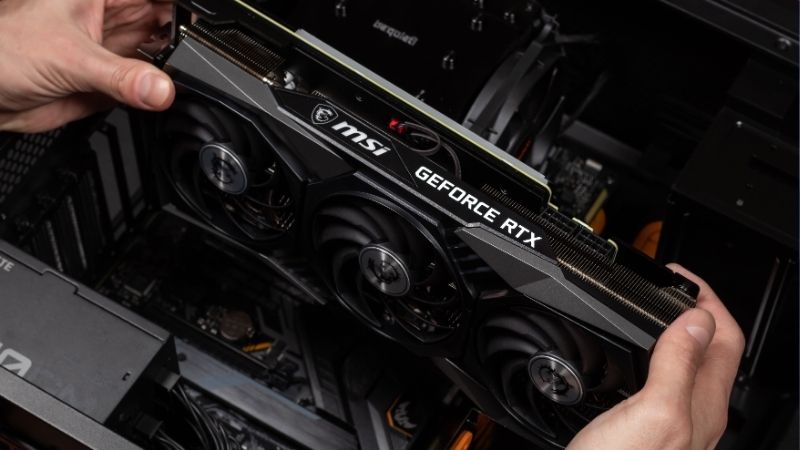
The reject risk is the factor that pulls our rating down the hardest, and it deserves close attention before you buy anything. Incoming cards go through a thorough inspection that checks model verification, physical damage, dust and dirt buildup, missing components, corrosion, serial-number verification, port and fan functionality, noise level, operating temperature, and benchmark performance. Failing any one of those checks can get a card rejected outright. Even when a card passes, reviewers and customers report that something as minor as light dust buildup or a few small scuffs on the backplate can knock a card’s grade down from “Like New” to “Good,” shaving real money off the quoted payout.
Now layer that on top of the upfront-payment structure, and the weakness becomes obvious. Because you have already paid full price for the new card, any rejection or downgrade happens after your money is committed, not before — there is no chance to walk away cleanly once the surprise lands. If a card is rejected outright it is shipped back to you free of charge, which sounds reassuring, but that round trip delays your upgrade and leaves you holding a card you now have to sell anyway, having gained nothing but lost time. For anyone with a clean, in-demand GPU, this combination — a guaranteed lower payout plus the chance of a downgrade you cannot really contest — is precisely why our verdict steers valuable cards toward a private sale. Managing your expectations about these strict standards before hand is the difference between a smooth swap and an expensive disappointment.
How Long Until the Credit Lands (and the Cash Flow Cost)
Timing is the other half of the “before you commit” calculation, and it is easy to underestimate, so this review weighs it heavily. Once the warehouse receives your card, the inspection process generally takes 10 to 15 business days, after which the approved credit is refunded to your original payment method within roughly another 3 to 5 days. Add the shipping window on the front end, where you have up to 14 days to send the card in, and the full cycle from checkout to refund routinely stretches across several weeks. Throughout that entire stretch, the money for your new card is already gone while the trade-in value sits in limbo pending inspection.
If your upgrade budget is tight or your cash flow matters at all, that multi-week delay is a genuine, concrete cost — one that a same-day private sale simply does not carry. Selling the card yourself first means you walk into the new purchase with cash already in hand, no waiting and no exposure to a valuation surprise. Weighing that timing penalty honestly is a core part of why the program scores as merely adequate rather than excellent: the convenience is real, but the wait and the uncertainty are real too.
Our Verdict: Is the Newegg GPU Trade-In Worth It?
After weighing the payout, the reject risk, and the timing, our verdict settles at a fair-but-cautious 3 out of 5: the program is worth using in specific situations and a clear mistake in others. It earns its keep when your card is older or lower in demand, when you genuinely dread the friction of listing and shipping to strangers, or when avoiding scams and locking in a guaranteed return matters more to you than the last dollar. In those cases the convenience is worth the haircut, and trading in is a perfectly rational choice. But if you own a sought-after, well-kept GPU, the verdict flips: taking a little time to sell it yourself on a reputable peer-to-peer platform frequently puts enough extra cash in your pocket to meaningfully cut the cost of your next card, and you avoid both the reject risk and the multi-week wait entirely.
The smartest way to use the program, and the approach we recommend, treats the two paths as one workflow rather than an either-or: get the trade-in quote first and treat it as your guaranteed price floor, then only commit to selling privately if the gap is large enough to justify the extra effort. That way you always know the minimum your card is worth, and you only take on the work of a private sale when the reward clearly outweighs the convenience you would be giving up. Whatever you decide, make the call with the payout comparison, the reject risk, and the timing all on the table — not just the headline trade-in number the product page shows you.
See More:
Pros, Cons, and the Better-Value Alternative
Distilling the full evaluation into a quick scorecard, here is where the program stands:
- Pro — Real convenience: no listings, no low-ball offers, no scams, and a structured, prepaid-label process from start to finish.
- Pro — Guaranteed, scam-free payout: you get a near-certain return instead of gambling on whether a private listing sells, with no buyer disputes to manage.
- Pro — Paperwork-free: no tax-reporting friction that high-volume private selling can trigger.
- Con — Pays roughly 35% under eBay: the convenience comes straight out of your card’s value, and the gap widens on desirable models.
- Con — Reject and downgrade risk: strict inspection can cut or cancel your quote after you have already paid full price for the new card.
- Con — Multi-week payout wait: several weeks from checkout to refund, with your money committed the entire time.
The better-value alternative for most clean, in-demand cards remains selling it yourself, then buying the new card with cash in hand — which also frees you from store credit and lets you shop the whole market for the best price. For that final purchase, Amazon is the most reliable route for most builders: consistently competitive pricing, fast Prime shipping, an enormous selection of brands and cooler designs, and a generous return policy that covers coil whine or a card that simply will not fit your chassis. And if you do go through with the trade-in, give yourself the best shot at a top-tier valuation — clear the dust from the fins, heatsink, and fan blades with compressed air, wipe the shroud with a microfiber cloth, and package the card securely in its original box or an anti-static bag before shipping. Small steps like these can be the difference between a “Like New” grade and a costly downgrade, and they are the last lever you control before the program’s inspectors take over.
Recommended Products

AMD
AMD Ryzen 5 5600X 6-core, 12-thread unlocked desktop processor with Wraith Stealth cooler

Corsair
CORSAIR CX650 80 Plus Bronze Non Modular Low-Noise ATX 650 Watt Power Supply – NA – Black
As an Amazon Associate we earn from qualifying purchases. Product prices and availability are accurate as of the date/time indicated.
Frequently Asked Questions
How does the Newegg GPU trade-in process work?
You select your card model and declare its condition on the trade-in portal, receive an estimated quote, then ship the card in with the provided label. Newegg inspects it on arrival, confirms or revises the offer based on actual condition, and issues payment. The whole cycle typically takes one to three weeks.
Do you get cash or store credit?
Trade-in programmes of this type generally pay out as store credit or a gift card, sometimes with a bonus percentage if you apply it toward a new GPU purchase. Read the specific terms before shipping, because the headline value often assumes you are buying a replacement card rather than cashing out.
What happens if my card is downgraded during inspection?
You will be sent a revised offer that you can accept or decline. If you decline, the card is returned to you, though return shipping terms vary. Downgrades are commonly triggered by missing accessories, cosmetic damage, dead fans, or a card that fails to display output during the bench check.
Is trading in better than selling on eBay or locally?
Trade-in pays less than a private sale, usually noticeably so, because the buyer absorbs the resale risk. What you get in return is speed, no listing fees, no buyer disputes and no chargebacks. Selling locally for cash usually nets the most money, and eBay sits in between after fees.
How should I prepare a card before sending it?
Uninstall drivers cleanly with DDU, reset any custom BIOS or overclock profile to stock, blow the dust out and clean the shroud, and photograph the card and its serial number from every angle before packing. Include the original box and accessories if you have them, and pack in antistatic material with firm padding.



Write Your Review
No reviews yet. Be the first to share your experience!