
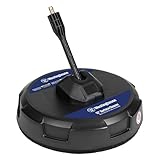
- Top Pick: Westinghouse Universal 15” Pressure Washer Surface Cleaner Attachment – 3400 Max PSI, 1/4” Connector – For Gas and Electric Pressure Washers
- Best Value: MEKOH 20” Heavy-Duty Pressure Washer Surface Cleaner with Wheels, 4500PSI | Dual-Handle Power Washer Attachment for Large Driveway Sidewalk Deck Patio Concrete Streak-free Cleaning, 3/8'' Quick-Connect
- Premium Choice: Westinghouse Universal 16.5” Pressure Washer Surface Cleaner Attachment – Stainless Steel – 4400 Max PSI, 1/4” Connector – for Gas and Electric Pressure Washers
For most homeowners, a 15-inch to 16-inch stainless-hooded surface cleaner from a known maker such as Simpson, Generac or Ryobi is the sensible match for a 2.3 to 3.0 GPM gas pressure washer, while a 20-inch or larger unit only pays off if the machine can feed it at the flow rate the maker specifies. A surface cleaner is a rotating spray bar under a hood. It turns a narrow wand jet into an even, striped-free pass across concrete, and the gas engine behind it decides how well that attachment works.
As an Amazon Associate we earn from qualifying purchases at no extra cost to you.


What a surface cleaner actually needs from your pressure washer
Three numbers decide compatibility: the maximum pressure rating (PSI), the water flow (GPM) and the inlet connection. Makers of surface cleaners usually print a recommended PSI window and a minimum GPM on the box or product page. If the machine delivers less flow than the attachment expects, the spray bar spins slowly and cleans unevenly. If it delivers more pressure than the attachment is rated for, seals and bearings wear faster.
- Pressure: consumer attachments are commonly rated somewhere in the 3,000 to 4,000 PSI range, and some heavier commercial models go higher. Match the washer to the rating on the attachment, not the other way around.
- Flow: larger hoods need more gallons per minute. Most reviewers suggest that a 20-inch hood is the point where a small residential washer starts to struggle.
- Connection: many gas washers use a 3/8-inch quick-connect on the wand; some attachments use 1/4-inch quick-connect or threaded M22 fittings. Adapters exist, but each one adds a leak point and a little pressure loss.
- Nozzle: the spray bar nozzles are sized to the flow. Using the wrong orifice size can hurt both cleaning and the spin speed.
At a glance: representative models
| Model family | Best for | Key stated specs (maker-listed ranges) | Limits |
|---|---|---|---|
| Simpson 15-inch and 20-inch surface cleaners | Owners of Simpson or similar 3,000 to 3,300 PSI gas washers | Stainless or steel hood, rear wheels or skids, 3/8-inch quick-connect on many versions | 20-inch version expects higher flow; heavier to push |
| Generac 15-inch and 16-inch surface cleaners | Generac-engine owners and general driveway work | Rotating bar under a hood, rated for gas washers in the mid-range PSI band | Plastic and steel mix; less rugged than commercial-grade bars |
| Ryobi 15-inch surface cleaner | Ryobi gas washer owners, mid-sized patios | Maker lists compatibility with its own gas models and similar PSI ratings | Check the box compatibility note against your washer |
| Kärcher T-Racer style attachments | Owners of Kärcher machines wanting a bundled system | Designed around Kärcher couplings and rated flow | Fitment often brand-specific |
| Commercial-style units (Whirlaway, Mosmatic and similar) | Contractors and frequent users | Heavy stainless hood, swivel and bearings built for long runs | Higher budget tier, needs a strong machine |
Model lines change, and makers refresh packaging and part numbers regularly. Treat the table as a family-level guide and read the maker’s own spec sheet for the exact PSI and GPM before buying.
Size: 12, 15, 16, 20 or 24 inches
The cleaning path is only as good as the flow behind it. A 12-inch hood suits small patios and walkways, and it works with the lower-flow machines. A 15-inch to 16-inch hood is the usual sweet spot for 2.3 to 3.0 GPM washers. Anything above 20 inches is mostly for contractors with 4 GPM or higher machines. Reviewers who compare attachments often say that going bigger than the engine supports does not speed up the job, because the bar spins too slowly and the stripe lines show.
Materials and build
- Hood: stainless steel resists rust and handles drag across rough concrete. Powder-coated steel is acceptable if kept dry. Heavy plastic hoods are lighter but crack under impact.
- Bar and bearings: sealed bearings and a swivel union are what separate a long-lived unit from one that seizes after a season.
- Wheels or skids: wheels make it easier to push but add parts that wear. Skid designs are simpler.
- Nozzles: replaceable nozzles are a plus, because small orifices clog with grit.
Pick this if you want…
| Pick this if… | Choose | Why |
|---|---|---|
| You have a 2.3 to 2.5 GPM homeowner washer | A 12-inch to 15-inch unit | Keeps flow matched to the hood so the bar spins freely |
| You clean a long driveway or large patio | A 16-inch to 20-inch unit with a gas machine that supports it | Fewer passes per area |
| You are loyal to one brand | The brand’s own bundled attachment | Couplings and rated flow are already matched |
| You clean for pay or weekly | A commercial-style stainless unit | Replaceable bearings and heavy hood take repeated use |
| You have a strict budget tier | An entry-level 12-inch to 15-inch unit | Lower cost, accepts some plastic parts |
Technique and safety
Gas pressure washers are powerful enough to cut skin, so keep hands and feet clear of the hood and never lift a running surface cleaner off the ground. Wear eye protection and closed shoes. Run the engine outdoors only, never in a garage, because of carbon monoxide. Follow the engine and washer manuals for fueling and storage, and let the engine cool before refueling.
- Sweep first so loose grit does not scratch the hood or the surface.
- Connect the attachment and start the water before squeezing the trigger, to purge air.
- Work in overlapping lanes, keeping the hood flat on the ground.
- Rinse the bar and nozzles after use, particularly if you used detergent or have well water.
Common mistakes
- Buying a large hood for a small engine, which results in a slow-spinning bar and visible striping.
- Ignoring the thread and quick-connect type until the box arrives.
- Using the attachment on soft wood decks or old pavers without testing in a hidden spot first, because even a hooded unit can etch soft materials.
- Skipping a pump-saver or flushing step in cold climates, so water freezes in the bar or pump.
Alternatives to consider
Electric pressure washer with a smaller surface cleaner: a 12-inch attachment on a mid-range electric machine suits smaller patios and quieter work. Wand with a rotary turbo nozzle: cheaper, but striping is much more likely. Rental of a commercial surface cleaner: practical if you clean a large slab once or twice a year.
Frequently Asked Questions
Do I need a gas pressure washer for a surface cleaner?
No, but larger attachments are generally designed around the flow rates of gas machines. Small electric washers can drive a 12-inch unit if the maker lists compatibility. Always compare the attachment’s required PSI and GPM with your machine’s specs.
What size surface cleaner should I buy?
For typical residential machines, 15 inches to 16 inches is the common choice. Go to 20 inches or more only if your washer can supply the flow the maker lists for that size.
Will a surface cleaner damage concrete?
Used as directed on sound concrete, it cleans evenly. On cracked, painted, sealed or soft surfaces, test a small hidden area first. Keep the hood on the ground at all times to avoid marking.
Why does my surface cleaner leave stripes?
Common causes are too little flow for the hood size, worn or clogged nozzles, and moving too fast or with uneven overlap. Reduce the speed and overlap each pass by a couple of inches.
Can I use detergent through a surface cleaner?
Some makers allow low-pressure detergent application through the machine’s soap injector before a rinse pass. Others recommend applying detergent separately with a sprayer. Read the attachment manual and use products compatible with your pump.
How do I store it?
Rinse it, let it drain and store it indoors or out of freezing temperatures. Trapped water can crack parts in cold weather, and grit left inside can wear the bearings.





Write Your Review
No reviews yet. Be the first to share your experience!